




Roman Numeral Table Clock
A roman numeral table clock brings architectural presence and steady mechanics to a desk or mantelpiece.
Roman Numeral Table Clock
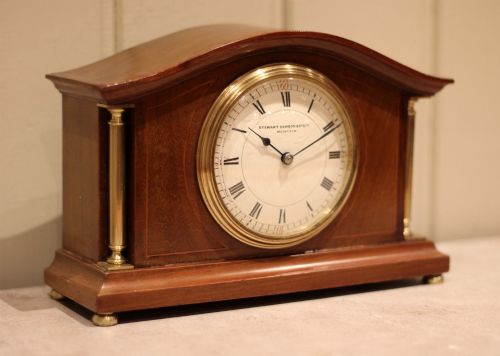
A roman numeral table clock stands as a functional timepiece designed for domestic surfaces, encompassing mantel clocks, desk clocks, and bracket clocks. These pieces sit comfortably on flat surfaces, relying on weighted or spring-driven movements to record the hours.
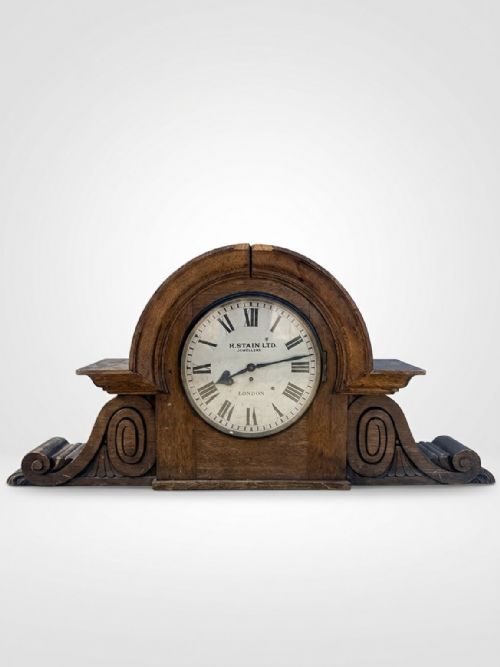
The selection here draws principally from the nineteenth and early twentieth centuries, featuring Victorian, Edwardian, and Regency examples. Mahogany and marble form the bulk of the structural housings, accompanied by brass, walnut, and ebonised wood.
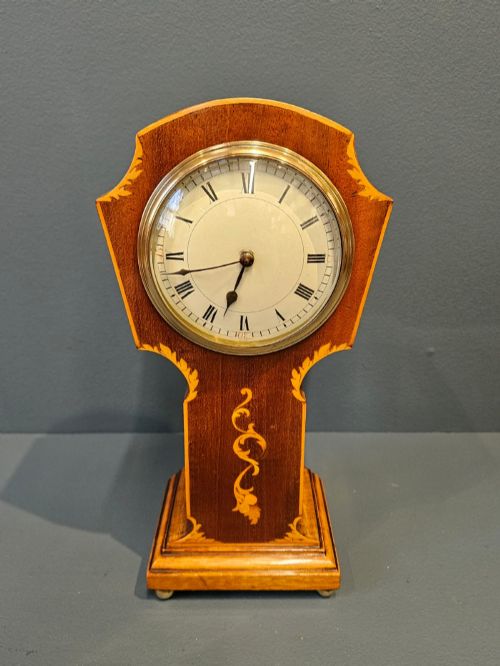
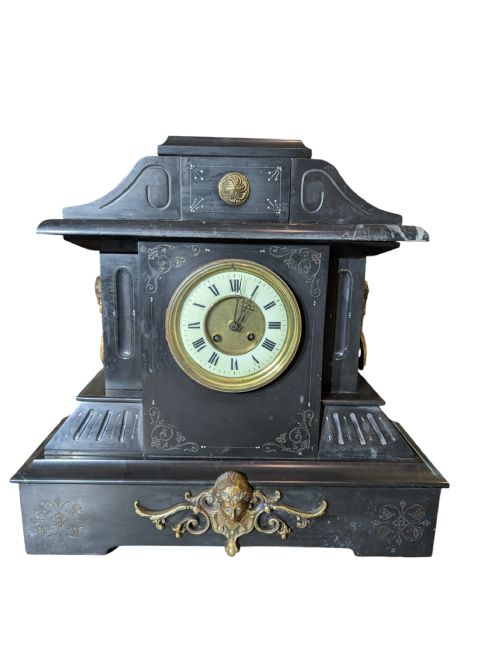
Makers and retailers from regional British towns and continental workshops alike stamped their identities on dials and movements. Buyers meet variations ranging from simple mahogany timepieces to elaborate architectural marble cases and inlaid balloon shapes.
Materials and construction methods
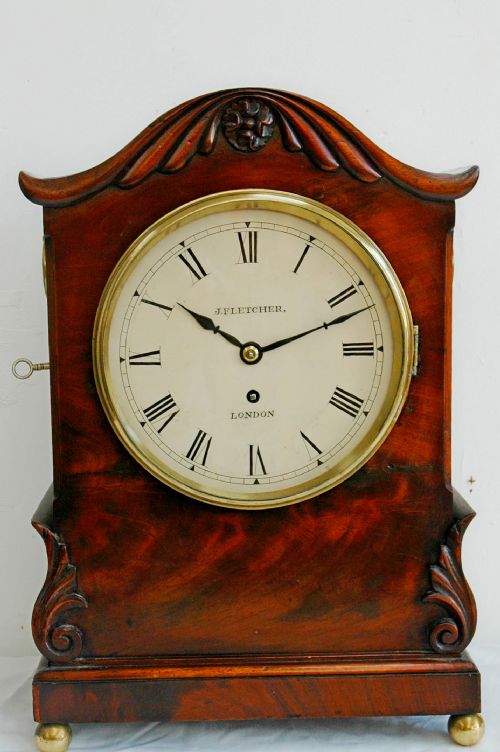
Cabinetmakers constructed the wooden housings using dense timbers such as mahogany, walnut, and oak, frequently incorporating marquetry or brass inlay. Ebonised finishes provided a stark, dark contrast to the polished brass bezels and white enamel dials.
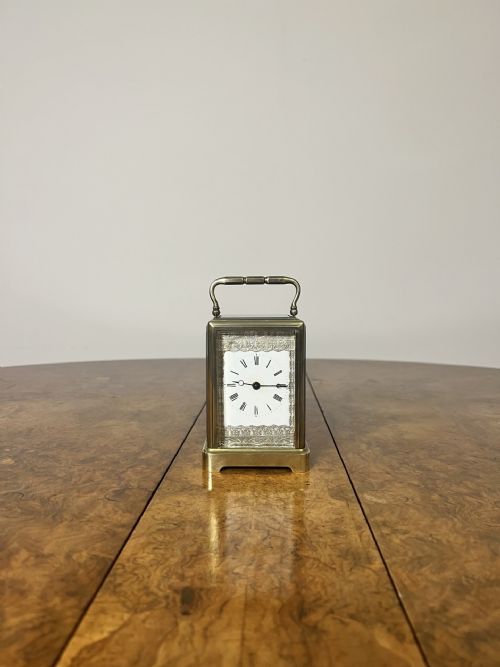
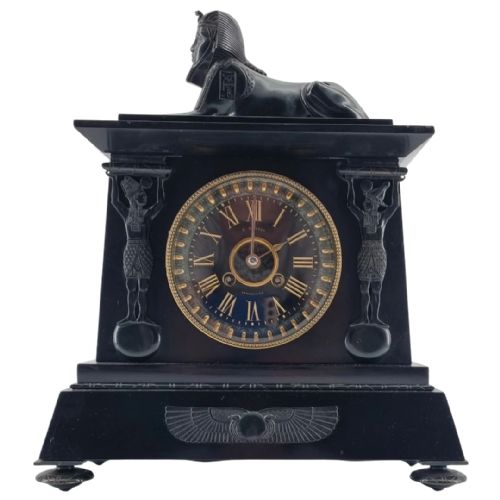
Casting and stone-cutting shaped the heavy marble and brass cases found in architectural and carriage clocks. Skilled metalworkers cast brass frames, while glass protected the delicate hands and porcelain or enamel chapter rings bearing the numerals.
Several vessels ensured maritime timekeeping, evidenced by clocks salvaged from steamships bearing the weight of transatlantic voyages.
Distinctions in craftsmanship
Quality rests in the precision of the interior movement and the crispness of the exterior joinery. Finer pieces display hand-carved mahogany, intricate marquetry, and robust brass mechanisms signed by established makers rather than mass-produced assemblies.
The weight and selection of materials mark the divide between standard production and top-tier workshop output. Solid marble blocks, heavy cast brass carriage frames, and selected burr walnut veneers denote superior construction.
Piggin Norwich·D. Munsey of Cambridge·Henry Marc·Jas Whitelaw of Edinburgh·Van Cleef & Arpels Paris·Luxor·Perigal & Duterrau·Garrard & Co·Baldwin of Loughborough·Armstrong of Manchester
The Roman Numeral Table Clock Glossary
- Bracket clock
- A portable tabletop clock originally designed to sit on a wall bracket. They typically feature heavy wooden cases and fine mechanical movements.
- Carriage clock
- A small, spring-driven timepiece developed for travel, fitted with a carrying handle and glass panels. These often combine brass frames with enamel dials.
- Timepiece
- A clock that indicates the time without possessing a striking mechanism for hours or quarters. Simpler movements define this category.
- Chapter ring
- The circular band on a clock face that bears the numerals. Enamel and painted metal serve as the primary surfaces for these markings.
- Bezel
- The metal ring that holds the glass protecting the clock face in place. Hinged brass bezels allow access to the hands and dial.
Roman Numeral Table Clock: Frequently Asked Questions
Where should I place a heavy marble clock?
Marble mantel clocks require a sturdy, level surface capable of supporting considerable stone weight without shifting.
Position the clock away from direct heat sources and damp environments to protect both the stone and the brass movement inside.
How do I wind a mechanical desk clock?
Insert the appropriate key into the winding arbor on the dial or backplate and turn it gently until resistance is felt. Avoid over-winding, as this can damage the mainspring.
Consult the specific movement type to determine whether the clock requires winding daily or once every eight days.
What is the difference between a bracket clock and a mantel clock?
Bracket clocks historically rested on wall-mounted shelves to project sound further across a room, whereas mantel clocks were designed specifically for fireplace shelves.
Over time, the terms became interchangeable, though bracket clocks often retain heavier wooden or ebonised cases with detailed brass carrying handles.
How do I read roman numerals on an antique dial?
Roman numerals use combinations of letters such as I, V, and X to represent numbers, where I equals one, V equals five, and X equals ten. On clock dials, the number four is traditionally written as IIII instead of IV.
Add or subtract the values depending on their position relative to larger numerals to tell the exact hour.