




Rococo Revival Overmantel
A rococo revival overmantel brings dramatic scrolling curves and light-reflecting glass above a fireplace, anchoring a room with nineteenth-century presence.
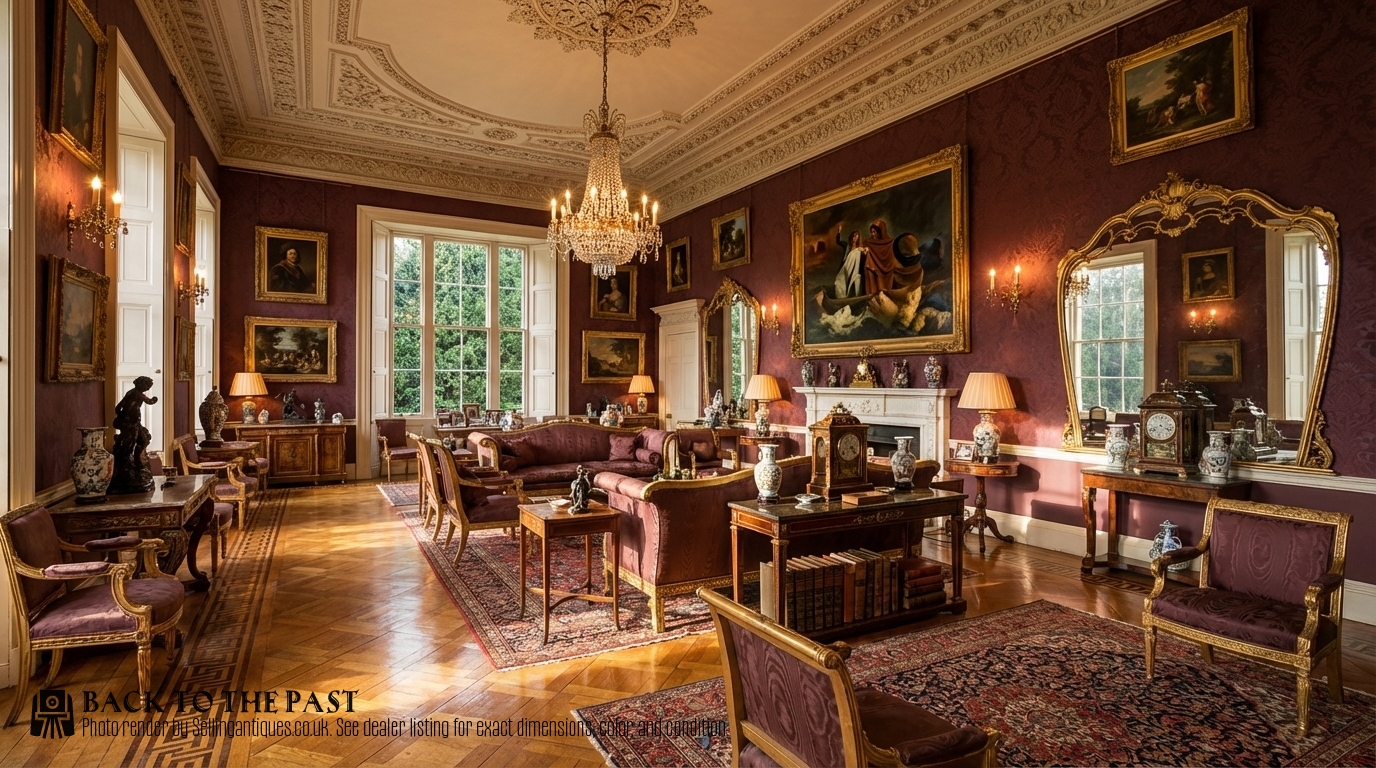
Rococo Revival Overmantel
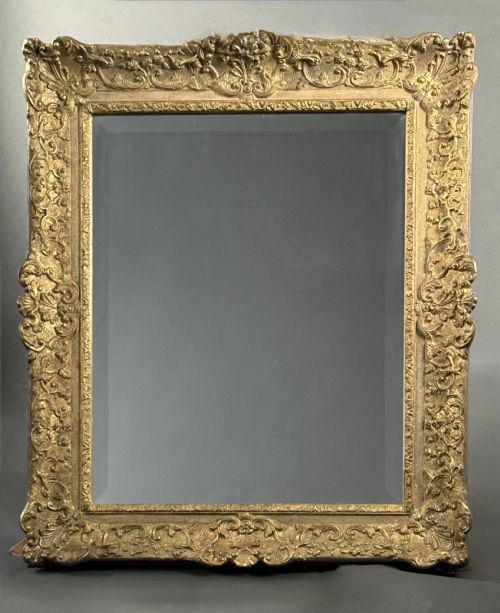
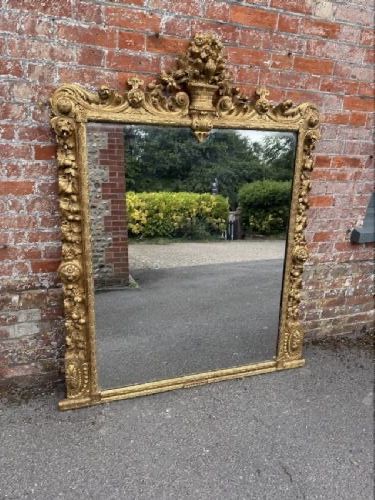
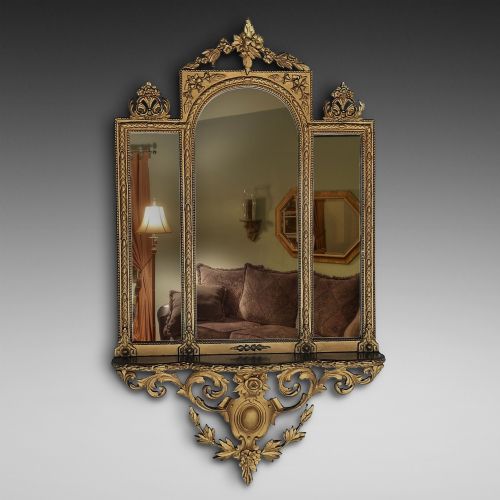
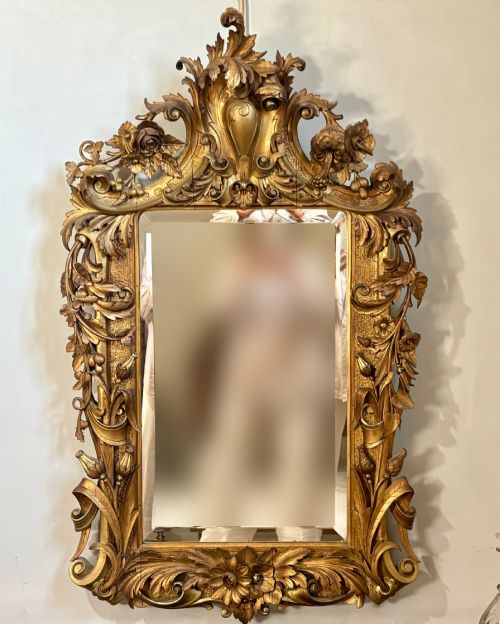
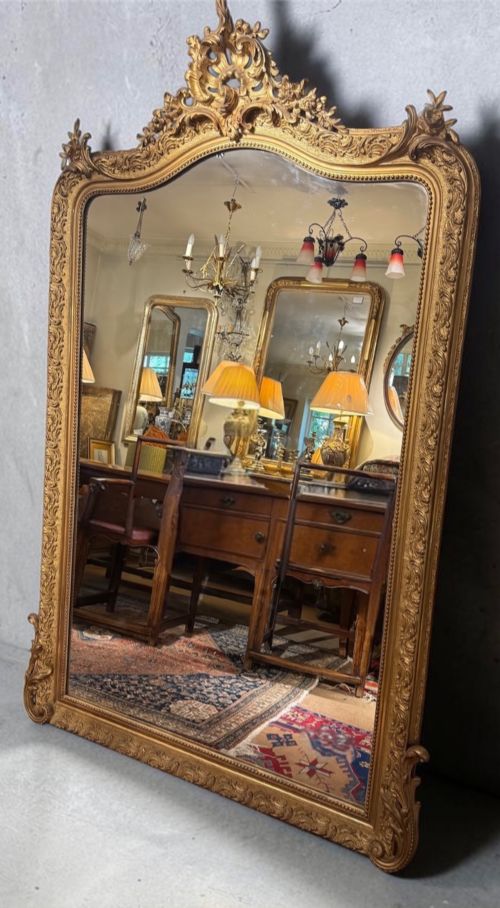
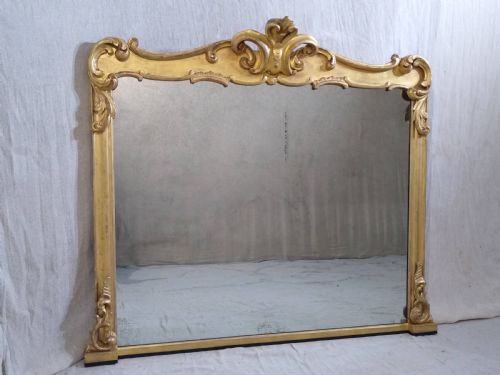
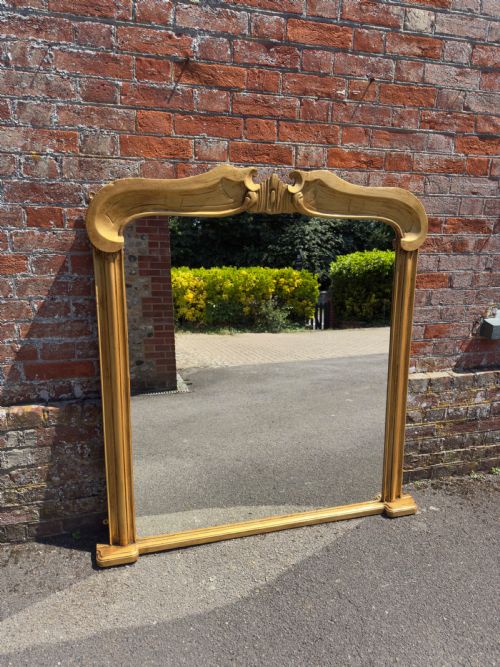
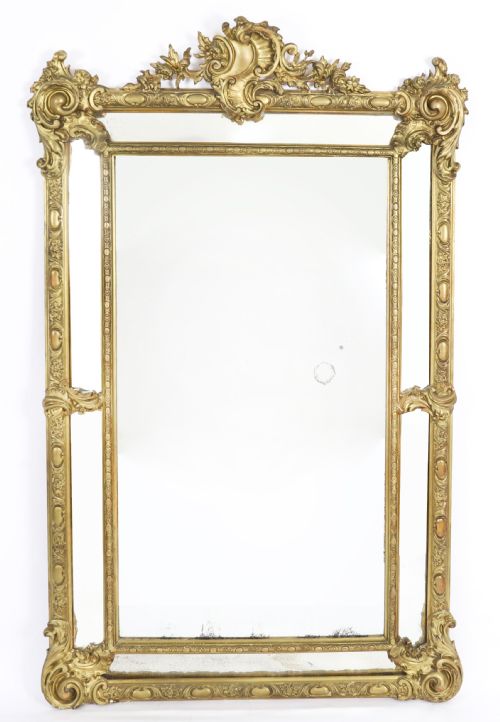
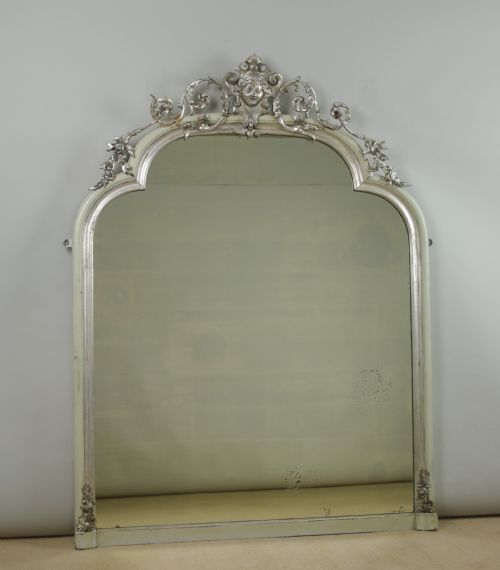
A rococo revival overmantel is a large mirror designed to hang above a mantelpiece, drawing heavily on eighteenth-century French motifs like C-scrolls, asymmetric cartouches, and naturalistic foliage. The versions most commonly found here date from the nineteenth century, spanning Victorian, Edwardian, and French Louis Revival aesthetics.
These architectural fittings often incorporate shaped crestings, arch tops, and cushion frames that dominated domestic interiors during the mid to late eighteen-hundreds. Makers shaped heavy timber and applied ornamental plaster to create sweeping, monumental silhouettes intended to reflect light deep into grand reception rooms.
Materials and Construction
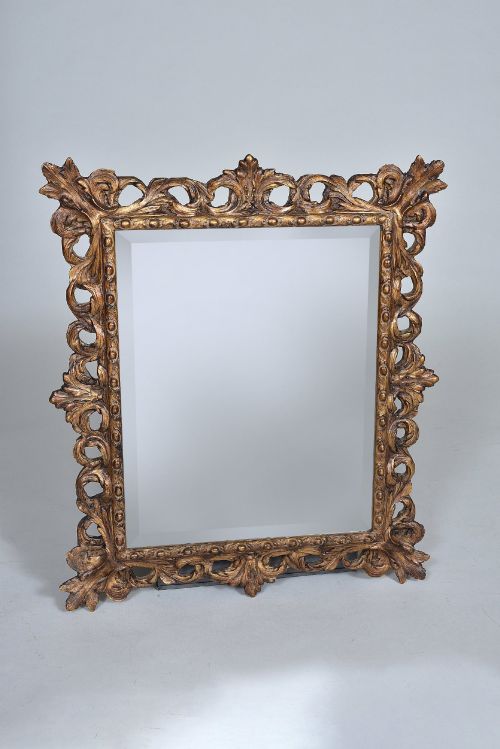
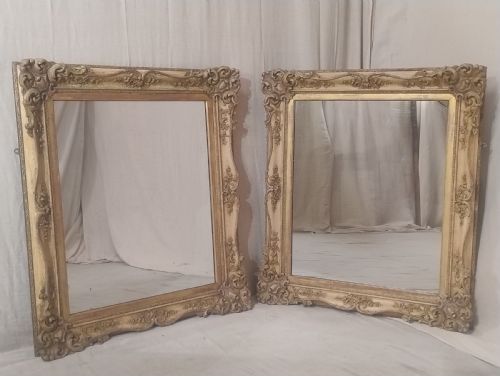
Carved wood and moulded gesso form the structural relief of these frames, providing the crisp foundation required for elaborate scrolling ornament. Artisans applied thin layers of gold leaf or paint over the gesso base to achieve a brilliant, light-catching metallic finish.
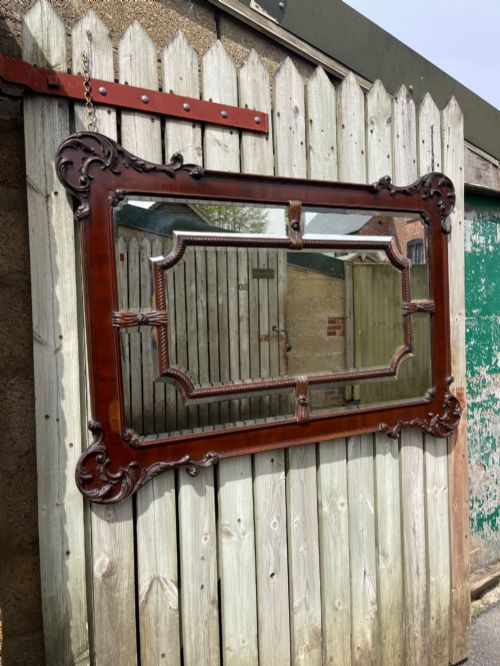
Mirror plates were set into heavy timber carcases, sometimes utilising bevelled glass or sectional panels held securely by traditional backing boards. The combination of carved wood, composition ornament, and gilded surfaces allowed makers to produce ornate frames of substantial scale.
Several mirrors include charming shell motifs, whispering of seaside holidays hidden within grand nineteenth-century drawing rooms.
Distinguishing Quality
Quality rests in the depth and crispness of the carved or moulded ornamentation, where hand-finished detail outshines mass-produced uniformity. Superior examples display deeply undercut foliage and balanced proportions that integrate seamlessly with the central cartouche or arch.
The integrity of the original gilding and the preservation of the antique mirror plate dictate the visual impact of the piece. Subtle distressing and uniform ageing indicate authenticity, whereas clumsy repairs or re-gilding can obscure the original definition of the scrollwork.
Sir Willian Trotter
The Rococo Revival Overmantel Glossary
- Overmantel
- A large mirror or decorative panel specifically scaled to hang on the wall directly above a fireplace mantel. These pieces were central to nineteenth-century interior design.
- Gesso
- A plaster-like mixture applied to wood frames to create a smooth surface for carving or gilding. It allows for intricate relief ornamentation.
- Cartouche
- An ornamental tablet or oval frame design resembling a rolled-up piece of paper, frequently placed centrally on the crest of these mirrors.
- Cushion mirror
- A frame style where the outer edge slopes inward toward the glass plate, creating a rounded, volumetric profile.
- Giltwood
- Timber that has been coated with thin sheets of gold leaf. It remains a defining finish for formal nineteenth-century mirrors.
Rococo Revival Overmantel: Frequently Asked Questions
How do I hang a heavy overmantel safely?
These large mirrors carry considerable weight due to their timber frames and thick glass plates. Secure the hanging fixings directly into the structural wall studs or masonry rather than relying solely on plasterboard.
Employ heavy-duty brackets or mirror plates that distribute the load evenly across the top and lower frame corners.
Can these mirrors be cleaned easily?
Dust the carved and gilded frame gently with a soft, dry brush to prevent accumulating dirt within the intricate scrollwork. Avoid harsh chemical cleaners that can strip the historic gold leaf or damage the gesso.
Use a mild glass cleaner applied to a cloth rather than directly onto the mirror plate to protect the antique backing.
Did they always hang above fireplaces?
While primarily designed to sit on mantelpieces in formal reception rooms, similar large frames also functioned as pier mirrors positioned between windows.
Their substantial scale and reflective qualities were intended to amplify natural daylight in nineteenth-century interiors.
How can I tell the period?
Examine the construction methods visible on the reverse of the frame, including timber types, fixings, and the composition of the gesso. Mid nineteenth-century examples often feature dense hand-carving and distinct patination on the gold leaf.
Later Victorian and Edwardian revivals frequently incorporate machine-moulded composition ornament alongside standard nineteenth-century forms.