


Rococo Revival Display Cabinet
A rococo revival display cabinet brings the fluid asymmetry and gilded warmth of mid-eighteenth-century France into nineteenth-century interiors.
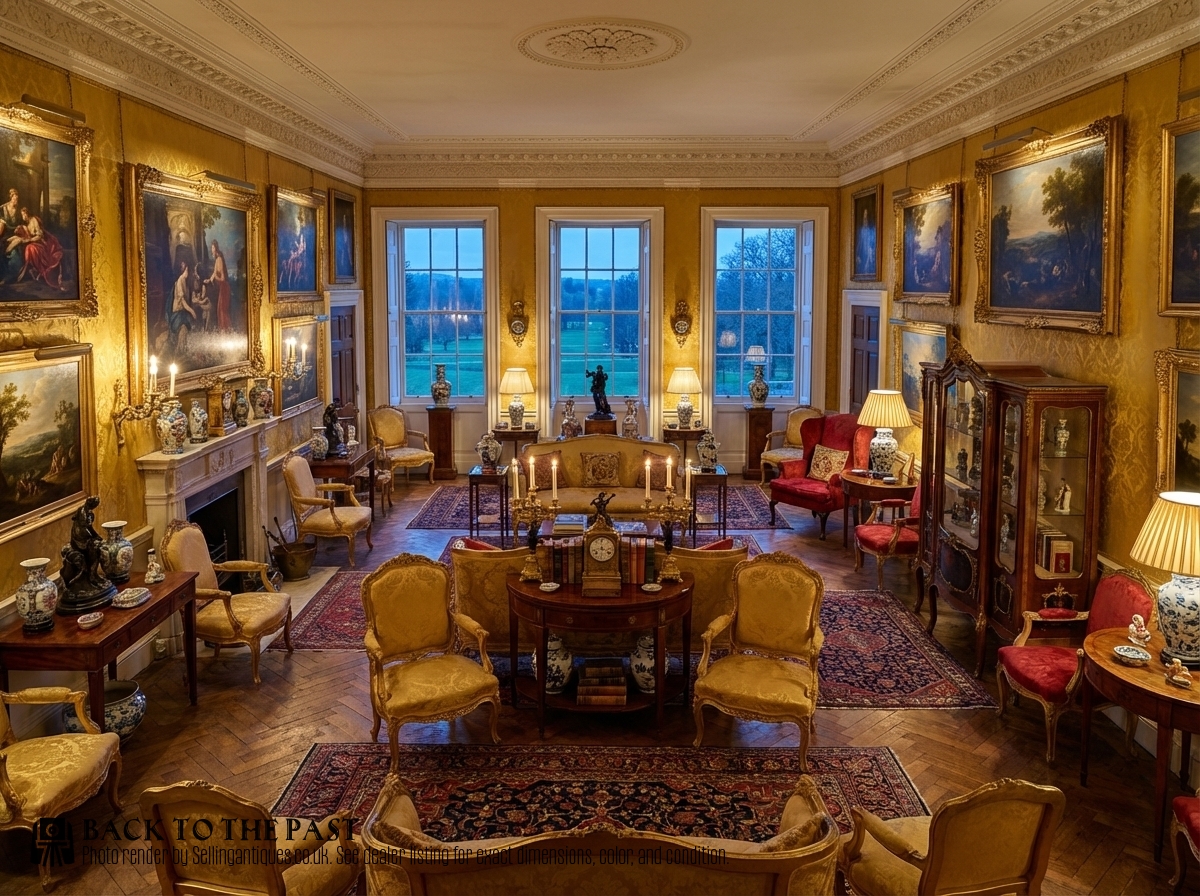
Rococo Revival Display Cabinet
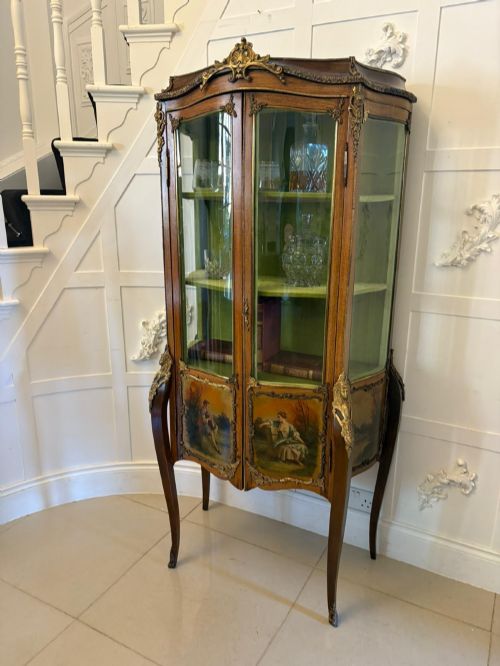
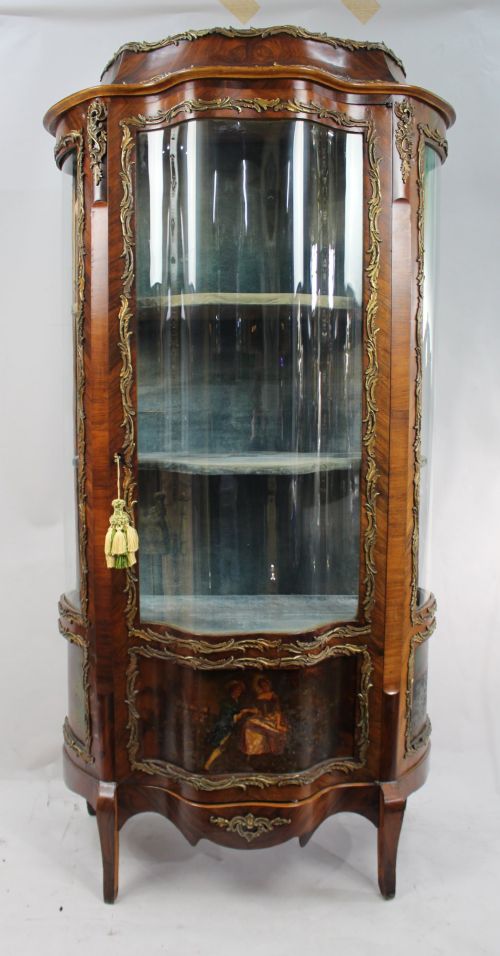
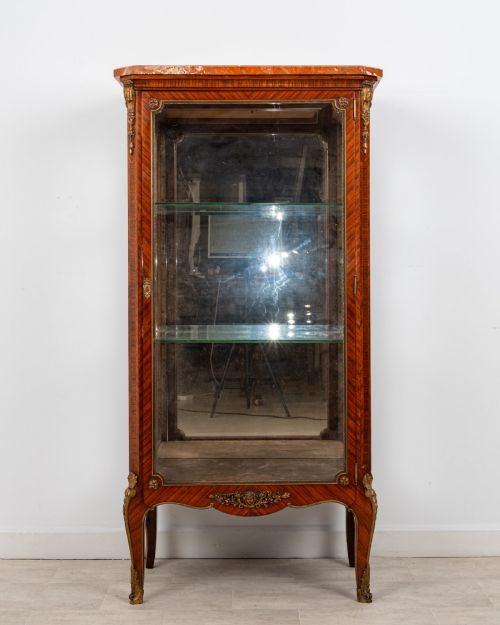
When you search for a rococo revival display cabinet, you encounter nineteenth-century pieces spanning the Victorian and Edwardian eras, alongside French and English interpretations. The most common form on this page is the freestanding glass-fronted vitrine, often shaped with serpentine fronts or bombe contours.
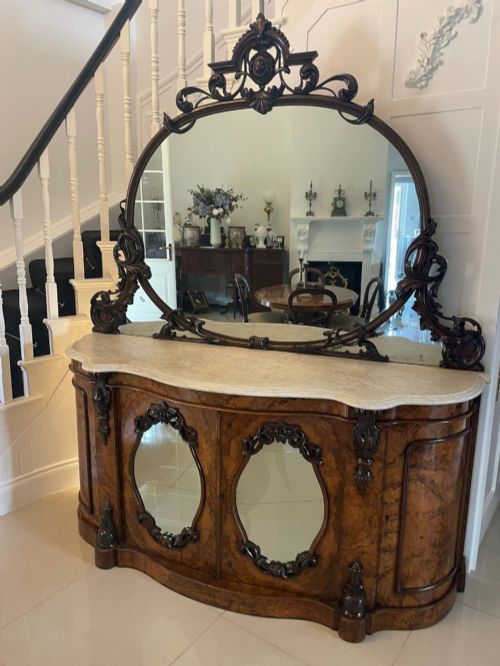
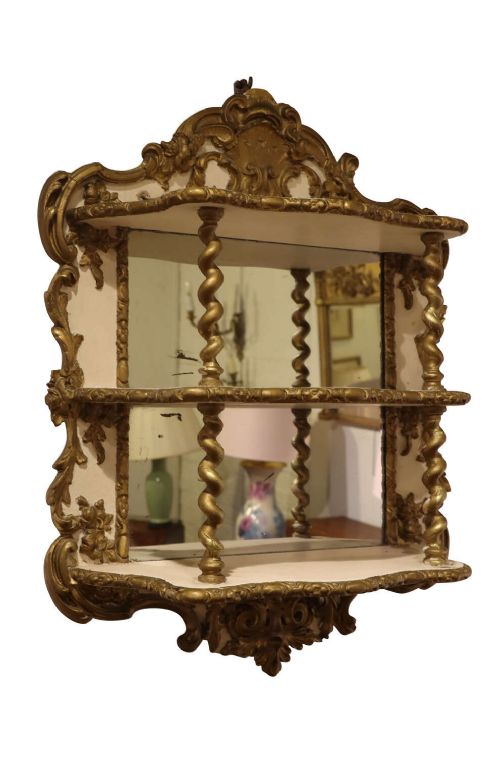
Beyond upright vitrines, the selection includes credenzas, sideboards, and wall-mounted shelves that share the characteristic asymmetrical curves and ornamental mounts of the revival. These pieces originated primarily in France and England during the nineteenth century, utilising revived Louis XV vocabulary to showcase porcelain and decorative objects.
Makers and workshops of the period adopted styles ranging from French Rococo Revival to Louis XV Revival, frequently incorporating painted panels alongside glazed doors. The survival of these glazed cabinets demonstrates their original purpose as protective furniture for fragile porcelain and curiosities.
Materials and technique
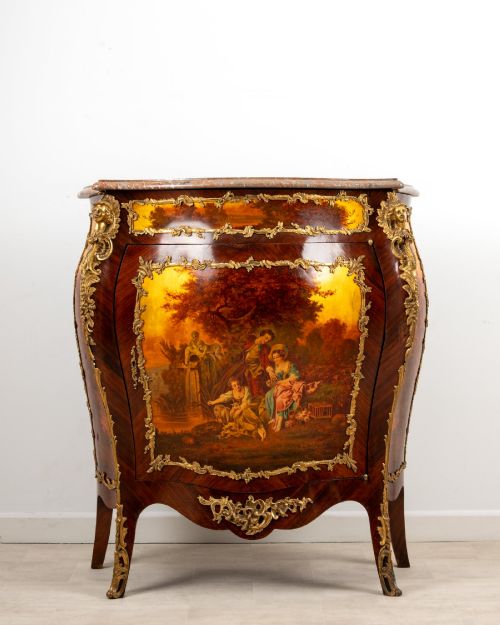
Cabinetmakers constructed these pieces using dense foundational timbers such as mahogany, walnut, and rosewood, frequently applying kingwood and burr walnut veneers in parquetry or marquetry patterns. Vernis Martin painted panels depicting pastoral scenes appear frequently, adding decorative depth to the timber surfaces.
Gilt bronze, or ormolu mounts, cast in elaborate scrollwork and floral motifs, edge the glass panels and frame the serpentine contours of the cabinetry. White or coloured marble tops provide a contrasting, durable surface on many of the French freestanding vitrines.
Listings demonstrate that these cabinets combine glass, kingwood, ormolu, marble, and porcelain within nineteenth-century revival styles.
Defining craftsmanship
The distinction between ordinary and exceptional examples lies in the integration of the bronze mounts and the precision of the cabinetwork. High-quality pieces display crisp, hand-chased ormolu that follows the exact curves of the timber, rather than generic cast fittings applied to flat surfaces.
The fluidity of the carved woodwork and the fidelity of the painted panels determine the artistic merit of the piece. Cabinets bearing maker signatures or attributions to prominent workshops demonstrate superior joinery in their serpentine doors and fitted interiors.
François Linke·Doe and Rogers·Copeland·John Ridgway·Helena Wolfsohn·Meissen·Gillows
The Rococo Revival Display Cabinet Glossary
- Ormolu
- Gilded bronze mounts applied to furniture. This technique provides decorative metallic highlights that accentuate the organic curves of revival pieces.
- Vitrine
- A glass-fronted display cabinet. These pieces protect delicate porcelain and objects while offering a clear view from multiple angles.
- Vernis Martin
- A type of simulated Japanese lacquer developed in France. Artisans applied multiple layers of translucent varnish over painted scenes to achieve a glossy, lustrous finish.
- Bombe
- An outwardly swelling, convex furniture shape. This undulating profile requires skilled veneering to follow the complex curves.
- Marquetry
- The art of applying pieces of veneer to a structure to form decorative patterns. Craftsmen use various coloured woods to create pictorial designs on cabinet doors and panels.
Rococo Revival Display Cabinet: Frequently Asked Questions
What is a rococo revival display cabinet?
A rococo revival display cabinet is a nineteenth-century glass-fronted piece of furniture designed to showcase porcelain and decorative objects. It draws inspiration from eighteenth-century French design, featuring curved lines and ornate mounts.
These pieces typically incorporate glazed sides and doors, wooden veneers, and decorative painted panels. They served both a practical purpose for storage and a decorative role in Victorian and Edwardian drawing rooms.
How were these cabinets used originally?
Households used these cabinets to display imported porcelain, cabinet plates, and small curiosities. The glass protected delicate items from dust while allowing guests to admire the collection.
Positioned in drawing rooms or formal dining spaces, the furniture itself acted as a statement of taste and social standing. The integration of mirrored backs in some variants amplified the light within the display space.
How do I care for a nineteenth-century cabinet?
Maintain a stable room temperature and keep the cabinet away from direct sunlight to protect the wood veneers and painted panels. Dust the carved wooden surfaces and ormolu mounts gently with a dry, soft cloth.
Avoid using modern chemical polishes on the timber or the gilded bronze. Conditioning the wood occasionally with appropriate wax helps preserve the finish without damaging the delicate lacquer or mounts.
How can I distinguish French from English examples?
French cabinets from this period frequently feature bombe profiles, marble tops, and Vernis Martin painted panels with distinct ormolu mounts. Makers in France often emphasised lighter fruitwood veneers and elaborate serpentine shapes.
English interpretations commonly rely on mahogany or walnut frames, sometimes incorporating mirror backs or credenza configurations. The architectural lines on English pieces tend to reflect local Victorian tastes alongside continental revival motifs.