





Francois Linke Style Vitrine
A francois linke style vitrine brings opulent French revival cabinet-making into a room, offering grand glazed display space enriched with fine mounts.
Francois Linke Style Vitrine
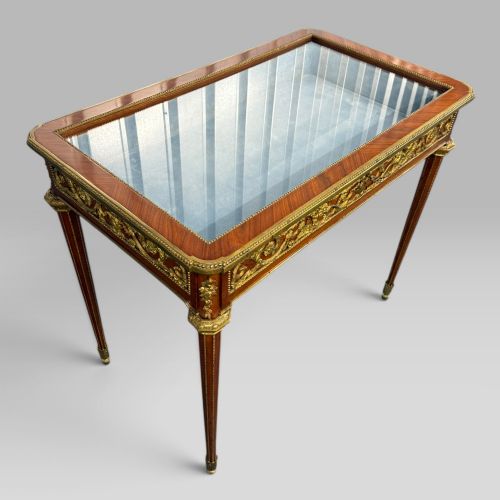
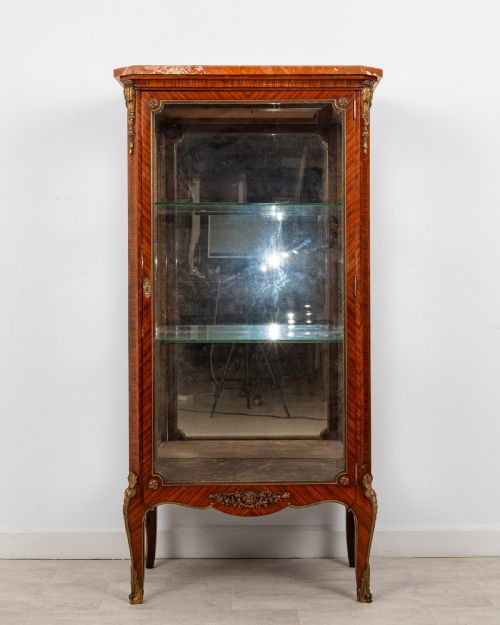
When you search for a francois linke style vitrine, you are looking at elaborate display cabinets and bijouterie display tables rooted in French revival aesthetics. The pieces on this page span the nineteenth century up to the mid twentieth century, capturing the luxurious output associated with master Parisian cabinet-making.
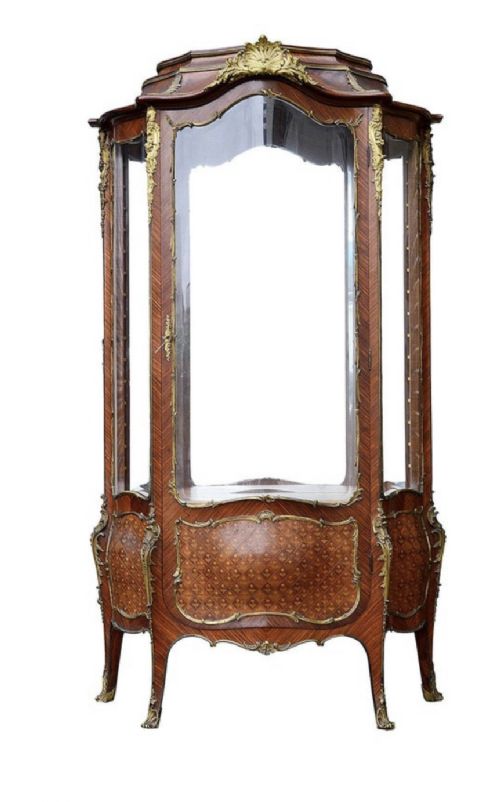
The most common forms you will meet are large glazed vitrines and smaller display tables designed to showcase precious objects. These items draw heavily on Louis XV and Louis XVI design vocabularies, featuring curvaceous Rococo silhouettes or more restrained neoclassical lines.
Makers working in this tradition utilised rich timbers and elaborate metal mounts to recreate the grandeur of historic French chateaux. Whether listed as after François Linke, in his manner, or attributed directly to his workshop, these pieces serve as monumental focal points in sophisticated interiors.
How they were made
Makers constructed these cabinets using dense exotic timbers such as kingwood, rosewood, and mahogany as the foundational carcase. Veneers were applied with precision to create decorative grain patterns across the surfaces, occasionally complemented by painted panels in the Vernis Martin style.
The defining structural and decorative feature is the heavy application of ormalu, or gilt bronze, cast in elaborate rocaille motifs and scrolling foliage. These metal mounts frame the glass doors, accentuate the corners, and protect the feet, requiring exceptional bronze-smithing skills alongside traditional cabinet-making.
Francois Linke Style Vitrine Retail Price Guide 2026
Typical asking prices for francois linke style vitrine among the pieces listed under this phrase on Sellingantiques today, from the lower quarter to the upper quarter. They describe what is for sale here now, not the wider market.
Listings feature pieces spanning the nineteenth century alongside later twentieth-century interpretations, utilising mahogany, kingwood, rosewood, and marble.
What varies in quality
The distinction between ordinary production and the highest grade lies primarily in the crispness and weight of the gilt bronze mounts. Superior pieces display deeply chased ormolu with sharp definition and secure, seamless integration into the timber carcase.
Timber selection and the complexity of the internal and external joinery also separate standard cabinet-making from master work. Superior examples feature finely figured kingwood or rosewood veneers, substantial marble tops, and meticulously fitted glass panels that reflect the ambitious standards of the original Linke workshop.
François Linke
The Francois Linke Style Vitrine Glossary
- Vitrine
- A glass-fronted display cabinet intended for the presentation of porcelain, curiosities, and small decorative objects. These pieces often feature glass on the sides as well as the doors to maximise ambient light.
- Ormolu
- Gilded bronze mounts used extensively to decorate the corners, frames, and feet of fine nineteenth-century French furniture. The technique involves applying a gold amalgam to cast bronze before heating.
- Kingwood
- A dense, richly figured Brazilian timber prized by cabinet-makers for its contrasting dark and golden-brown tones. It was frequently used for geometric veneer work on high-end French revival furniture.
- Vernis Martin
- A type of decorative varnish developed in eighteenth-century France to imitate Asian lacquer work. Cabinets featuring this technique display painted pastoral or mythological scenes beneath a glossy translucent finish.
- Bijouterie table
- A specialised display table featuring a glazed compartment beneath the top surface for showing jewellery and small valuables. These tables often stand on slender cabriole legs with extensive metal mounts.
Francois Linke Style Vitrine: Frequently Asked Questions
What is a francois linke style vitrine?
A francois linke style vitrine is a nineteenth-century or later display cabinet inspired by the luxurious designs of the Parisian cabinet-maker François Linke. These pieces combine elaborate gilt bronze mounts with rich timbers like kingwood and rosewood.
They reflect the revival of Louis XV and Louis XVI styles, offering glazed panels designed to showcase fine porcelain and decorative objects within a grand interior.
How do I date a nineteenth-century vitrine?
Dating these cabinets involves examining the construction methods, the quality of the timber framing, and the style of the cast metal mounts. Pieces produced during the height of the revival period often display heavier, more finely chased ormolu.
Makers working in the decades around nineteen hundred closely emulated eighteenth-century prototypes, sometimes incorporating modern manufacturing techniques while retaining traditional hand-finishing on the veneers.
Where should I place a display cabinet?
These cabinets work best in principal reception rooms or drawing rooms where their grand proportions and reflective glass panels can enhance the space. Positioning them away from direct sunlight protects the delicate wood veneers and fabric linings from fading.
Because many examples feature glass on all sides, placing them where light passes through allows the displayed objects to be viewed from multiple angles.
What is the difference between Louis XV and Louis XVI styles?
Louis XV furniture is characterised by asymmetrical curves, flowing rocaille motifs, and undulating serpentine shapes. Cabinets from this tradition embrace organic movement and ornate ormolu mounts that wrap around rounded corners.
Louis XVI style moves towards neoclassical symmetry, featuring straight lines, fluted columns, and rectilinear framing. Vitrines in this latter taste display geometric restraint while maintaining luxurious material standards.