

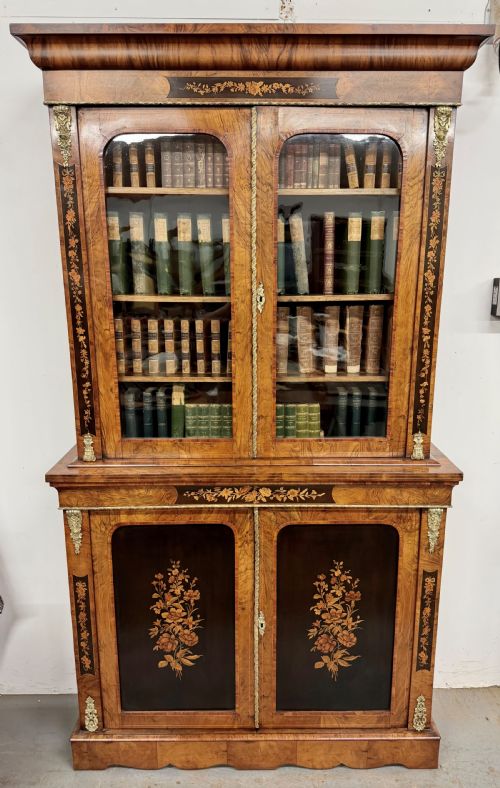
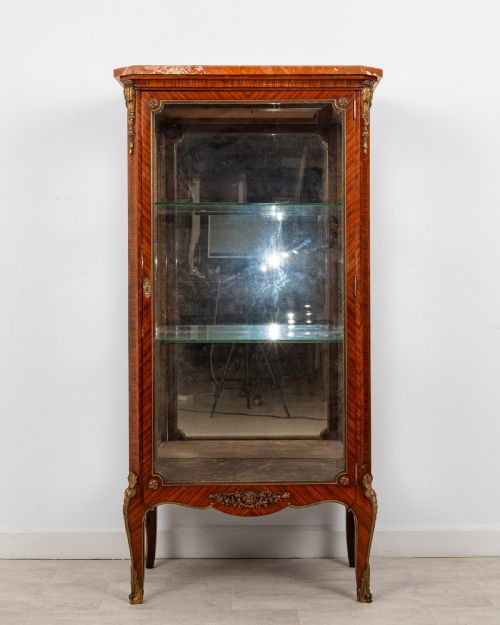


French Marquetry Display Case
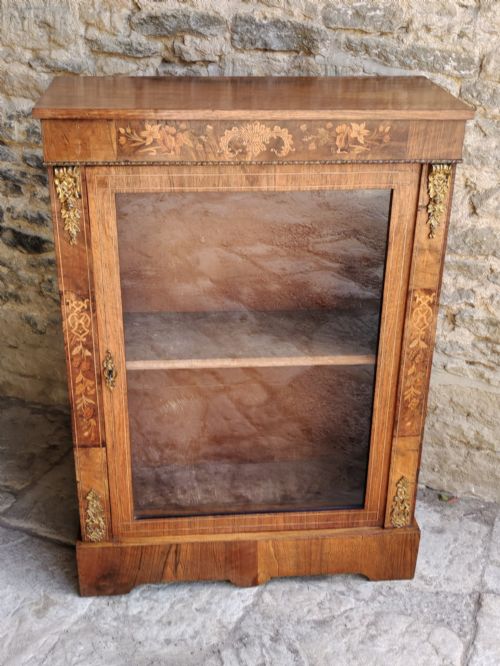
A french marquetry display case marries intricate floral woodwork with gilt metal mounts to present treasured objects behind glass.
French Marquetry Display Case
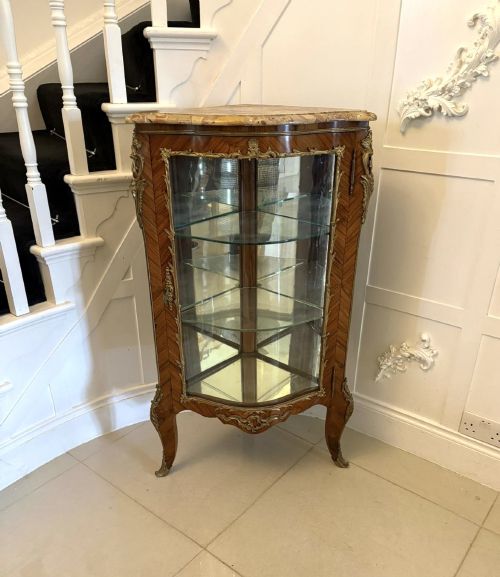
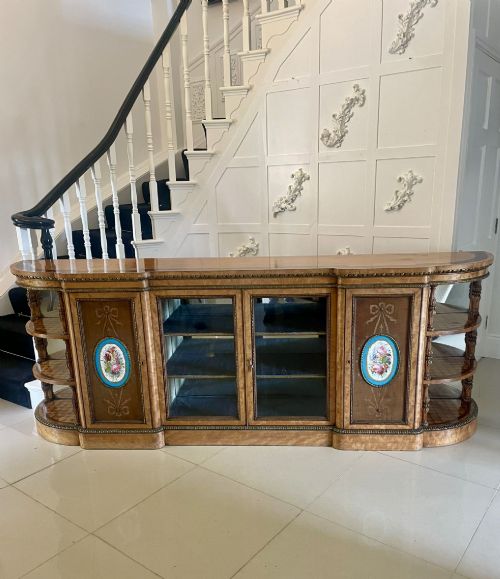
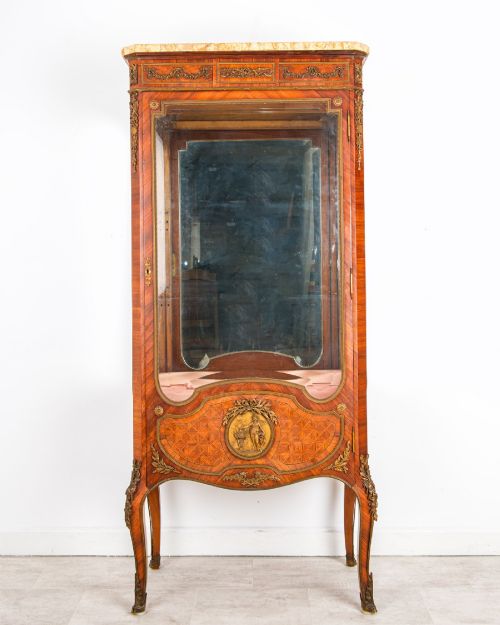
A french marquetry display case encompasses tall vitrines, pier cabinets, and serpentine corner cabinets designed to showcase valuables in reception rooms. Buyers encounter nineteenth-century pieces alongside Edwardian examples, spanning forms from freestanding glazed cabinets to low side cabinets and tabletop bijouterie cases.
The aesthetic draws heavily from Louis XV and Napoleon III revivals, featuring curved glass fronts, bowed doors, and occasionally marble tops. Kingwood, walnut, and ebonised wood dominate the structural carcass, providing a dark, contrasting backdrop for the elaborate surface patterns.
Materials and Construction
Cabinetmakers constructed these pieces using dense hardwoods like kingwood, walnut, and satinwood, applying finely sliced veneers to form detailed marquetry pictorial scenes or geometric motifs. Boulle work appears frequently, setting intricate brass and tortoiseshell inlay into ebonised timber surfaces.
Gilded bronze or ormolu mounts frame the glazed doors, corners, and aprons, secured with heavy cast brass hinges and locks. Cast marble slabs frequently cap the upper surfaces of corner cabinets and vitrines, adding weight and a cool tactile contrast to the polished timber.
French Marquetry Display Case Retail Price Guide 2026
Typical asking prices for french marquetry display case among the pieces listed under this phrase on Sellingantiques today, from the lower quarter to the upper quarter. They describe what is for sale here now, not the wider market.
Materials span burr walnut, kingwood, satinwood, and ebonised timber complemented by marble tops and cast ormolu mounts.
Assessing Quality
The standard of a french marquetry display case rests on the crispness of the brass and wood cutting, where tightly fitted veneer junctions reveal the hand of a skilled marqueterie cutter. Inferior examples rely on stamped transfers or lazily cut floral panels that lack the depth and shadow of genuine contrasting timbers.
Mount quality dictates the upper tier of production, distinguishing workshop pieces from mass-manufactured items by the chiselling and fire-gilding of the ormolu. Heavier cast bronze mounts with sharp, clean detailing indicate superior cabinetmaking, particularly when signed by known makers.
François Linke·G. Durand
The French Marquetry Display Case Glossary
- Marquetry
- A technique where small pieces of veneer are arranged to form decorative pictures or patterns. It relies on contrasting natural wood colours to create shaded pictorial depth.
- Ormolu
- Gilded bronze mounts applied to furniture edges and feet for ornamentation. This decorative brass-like finish was cast and hand-chiselled before gilding.
- Vitrine
- A glass-fronted cabinet designed for displaying porcelain, curiosities, and fine objects. The glazed panels allow light to enter from multiple angles.
- Boulle
- A style of marquetry using tortoiseshell and brass inlay developed in France. The contrasting materials create a striking metallic sheen against dark wood.
- Bijouterie
- A low display table or cabinet specifically proportioned for small jewels and trinkets. These pieces often feature glazed tabletops and velvet-lined interiors.
French Marquetry Display Case: Frequently Asked Questions
What is a french marquetry display case used for?
These cabinets were originally built to display porcelain, silver, and treasured miniatures in formal reception rooms. The glass panels and mirrored backs allowed guests to inspect delicate collectibles from multiple angles.
Today, they serve the same purpose in domestic interiors, protecting fragile objects from dust while adding considerable warmth and texture to a room.
How do I care for antique veneer and ormolu?
Protect the timber surfaces by keeping cabinets away from direct sunlight and steady heat sources that can dry out old glues and warp veneers. Dust regularly with a dry, soft cloth and avoid modern aerosol polishes.
Ormolu mounts require gentle cleaning with a dry brush to remove dust from crevices. Liquid cleaners should be kept away from both the gilt bronze and the surrounding wood.
How do I distinguish nineteenth-century styles?
Nineteenth-century pieces often draw heavily on earlier French royal aesthetics, particularly the curved lines and asymmetrical floral marquetry of Louis XV revival work. Napoleon III pieces frequently utilise ebonised wood paired with bold brass and tortoiseshell Boulle inlay.
Later Edwardian interpretations tend to feature lighter mahogany or satinwood timbers with more restrained floral garlands and simpler framing.
Are these cabinets suitable for small rooms?
Many forms are well suited to compact spaces, particularly corner cabinets designed to utilise awkward angles or narrow pier cabinets that occupy minimal floor space. Tall glass doors also create an optical illusion of depth in smaller interiors.
Tabletop bijouterie cases offer another alternative, providing display space without adding bulk to a room's footprint.