

Kingwood Ormolu Cabinet
When choosing a kingwood ormolu cabinet, you look for the rich contrast of violet-brown veneers paired with bright cast brass mounts.
Kingwood Ormolu Cabinet
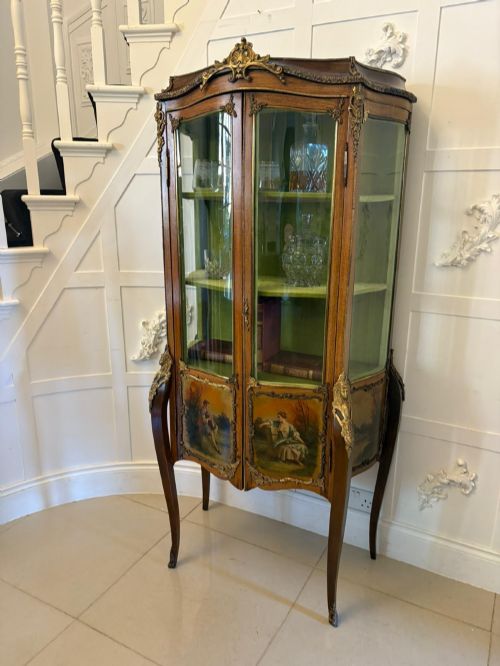
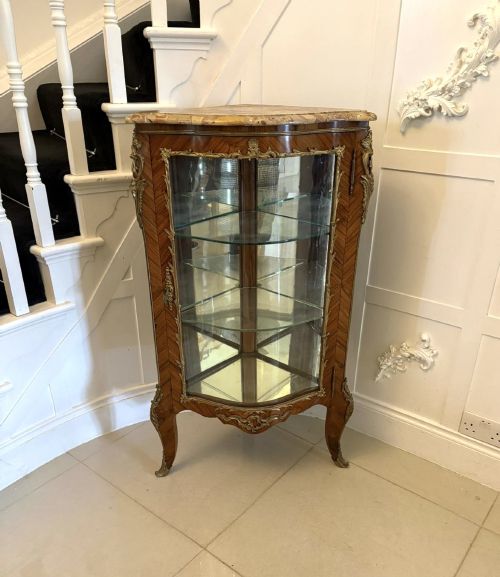
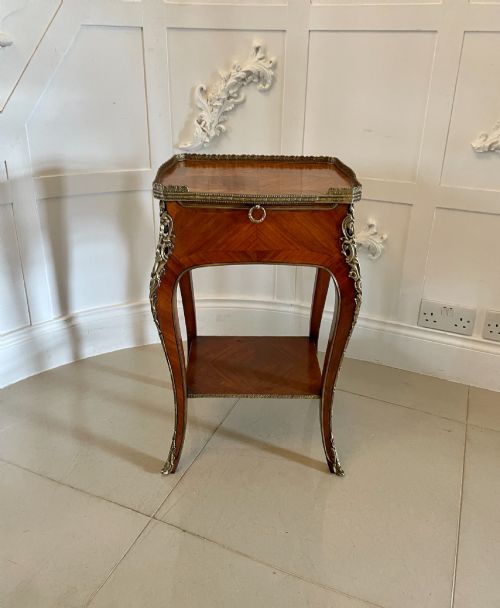
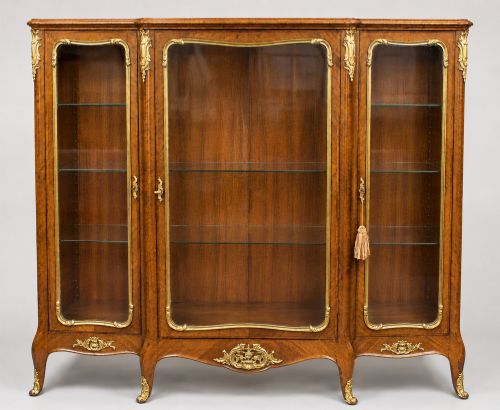
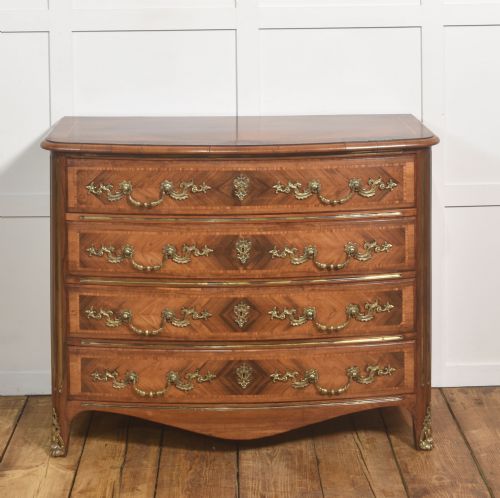
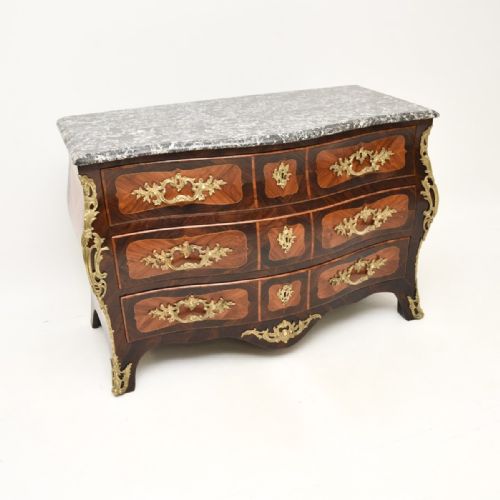
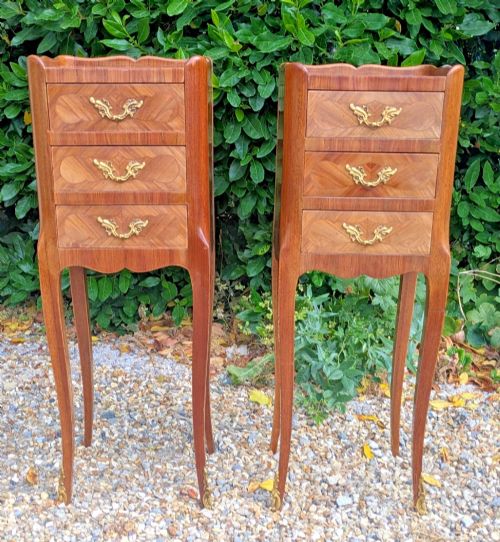
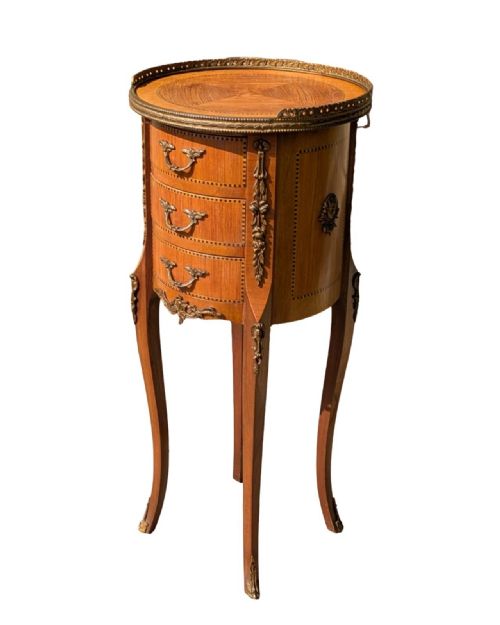
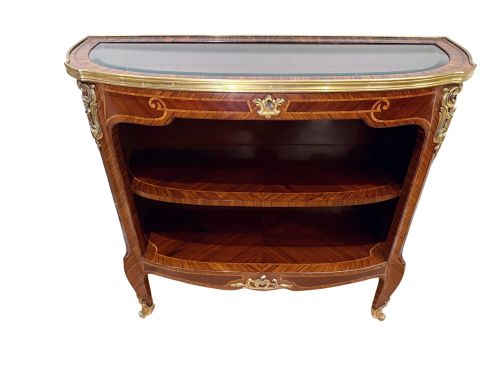
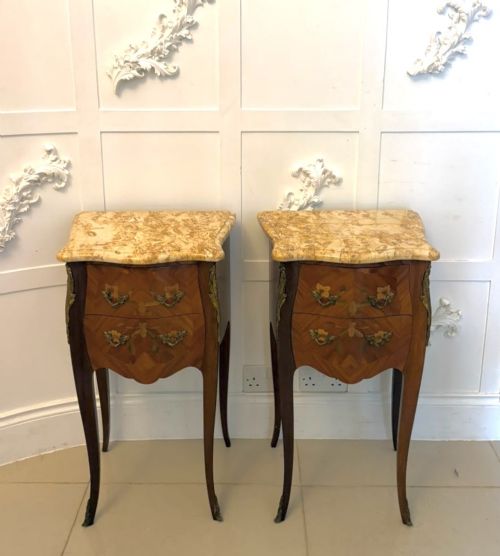
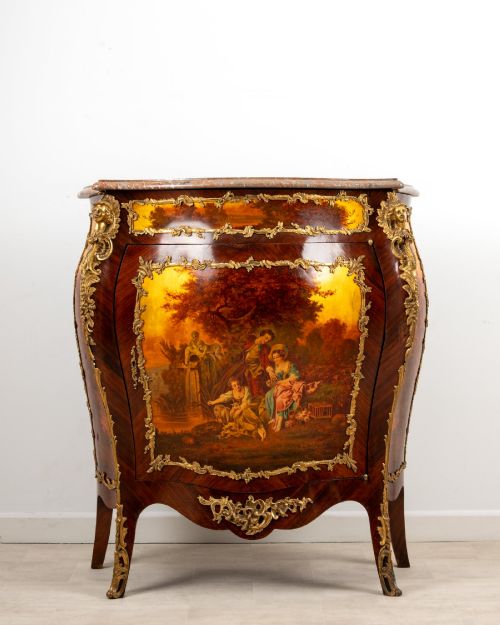
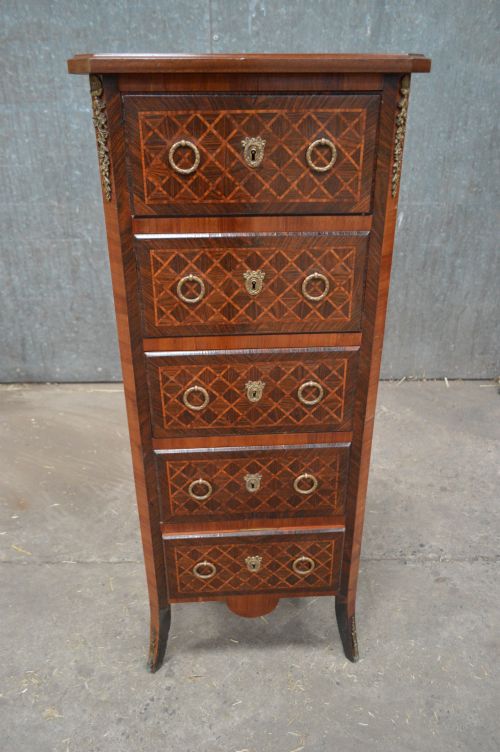
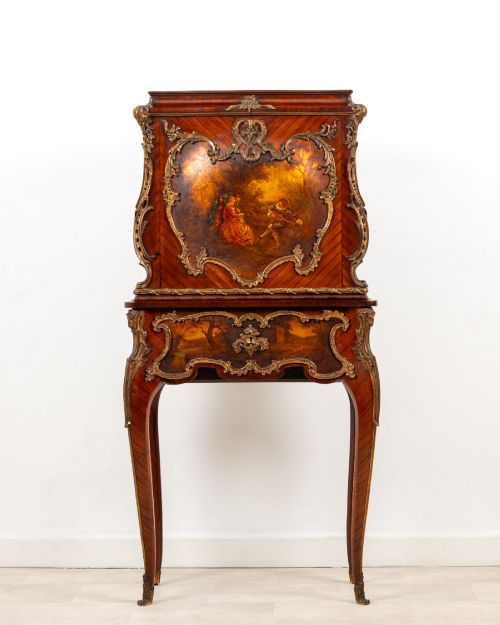
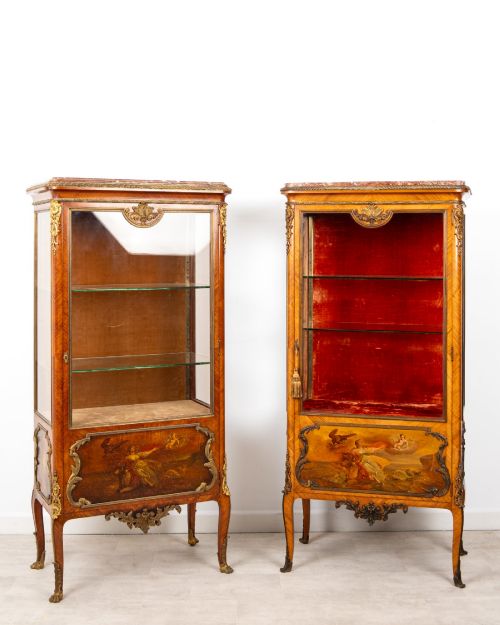
A kingwood ormolu cabinet combines richly figured exotic timber with decorative cast bronze details, following French revival designs from the nineteenth century onwards. Buyers frequently encounter vitrines, commodes, and bedside cabinets showcasing serpentine forms and marquetry inlay.
Most surviving examples date from the Victorian period through to the early twentieth century, drawing heavily on Louis XV and Rococo aesthetics. These items served as focal points in formal reception rooms for displaying porcelain and holding correspondence.
How they were made
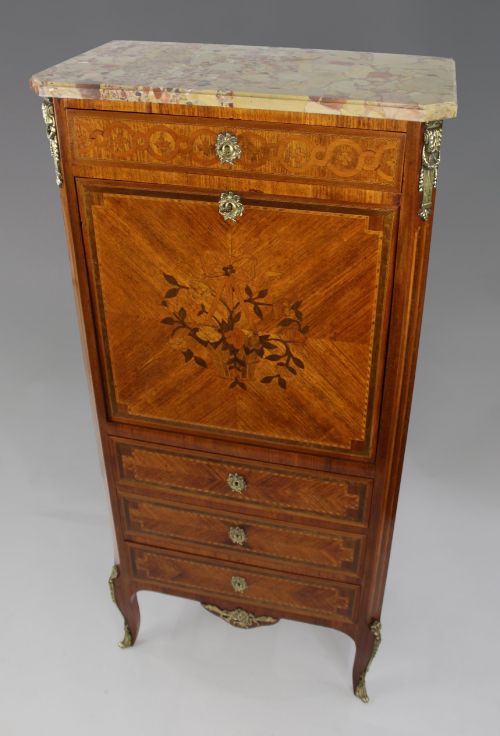
Cabinetmakers laid delicate kingwood veneers over sturdy foundational timbers like oak or walnut, often arranging the grain in intricate parquetry or floral marquetry patterns. Slabs of shaped marble, frequently white or veined, were then fitted closely to the tops of commodes and display cabinets.
Gilt bronze or ormolu mounts were cast, chased by hand, and screwed onto the corners, feet, and aprons to accentuate the curved contours of the furniture. Glass panels and mirrored backs were integrated into vitrines to amplify light within the display compartments.
Some petite bedside cabinets include hidden drawers designed specifically for midnight reading materials.
What varies in quality
The crispness of the ormolu chasing sets finer pieces apart, where individual leaf and scroll details retain sharp definition rather than soft, muddy edges. Heavier, more substantial bronze mounts generally indicate a workshop that invested greater time in finishing.
The precision of the veneer work also defines the tier of the piece, with tightly aligned geometric patterns and balanced wood figures marking superior cabinetmaking. Original marble tops free from heavy restoration further elevate the standing of an item.
Jacques Bircklé·E. Kahn·François Linke·Blake·Sormani·Victor Raulin
The Kingwood Ormolu Cabinet Glossary
- Ormolu
- Gilded bronze used for decorative mounts on furniture and clocks. The technique involves applying a gold amalgam to cast bronze before heating.
- Kingwood
- A dense, heavy Brazilian timber displaying distinctive violet-brown colouring with darker streaks. It gained widespread use in high-end French cabinetmaking during the eighteenth and nineteenth centuries.
- Vitrine
- A glass-fronted display cabinet designed for porcelain and curiosities. These pieces often feature mirrored interiors and glazed side panels.
- Vernis Martin
- A form of simulated Japanese varnish developed in France, used to create polished painted panels on cabinets and commodes.
- Marquetry
- Inlaid wood veneers assembled to form pictorial or geometric patterns on furniture surfaces. Craftsmen select contrasting timbers to achieve tonal depth.
Kingwood Ormolu Cabinet: Frequently Asked Questions
What is a kingwood ormolu cabinet used for?
These cabinets function as display spaces for ceramics and precious items, while commodes and side cabinets provide enclosed storage for household linen or papers. Their decorative surfaces make them suited for principal reception rooms.
Smaller iterations, such as bedside tables and vitrines, serve functional roles in bedrooms or smaller studies while maintaining a decorative presence.
How do I identify the period of a cabinet?
Examination of the internal construction timbers, screw types, and veneer backing helps determine whether a piece originates in the nineteenth century or the twentieth century. Stylistic markers also point toward specific revival movements.
Signatures or stamps on the bronze mounts or carcase wood occasionally reveal the workshop or maker responsible for the piece.
How do I care for marble and wood?
Polishing kingwood requires soft cloths and conservation wax to preserve the sheen of the veneer without building up heavy residue. Direct sunlight should be avoided to prevent the timber from fading.
Marble tops benefit from prompt wiping of spilled liquids to prevent staining, using mild soap and water rather than acidic cleaners.
Are these cabinets purely French in origin?
The majority of pieces following this style originate from French workshops in Paris, reflecting the enduring influence of Louis XV designs. British cabinetmakers also adopted these continental forms during the Victorian era.
Both French and English makers utilised imported kingwood and cast ormolu mounts to satisfy demand for revival furniture.