




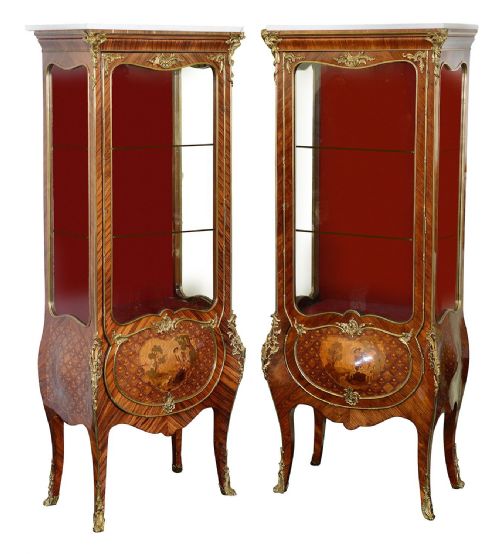


Bombe Glazed Cabinet
A bombe glazed cabinet brings sweeping curves and rich timber into a room, offering display space for treasured collections.
Bombe Glazed Cabinet
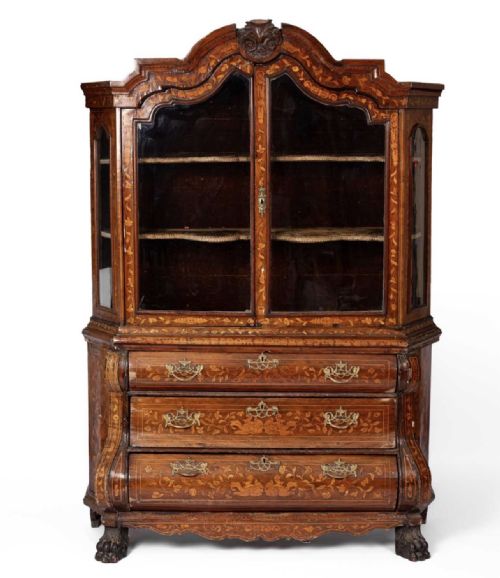
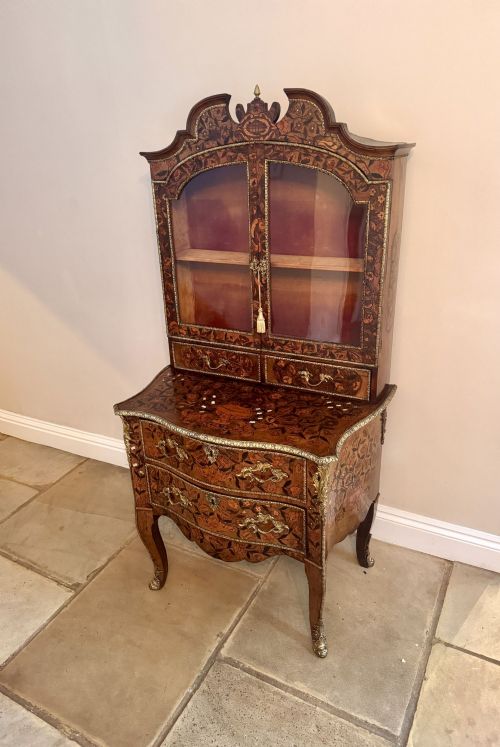
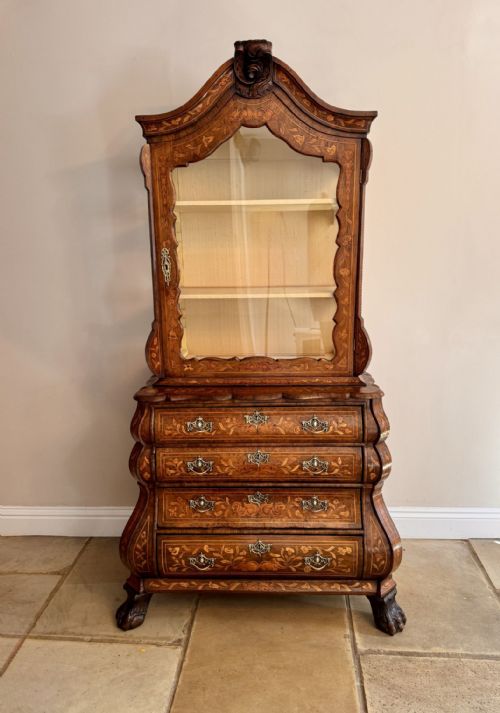
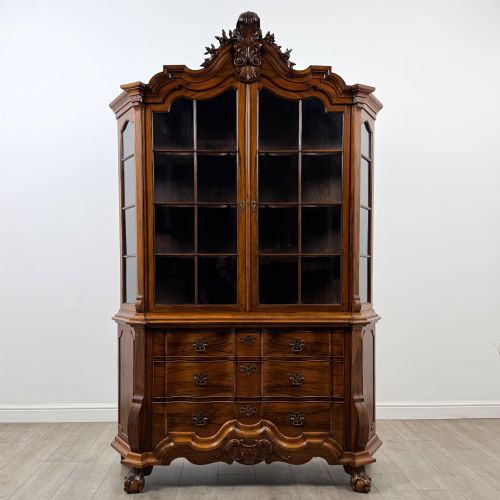
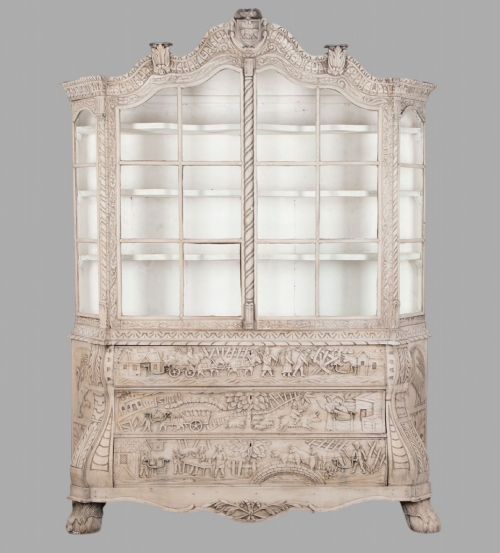
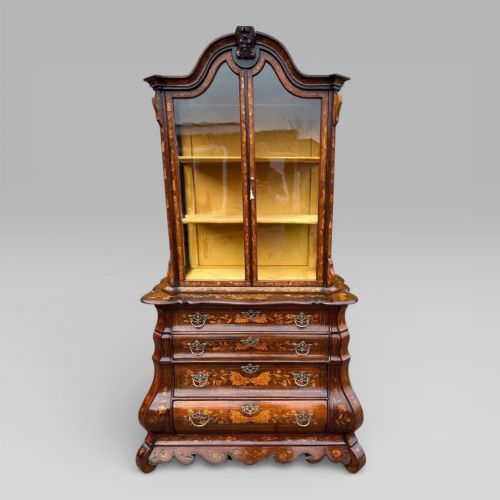
A bombe glazed cabinet combines a bulbous, swelling lower section with glass-fronted upper display space. These statement pieces emerge primarily in Dutch and French designs, spanning periods from the eighteenth century through to the early twentieth century.
The form appears in various configurations, including tall cabinets on chests, freestanding vitrines, and bookcase combinations. Walnut and kingwood provide the main structural timbers for these grand display items.
Dutch Baroque and Louis XV revival styles dominate the selection, bringing substantial presence and curved silhouettes to domestic interiors.
Materials and construction methods
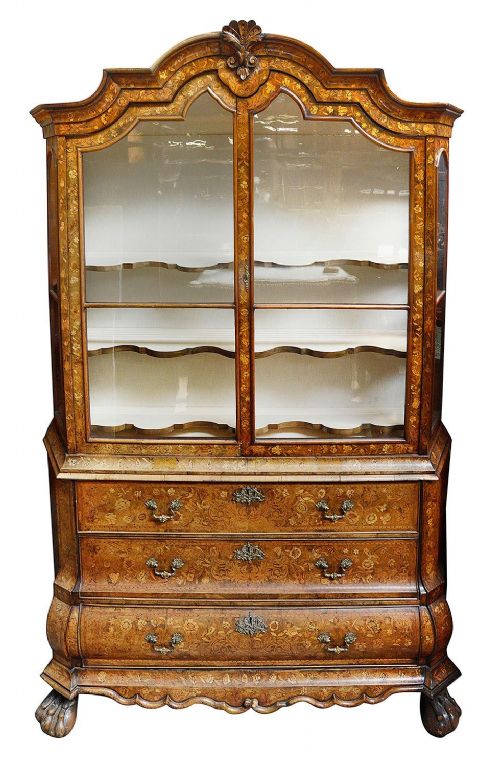
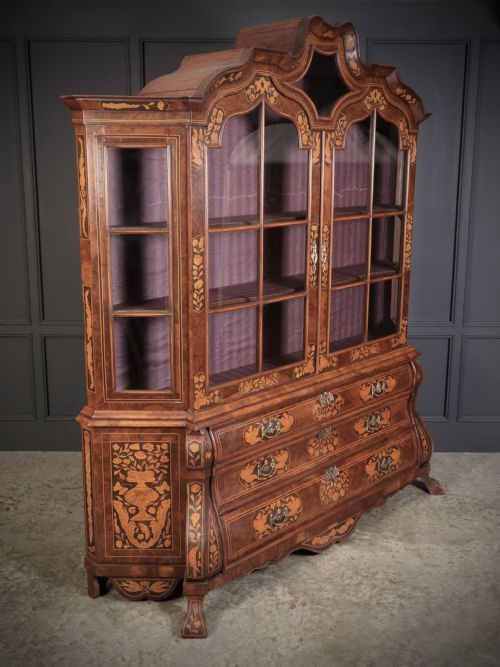
Cabinet makers utilised solid woods such as oak and fruitwood for internal carcases, applying richly figured veneers of walnut and kingwood to the exterior surfaces. Marquetry panels feature intricate floral and botanical inlays created from contrasting timbers.
Glazing bars segment the glass doors, while cast brass and ormolu mounts accent the corners, feet, and key escutcheons. Vernis Martin lacquer appears on select pieces, adding painted decorative scenes beneath a clear finish.
Bombe Glazed Cabinet Retail Price Guide 2026
Typical asking prices for bombe glazed cabinet among the pieces listed under this phrase on Sellingantiques today, from the lower quarter to the upper quarter. They describe what is for sale here now, not the wider market.
Listings feature walnut, kingwood, and oak as primary structural and veneer materials across eighteenth and nineteenth-century periods.
Distinctions in craftsmanship
Quality rests upon the fluency of the swelling bombe contour and the precision of the veneer matching across curved surfaces. Finer examples display meticulous marquetry work where floral inlays remain crisp and well-aligned.
The weight and detail of the cast brass or ormolu mounts signal superior workshop production. Interior timber selection and the clarity of the glazed panels further separate standard production from exceptional cabinet work.
Edwards and Roberts
The Bombe Glazed Cabinet Glossary
- Bombé
- A swelling, outward-curving profile characteristic of baroque and rococo furniture forms. This convex shaping requires advanced woodworking skill to achieve symmetrical curves.
- Marquetry
- Decorative veneer work forming intricate patterns using various coloured woods. Artisans cut thin pieces of timber to fit together like a puzzle before applying them to the carcase.
- Ormolu
- Gilded bronze mounts used for decorative and protective hardware on fine furniture. The technique involves applying a gold amalgam to cast bronze.
- Vitrine
- A glass-fronted cabinet designed specifically for displaying porcelain, curiosities, or silver. These display cases emphasise visibility from multiple angles.
- Vernis Martin
- A simulated Japanese lacquer finish developed in eighteenth-century France. This translucent varnish technique created glossy painted scenes on cabinet doors.
Bombe Glazed Cabinet: Frequently Asked Questions
What is a bombe glazed cabinet?
A bombe glazed cabinet is a display piece featuring a rounded, bulging lower body and glass doors above. These cabinets showcase collections while serving as major decorative furniture items.
Originating in continental workshops, they draw upon Dutch and French design traditions. The curved silhouette sets them apart from straight-sided bookcases and vitrines.
How do I style a bombe glazed cabinet?
Position the cabinet against a flat wall where its curved profile can catch natural light. Ensure adequate clearance around the piece so the swelling proportions remain visible.
Use the interior shelves to display ceramics, glassware, or small sculptures. Keep surrounding furnishings simpler to let the rich wood veneers and brass mounts stand out.
How do I date a bombe cabinet?
Examine the secondary timbers inside drawers and behind panels to understand the period of construction. Eighteenth-century examples often display hand-cut dovetails and native European hardwoods.
Revival pieces from the nineteenth and twentieth centuries may utilise machine-sawn elements alongside historical revival styles. The complexity of the marquetry and the style of the brass mounts also point toward specific decades.
Are these cabinets purely Dutch?
While many pieces reflect Dutch Baroque and marquetry traditions, French design heavily influences the selection. Louis XV revival and transitional styles appear frequently among the pieces.
French workshops favoured kingwood veneers and ormolu mounts, whereas Dutch makers often utilised walnut and intricate floral marquetry.