


French Louis XV Style Vitrine
A french louis xv style vitrine brings glass-fronted display and serpentine elegance into a room through carved curves and gilt mounts.
French Louis XV Style Vitrine
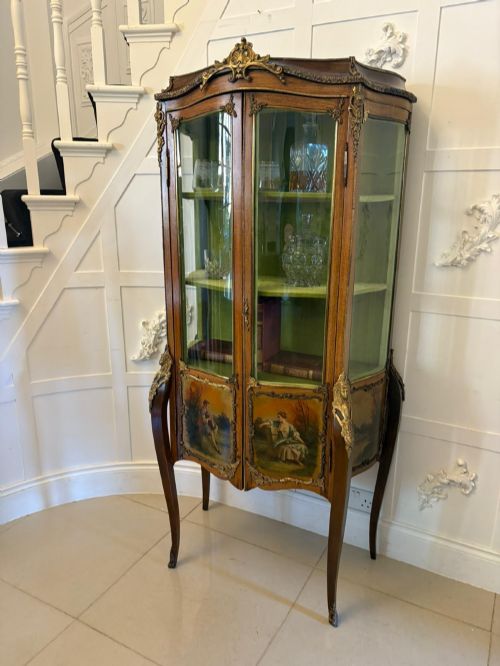
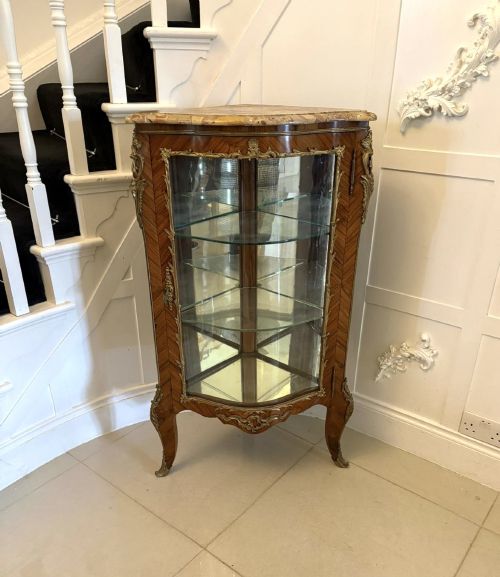
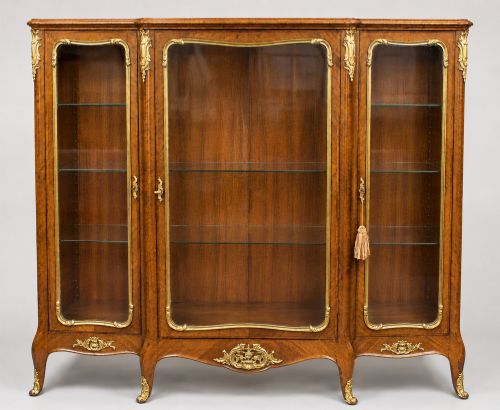
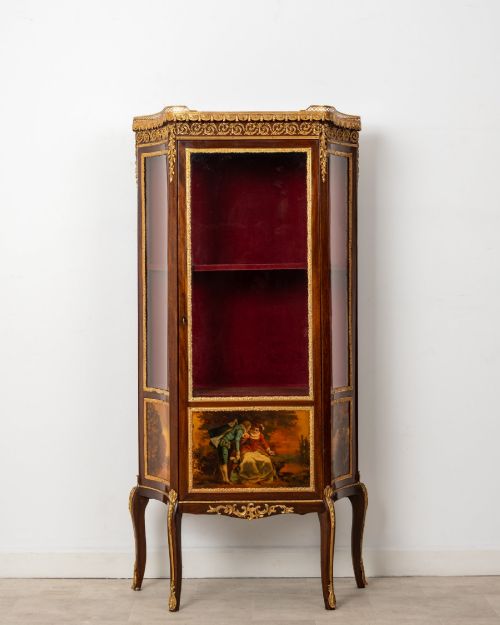
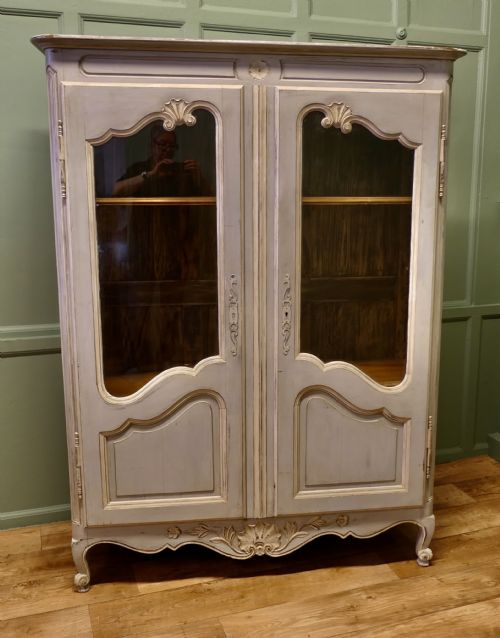
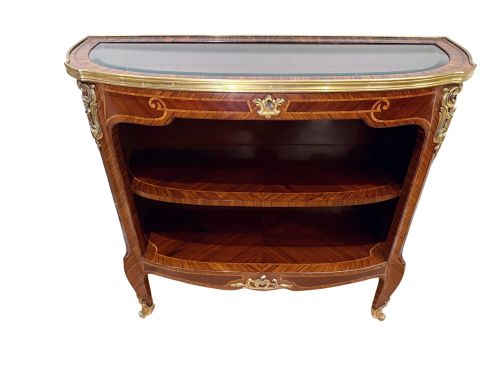
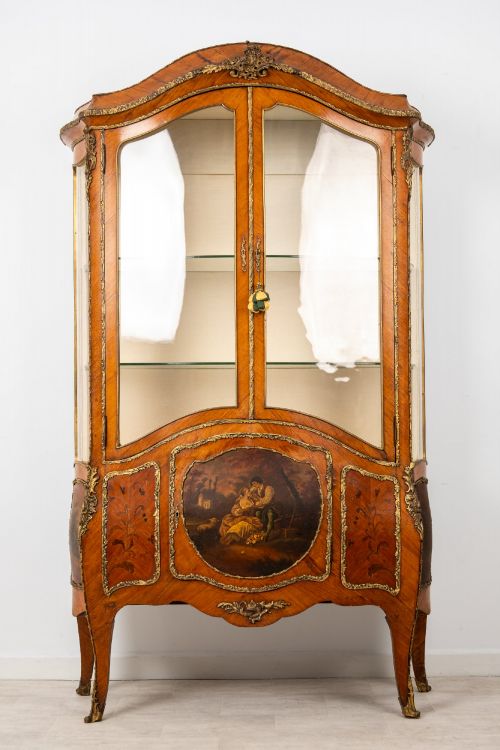
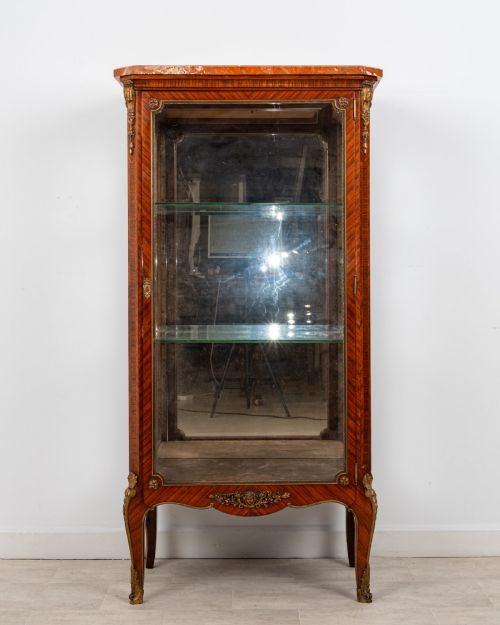
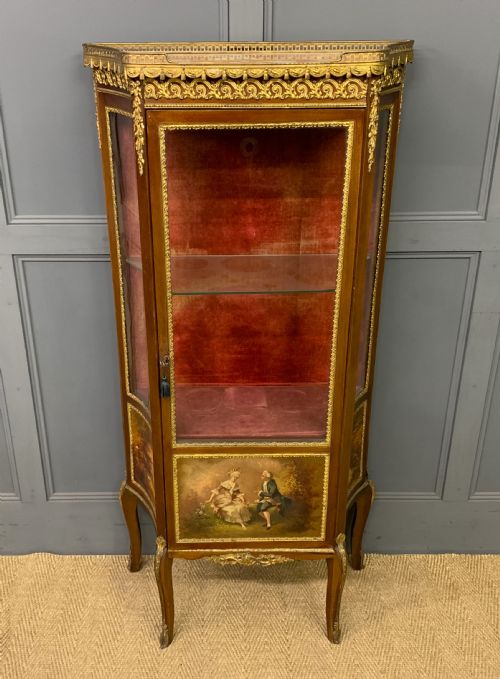
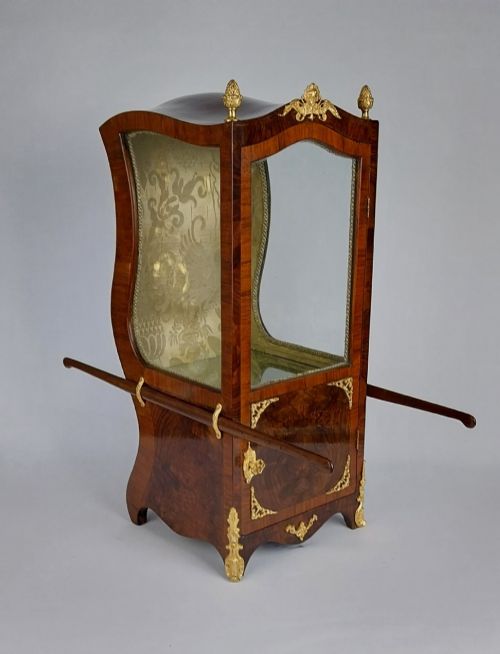
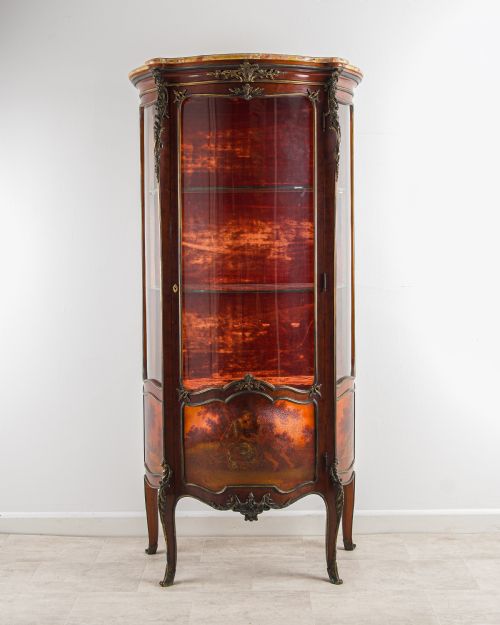
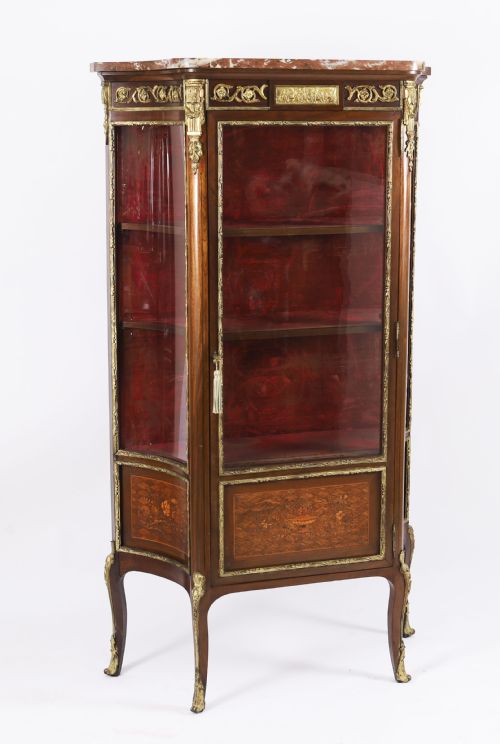
A french louis xv style vitrine is primarily encountered in nineteenth-century interpretations, drawing heavily upon eighteenth-century rococo curves and display needs. These cabinets manifest as serpentine corner units, double-door bookcases with glazed upper sections, and compact table-top vitrines designed to showcase porcelain and curiosities.
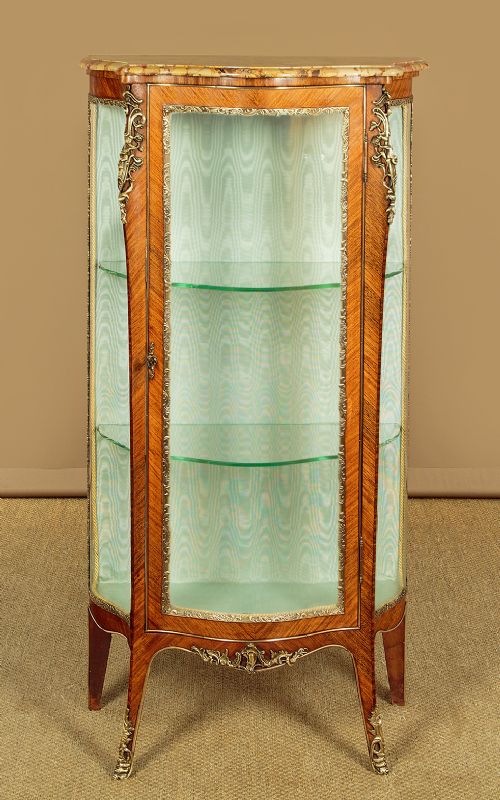
Makers working during the Victorian and Edwardian periods adapted these foundational forms into freestanding display cabinets and bijouterie tables, utilising glazed sides to let light flood the interior shelves. The profile typically relies on a bowed or serpentine front, mirrored by matching glass panels that wrap the upper display chamber.
Materials and Construction
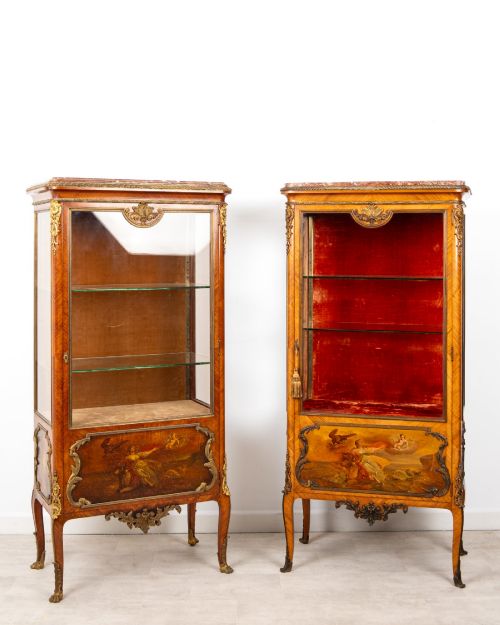
Construction rests upon a carcass of mahogany, walnut, or kingwood, frequently enriched with floral marquetry or hand-painted Vernis Martin panels depicting pastoral scenes along the lower base. The timber is chosen for its grain pattern, providing a warm visual ground for the cabinet work.
Gilt bronze and ormolu mounts trace the structural curves, highlighting the shoulders, feet, and apron with cast rocaille scrollwork and acanthus leaves. Many examples are completed with a shaped marble top, fitted securely within the wooden framing above the glazed display space.
One remarkably honest twentieth-century display table arrived bearing later sign-writing for Breitling watches.
Judging Quality
Quality reveals itself in the crispness of the ormolu chasing and the fluency of the cabinet maker's serpentine lines. Finer pieces display heavy, finely detailed bronze mounts that fit the wooden contours precisely without gaps.
The execution of the painted panels and the depth of the kingwood veneers further separate standard production from masterwork output. Superior examples integrate curved glass panels and substantial marble tops that sit flush against the timber framing.
François Linke·Paul Sormani·Lampre
The French Louis XV Style Vitrine Glossary
- Ormolu
- Gilded bronze mounts applied to furniture. This technique involves coating cast bronze with a layer of finely ground gold amalgam.
- Vernis Martin
- A type of simulated Japanese lacquer developed in France. It utilises multiple coats of varnish to create translucent painted panels.
- Serpentine
- A furniture front or shelf shaped with a concave centre flanked by two convex ends. This undulating contour defines rococo design.
- Bijouterie table
- A shallow display table with a glazed top and sides. It was historically used for showing small personal treasures and jewellery.
- Marquetry
- Inlaid wood pieces arranged to form decorative patterns or pictures on a surface. It uses contrasting veneers to create pictorial depth.
French Louis XV Style Vitrine: Frequently Asked Questions
What is a french louis xv style vitrine used for?
These cabinets were originally built to display prized porcelain, miniatures, and collection items behind protective glass.
Today, they serve the same function in domestic spaces, offering an illuminated or light-filled stage for curated objects while introducing period character.
How do I tell nineteenth century pieces apart from later ones?
Nineteenth-century examples frequently employ heavier timber framing, hand-chased ormolu mounts, and traditional veneer methods like kingwood and marquetry.
Later twentieth-century versions often simplify the internal construction, mount casting, and decorative painted panels.
How should I care for the marble top and ormolu?
Marble tops benefit from regular dusting and prompt wiping of spills to prevent staining on polished stone surfaces.
Ormolu mounts require only a soft cloth, avoiding abrasive metal cleaners that strip away the original fire gilding.
Where does the rococo style come from?
The style originates from mid-eighteenth-century France during the reign of Louis XV, emphasising asymmetry and natural curves.
Revival pieces from the nineteenth century reinterpreted these organic motifs with industrial-era precision and traditional cabinet-making skills.