

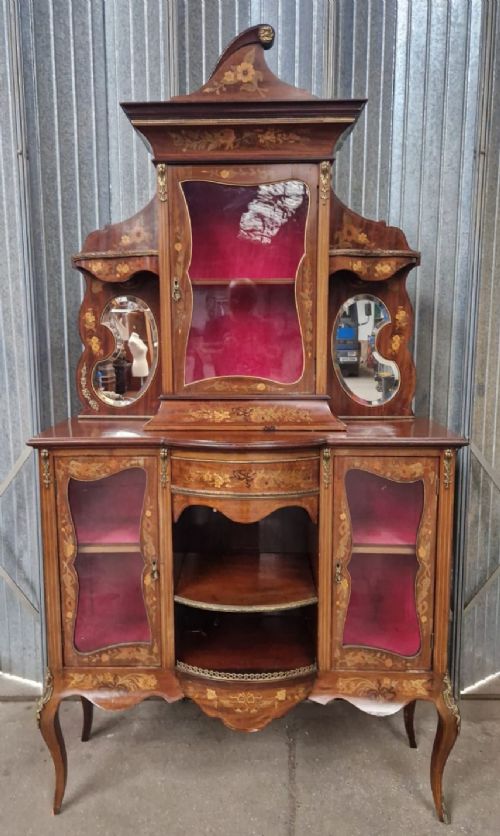
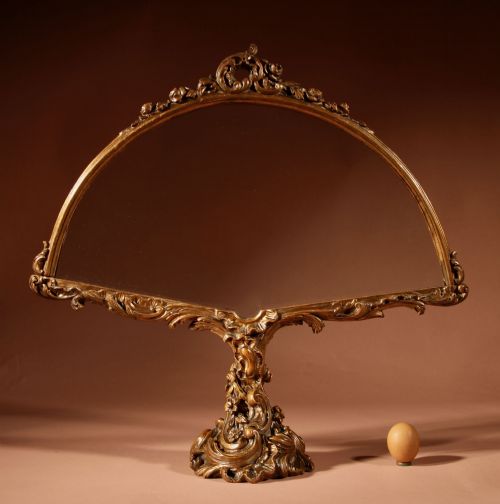
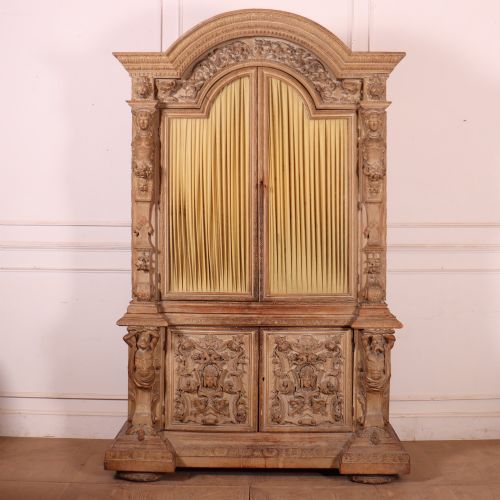


Ornate Glazed Cabinet
An ornate glazed cabinet commands the room, offering a protected stage for treasured possessions through clear glass and rich timber.
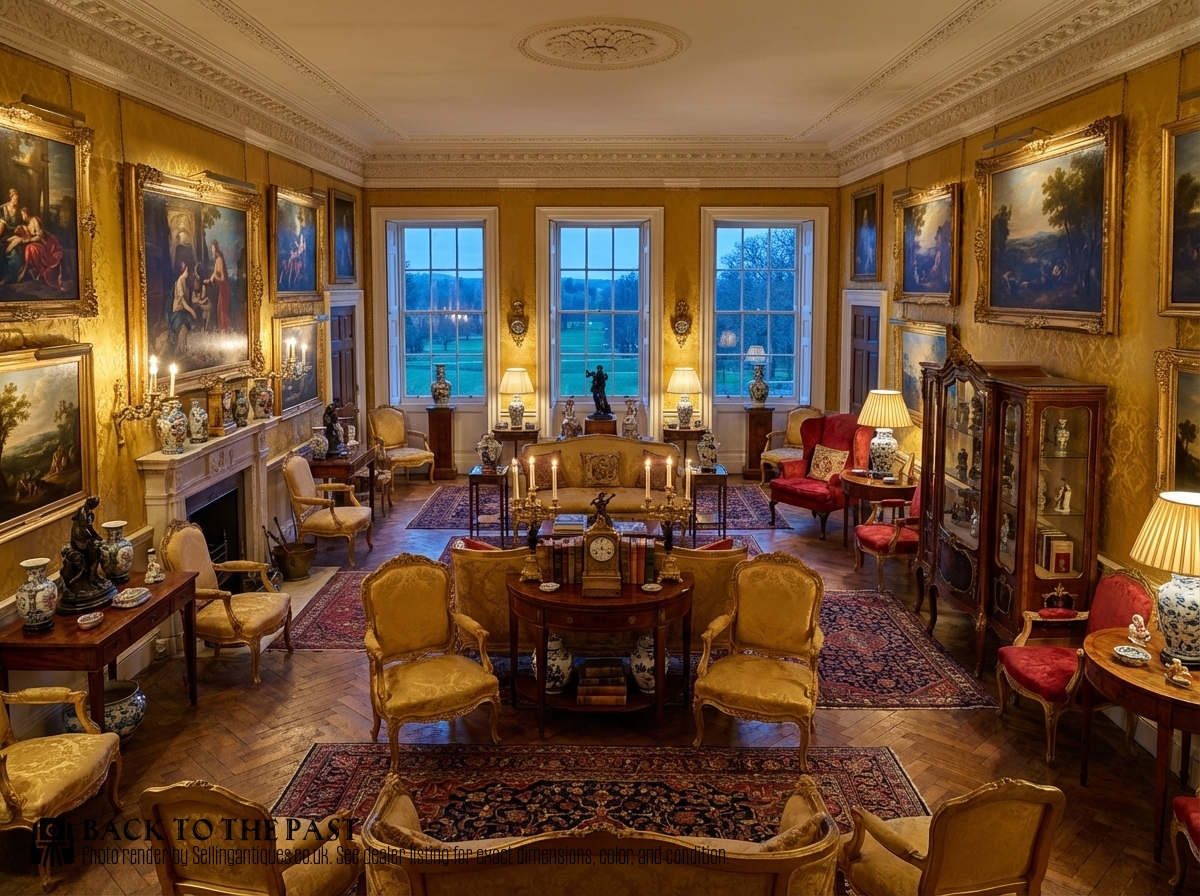
Ornate Glazed Cabinet
The ornate glazed cabinet gathers diverse forms, from tall vitrines and freestanding pier cabinets to low credenzas fitted with glass doors and display surfaces.
Victorian examples dominate the selection, frequently employing figured timbers and elaborate marquetry alongside continental revivals of the eighteenth century.
Makers utilised rich hardwoods and transparent enclosures to showcase objects, creating focal points designed specifically for formal reception rooms.
How they were made
Cabinet makers built these pieces using foundational timbers such as walnut, mahogany, and rosewood, often applying delicate veneers like burr walnut, kingwood, and satinwood to the primary surfaces.
Workshops embellished the structures with cast ormolu, brass mounts, and fine boxwood inlay, while glass panels were fitted into doors and sides to enclose the display space.
Advanced techniques included curved glass shaping, intricate marquetry patterns, and specialised painted panels set within the wooden framework.
Ornate Glazed Cabinet Retail Price Guide 2026
Typical asking prices for ornate glazed cabinet among the pieces listed under this phrase on Sellingantiques today, from the lower quarter to the upper quarter. They describe what is for sale here now, not the wider market.
The selection spans the eighteenth, nineteenth, and early twentieth centuries, incorporating Victorian, French Rococo, and Louis XV revival styles.
What varies in quality
The hierarchy of these cabinets rests on the ambition of the design and the precision of the timber selection, where highly figured burr veneers and complex banded marquetry distinguish finer pieces.
The weight and chasing of the ormolu mounts signal grade, as heavily cast, hand-finished bronze mounts require significantly more skill than stamped brass alternatives.
François Linke·Sigmund Jaray Wien
The Ornate Glazed Cabinet Glossary
- Vitrine
- A glass-fronted cabinet designed for the display of fine objects and porcelain. These pieces usually feature glazed sides to maximise light penetration.
- Ormolu
- Gilded bronze mounts applied to furniture for decorative enrichment. The technique involves treating brass or bronze with an amalgam of gold.
- Credenza
- A low cabinet, frequently fitted with doors and central display sections. Victorian examples often incorporate mirrored backs and gilt metal mounts.
- Pier cabinet
- A narrow cabinet built to fit the wall space between windows. These upright pieces typically house single glazed doors.
- Marquetry
- The art of applying pieces of veneer to a structure to form decorative patterns. Craftsmen utilised contrasting woods like boxwood and satinwood for pictorial effect.
Ornate Glazed Cabinet: Frequently Asked Questions
What is a pier cabinet?
A pier cabinet is a narrow display piece traditionally designed to stand against the wall space between two windows.
These upright units make efficient use of compact wall areas while providing secure shelving behind glass.
How do I care for burr walnut?
Burr walnut veneer requires protection from direct sunlight and excessive temperature changes to prevent the timber from drying out.
Regular dusting with a dry, soft cloth and occasional gentle waxing maintain the natural lustre of the polished surface.
What is Vernis Martin?
Vernis Martin refers to a simulated Japanese lacquer finish developed in eighteenth-century France and revived later.
This technique involves applying multiple translucent layers of varnish over painted or gilded decorative panels.
Where were credenzas used?
Credenzas served as principal display and storage furniture within nineteenth-century drawing rooms and formal dining spaces.
Their low profiles allowed the top surface to hold decorative objects while the interior sheltered fine tableware.