
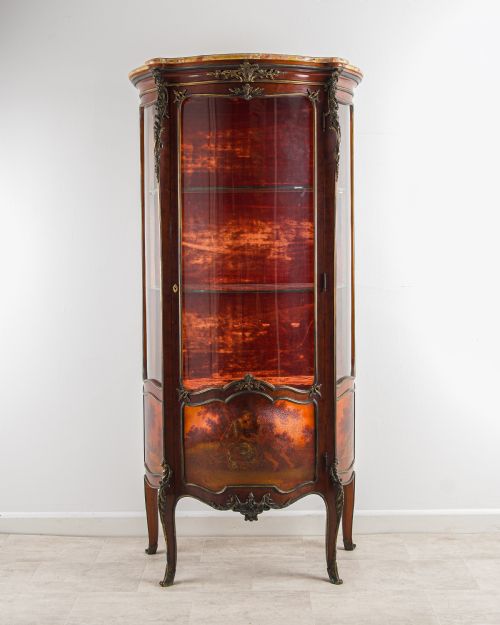


Vernis Martin Glass Cabinet
A vernis martin glass cabinet brings painted panels and glazed display space together, offering a grand French aesthetic for housing collections.
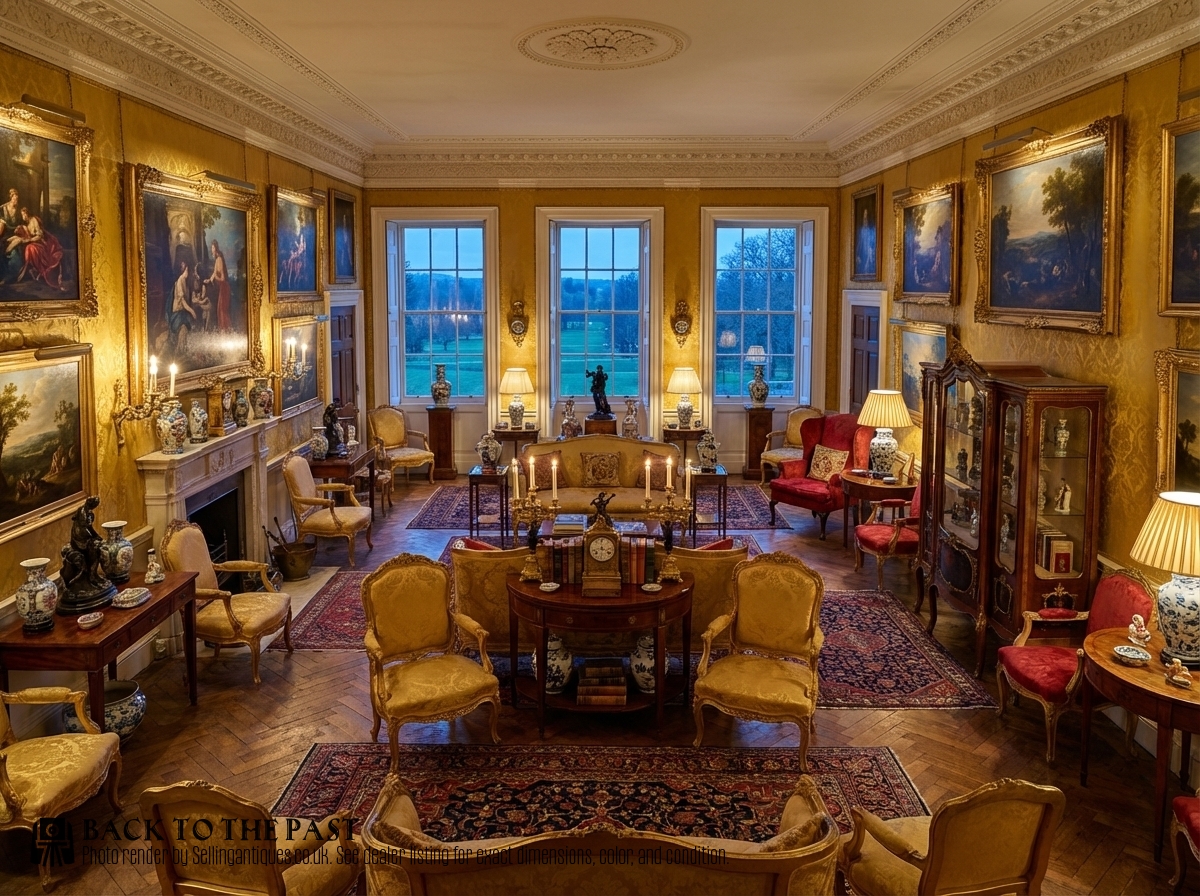
Vernis Martin Glass Cabinet
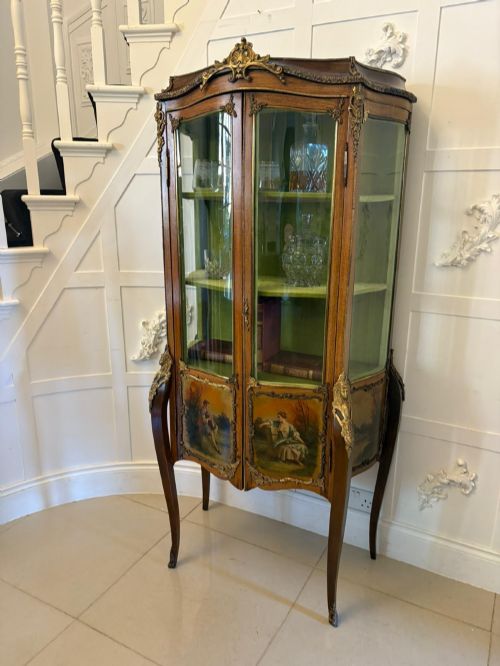
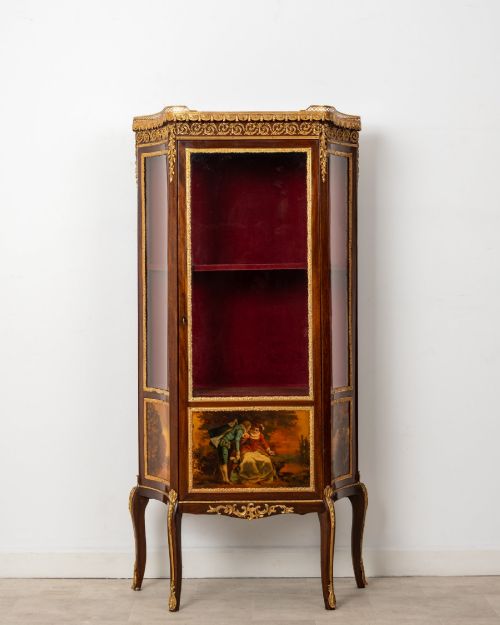
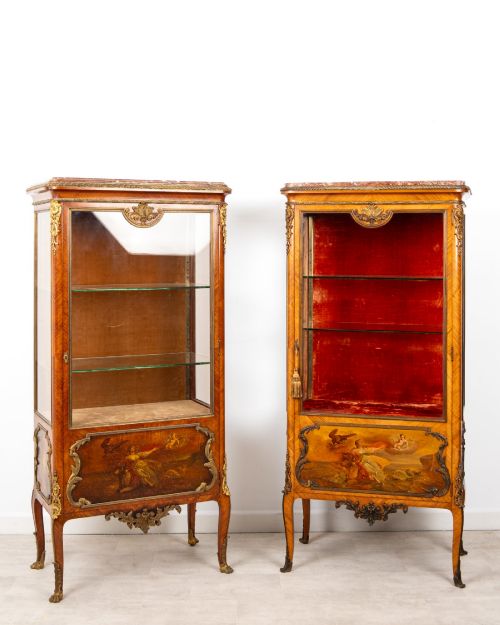
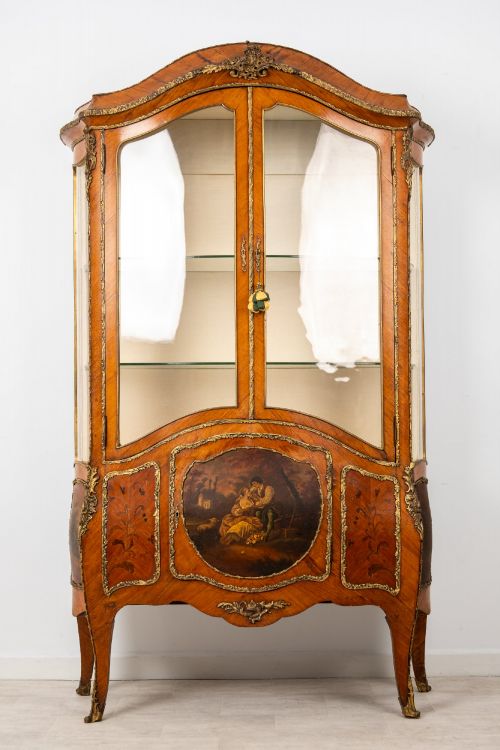
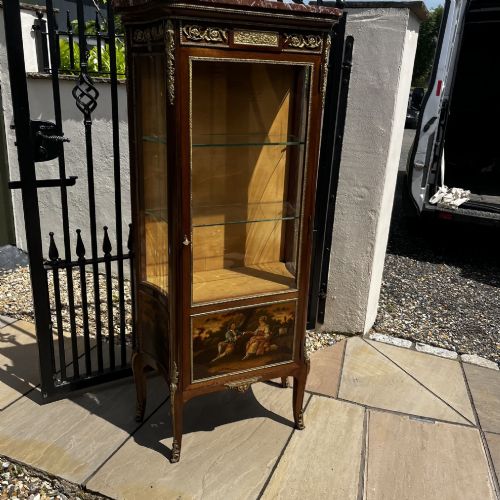
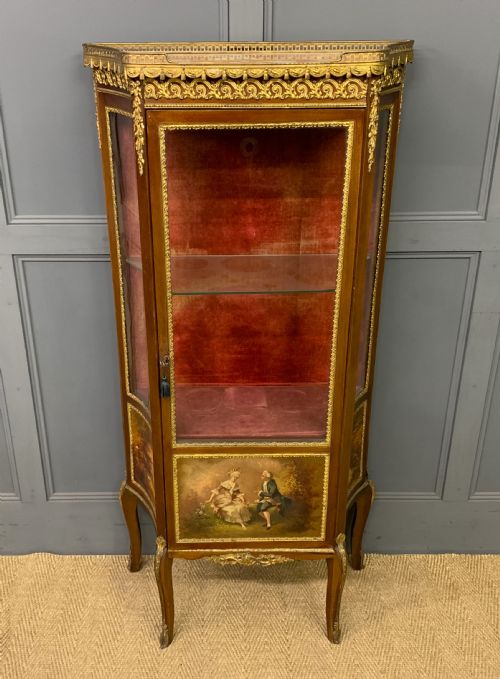
A vernis martin glass cabinet functions primarily as a display piece, designed with glass panes and glazed doors to showcase porcelain, silver, or curiosities. These cabinets originate predominantly from nineteenth-century France, aligning with revival movements that favoured ornate continental furniture.
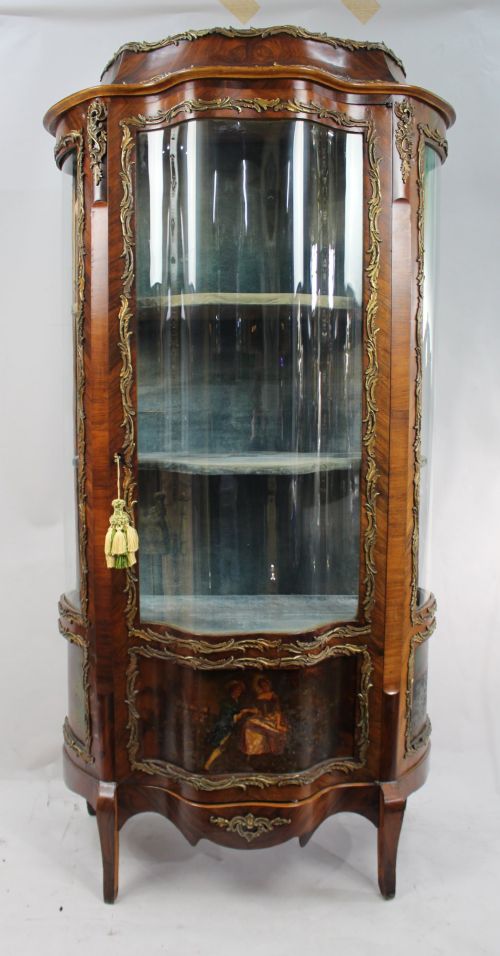
Buyers encounter forms ranging from serpentine fronts and freestanding oval shapes to large bombé carcasses and sedan styles. The defining characteristic involves the integration of painted panels alongside the glass sections, creating a distinct visual rhythm across the piece.
Most examples hail from the nineteenth century, spanning decades from eighteen seventy to nineteen twenty, with Edwardian interpretations also appearing. The overarching framework follows French Rococo and Louis XV or Louis XVI revival idioms.
How they were made
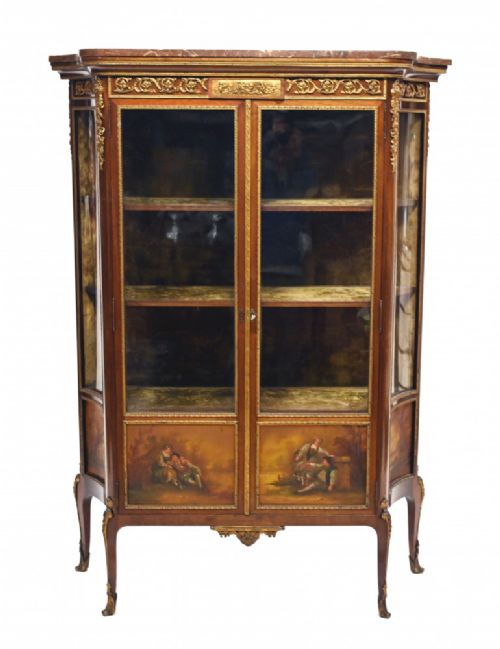
Construction relies upon a timber carcass of mahogany or kingwood, providing the structural stability necessary to support heavy glass doors and stone surfaces. Marble tops frequently cap these cabinets, adding weight and a cool tactile surface to the upper section.
Decorative impact stems from applied ormolu and gilt bronze mounts that edge the glass panels, frame the doors, and accent the corners. Painted panels emulate the lustrous, multi-layered varnish technique associated with the eighteenth-century Martin brothers, integrated directly into the cabinet bodies.
Materials appearing across the inventory include kingwood, mahogany, marble, ormolu, gilt bronze, velvet, and glass.
What varies in quality
Quality rests significantly on the execution of the painted panels and the crispness of the cast ormolu mounts. Finer examples display detailed brushwork and substantial, well-chased bronze work that integrates seamlessly with the timber framework.
The choice of underlying wood and timber veneers dictates the baseline standard of the piece, with figured kingwood and solid mahogany commanding greater presence than simpler carcasses. Structural ambition also separates standard production from exhibition pieces, visible in curved glass and complex bombé contours.
François Linke·Angela Kaufman
The Vernis Martin Glass Cabinet Glossary
- Vernis Martin
- A simulated Japanese lacquer technique developed in eighteenth-century France, utilising successive layers of varnish to achieve a translucent, glossy finish on painted panels.
- Ormolu
- Gilded bronze used for decorative mounts and accents on furniture, cast and chased to produce sharp ornamental detail.
- Vitrine
- A glass-fronted cabinet or display case specifically designed for exhibiting objects, often featuring glazed sides as well as doors.
- Kingwood
- A dense, richly figured tropical timber prized for veneers in high-end French cabinet making.
- Bombé
- A swelling, outward-curving furniture shape that presents a convex profile across the front and sides.
- Louis XV Revival
- A nineteenth-century design movement drawing inspiration from the mid-eighteenth-century French court style, characterised by asymmetrical curves and naturalistic ornamentation.
Vernis Martin Glass Cabinet: Frequently Asked Questions
How were these cabinets used originally?
These cabinets functioned as drawing room display furniture for showcasing precious porcelain, miniatures, and imported curiosities. The glass protected delicate items from dust while allowing guests to admire them.
In grand nineteenth-century interiors, they also demonstrated the owner's taste and engagement with continental design trends. Their prominent placement in reception rooms ensured visibility.
How do I style a vernis martin cabinet at home?
Integrate the cabinet into a sitting room or hallway where adequate lighting can highlight the painted panels and ormolu mounts. Keep internal contents curated to avoid cluttering the glass view.
Allow sufficient space around serpentine or bombé shapes so the curved woodwork remains fully visible. Pairing the piece with neutral walls lets the intricate lacquerwork stand out.
How can I tell the period of a vitrine?
Dating relies on examining the timber carcasses, the casting quality of the ormolu mounts, and the style of the revival period. Nineteenth-century examples often employ kingwood veneers over mahogany or oak frames.
Construction methods within the interior, such as drawer linings and backboards, provide further clues regarding age. Recognising specific revival idioms helps narrow down the decade of manufacture.