



Rich Brown Buffet Table
A rich brown buffet table is a substantial serving surface built to anchor a dining room and hold heavy dishes.
Rich Brown Buffet Table
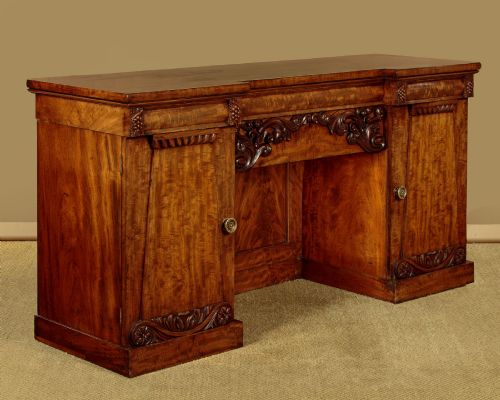
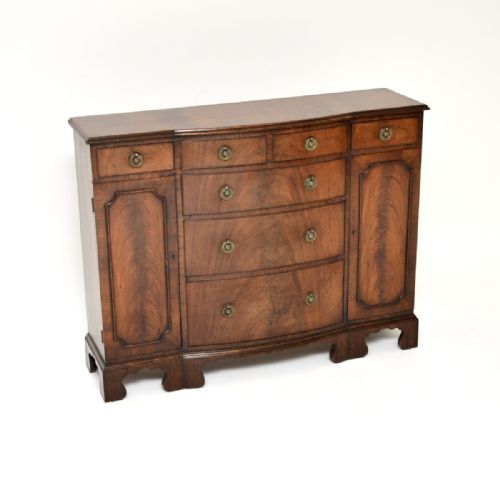
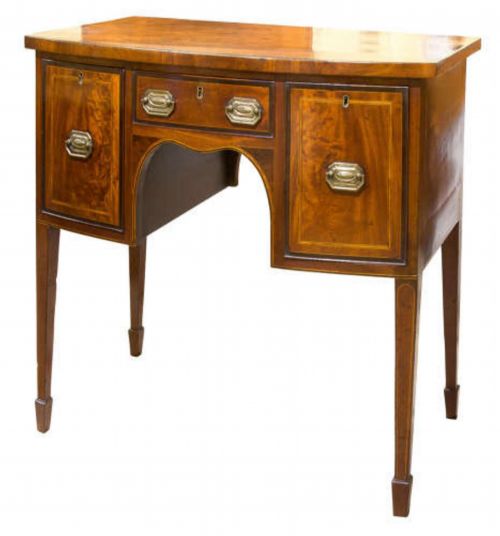
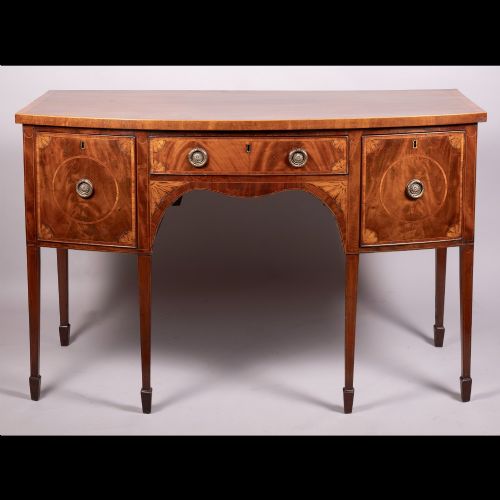
A rich brown buffet table serves primarily as a dining room accessory for holding dishes and serving food. The forms on this page include sideboards, serving tables, servers, and dresser bases spanning the eighteenth, nineteenth, and twentieth centuries. Buyers encounter Georgian, Victorian, and Regency examples alongside later revival pieces.
Most pieces date from the eighteenth and nineteenth centuries, featuring dark timber tones built into breakfront, bow-front, and pedestal configurations. Gillow is represented among the historical workshops associated with these designs. The selection leans heavily on British furniture traditions executed in dark cabinet woods.
How they were made
Cabinetmakers constructed these pieces primarily from solid mahogany and flame mahogany veneer, frequently accented with purpleheart, satinwood, and wood inlay. Brass hardware provides functional pulls and mounts on doors and drawer fronts. Carved details define the structural edges and legs of specific serving tables and pedestals.
Joinery techniques rely on traditional cabinetmaking methods appropriate for heavy timbers and large case pieces. Veneers are applied to secondary woods to create figured grain patterns across expansive drawer fronts and top surfaces. Structural framing supports the considerable weight of solid mahogany tops and internal shelving.
Rich Brown Buffet Table Retail Price Guide 2026
Typical asking prices for rich brown buffet table among the pieces listed under this phrase on Sellingantiques today, from the lower quarter to the upper quarter. They describe what is for sale here now, not the wider market.
Mahogany and flame mahogany veneer dominate the material palette across these eighteenth and nineteenth-century dining room pieces.
What varies in quality
The sophistication of the timber selection dictates much of the visual appeal, particularly the depth of figure in flame mahogany and the precision of contrasting wood inlays like purpleheart and satinwood. Cabinetmaking standards show in the handling of curved elements such as bow fronts and serpentine edges. Small proportions and unusual configurations alter the desirability of individual examples.
Carving execution separates standard production from finer workshop output, seen in the sharpness of detail on pedestal mounts and bracket feet. The integrity of the original hardware and the preservation of the polished finish influence the overall character of each sideboard or serving table.
Gillow·Holland and Sons·George Smith
The Rich Brown Buffet Table Glossary
- Breakfront
- A cabinet or sideboard whose central section projects forward from the flanking outer sections. This architectural arrangement creates depth and shadow across the front elevation.
- Bow-front
- A convex, outward-curving front facade common on eighteenth and nineteenth-century case pieces. This curved form softens the rectangular geometry of the dining room.
- Serpentine
- A furniture front characterised by a concave central section flanked by two convex ends, or the reverse. The undulating line requires expert woodworking precision.
- Pedestal sideboard
- A form featuring two distinct pedestals or cupboards flanking a central serving recess or drawer section. This layout became popular during the Regency and Victorian periods.
- Dresser base
- A low wooden storage cabinet with drawers or cupboards, historically used in kitchens or dining rooms for food preparation and tableware storage. These pieces lack the upper shelving tier of a full dresser.
Rich Brown Buffet Table: Frequently Asked Questions
What is a rich brown buffet table used for?
These tables function as serving surfaces and storage units in dining rooms. They hold platters, cutlery, and glassware during meals.
Historically, they supported large dishes before food was served to seated guests at the table.
How do I date a mahogany buffet table?
Dating relies on stylistic shifts, construction methods, and timber choices across the Georgian and Victorian eras. Bow-front and serpentine shapes often indicate eighteenth or early nineteenth-century origins.
Pedestal layouts and heavy carvings typically point toward Regency or Victorian production periods.
What is the difference between a sideboard and a serving table?
Sideboards generally incorporate enclosed cupboard storage and banks of drawers beneath the main surface. Serving tables are often more open in frame, lacking extensive cabinetry underneath.
Both forms share the primary purpose of food service during dining occasions.
How do I care for antique mahogany furniture?
Antique mahogany requires protection from direct sunlight and extreme humidity fluctuations to prevent wood splitting and veneer lifting. Regular dusting with a soft, dry cloth maintains the polish.
Occasional applications of appropriate wax nourish the dark timber without building up heavy residues.