

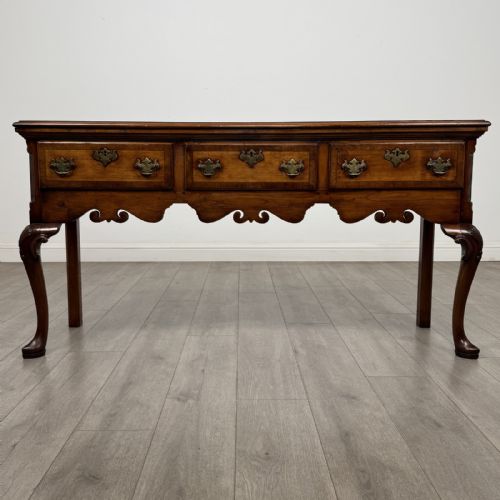
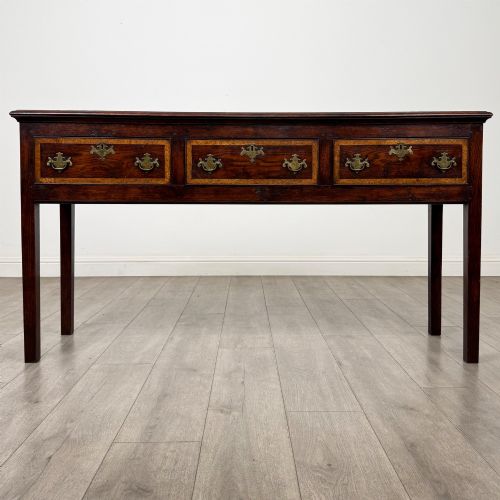
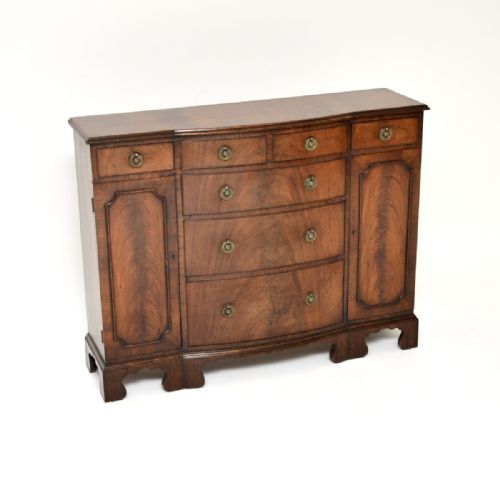
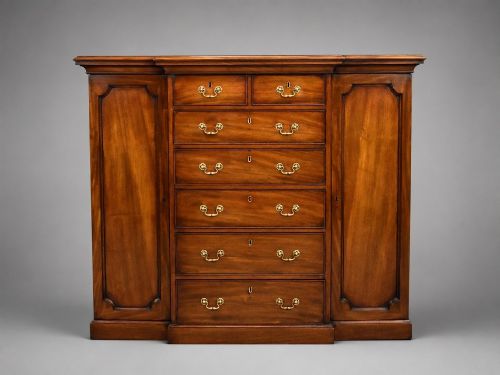


Georgian Style Hallway Credenza
A georgian style hallway credenza brings classic proportion and warm timber grain into an entrance, offering practical surface space and storage.
Georgian Style Hallway Credenza
When you search for a georgian style hallway credenza, you are looking at sideboards, side cabinets, chiffoniers and dresser bases dating from the Georgian period through to the twentieth century. These foundational furniture forms provide surface display and concealed storage in entrance halls and reception spaces, drawing on traditional cabinet-making conventions.
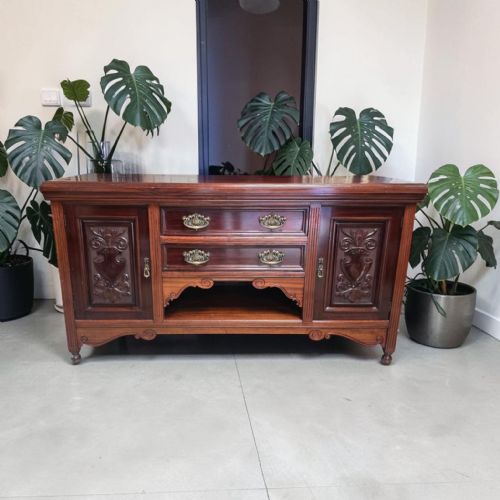
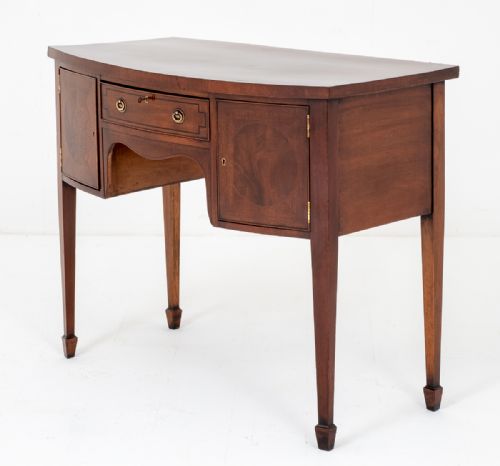
The versions you are most likely to meet on this page span several eras, including genuine Georgian examples alongside later Edwardian, Victorian, and 1920s revivals. Makers of these later periods frequently adopted the sweeping bow fronts, serpentine shapes, and architectural lines established in the eighteenth century.
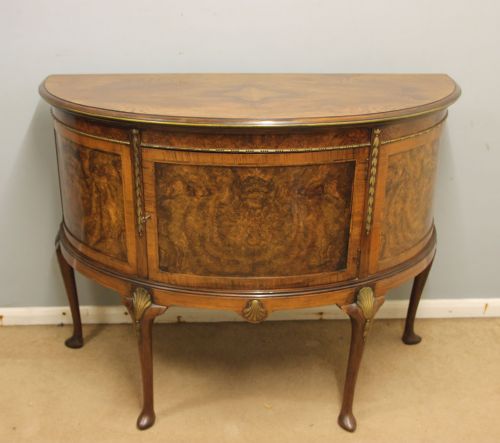
Materials vary across these offerings, showing rich timbers such as mahogany, satinwood, oak, burr walnut, and walnut, frequently enhanced by boxwood stringing and brass hardware. Whether you encounter a compact demi-lune cabinet or a substantial breakfront sideboard, each piece reflects the enduring appeal of classical English design in domestic interiors.
Materials and construction
Cabinet-makers constructed these pieces primarily using solid timbers and carefully selected veneers, relying on mahogany, oak, and walnut to provide structural stability and rich grain patterns. Satinwood and boxwood frequently appear as contrasting inlay details, creating delicate borders and geometric motifs across drawer fronts and top surfaces.
Metal components such as brass handles and backplates secure the functional elements, while fabric linings occasionally finish interior compartments. Traditional joinery techniques unite these elements, allowing the natural expansion and contraction of the timber over centuries of use.
Georgian Style Hallway Credenza Retail Price Guide 2026
Typical asking prices for georgian style hallway credenza among the pieces listed under this phrase on Sellingantiques today, from the lower quarter to the upper quarter. They describe what is for sale here now, not the wider market.
Listings feature sideboards and cabinets spanning the Georgian, Victorian, Edwardian, and 1920s periods, constructed from mahogany, oak, walnut, and satinwood.
Assessing quality
The distinction between standard and superior pieces rests upon the precision of the timber selection and the refinement of the decorative details. Grain matching across drawer banks and cabinet doors demonstrates the maker's intent, ensuring a harmonious visual rhythm across the front of the furniture.
Fine examples reveal crispness in their boxwood stringing and inlay work, alongside the careful execution of curved elements like bow fronts and serpentine edges. The integration of quality brass fittings and solid secondary timbers further separates robust everyday items from exceptional cabinet-work.
M. D. Miller and Sons·Gillows
The Georgian Style Hallway Credenza Glossary
- Bow front
- A convex curved cabinet front that projects outward in the centre, commonly seen on sideboards to soften rigid angles. This curved silhouette requires advanced woodworking skill to shape timber accurately.
- Serpentine
- A furniture front featuring a concave centre flanked by two convex ends, creating a gentle wave-like contour. It represents one of the most sophisticated profiles in classical cabinet-making.
- Demi-lune
- A half-moon shape used for tables and side cabinets designed to sit flush against a wall. This form saves valuable floor space in narrow hallways while offering a usable surface.
- Breakfront
- A large cabinet design where the central section projects forward from the flanking outer sections. This architectural arrangement creates depth and visual interest on larger sideboard forms.
- Stringing
- A narrow strip of contrasting wood inlaid into the surface of a piece to create decorative borders. It requires precise hand-cutting to fit flush within the surrounding timber.
Georgian Style Hallway Credenza: Frequently Asked Questions
What is a georgian style hallway credenza?
A georgian style hallway credenza is a descriptive term buyers use for sideboards, side cabinets, and chiffoniers placed in entrance spaces. These pieces provide storage and surface area while adopting traditional eighteenth-century design characteristics.
While the search phrase uses the word credenza, British cabinet-making traditions generally classify these forms as sideboards, side cabinets, or chiffoniers. The pieces on this page span genuine Georgian origins as well as later Edwardian and twentieth-century revivals.
How do I tell an original Georgian piece from a later revival?
Distinguishing original eighteenth-century furniture from later revivals involves examining construction methods, timber characteristics, and secondary woods. Original pieces often show hand-cut joinery and signs of age consistent with continuous use.
Later Edwardian and 1920s revivals frequently utilise machine-sawn elements and standardised hardware while faithfully copying earlier Georgian styles. Looking closely at the drawer linings and interior construction usually clarifies the manufacturing era.
Where should I place a sideboard in a hallway?
Placing a sideboard in a hallway depends on the available floor space and the architectural flow of your entrance. Narrower passages suit bow-front or demi-lune cabinets that project less into the walkway.
Larger entrance halls can accommodate breakfront sideboards or wider dresser bases that anchor the room. These surfaces provide a convenient spot for incoming post, keys, and decorative lamps.
What woods were used for these cabinets?
Cabinet-makers relied primarily on mahogany, oak, and walnut to build the structural carcase and exterior surfaces of these side cabinets. Mahogany remained a popular choice for its rich reddish-brown tones and stability under carving.
Lighter woods such as satinwood and boxwood provided contrast through stringing and banded inlay work. Burr walnut added dramatic grain movement to top surfaces and drawer fronts on specific revival pieces.