


Retail Glass Showcase
A retail glass showcase transforms merchandise into exhibition pieces, bringing professional display history straight into a domestic or commercial interior.
Retail Glass Showcase
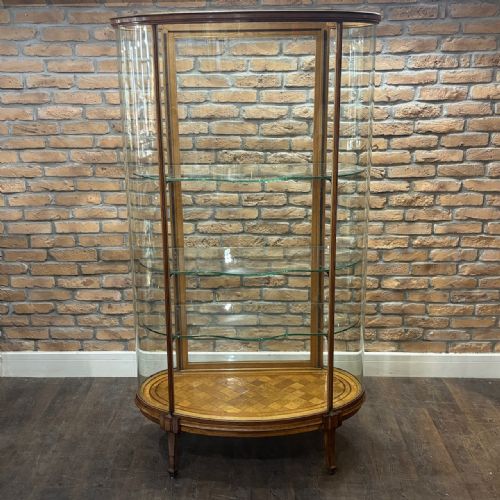
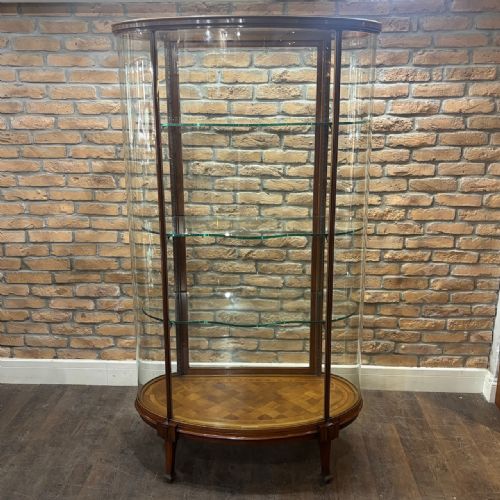
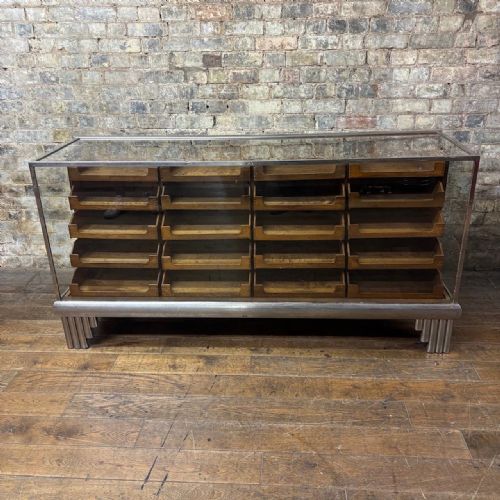
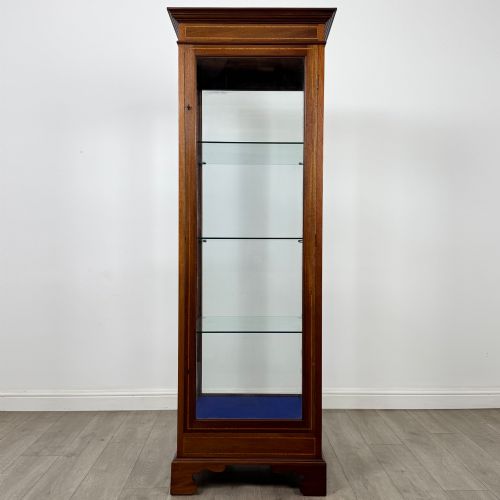
When searching for a retail glass showcase, buyers encounter commercial fixtures designed originally for trade, spanning the Victorian era through the 1930s. These pieces include freestanding towers, countertop display cabinets, and long serving counters built to present goods securely while offering maximum visibility.
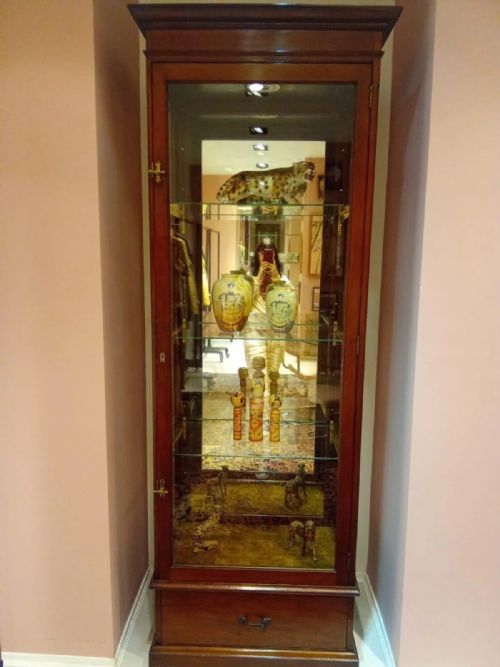
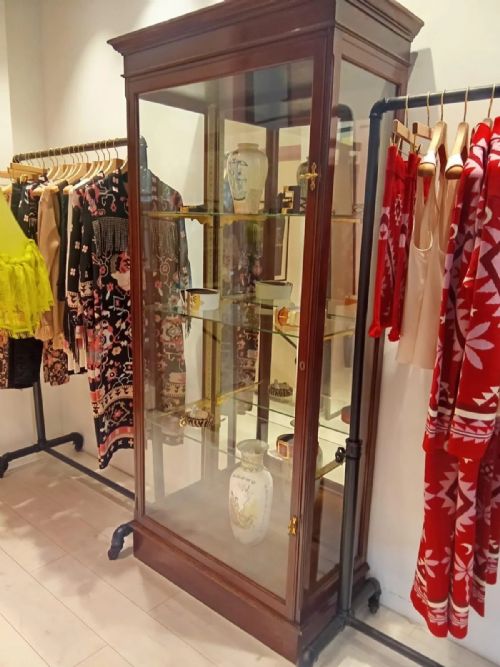
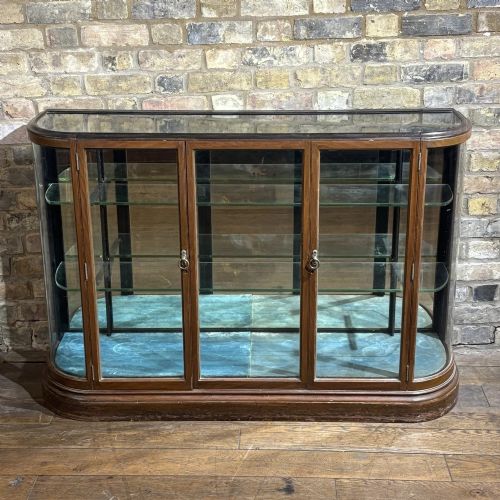
The most common versions met on this page are Edwardian and 1920s examples constructed from mahogany or oak, featuring glazed panels and adjustable glass shelving. Formats range from large shop display counters to compact tabletop units and specialised sweet shop cabinets.
Origins trace through nineteenth-century commercial joinery to early twentieth-century commercial design firms. Buyers select these units to house collections, books, or specialist items behind protective glass while maintaining an open, light-filled aesthetic in a room.
How they were made
Construction relies heavily on timber framing combined with extensive glazing to maximise light penetration around the displayed objects. Cabinet makers utilised dense hardwoods such as mahogany and oak for structural integrity, often incorporating brass hardware, chrome, or aluminium elements in later twentieth-century iterations.
Interiors frequently incorporate mirrored backs to reflect ambient light and create an illusion of depth behind the stored items. Adjustable glass shelves rest within these timber or metal frameworks, supported by specialised brackets that allow customisation of internal vertical spacing.
Finishes range from polished natural wood and ebonised treatments to gold leaf detailing and leather accents. Countertops and display tables often integrate lined bases, utilising materials like velvet to cushion delicate merchandise during daily trade.
Listings span from the late nineteenth century through to the 1930s, featuring oak, mahogany, brass, mirror, and steel materials.
What varies in quality
Construction depth and timber selection establish the baseline quality of a retail glass showcase, distinguishing utilitarian utility fixtures from high-status shop fittings. Dense, well-figured mahogany and quarter-sawn oak indicate superior cabinet making compared to simpler, purely functional joinery.
Hardware sophistication and interior detailing mark the difference between standard production units and bespoke showroom pieces. Original bevelled glass panels, working locks with matching keys, smoothly operating sliding doors, and integrated mirrored interiors elevate the standard of manufacture.
Provenance and architectural ambition separate ordinary commercial boxes from exceptional pieces. Specialised forms, such as bow-end fronts, pentagonal geometries, or branded confectionery cabinets associated with known makers, represent higher tiers of period design.
F. Sage & Co·Dudley & Co·Cadbury·Rowntree·Fry·Breitling
The Retail Glass Showcase Glossary
- Vitrine
- A glass display cabinet used primarily for safeguarding and exhibiting fragile objects or collectibles. This term often applies to refined freestanding or tabletop display pieces.
- Haberdashery counter
- A long commercial display unit historically used for selling textiles and small mercerery items, typically featuring multiple shallow drawers or glazed compartments. These counters provide extensive surface display area alongside organised storage.
- Bow end
- A curved glass and timber termination at the end of a cabinet or counter. This technique softens linear geometry and expands the viewing angle for internal merchandise.
- Countertop cabinet
- A smaller display case designed to sit upon an existing shop counter or table for eye-level customer browsing. These units often feature rear-access doors for serving staff.
Retail Glass Showcase: Frequently Asked Questions
How do I clean the glass shelves?
Use a soft microfiber cloth and a mild ammonia-free glass cleaner sprayed directly onto the cloth rather than the wood frame to prevent moisture damage.
Take care around original joints, painted signage, and antique mirrored backings to preserve the integrity of the vintage materials.
Can these cabinets support heavy items?
Most period display cases feature adjustable glass shelving designed for lighter retail goods, ceramics, or collectibles rather than heavy volumes.
Verify the thickness of the glass panes and the strength of the internal support brackets before placing dense objects inside.
Where should I place a showcase?
Position the cabinet away from direct, harsh sunlight to protect interior contents and prevent timber warping or veneer fading over time.
Ensure adequate clearance around rear sliding or hinged doors so the cabinet remains fully accessible in its chosen room.
How do I date a display cabinet?
Examine the timber species, joinery methods, hardware styles, and any maker's plates or branded advertisements integrated into the structure.
Late nineteenth-century and Edwardian pieces often display heavier mahogany framing, whilst 1930s examples introduce chrome, aluminium, and distinct Art Deco geometries.