
Regency Writing Bureau
A regency writing bureau brings architectural presence and concealed utility to a room through fitted pigeonholes and drop-front writing surfaces.
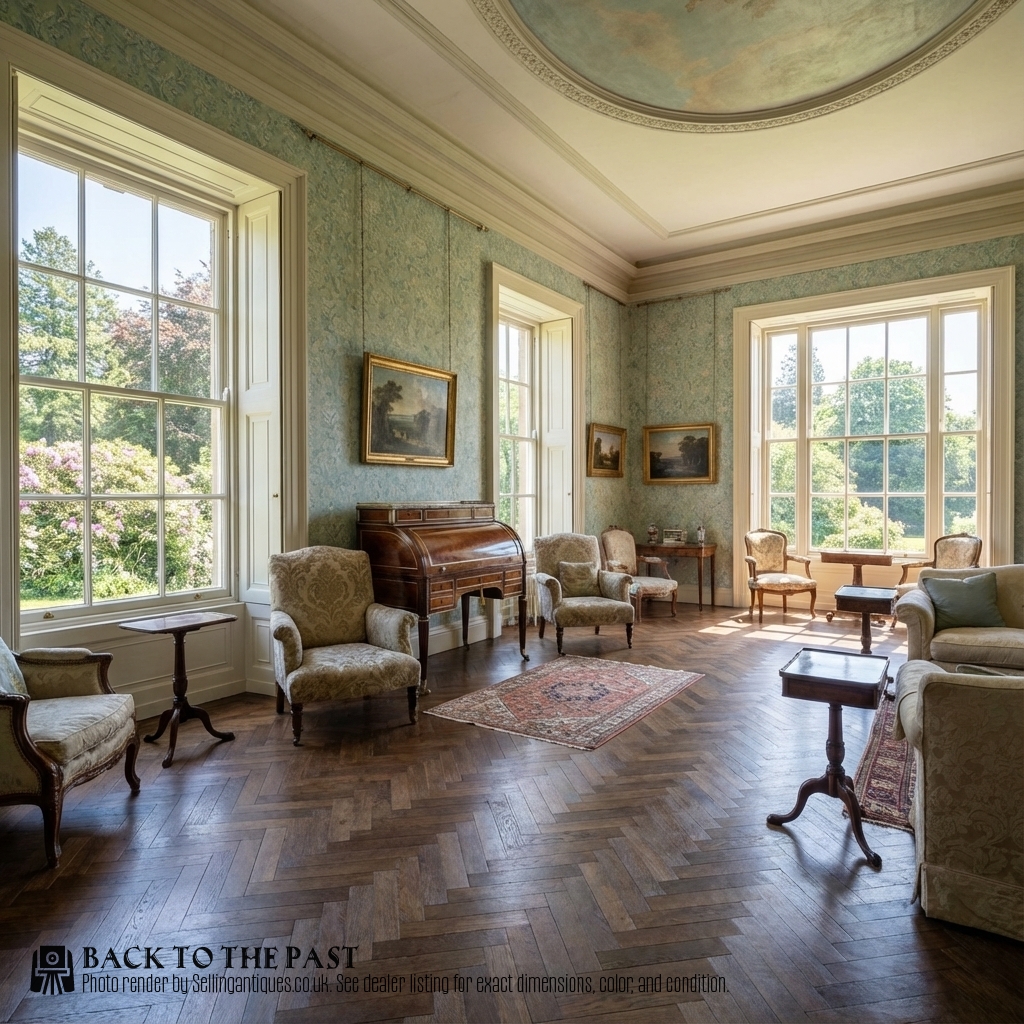
Regency Writing Bureau
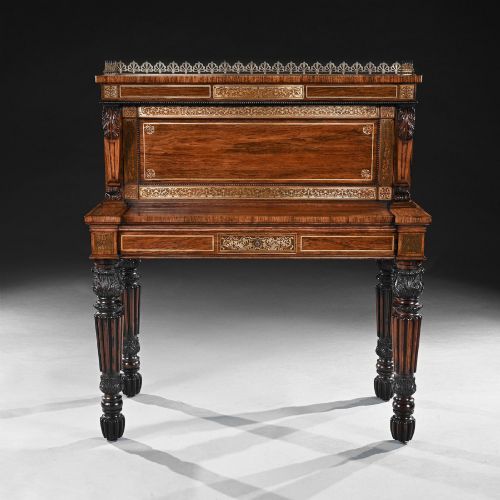
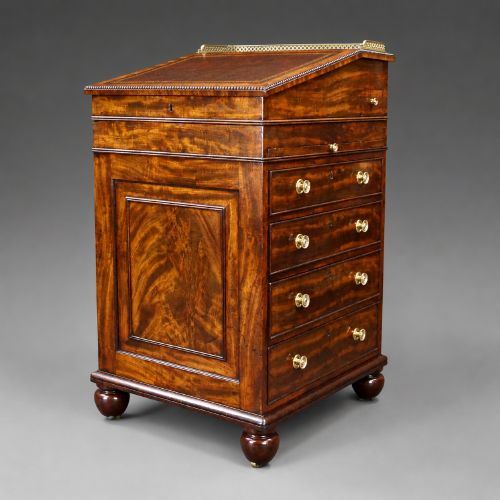
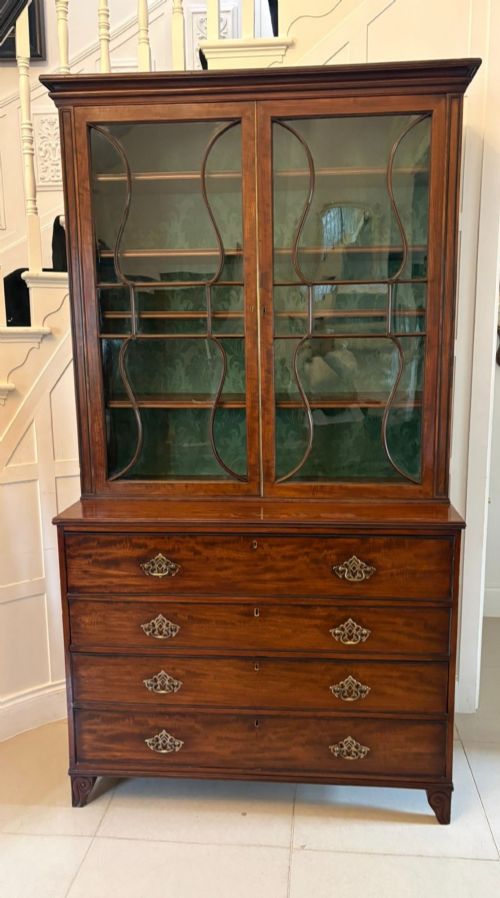
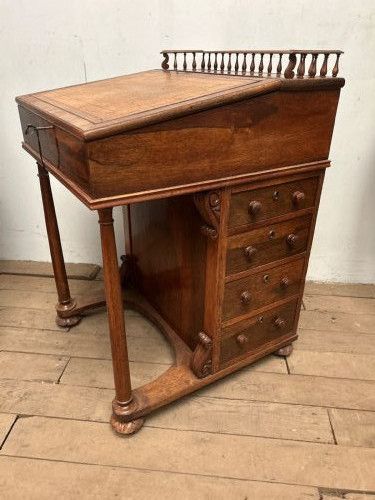
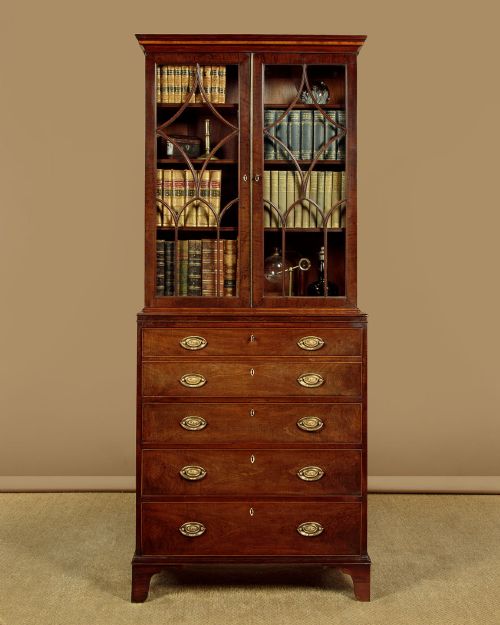
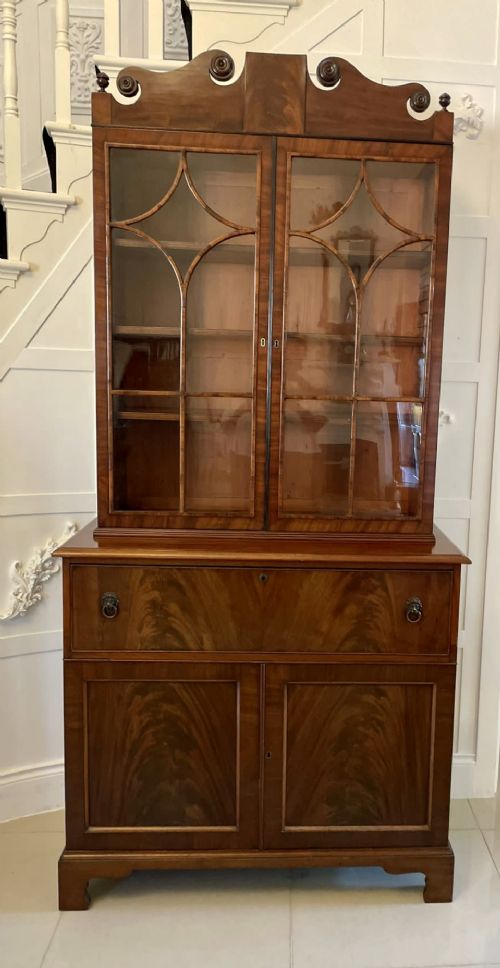
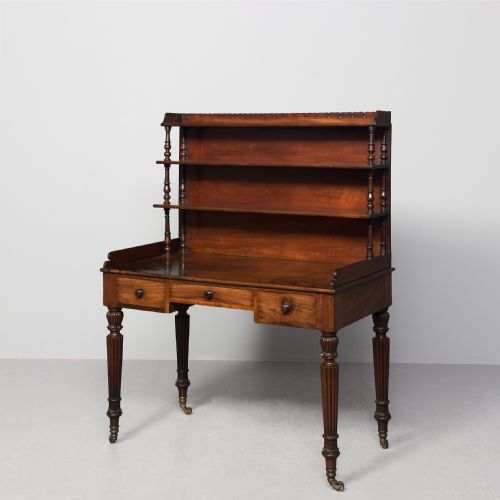
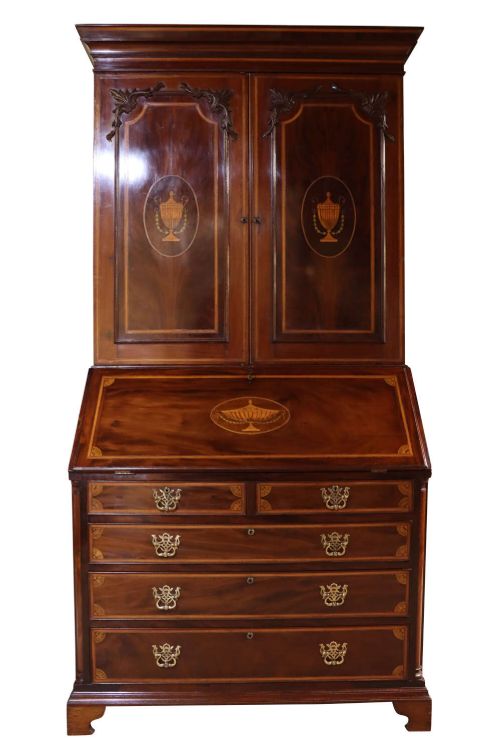
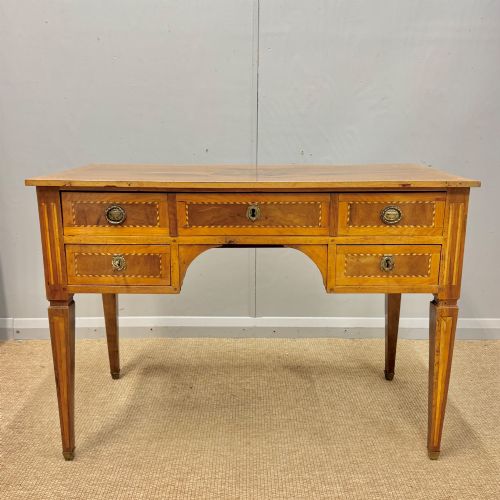
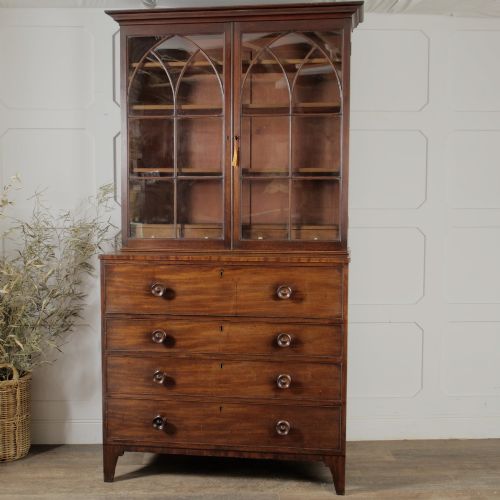
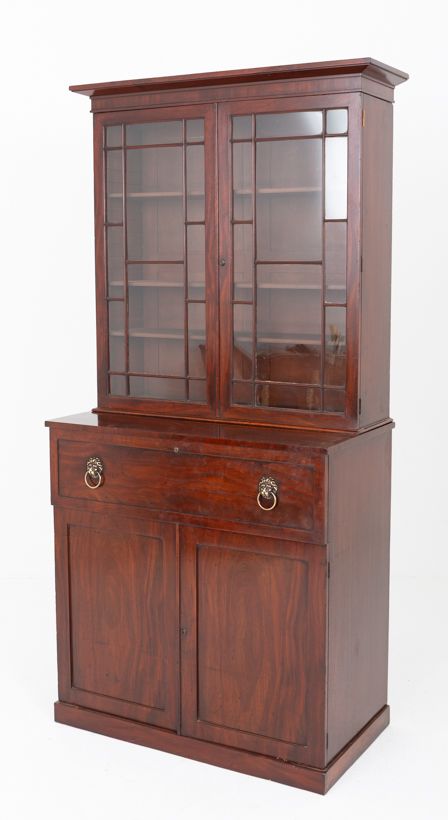
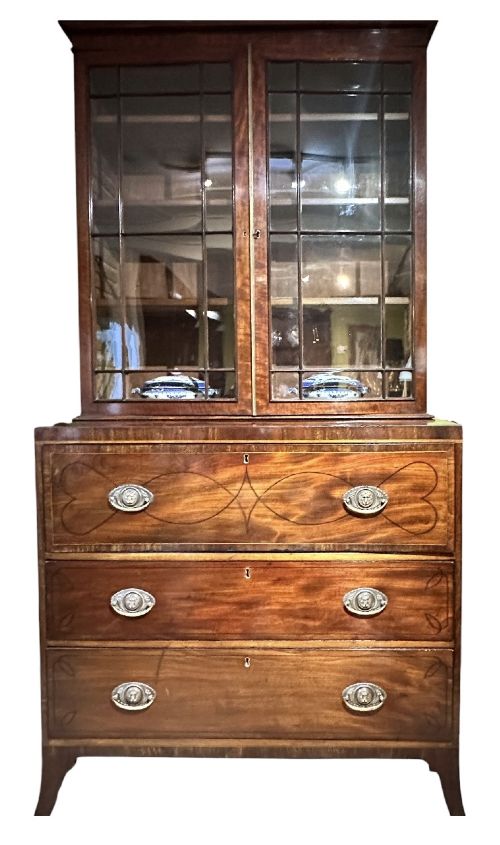
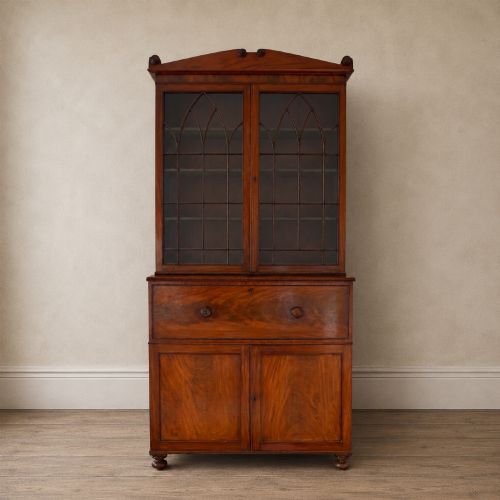
A regency writing bureau encompasses upright secretaire bookcases, compact Davenport desks, and cylinder top desks originating primarily from the nineteenth century. These forms combine a functional writing surface with substantial storage, frequently pairing a bookcase upper section with a fitted drawer base.
The pieces appearing most often on this page belong to the Regency, George III, George IV, and William IV periods, constructed in figured mahogany, flame mahogany veneer, rosewood, and satinwood. Many examples incorporate specialised writing compartments, drop-front flaps, and leather inserts designed for correspondence and administrative work.
How They Were Made
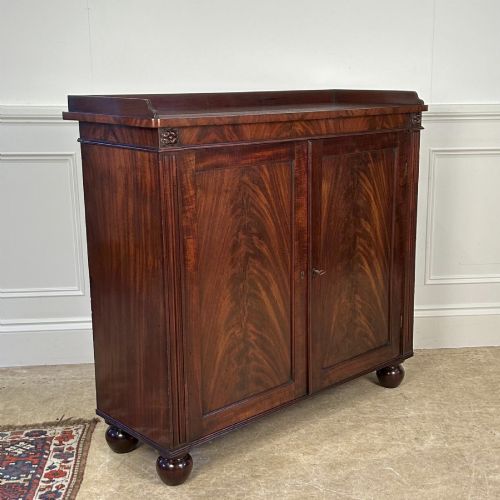
Cabinet makers utilised dense native and imported timbers, applying flame mahogany veneer and satinwood over secondary woods to create dramatic grain patterns on the primary surfaces. Brass inlay, ebony stringing, and glazed cabinet doors provided structural contrast and visual refinement.
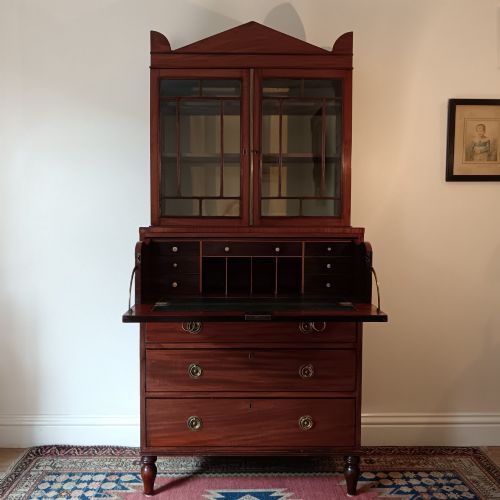
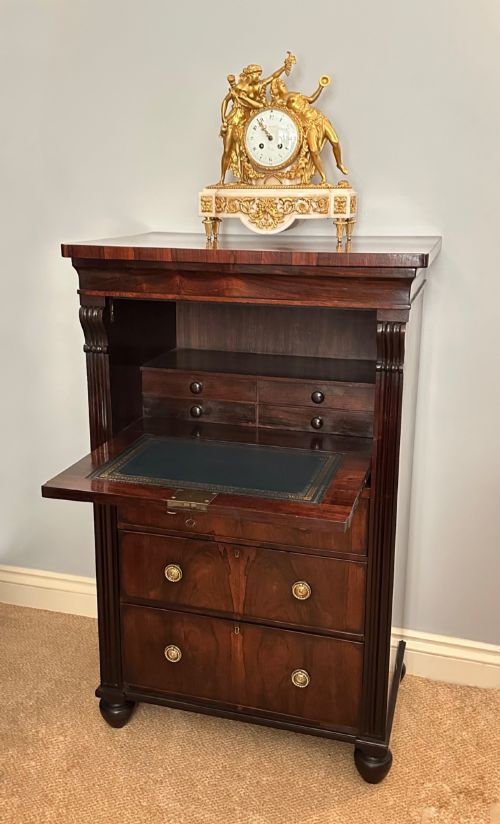
Interior fitments required intricate joinery, assembling small drawers, pigeonholes, and secret compartments within the drop-front bureau or Davenport superstructure. Writing surfaces were frequently lined with panels of leather or baize, edged with subtle blind tooling.
Regency Writing Bureau Retail Price Guide 2026
Typical asking prices for regency writing bureau among the pieces listed under this phrase on Sellingantiques today, from the lower quarter to the upper quarter. They describe what is for sale here now, not the wider market.
Materials recorded across the inventory include mahogany, rosewood, satinwood, brass, leather, and baize.
What Varies in Quality
Quality rests in the selection of timber veneers, where symmetrical flame mahogany or richly figured rosewood demonstrates a maker's ambition. The precision of brass inlay and the integrity of internal pigeonhole construction separate standard utility furniture from pieces produced by prominent workshops.
Proportion and scale dictate the visual balance of a secretaire bookcase or Davenport desk, particularly in the relationship between the upper cabinet and the lower chest of drawers. Original brass ring handles, fitted writing slides, and cleanly cut cockbeading on drawer edges further distinguish superior examples.
Gillows Oxford Street Workshop·James Mein of Kelso·George Oakley·Gillows of Lancaster·Hobbs and Co
The Regency Writing Bureau Glossary
- Secretaire bookcase
- A tall cabinet featuring an upper section with glazed doors for books above a lower chest containing a dedicated writing drawer with a drop front. This dual-purpose form proved popular throughout the Georgian and Regency eras.
- Davenport
- A compact desk featuring a sloping, leather-lined writing surface above a pedestal of side drawers. These portable writing cabinets often incorporate internal stationery compartments and pen trays.
- Escritoire
- An alternative term for a writing cabinet or bureau, typically featuring a fall-front flap that conceals an arrangement of small drawers and pigeonholes. The form emphasises private correspondence and document storage.
- Baize
- A coarse woollen material resembling felt, traditionally utilised as a durable writing surface inset into desks and tables. It provides a soft texture suitable for quill pens and paper.
- Flame mahogany veneer
- Thin slices of mahogany timber harvested from the branch crotches where the grain twists into a distinctive, flame-like pattern. Cabinet makers applied these veneers to prominent drawer fronts and fall-front panels.
Regency Writing Bureau: Frequently Asked Questions
What is a regency writing bureau?
A regency writing bureau is a dedicated piece of antique furniture designed for correspondence, featuring a hinged writing flap or pull-out drawer that conceals small compartments and pigeonholes.
These desks span several distinct formats, including upright secretaire bookcases with glass doors, compact Davenport desks, and cylinder top desks produced during the early nineteenth century.
How do I use a bureau in a modern room?
The drop-front flap or sliding surface provides a practical laptop desk or writing space that can be closed away when not in use to conceal paperwork and clutter.
The upper bookcase sections of taller pieces offer display storage for books and ceramics, while the lower drawers function as standard chest storage for household items.
How do I tell a Regency bureau from a William IV one?
Regency pieces often display restrained neoclassical proportions, delicate brass inlay, satinwood details, and slender supports like lyre bases or bracket feet.
William IV furniture tends to feature heavier proportions, bolder mahogany grain, and robust carved details reflecting the transition into the mid-nineteenth century.
What woods were used for these desks?
Primary timbers include solid mahogany and figured mahogany veneers, accompanied by exotic woods such as rosewood and satinwood for decorative contrast.
Secondary woods like oak frequently appear in the drawer linings and internal partitions of pieces produced during the Georgian and Regency periods.