
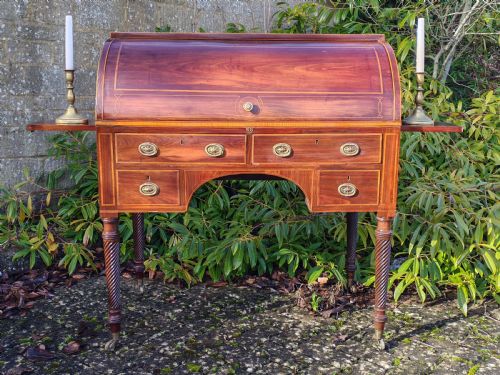
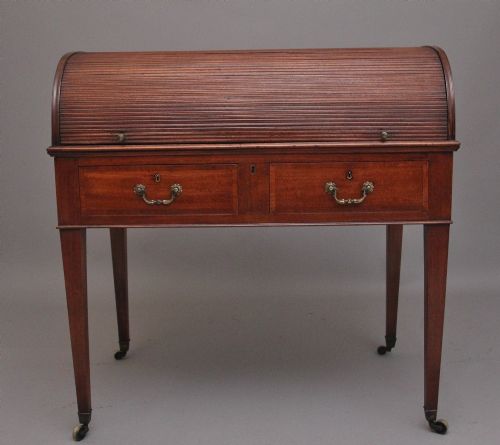


Georgian Cylinder Bureau
A georgian cylinder bureau offers a clever roll shutter to conceal your papers, combining cabinetmaker skill with practical writing space.
Georgian Cylinder Bureau
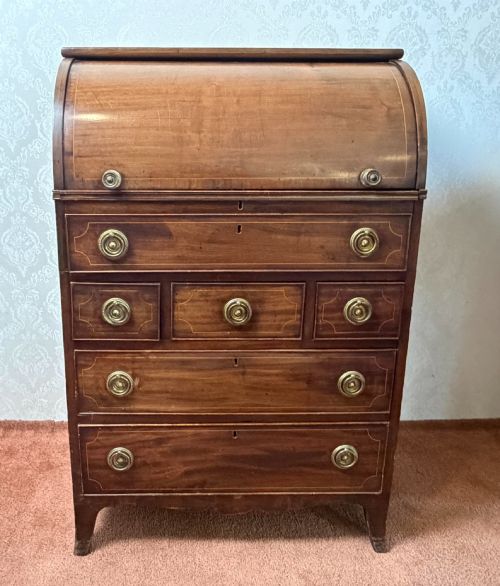
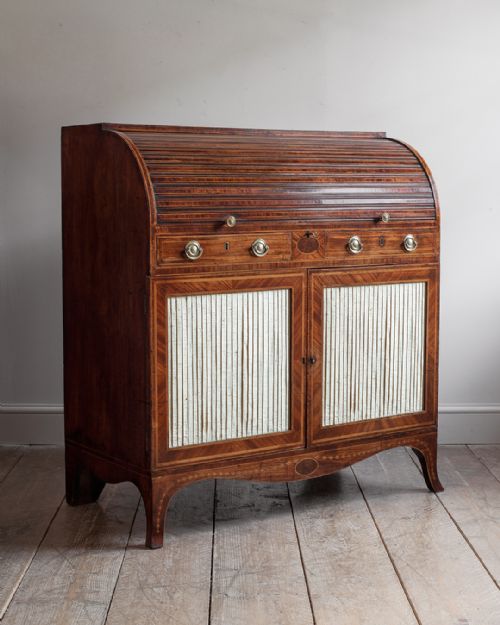
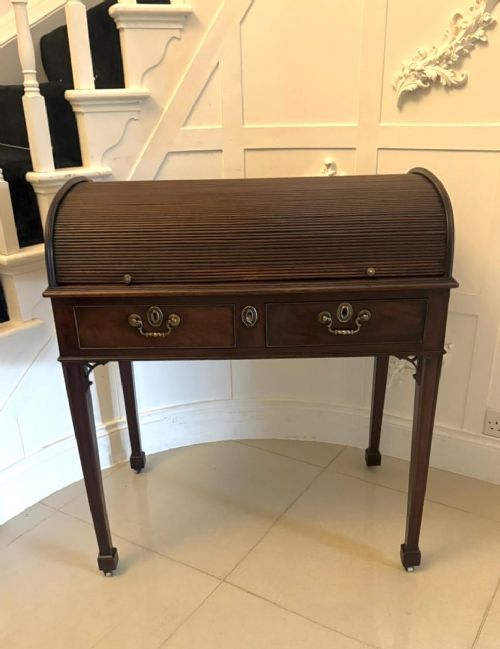
A georgian cylinder bureau provides a dedicated writing surface enclosed by a curved wooden shutter that rolls back into the body of the furniture. These pieces emerge primarily from the eighteenth and nineteenth centuries, spanning Georgian, Regency, and Sheraton periods.
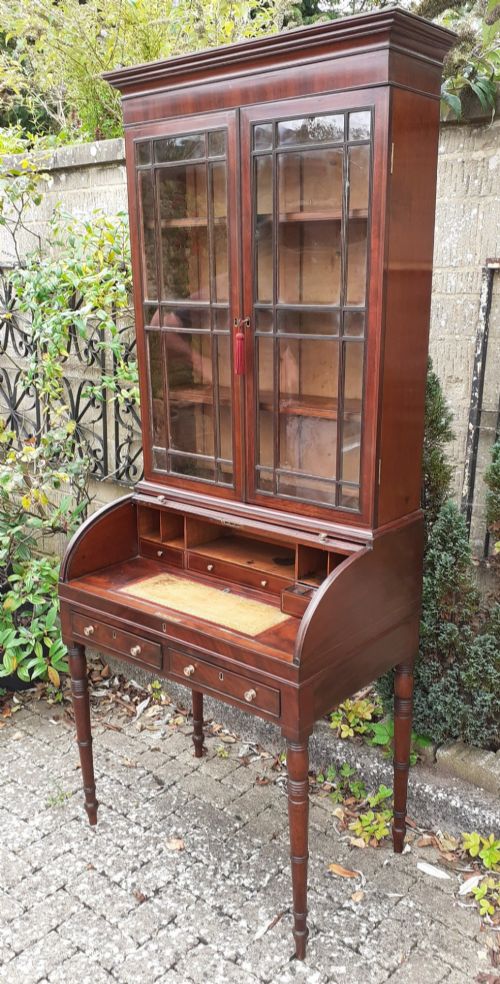
You will encounter standalone desks alongside taller bureau bookcases that feature upper shelving enclosed by glass doors. Common variations range from compact ladies desks to substantial estate writing desks and bureau bookcases.
Regional styles introduce distinct silhouettes, including Dutch baroque bombe fronts and marquetry inlaid walnut alongside English mahogany and satinwood forms. The most frequently met examples rely on figured mahogany veneers set with pull-out writing slides and internal compartments.
Materials and Construction
Cabinetmakers constructed these desks using solid timbers and fine veneers of mahogany, satinwood, walnut, and partridgewood over secondary woods. Surfaces frequently display intricate inlay work, stringing, and floral marquetry executed in contrasting woods.
Hardware details involve cast brass ring handles, escutcheons, and occasional ebony stringing to accent the drawer fronts and writing compartments. Interior fittings comprise small pigeonholes, drawers, and leather or textile lined pull-out writing slides.
Some cylinder desks hide secret compartments behind tiny drawers that only slide out when you press a hidden wooden spring.
Judging Quality
The distinction between ordinary and superior pieces rests on the choice of timber and the precision of the cylinder mechanism. Dense, highly figured mahogany or satinwood veneers demonstrate greater cabinetmaker skill than plain surfaces.
Smooth operation of the rolling cylinder and tightly fitted internal drawers indicate meticulous workshop construction. The integration of fine brass mounts, subtle stringing, and balanced proportions elevates the status of the piece within its period.
Tudor and Burrey·John Mclean
The Georgian Cylinder Bureau Glossary
- Cylinder bureau
- A writing desk with a rounded, quarter-circle wooden shutter that slides back to reveal drawers and pigeonholes. This mechanism protects the desktop contents while maintaining a neat exterior appearance.
- Tambour
- A flexible shutter made from narrow strips of wood glued to a canvas backing so it can run in a track. It serves the same enclosing function as a solid cylinder top.
- Marquetry
- Decorative patterns formed by fitting together contrasting veneer pieces into wooden surfaces. Floral motifs and geometric designs are typical of this technique.
- Secretaire
- A cabinet or desk incorporating a pull-out writing drawer or drop-front writing surface. It often combines storage shelving with a dedicated desk section.
- Stringing
- Thin lines of contrasting wood inlaid into the surface of furniture to create borders and geometric outlines. This detail defines panel edges on drawers and tabletops.
Georgian Cylinder Bureau: Frequently Asked Questions
How do I operate a cylinder bureau?
Grasp the handle or pull-rail of the curved wooden shutter and slide it smoothly backward into the body of the desk. This action simultaneously reveals the internal writing slide and pigeonholes.
Ensure the internal desk slide is pushed back before attempting to close the cylinder shutter. Regular light waxing of the wooden tracks keeps the mechanism moving freely.
What is the difference between a cylinder bureau and a rolltop desk?
A cylinder bureau uses a solid curved wooden shutter that follows a precise quarter-circle track to conceal the desk interior. These typically date from the Georgian and Regency periods and feature refined cabinetwork.
Rolltop desks generally utilise tambour slats and belong to later Victorian and Edwardian manufacturing traditions. The cylinder form offers a sleeker, continuous wooden curve when closed.
Where should I place a cylinder bureau in a room?
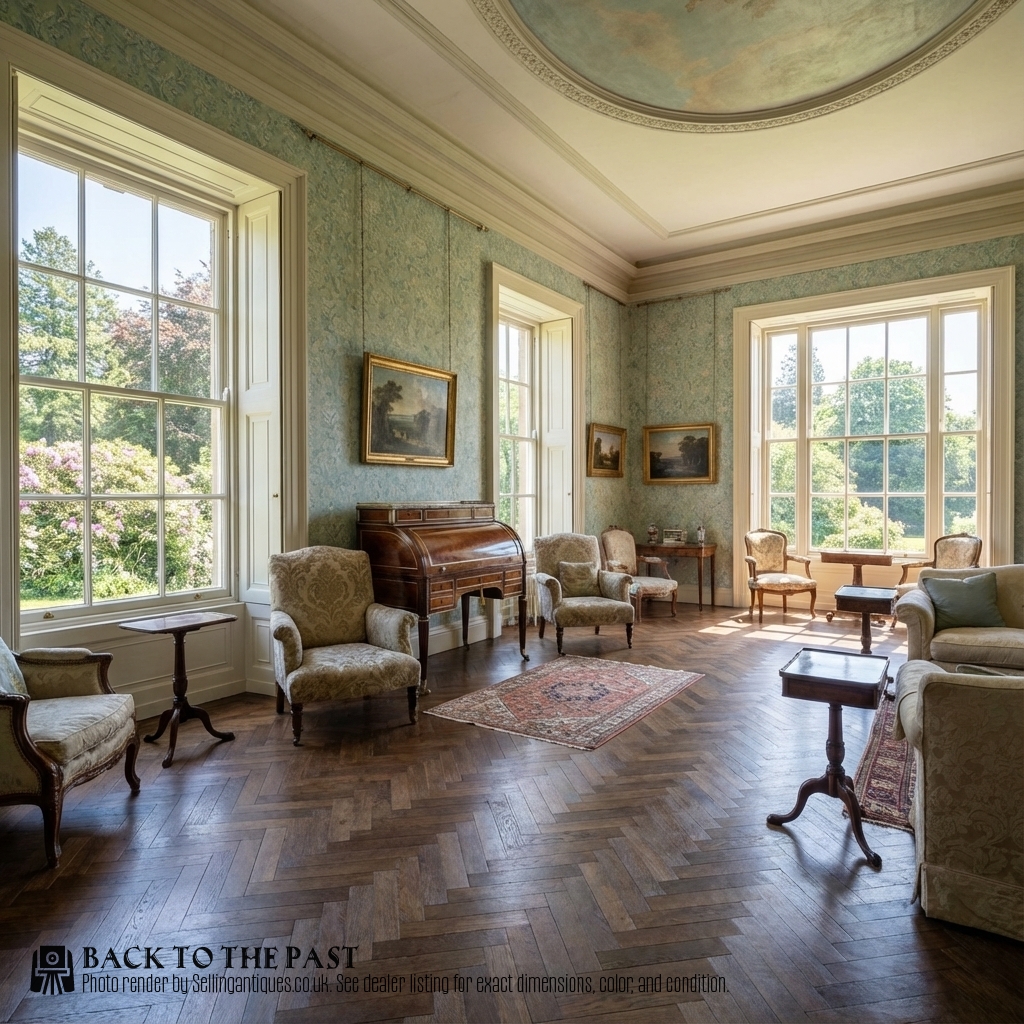
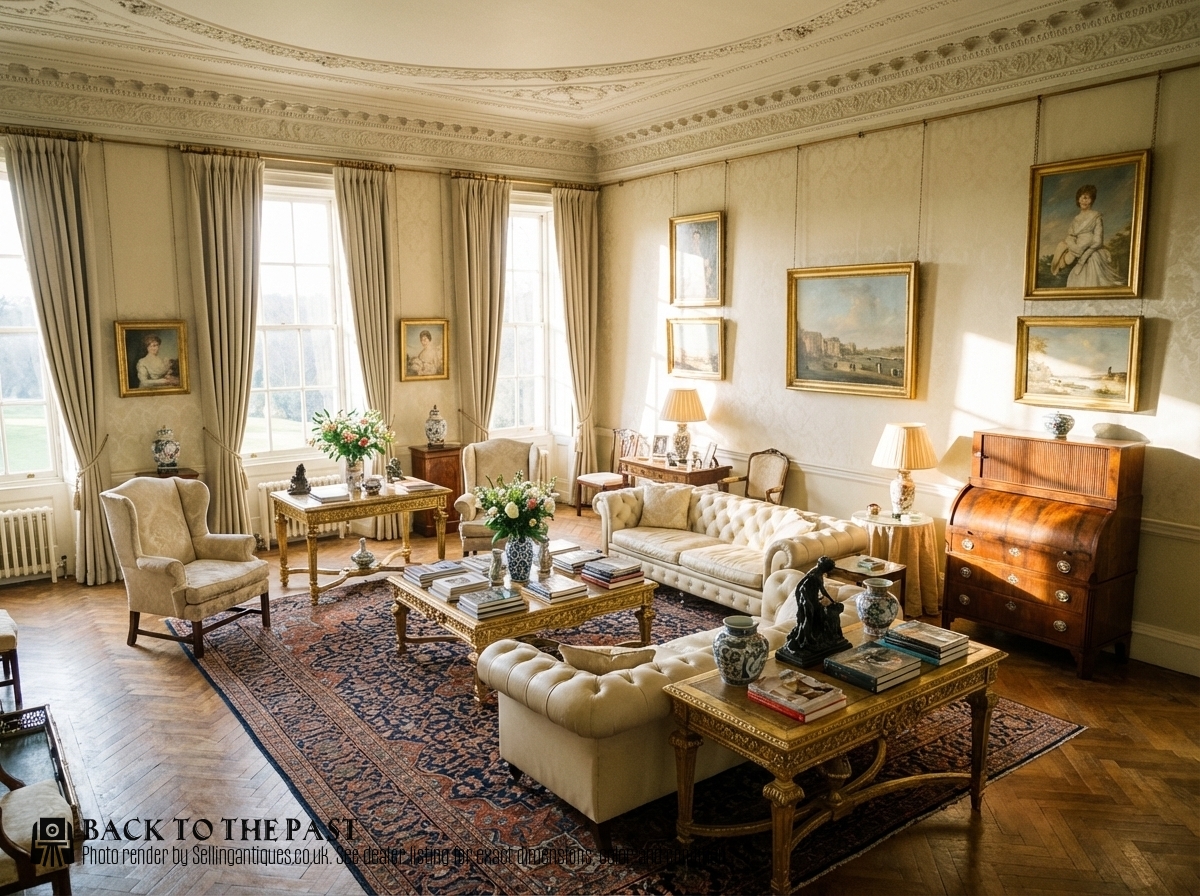
Position the desk against a solid wall where natural light can fall across the pulled-out writing slide from the side. Avoid placing the piece in direct sunlight to protect delicate satinwood and mahogany veneers from fading.
Leave sufficient clearance in front of the desk for a chair and for the writing slide to extend fully. These pieces function well in studies, libraries, or living spaces as focal points.
How do I care for antique wood surfaces?
Dust the exterior regularly with a soft, dry cloth and apply a quality beeswax polish sparingly every few months. Avoid silicone-based sprays and keep the furniture away from direct heat sources and damp environments.
Treat the leather or textile writing insert gently by keeping it clean and free from moisture. Proper humidity control prevents the solid timbers and veneers from shrinking or cracking.