

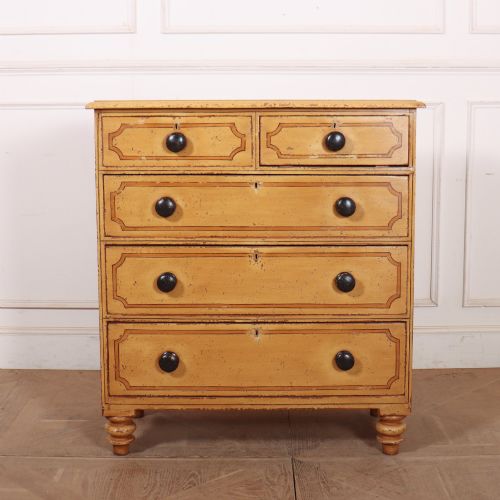


English Regency Bureau
An English regency bureau brings together fine cabinetmaking and practical writing space, offering a striking centrepiece for any study or drawing room.
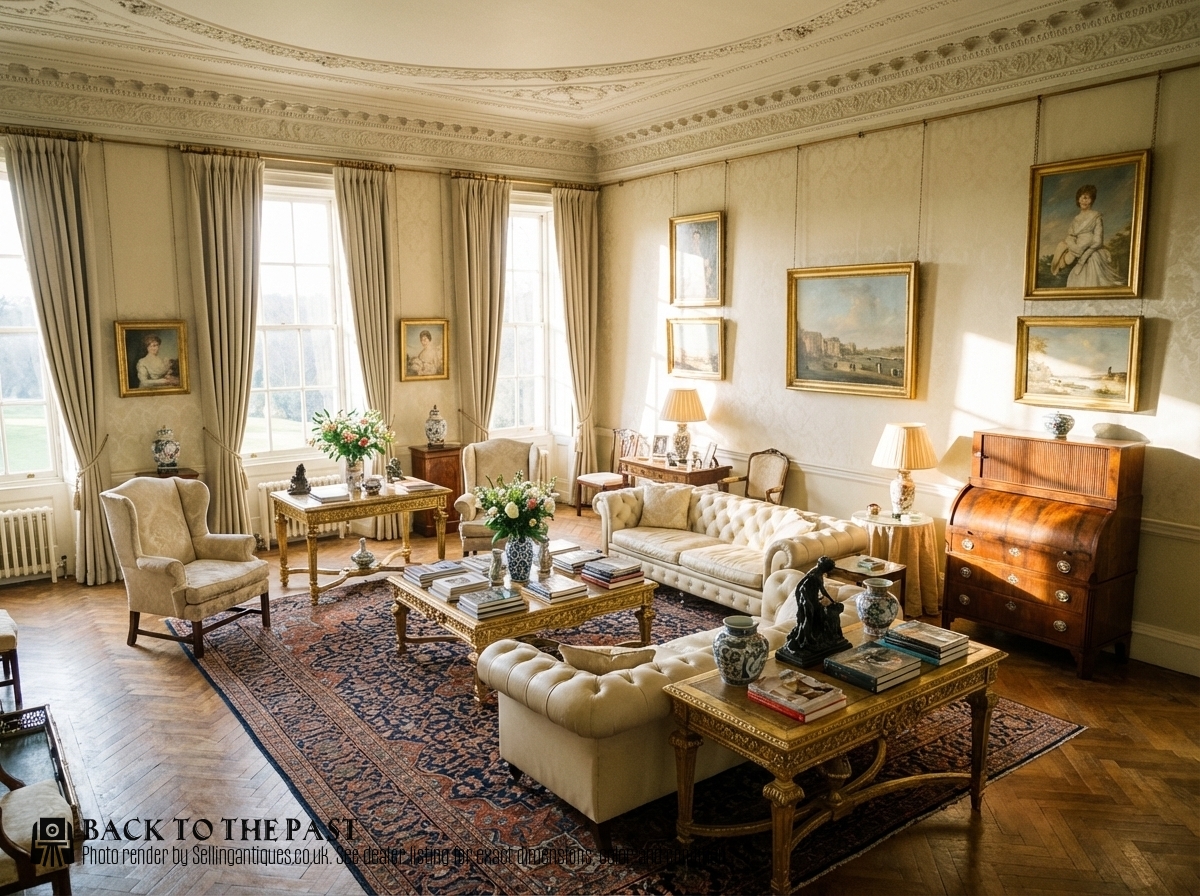
English Regency Bureau
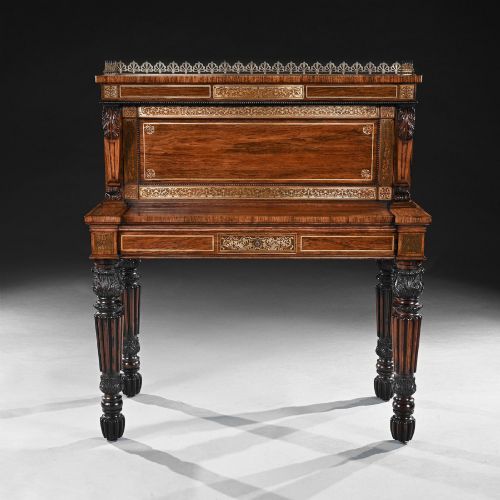
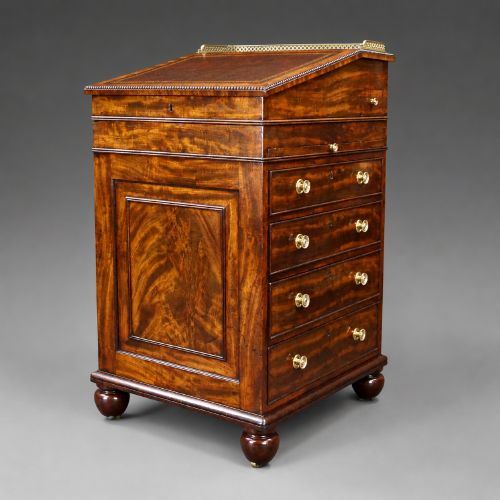
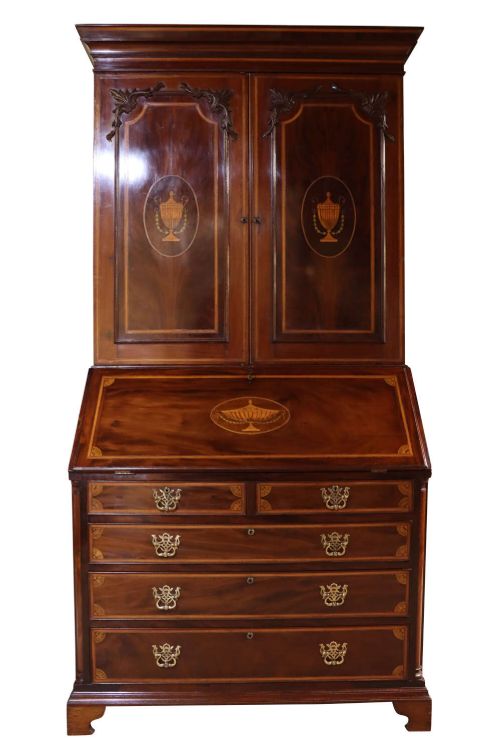
An English regency bureau encompasses pieces designed for writing and storage, including secretaire bookcases, Davenport desks, and cylinder desks. These items date primarily from the nineteenth century and the Regency period, though examples extend into the Georgian and Victorian eras.
The form frequently appears as a chest of drawers fitted with a fall front or writing flap that conceals fitted compartments and small drawers. Bookcases and cabinets with upper shelving sections also emerge regularly within this selection.
Makers such as Gillows and John McLean heavily influenced the output of the period, producing high-status items in mahogany and rosewood. Simpler provincial variants and English country pieces also populate the category alongside grand scale formats.
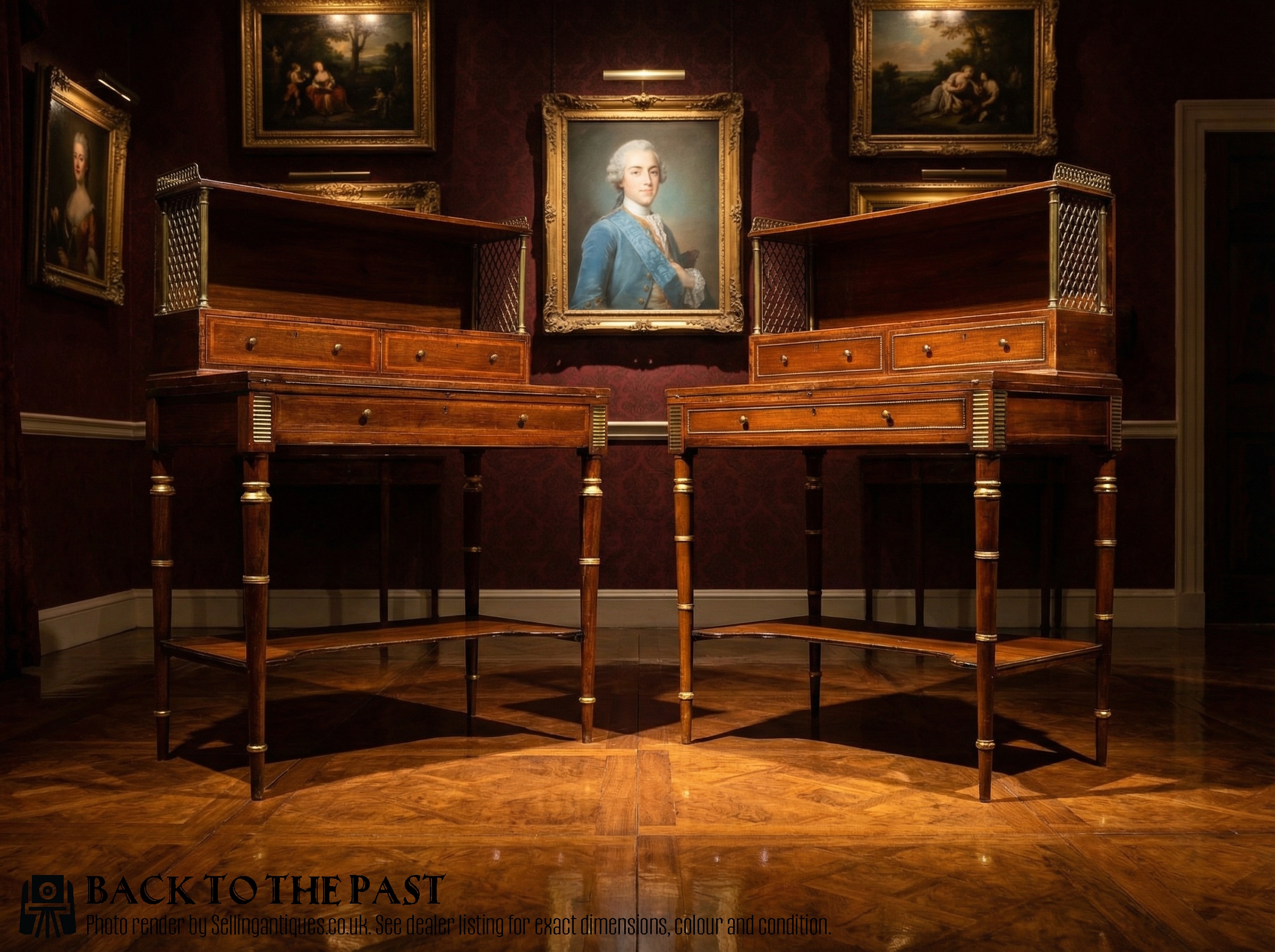
Determinants of Quality
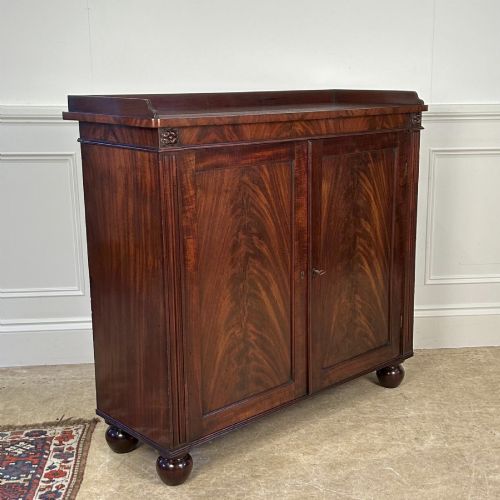
The choice of timber sets the baseline for quality, with carefully selected flame mahogany and figured rosewood marking out superior pieces. Grain matching across drawer fronts and fall fronts demonstrates the skill of the cabinetmaker.
Internal complexity dictates distinction within the category. Fitted interiors featuring secret compartments, pigeonholes, and fine small drawers separate standard utility furniture from pieces produced by premier workshops.
The listings span the nineteenth century, featuring oak, mahogany, glass, leather, and brass across desks, chests of drawers, and secretaire bookcases.
Gillows Oxford Street Workshop·John MaClean·John Gregory London·Gillows of Lancaster
The English Regency Bureau Glossary
- Secretaire
- A desk or cabinet featuring a pull-out or drop-front writing drawer that conceals smaller compartments. This mechanism allowed formal storage to double as a writing surface.
- Davenport
- A compact small desk featuring a sloping writing top and drawers accessed from the side. It gained popularity during the Regency period for boudoir and parlour use.
- Flame mahogany
- Timber cut from the fork of the mahogany tree to produce a distinctive flickering grain pattern. Cabinetmakers used these veneers symmetrically on primary surfaces.
- Stringing
- Thin inlay lines of contrasting wood or brass set flush into the surface of the furniture. It outlines drawers and panels to add linear definition.
- Abattant
- A vertical cabinet with a drop-front writing flap similar to a bureau. The term links closely to continental forms found in English collections.
English Regency Bureau: Frequently Asked Questions
What is a regency bureau?
A regency bureau is a writing desk or cabinet produced during the early nineteenth century, typically featuring a hinged writing flap or pull-out drawer mechanism.
These pieces combine enclosed storage for correspondence with a stable surface for daily writing tasks.
How do I identify a Gillows piece?
Gillows pieces often display exceptional timber selection, such as flame mahogany or rosewood, paired with refined brass inlay and precise joinery.
Some items carry direct stamps or paper labels, while others are attributed through distinctive workshop characteristics and structural traits.
Where were these desks used?
These items originally served as private writing desks and storage units in the principal rooms or libraries of large houses.
Today they function effectively as standalone desks or feature storage in modern studies and living spaces.
What timber was most common?
Mahogany served as the predominant wood, frequently utilised in solid form or as a figured veneer over a secondary timber.
Rosewood also appears on finer high-status examples, complemented by brass and leather details.