


Regency Ladies Desk
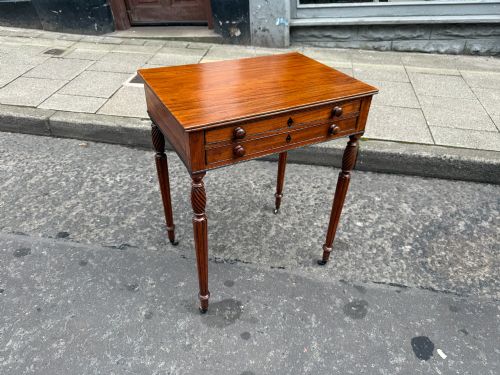
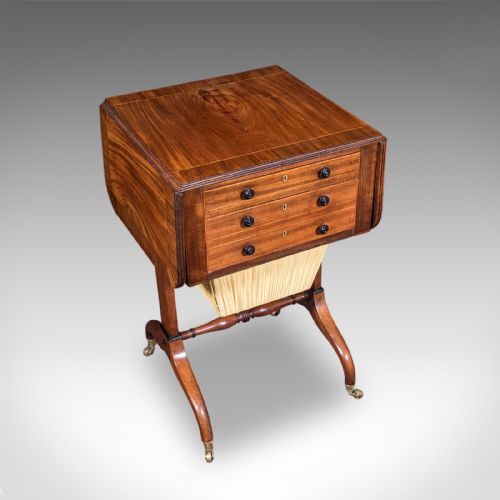
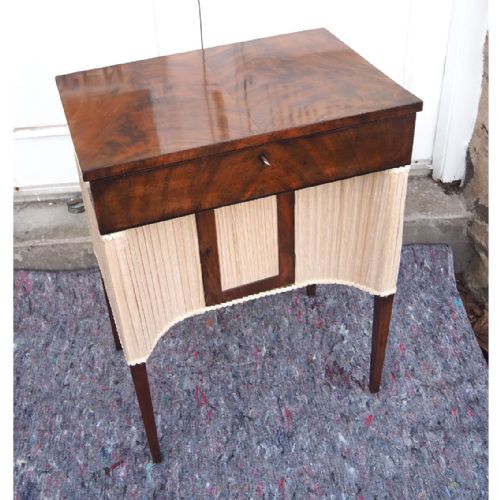
A regency ladies desk is a compact writing piece designed for correspondence, bringing refined elegance and practical utility to a private room.
Regency Ladies Desk
The versions most likely to meet you on this page are mahogany and rosewood examples featuring delicate proportions, often incorporating tambour doors, screen backs, or lyre supports. Many pieces combine writing surfaces with dressing or work facilities.
Originating in an era of elegant domestic interiors, these tables reflect the Neoclassical taste of the Georgian and Regency periods. They range from simple mahogany writing surfaces to elaborate kidney-shaped tables adorned with painted decoration and Wedgwood plaques.
Materials and construction
Cabinet makers built these desks using solid timbers and fine wood veneers, predominantly selecting richly figured mahogany, flame mahogany, fiddle back mahogany, and exotic rosewood. Satinwood frequently appears for contrasting interior details or primary surfaces.
Decorative embellishments include brass hardware, giltwood accents, and intricate inlay work, alongside fabric and leather inserts set into the writing surfaces. Structural supports often take the form of graceful lyre ends or slender legs suited to lighter domestic furniture.
Listings demonstrate forms spanning tambour writing tables, work tables, and Davenport desks executed in mahogany, rosewood, and satinwood.
Distinctions in quality
The distinction between standard and exceptional pieces rests upon the selection of timber figures, such as flame mahogany or highly grained rosewood, and the precision of the cabinet work. Superior examples demonstrate refined proportions and meticulous attention to secondary details like interior drawers and pigeonholes.
Makers of the highest standing incorporated specialised mechanics, such as smooth-running tambour shutters, drop-leaf mechanisms, or fitted writing slides. Decorative additions like original painted decoration, Wedgwood plaques, and quality brass mounts further elevate a piece above standard workshop production.
John MaClean·Gillows·S & H Jewell of London·Hobbs & Co
The Regency Ladies Desk Glossary
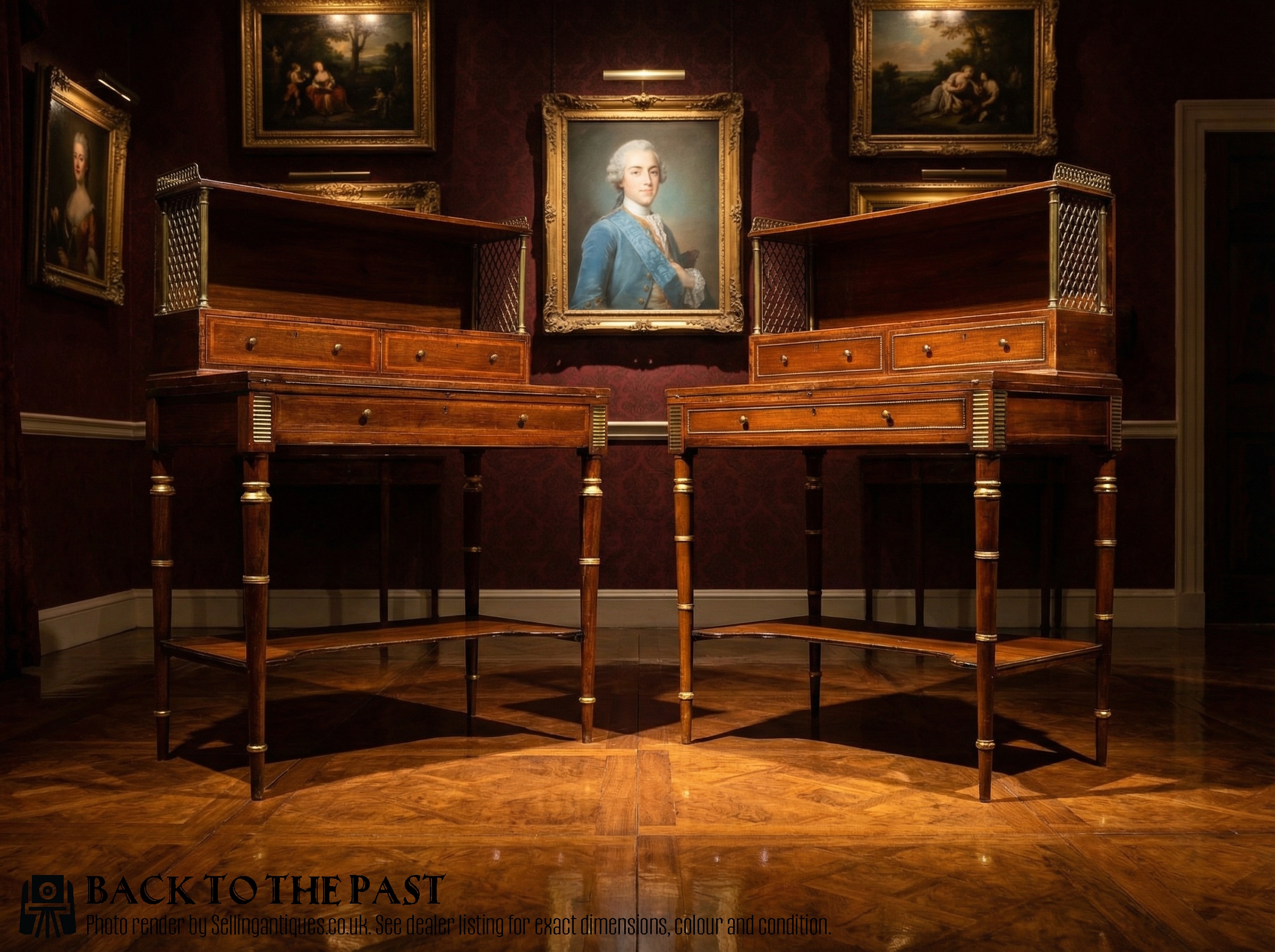
- Bonheur du jour
- A small, light ladies desk featuring a raised cabinet or set of pigeonholes and drawers above the main writing surface. This form gained popularity during the late eighteenth century and continued through the Regency period.
- Tambour
- A sliding door or shutter constructed from narrow vertical strips of wood glued to a canvas backing. It runs in concealed grooves to enclose compartments or small drawers.
- Davenport
- A compact form of small desk featuring a sloped, hinged writing lid above a pedestal of drawers. It typically includes a side-opening mechanism or stationery box.
- Lyre support
- A furniture support shaped in the classical silhouette of a Greek lyre, frequently utilised on the ends of tables and desks during the Regency era.
- Fiddle back mahogany
- Timber displaying a wavy, undulating grain pattern resembling the back of a violin. Cabinet makers prized this figure for its optical depth and chatoyancy under polish.
Regency Ladies Desk: Frequently Asked Questions
How do I use a ladies writing table today?
These compact desks fit easily into modern bedrooms, living rooms, or home studies as functional writing surfaces or display tables. Their modest proportions make them practical for laptop use or letter writing.
Many pieces also double as dressing tables or side tables, offering useful surface space and internal storage without dominating a room.
How can I tell a Regency desk from a later copy?
Authentic Regency pieces display construction methods appropriate to the early nineteenth century, including hand-cut dovetails, timber shrinkage patterns, and appropriate secondary woods. The hardware, patination, and manner of veneering align with the techniques of the period.
Later nineteenth-century and Edwardian revival pieces often utilise different internal construction details, machine-made elements, or timber preparation methods characteristic of their actual manufacture date.
What woods were used for Regency desks?
Cabinet makers predominantly used mahogany, flame mahogany, and rosewood for the primary exterior surfaces of these desks. Satinwood frequently appears for contrasting interior veneers and lighter decorative highlights.
Secondary structural timbers typically include oak or pine for drawer linings and internal frames, depending on the workshop and regional traditions.