


Carved Lyre Desk
These carved lyre desk examples and related seating integrate classical proportions with practical workspace utility.
Carved Lyre Desk
A carved lyre desk brings classical design motifs into domestic writing and reading furniture. When exploring a carved lyre desk, buyers encounter forms spanning the Georgian, Regency, and Victorian periods.
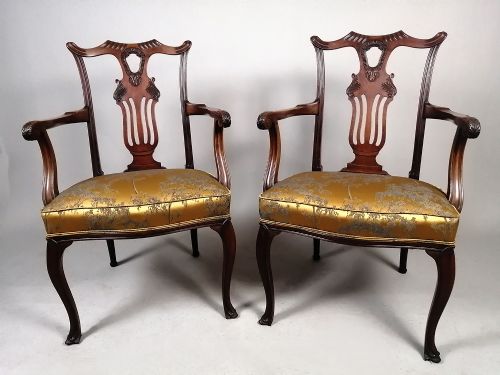
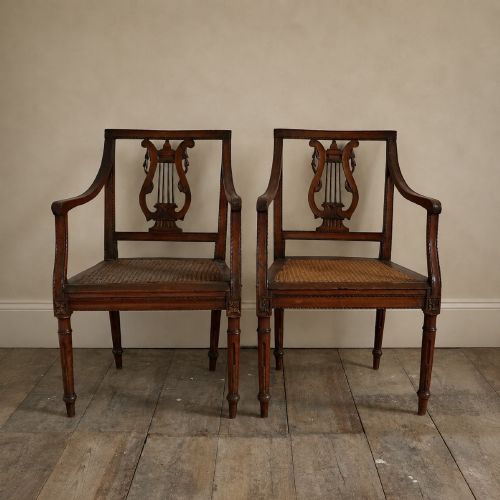
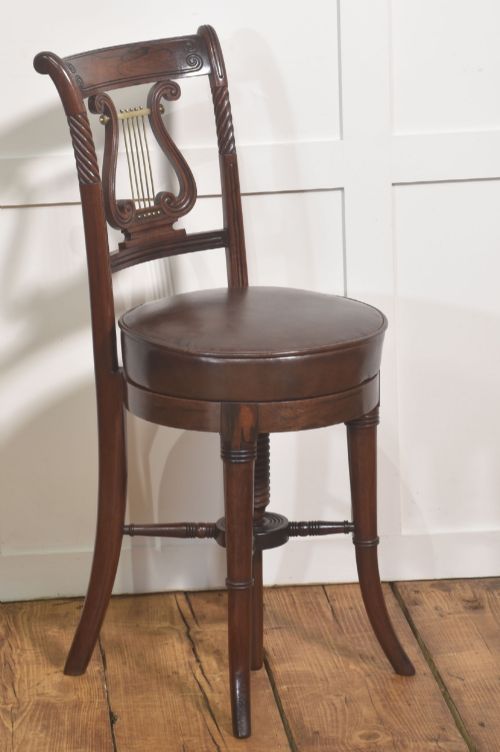
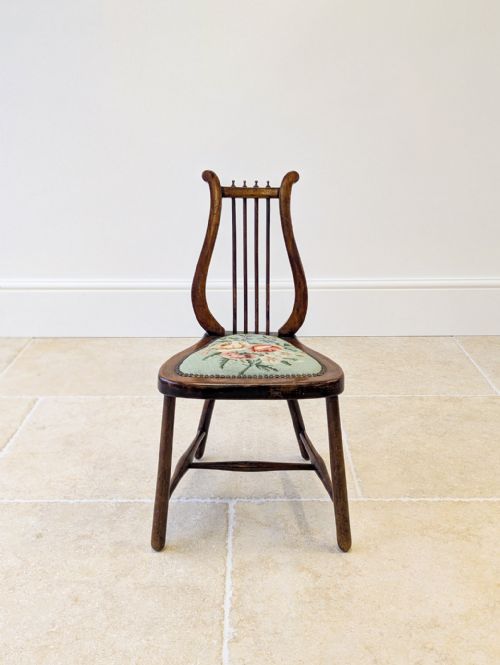
The selections on this page pair the characteristic musical instrument motif with mahogany, walnut, rosewood, and oak timbers. Alongside desks, related pieces feature the same lyre motif upon armchairs, side chairs, and music stands.
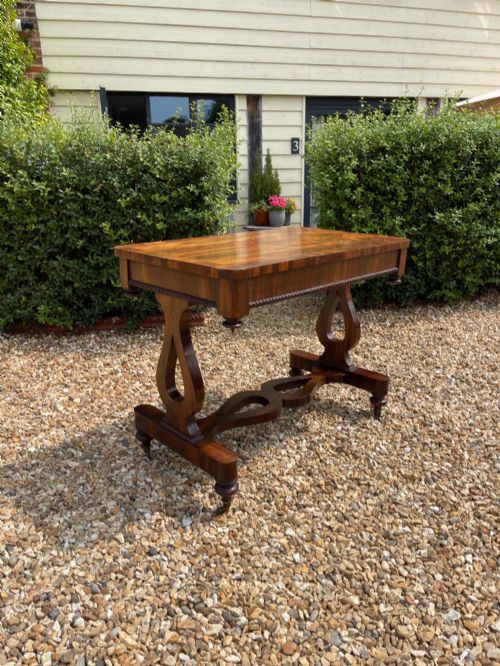
Origin details in the evidence highlight English and continental workshops producing these items across the nineteenth century and into the Edwardian era. Pieces range from formal ladies desks on lyre supports to robust library and side tables.
Materials and construction
Cabinetmakers utilised dense hardwoods including mahogany, walnut, rosewood, and oak to shape the structural frames and decorative lyre supports. These timbers provided the strength needed for intricate carving work.
Joinery methods relied on traditional cabinet techniques to secure desks and seating while incorporating brass accents and leather surfaces. Secondary woods such as beech and elm appear in supporting frameworks and country variations.
Some desks hide their inkwells so cleverly that even the most determined nineteenth-century writer had to hunt for the pen.
Assessing quality
Quality rests on the crispness of the carved lyre motif and the selection of figured timber veneers. Superior examples display balanced proportions and precise joinery that withstands daily use.
The integrity of the original wood grain and the finesse applied to secondary materials distinguish finer items from simpler utilitarian productions.
The Carved Lyre Desk Glossary
- Lyre motif
- A decorative carving shaped like the ancient musical instrument, frequently centered on chair backs and desk supports. This classical ornament defines the aesthetic of the category.
- Secretaire
- A writing cabinet or desk featuring a drop-down writing flap that conceals inner compartments and drawers. Such pieces combine storage utility with refined reception spaces.
- Inlay
- A technique where contrasting pieces of wood or metal are inserted into the primary timber surface to create decorative patterns. It enhances the visual depth of tables and desk lids.
Carved Lyre Desk: Frequently Asked Questions
What is a carved lyre desk?
A carved lyre desk is a writing table featuring structural supports or back splats carved in the shape of a classical lyre.
These pieces draw on Regency and Victorian design traditions, combining workspace functionality with ornamental woodwork.
How do I date a desk?
Dating relies on examining the timber species, construction methods, and stylistic cues present in the woodwork.
Pieces from the Georgian and Regency periods show different framing techniques compared to later Victorian and Edwardian examples.
Which woods were used?
Cabinetmakers primarily worked with dense hardwoods including mahogany, walnut, and rosewood for primary surfaces.
Secondary timbers like oak, beech, and elm frequently appear in structural frames and country-made variations.
Are these desks for daily use?
Solid hardwood construction makes these historical desks suitable for everyday writing and laptop use.
Placing them away from direct heat sources helps preserve the polished timber surfaces and antique joinery.