



Lyre Leg Desk
A lyre leg desk brings graceful scrolling supports and rich mahogany or satinwood into a study, offering a timeless writing surface.
Lyre Leg Desk
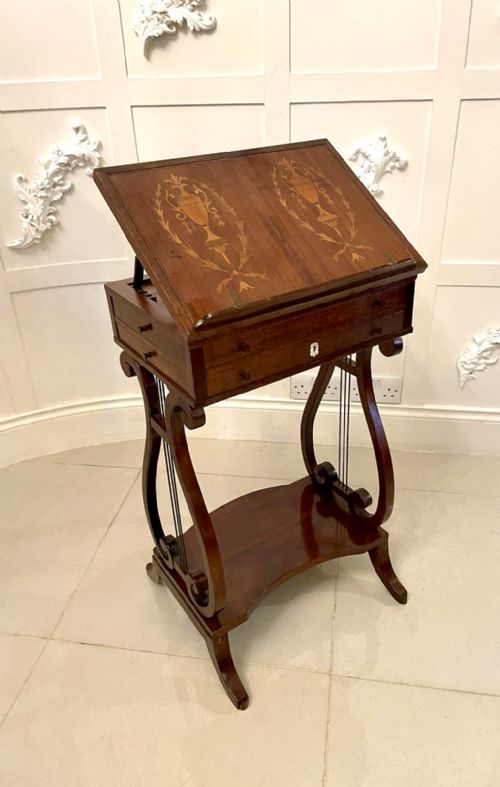
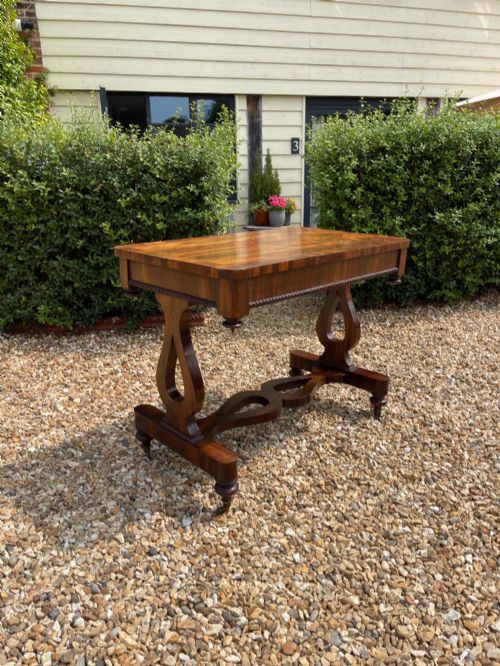
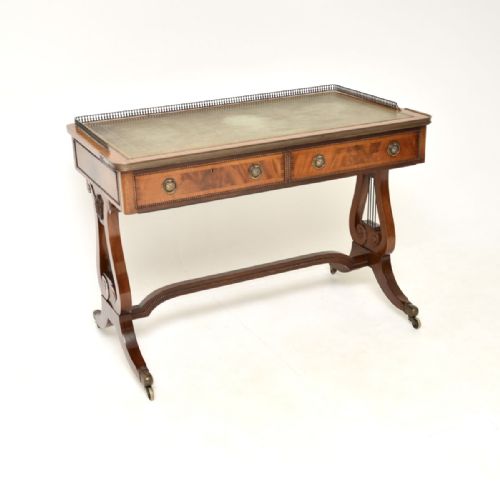
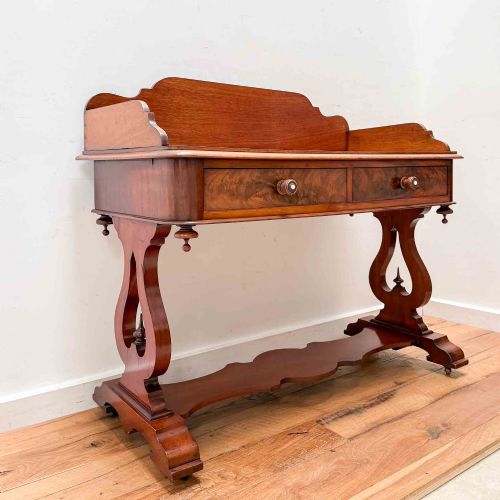
A lyre leg desk combines a practical writing surface with distinctive scrolling supports shaped like the ancient musical instrument, drawing on Regency and revival aesthetics. You will most frequently encounter variations from the nineteenth century alongside later Edwardian and Victorian interpretations.
These pieces often feature rich timber grains such as mahogany and satinwood, occasionally complemented by leather writing inserts or delicate boxwood inlay. The form bridges the gap between formal library tables and elegant ladies writing desks.
Materials and construction
Cabinetmakers relied on solid mahogany and walnut for structural integrity, shaping the distinctive lyre supports with careful scrollwork and brass fittings. Finer examples incorporate satinwood veneers and contrasting boxwood stringing to accentuate the writing surface.
Surfaces were frequently finished with inset leather or fabric writing panels, secured with subtle tooling. Joinery techniques from these periods prioritized both stable weight distribution and visual lightness around the central kneehole.
Musicians and classicists alike have quietly repurposed nineteenth-century music room motifs into everyday writing furniture for two centuries.
Assessing quality and proportion
Quality rests heavily on the crispness of the carved lyre scrolls and the selection of timber veneers across the top. Superior examples display balanced proportions where the weight of the base matches the scale of the writing surface.
The integration of secondary timbers and the precision of any inlay work distinguish standard production from finer cabinetmaking. Well executed joinery ensures the delicate curves of the leg assembly remain rigid under daily use.
Andrew Thomson And Sons
The Lyre Leg Desk Glossary
- Lyre
- A scrolling wooden support carved in the stylized shape of an ancient Greek instrument, commonly found on the ends of tables and chairs from the Regency period onwards.
- Satinwood
- A lustrous, hard timber native to the tropics, prized by cabinetmakers for its pale yellow tone and silky grain during the Sheraton revival.
- Stringing
- A narrow strip of contrasting wood inlaid into the surface of a desk or table to create decorative geometric borders.
- Sofa Table
- A freestanding table with drop leaves on either side, frequently supported by dual pedestal columns or lyre ends.
Lyre Leg Desk: Frequently Asked Questions
What is a lyre leg desk?
A lyre leg desk is a writing table featuring distinctive vertical supports shaped like musical lyres, popularized during the Regency era and revived in later Victorian and Edwardian periods.
These pieces serve as functional workstations while providing a decorative architectural silhouette derived from classical antiquity.
How do I care for the leather top?
The leather writing insert benefits from occasional cleaning with a damp cloth followed by a neutral leather cream to prevent drying and cracking.
Avoid placing direct heat sources or strong sunlight near the desk to protect both the leather surface and the polished wood surrounding it.
Are these desks suitable for daily work?
Many antique writing tables function effectively for modern laptops and paperwork, provided the kneehole height matches your seating requirements.
Consider the depth of the writing surface and any central drawers when pairing the desk with a standard office chair.
How can I date my desk?
Dating relies on identifying the primary wood species, construction methods, and stylistic revival cues such as Sheraton or Regency motifs.
Nineteenth-century examples often display hand-cut dovetails in the drawer construction and distinct patination on the timber.