

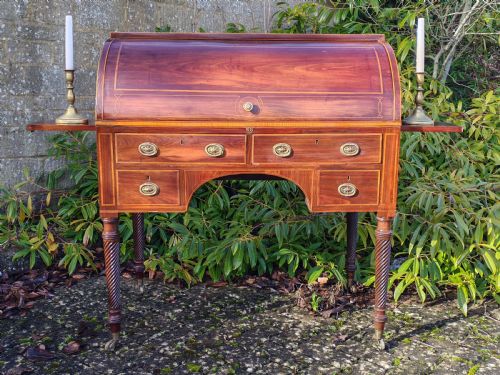

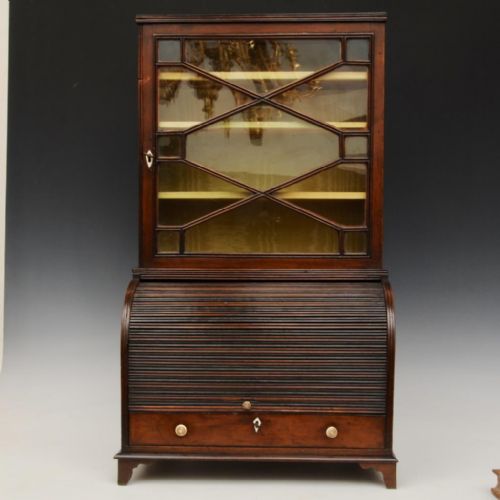


Regency Cylinder Desk
A regency cylinder desk is a practical writing companion with a curving roll enclosing fitted drawers, prized for keeping correspondence concealed.
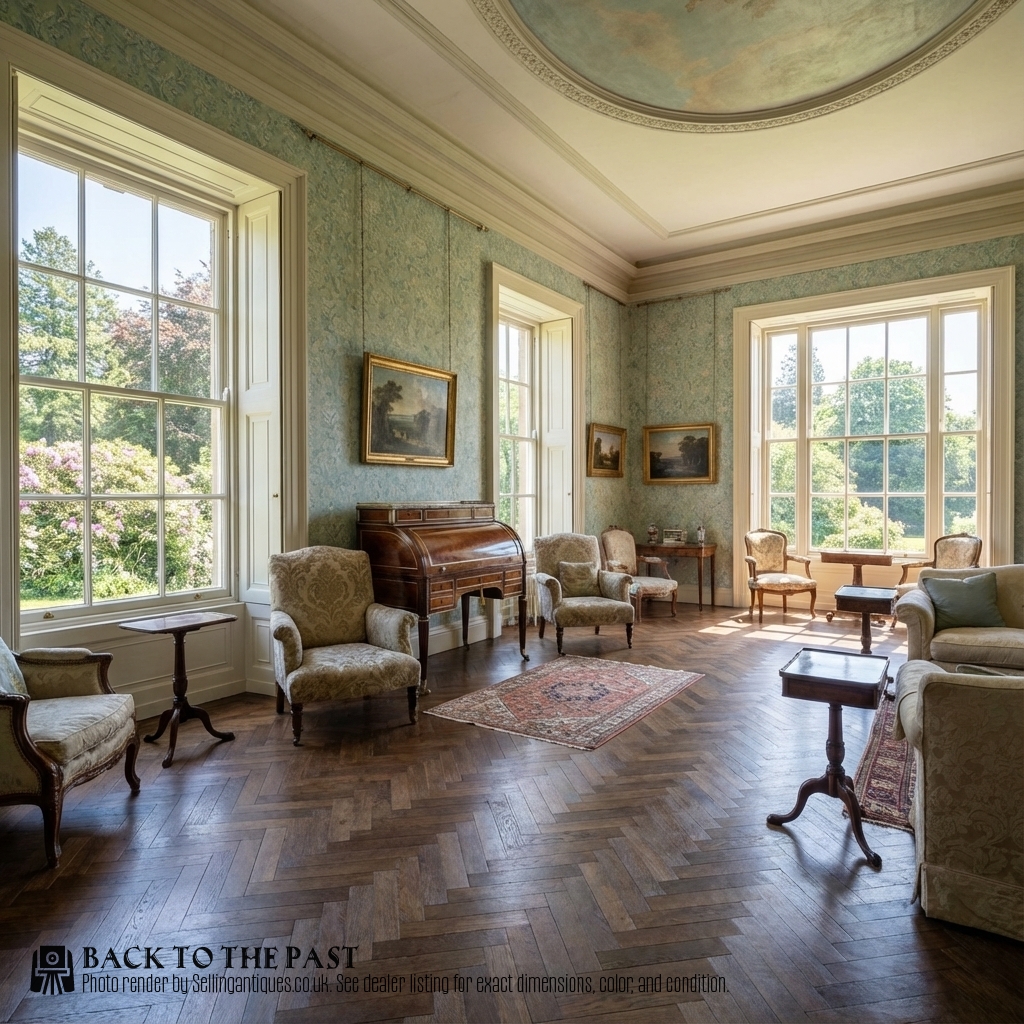
Regency Cylinder Desk
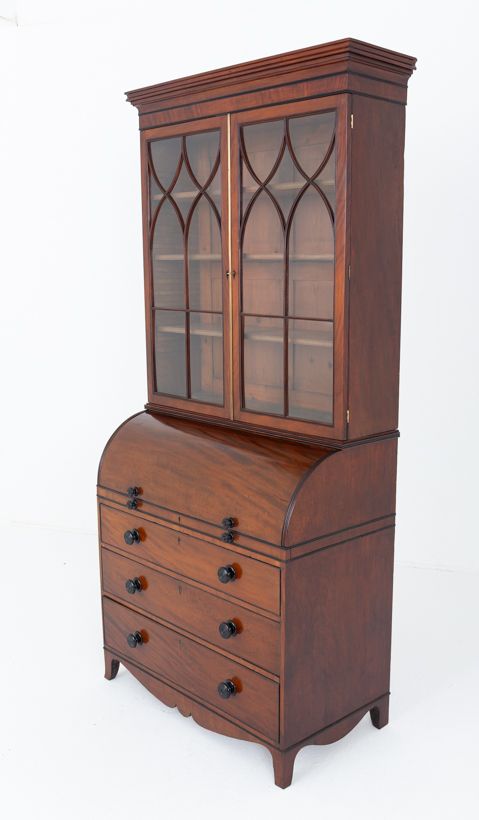
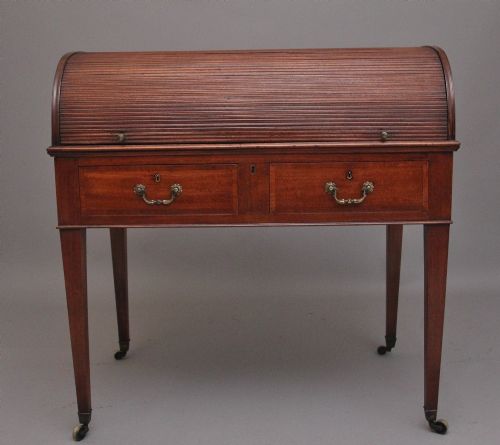
When you search for a regency cylinder desk, you look at a sophisticated writing form defined by a curved wooden shutter that rolls back to reveal fitted drawers and a pull-out slide. These pieces belong predominantly to the nineteenth century, aligning with the Regency and Georgian periods.
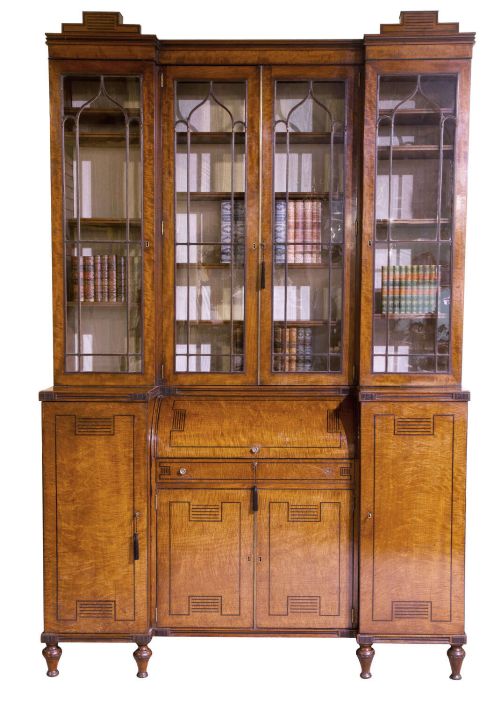
The versions you meet on this page include simple mahogany iterations alongside more ambitious rosewood, burr elm and pollard oak examples. Some pieces incorporate bookcase tops or fine satinwood inlay, while others stand as compact writing tables.
Makers of the period often worked in the manner of John McLean or George Bullock, producing freestanding desks with considerable presence. The form balances architectural discipline with the practical demand for a secure, tidy workspace.
How they were made
Cabinetmakers constructed these desks using dense primary timbers such as mahogany and rosewood, frequently accented with contrasting veneers like ebony and satinwood inlay. The curved cylinder shutter required precise joinery to ensure smooth travel along its tracks.
Hardware played a functional and decorative role, featuring cast brass ring handles and mounts. Secondary treatments included polished finishes that highlighted the natural grain of burr elm and pollard oak.
Regency Cylinder Desk Retail Price Guide 2026
Typical asking prices for regency cylinder desk among the pieces listed under this phrase on Sellingantiques today, from the lower quarter to the upper quarter. They describe what is for sale here now, not the wider market.
Some miniature cylinder desks appear alongside full-sized counterparts, serving as detailed scale models for master cabinetmakers.
What varies in quality
Quality rests upon the choice of timber and the ambition of the secondary veneers, where figured rosewood and burr elm elevate a piece far above plain mahogany. The precision of the cylinder mechanism and the crispness of any ebony inlay or brass mounts also distinguish finer workshops from standard production.
Proportion dictates the overall success of the form, separating neat, balanced writing desks from heavier, less resolved cabinet bookcases. Interior arrangement, including the complexity of the pigeonholes and small drawers, reflects the original commission's cost.
The Regency Cylinder Desk Glossary
- Cylinder desk
- A writing desk featuring a quarter-circle rotating wooden shutter that conceals the writing surface and interior drawers when closed. This mechanism keeps papers private without the hinged flap of a traditional bureau.
- Tambour
- A flexible shutter constructed from narrow vertical strips of wood glued to a canvas backing. It slides along a grooved track in a similar manner to a cylinder top.
- Secretaire
- A piece of furniture incorporating a pull-out writing drawer or drop-front desk compartment. The term often denotes a cabinet with integrated workspace.
- Rosewood
- A dense, heavily figured exotic hardwood prized for its dark grain and rich colour during the Regency period. It was frequently used for high-status cabinet work.
- Inlay
- The technique of inserting contrasting materials into depressions carved into the wood base to form decorative patterns. Ebony and satinwood were common choices for linear detailing.
Regency Cylinder Desk: Frequently Asked Questions
What is a cylinder desk?
A cylinder desk is a form of writing furniture featuring a curved, quarter-circle wooden roll that conceals the writing surface when pulled down. It offers the privacy of a bureau combined with the flat working area of a table.
Cabinetmakers during the Regency period refined this shape, often pairing the roll-top mechanism with raised bookcase sections or elegant tiered interiors.
How do I date a cylinder desk?
Dating relies on timber selection, structural characteristics, and decorative motifs consistent with the nineteenth century. Regency and Georgian examples display specific brass hardware and veneer choices such as rosewood and burr elm.
Construction details, including the method used to house the rolling cylinder and the dovetailing of interior drawers, also point toward the period of manufacture.
Were these desks used for writing?
These desks served as private administrative centres for correspondence and estate management. The pull-out writing slide typically featured a leather insert for a smooth writing surface.
Interior compartments organised letters, ledgers, and sealing wax, keeping sensitive documents secure behind the locked roll-top cylinder.
How do I care for rosewood furniture?
Rosewood requires stable indoor humidity and protection from direct sunlight to prevent the timber from drying or fading. Regular dusting with a soft, dry cloth preserves the polished surface.
Avoid placing these pieces near direct heat sources, which can cause historical veneers and delicate inlay work to lift from the primary wood.
What is pollard oak?
Pollard oak is a decorative timber harvested from trees that were cut back near the main trunk to encourage dense, textured branch growth. This pruning creates a distinctive clustered grain pattern with dark knot formations.
Cabinetmakers valued pollard oak for its striking visual movement, using it on prominent surfaces like cylinder desk shutters.