
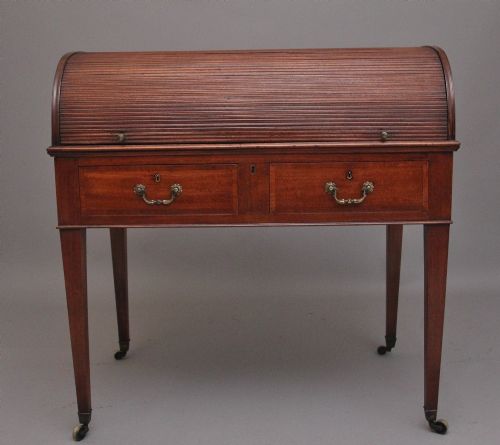


Georgian Roll Top Desk
A Georgian roll top desk brings working practicality and fine timber together in a single piece.
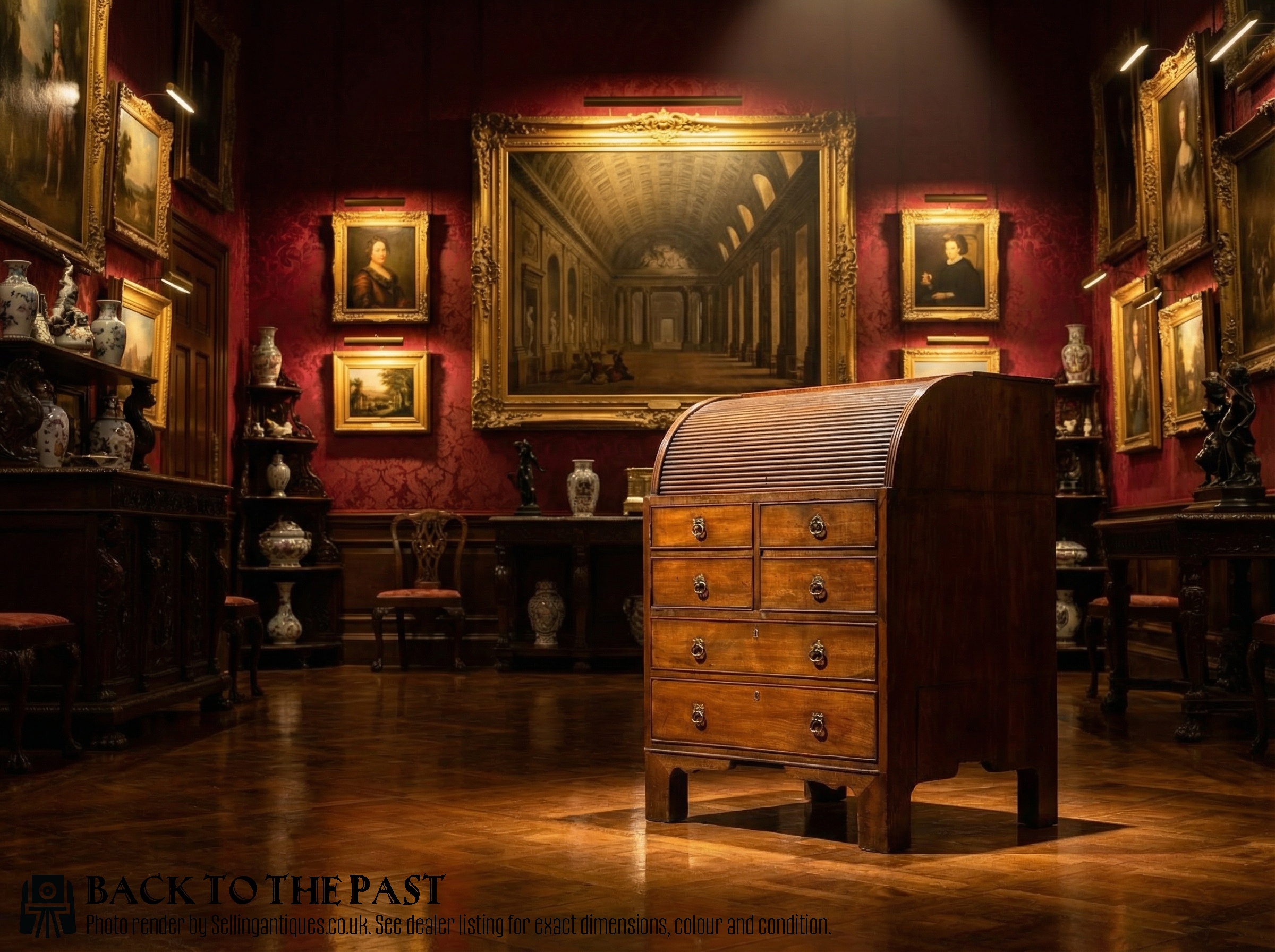
Georgian Roll Top Desk
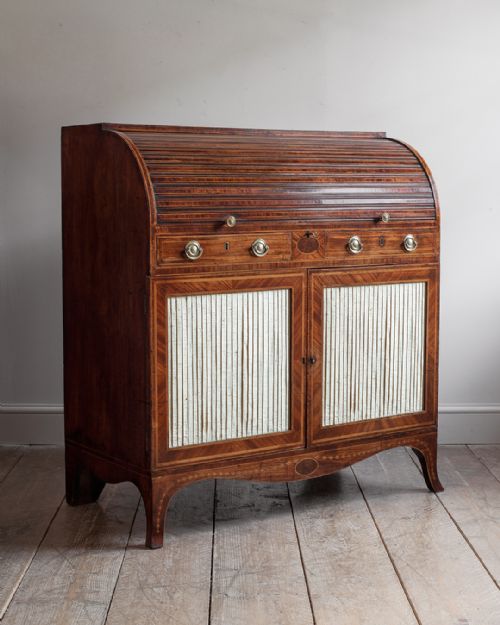
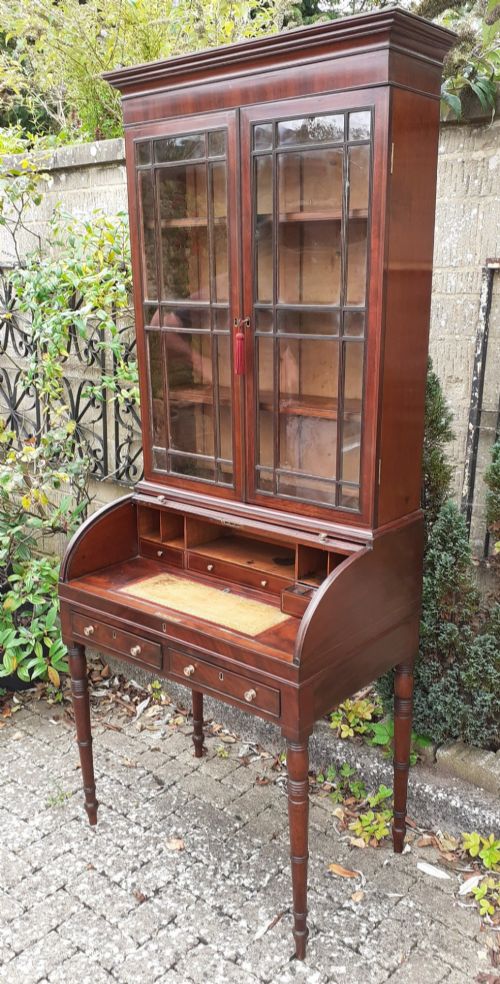
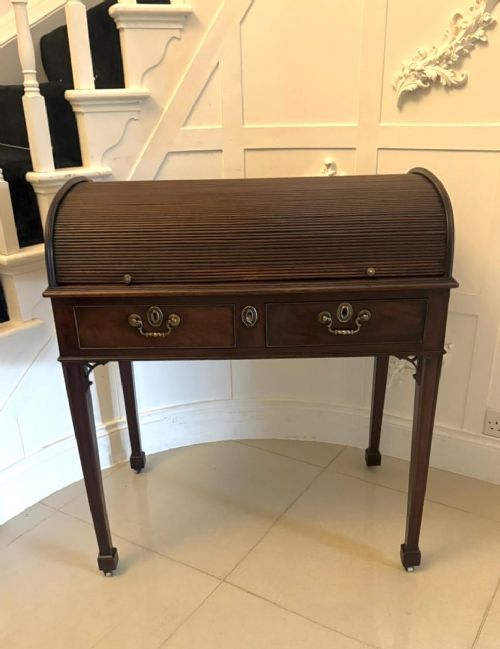
When searching for a Georgian roll top desk, buyers encounter forms that span the late 18th and early 19th centuries, including cylinder desks, tambour desks, and bureau bookcases. These pieces combine a writing surface with enclosed compartments, drawers, and sometimes upper shelving.
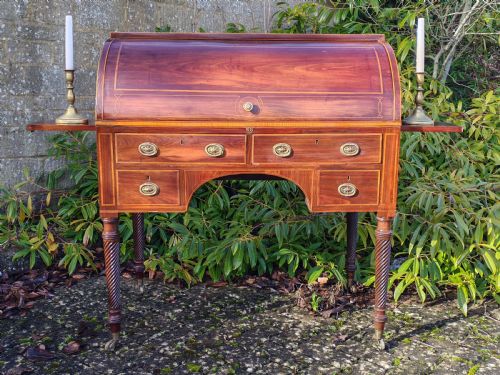
The materials seen in these listings range from dense mahogany and figured satinwood to exotic partridgewood and rosewood, often accented with contrasting inlay and brass hardware. Most examples date from the Georgian, George III, and Regency periods, reflecting the refined cabinet-making standards of those eras.
How they were made
Cabinet-makers of the period utilised solid timbers and choice veneers, applying satinwood inlay, ebony stringing, and floral marquetry to enhance the surfaces. Brass ring handles and escutcheons completed the construction of drawers and pull-out writing slides.
The distinctive rolling closure relied on either a solid cylinder of wood or flexible tambour slats glued to a canvas backing, allowing the mechanism to slide smoothly within concealed tracks to secure the desk interior.
Some miniature bookcases appear alongside full-sized desks, suggesting cabinet-makers also practiced their craft for dolls.
What varies in quality
The distinction between standard and exceptional pieces rests on the choice of timber figure, the precision of the inlay work, and the complexity of the internal fittings such as pigeonholes and secret drawers. Master cabinet-makers selected highly figured mahogany, satinwood, and yew wood to create striking visual depth.
Execution of the rolling mechanism and the integration of brass mounts also separate simpler items from pieces attributed to notable makers or specific stylistic periods like Sheraton and Hepplewhite.
Tudor And Burrey·John Mclean
The Georgian Roll Top Desk Glossary
- Tambour
- A flexible shutter made of narrow wooden strips glued to a fabric backing, which slides in a track to enclose the desk interior.
- Cylinder desk
- A writing desk featuring a quarter-circle rotating wooden cylinder that covers the writing surface and inner drawers.
- Marquetry
- Decorative veneer patterns formed by fitting together pieces of various woods, ivories, or shells.
- Secretaire
- A writing cabinet containing a fitted interior with drawers and pigeonholes behind a drop-front or cylinder lid.
- Stringing
- A narrow strip of contrasting wood inlaid into the surface of a piece to create a fine border line.
Georgian Roll Top Desk: Frequently Asked Questions
How do cylinder desks work?
A curved wooden shell rotates on a track to reveal or conceal the writing surface and internal compartments. Pull-out writing slides often extend forward to provide additional workspace when the cylinder is open.
This mechanical action keeps the desk surface tidy while securing papers and small items inside.
What is a tambour desk?
A tambour desk uses a slatted sliding shutter rather than a solid solid cylinder to cover the desk interior. The individual wooden strips are attached to a fabric backing for flexibility.
This construction allows the cover to follow a curved track around the back of the writing compartment.
Which woods were used?
Makers predominantly utilised mahogany, satinwood, and rosewood, frequently incorporating yew wood and partridgewood for contrast. Veneers and solid sections were chosen for their distinct grain patterns.
Inlay work often featured ebony, boxwood, and various fruitwoods to create decorative borders and floral marquetry.
How do I date these pieces?
Dating relies on stylistic markers associated with the Georgian, George III, Sheraton, and Regency periods. Cabinet-making techniques, hardware styles, and timber choices provide key indicators of age.
Details such as brass ring handles and specific inlay motifs help place the construction within the late 18th or early 19th century.