
Regency Wooden Credenza
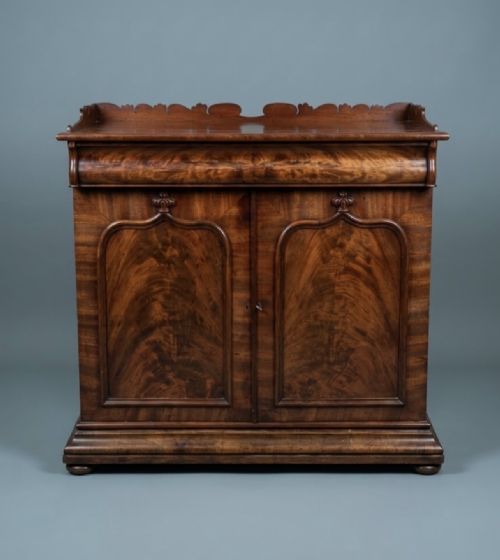
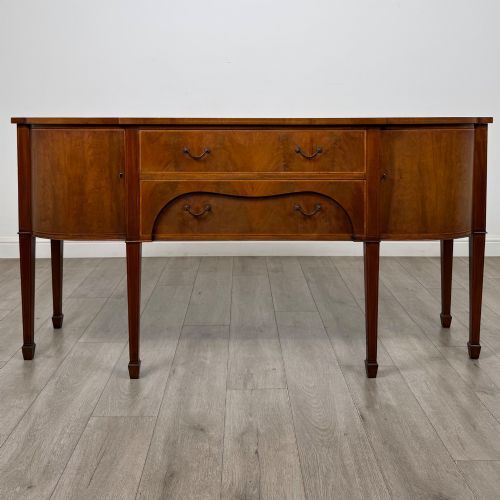
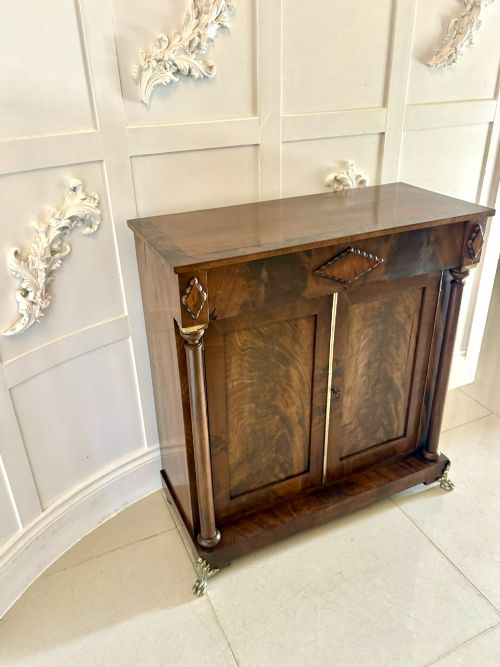
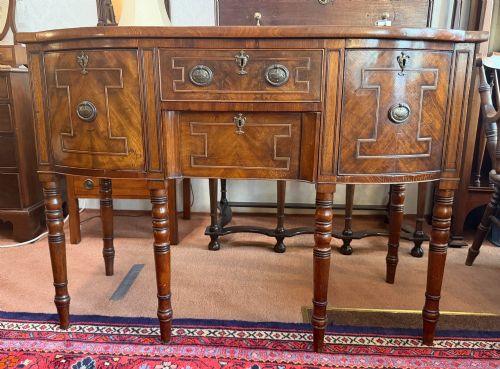
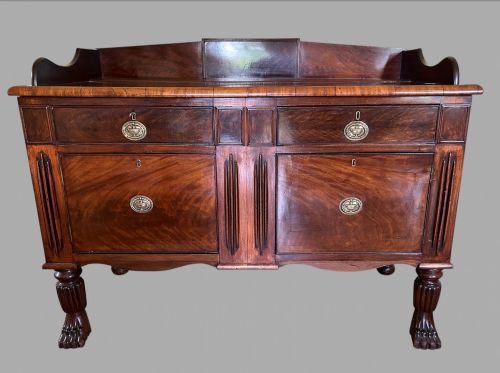
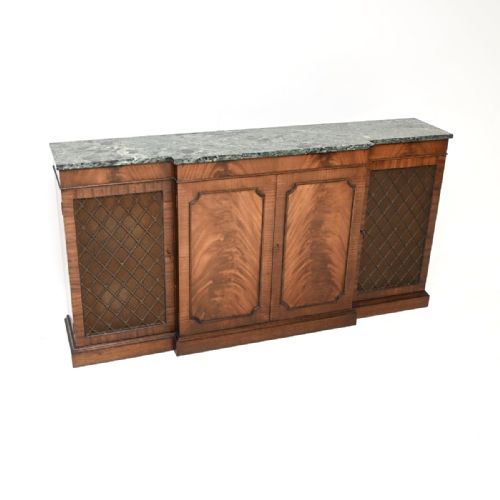
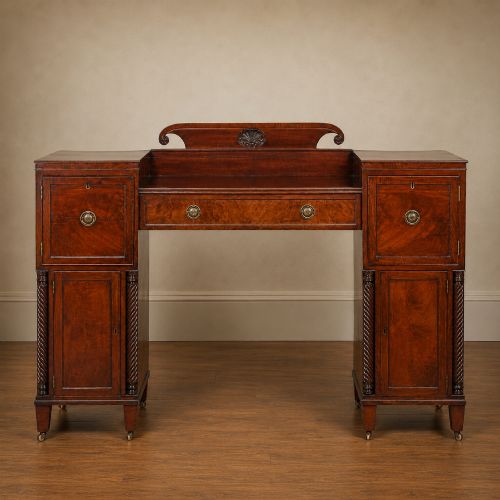
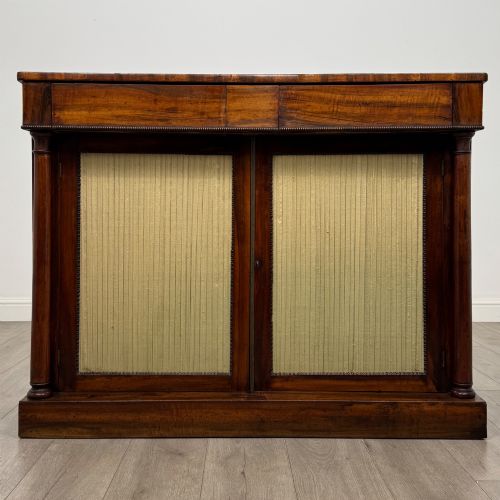
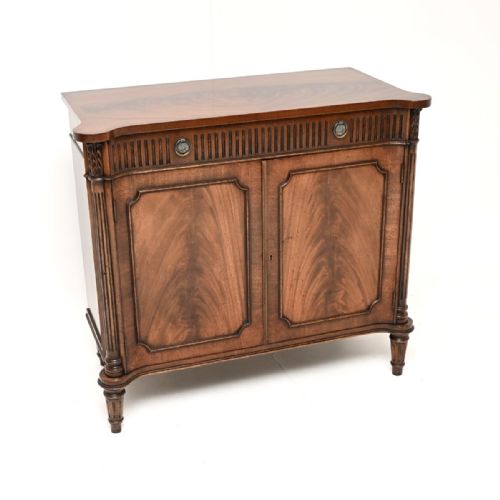
These regency wooden credenza options are substantial mahogany storage pieces built to anchor a formal dining room or parlour.
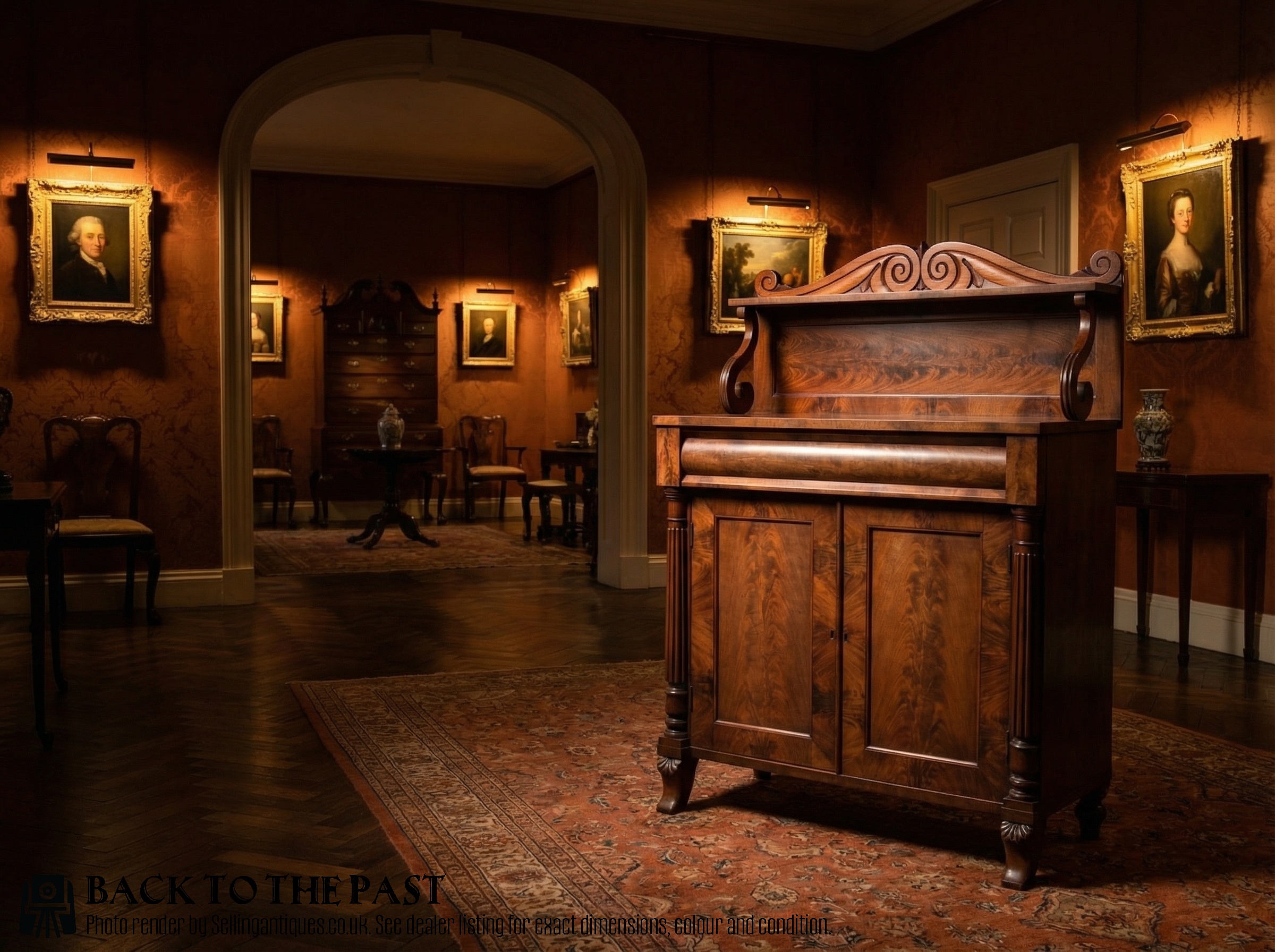
Regency Wooden Credenza
A regency wooden credenza brings together formal sideboards, chiffoniers, and low cabinets spanning the Regency, Georgian, and William IV periods. The pieces appearing most frequently are mahogany sideboards and chiffoniers constructed during the early nineteenth century.
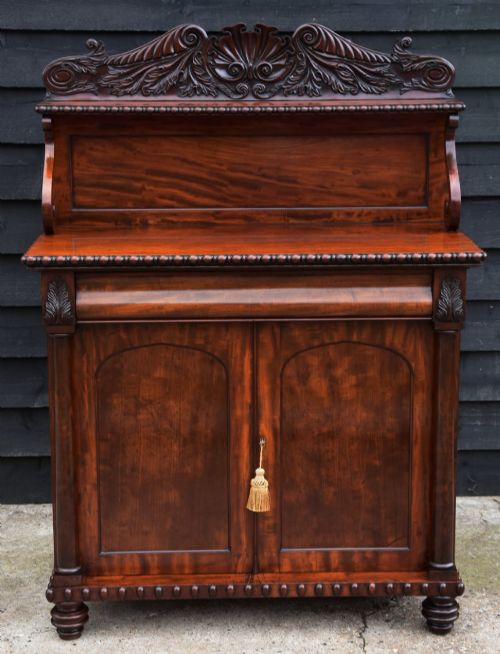
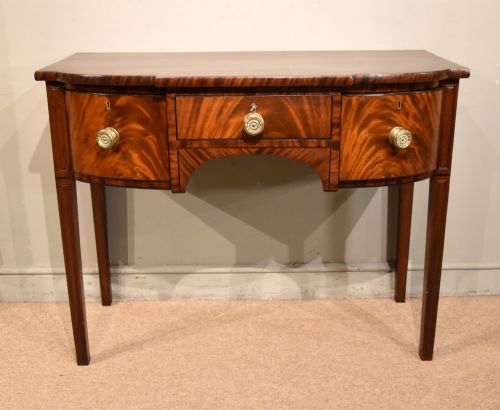
Makers and cabinetmakers of the era produced these forms primarily in mahogany, flame mahogany veneer, and rosewood, incorporating bow fronts, brass inlay, and pedestal configurations. Buyers encounter grand breakfront sideboards alongside smaller dwarf cabinets and bookcases designed for domestic utility and display.
How they were made
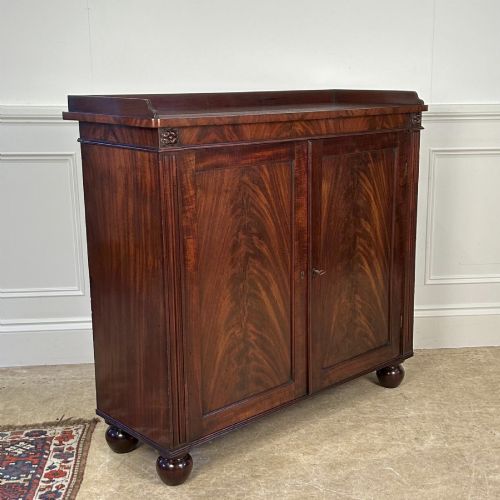
Craftsmen built these cabinets using solid mahogany and applied flame mahogany veneers over secondary timbers to create striking grain patterns on drawer fronts and doors. Cabinetmakers utilised boxwood and brass stringing or inlay to accent the dark timber surfaces.
Structural elements frequently combine mahogany with oak linings inside drawers, supported by turned feet, plinth bases, or carved pedestals. Joinery relied on traditional techniques suited to heavy timbers, ensuring stability across large sideboards and breakfront forms.
Current listings feature pieces spanning the Georgian, Regency, Victorian, and early twentieth-century periods.
What varies in quality
The choice of timber grain fundamentally divides standard utility pieces from exceptional examples, with highly figured flame mahogany and exotic veneers commanding greater visual weight. The crispness of brass inlay and the fineness of carved details distinguish workshop output.
Proportion and scale dictate the success of the design, from modest bow front sideboards to expansive breakfront cabinets. Superior examples maintain balanced proportions between the upper display shelves or cupboards and the robust base storage.
Gillows
The Regency Wooden Credenza Glossary
- Chiffonier
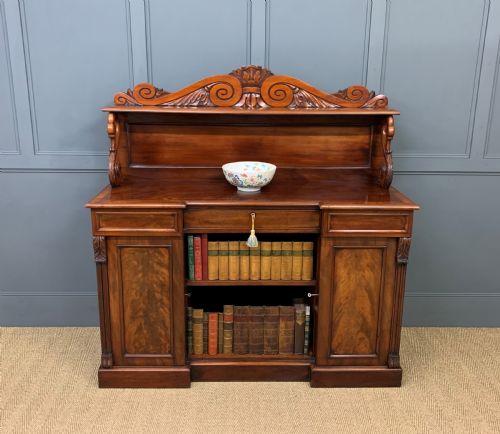
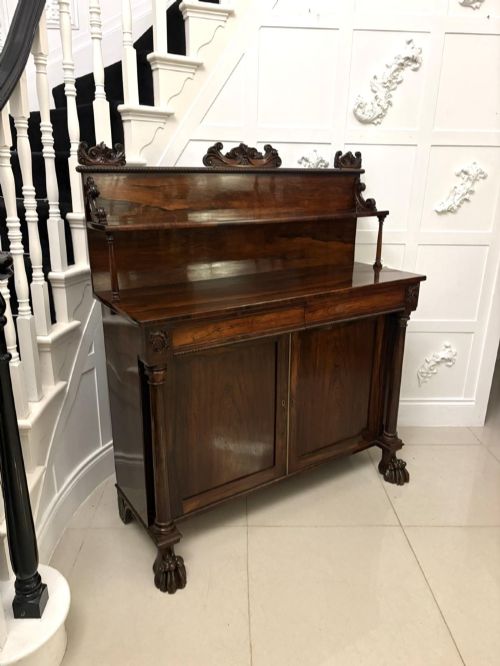
- A low cabinet, typically featuring a shelf or bookcase superstructure above enclosed cupboards, developed during the Regency period for dining room storage. These pieces often incorporated fabric panels behind glass doors.
- Pedestal sideboard
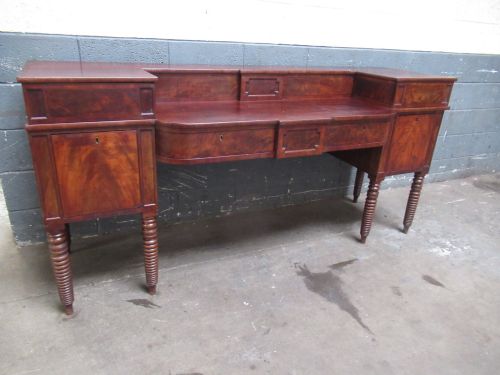
- A large dining room furnishing featuring central drawer sections flanked by substantial pedestals or cupboards standing on plinths. This form became prominent during the Regency and William IV eras.
- Breakfront
- A large cabinet or sideboard whose central section projects forward from the recessed outer wings. This configuration added architectural depth to formal nineteenth century dining furniture.
- Flame mahogany veneer
- Thin slices of mahogany timber cut from fork joints where branches meet the main trunk, displaying a distinctive flickering grain pattern. Cabinetmakers applied these veneers to prominent drawer and door fronts.
- Bow front
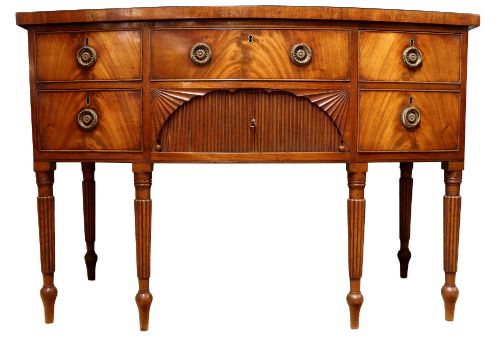
- A convex curved cabinet front that softens the linear geometry of formal dining room sideboards. This curved profile appeared frequently on Georgian and Regency pieces.
Regency Wooden Credenza: Frequently Asked Questions
What is a regency wooden credenza used for?
These large storage units functioned historically in dining rooms to hold silverware, linen, and serving dishes during formal meals. The upper surfaces and attached shelves also served to display porcelain and glassware.
In modern interiors, they provide substantial concealed storage while anchoring a dining room or living space with period character. The flat top surface accommodates lamps, books, or decorative objects.
How do I identify a Regency period piece?
Regency furniture typically dates from the early nineteenth century and is characterised by classical architectural restraint, dark mahogany timbers, and restrained brass ornament. Pieces often feature brass stringing, sabre legs, or bold pedestal bases.
Comparing construction methods, secondary timbers, and hardware helps distinguish authentic Regency pieces from later Victorian revivals or Edwardian reproductions. Grain selection and patination develop naturally over two centuries of age.
Where should I place a large sideboard?
Sideboards require a prominent wall in a dining room, hallway, or spacious living area where their length and depth can be appreciated without blocking circulation. Ensure the room has sufficient wall space to accommodate the full width of breakfront or pedestal designs.
Keep these timber pieces away from direct heat sources and strong sunlight to protect the mahogany finish and prevent veneer lifting. Allow adequate clearance for cabinet doors and drawers to open fully.
What is the difference between a sideboard and a chiffonier?
A sideboard is generally a long, low piece designed primarily for dining room storage with a flat top surface for serving food. Examples often feature multiple drawers flanked by cupboards.
A chiffonier is typically smaller and frequently incorporates an upper shelf or small bookcase backed by a mirror or fabric panel. They functioned as multi-purpose cabinets in both dining rooms and parlours.