
Regency Upholstered Armchair
A regency upholstered armchair brings architectural restraint and comfort to a room, offering deep seats shaped for reading or desk work.
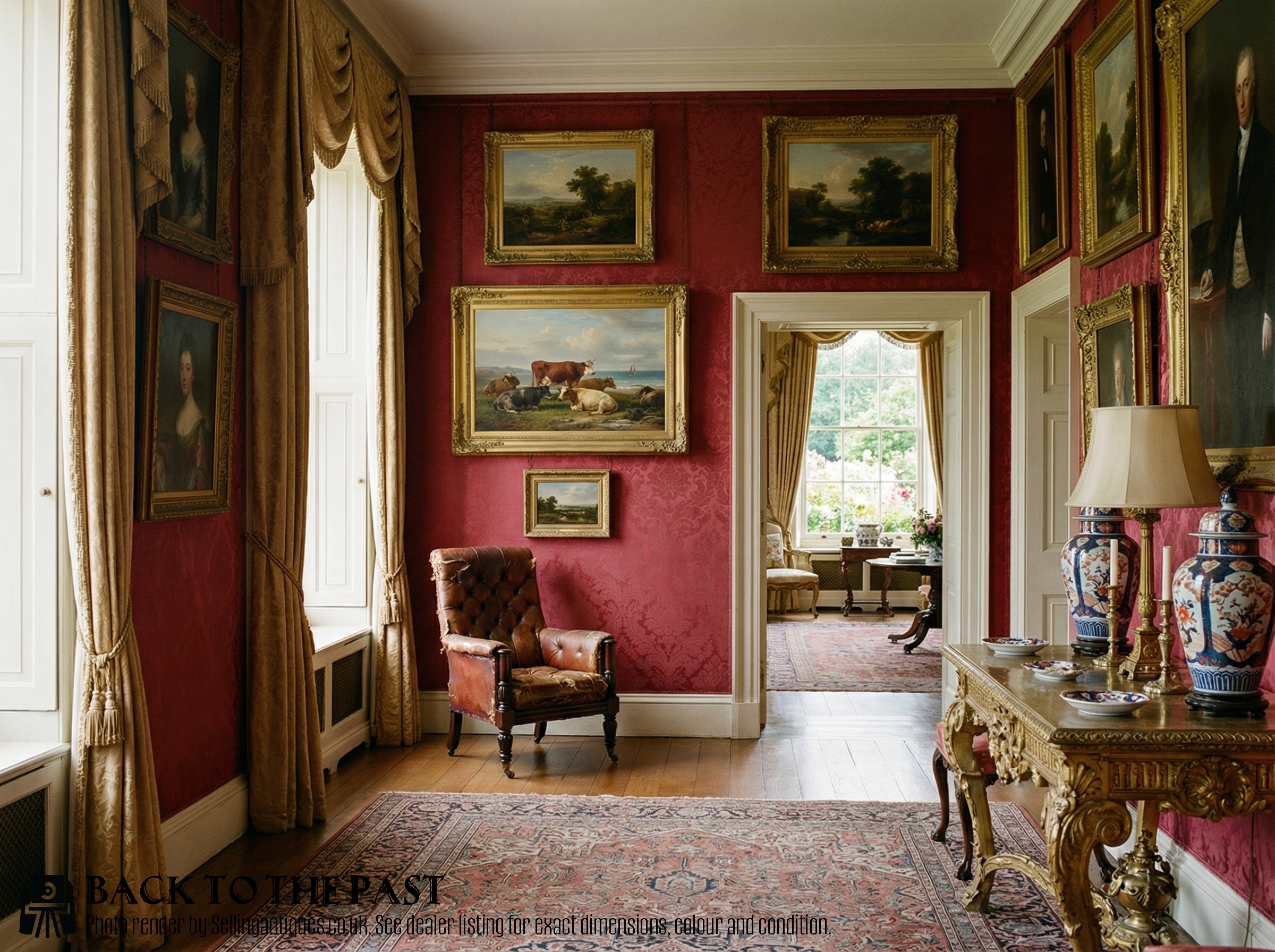
Regency Upholstered Armchair
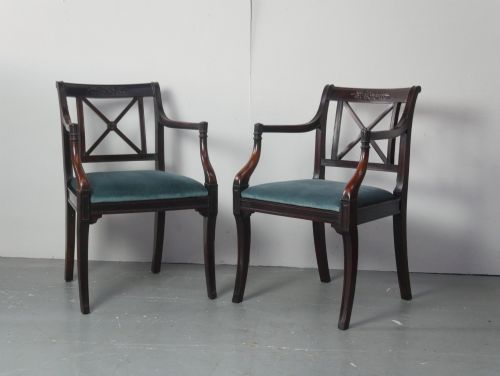
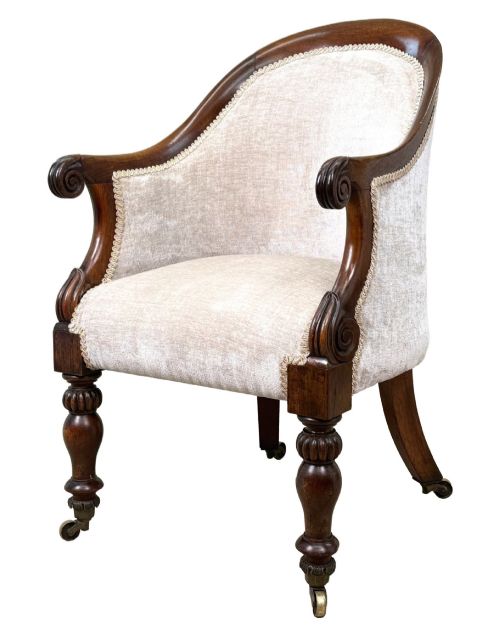
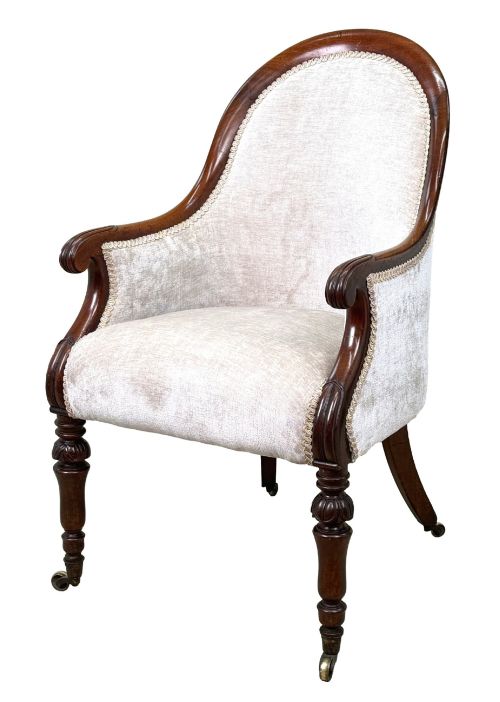
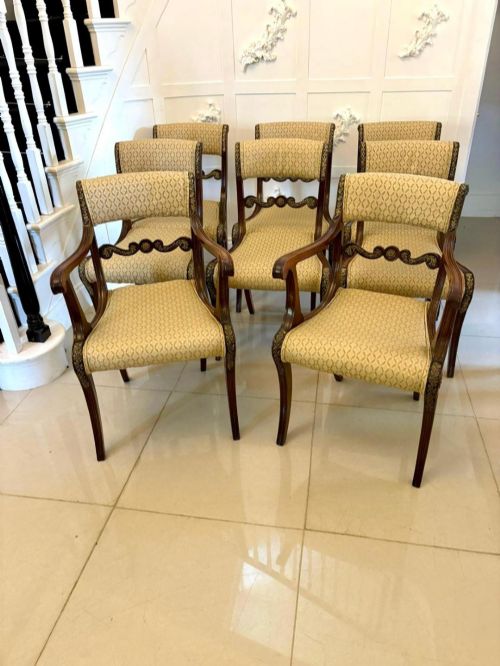
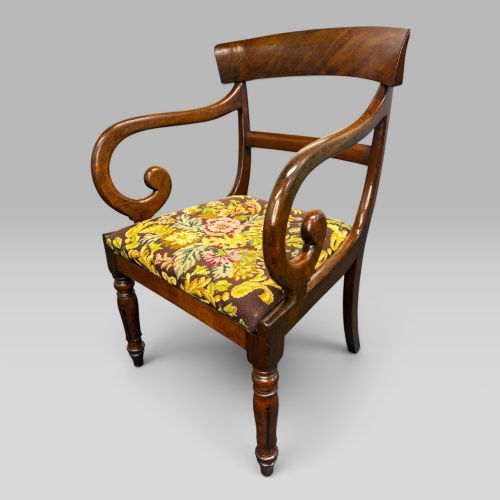
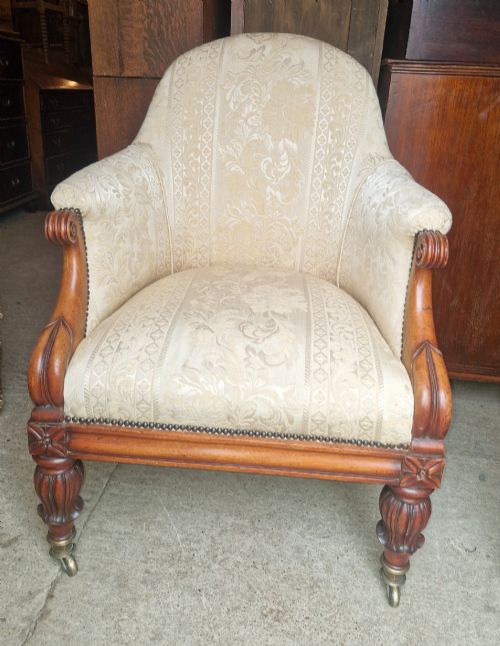
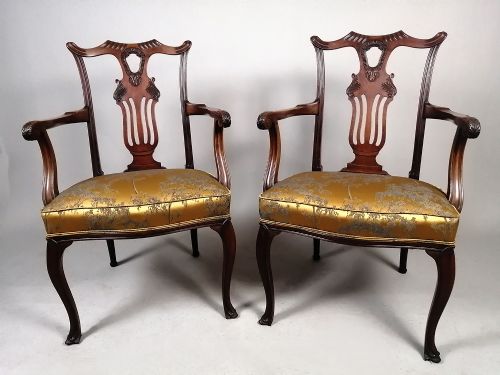
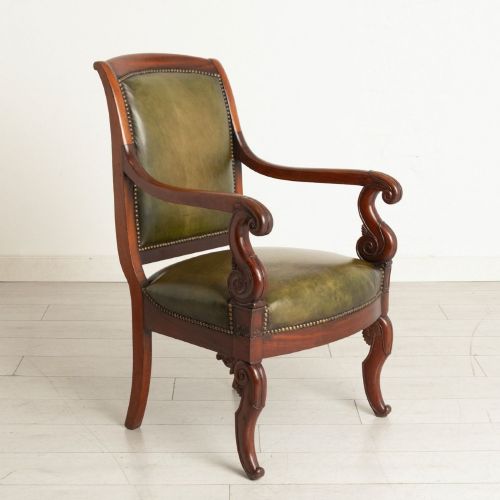
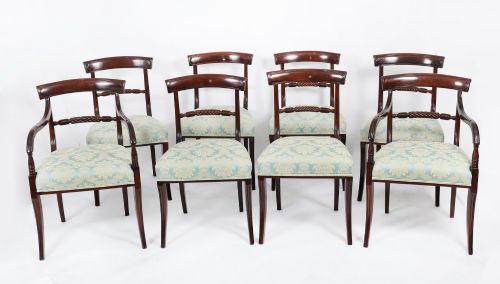
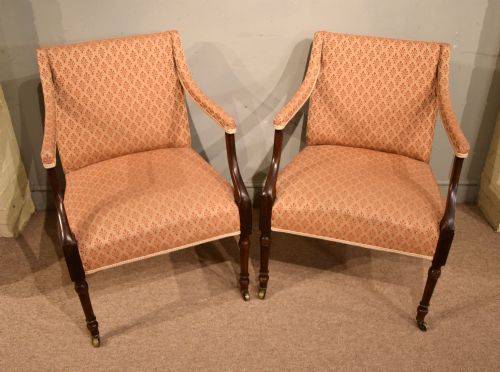
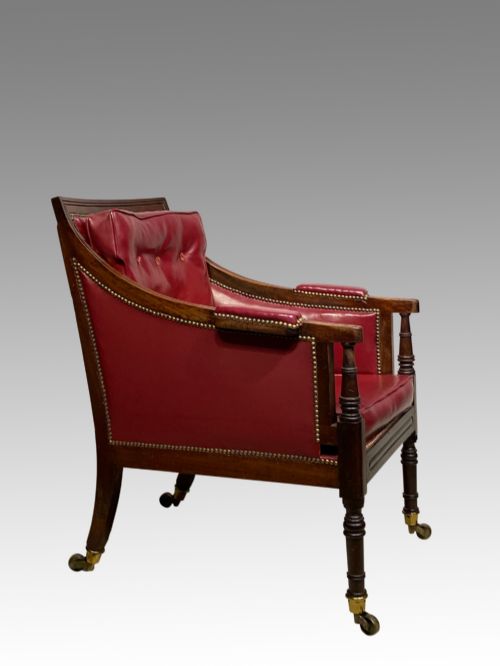
A regency upholstered armchair combines the architectural lines of the early nineteenth century with padded comfort for reading and study. You will regularly encounter mahogany and rosewood library chairs, library bergères with caned or upholstered panels, and heavier dining carvers from the period.
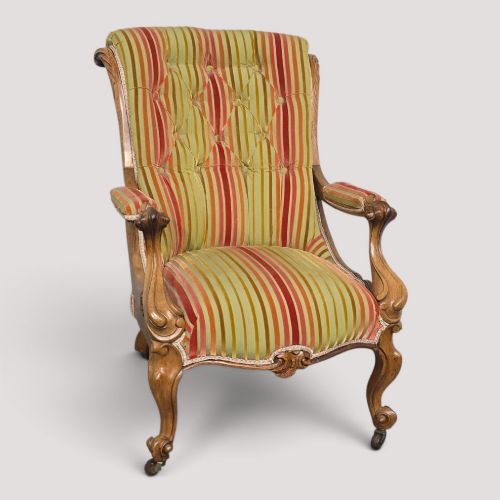
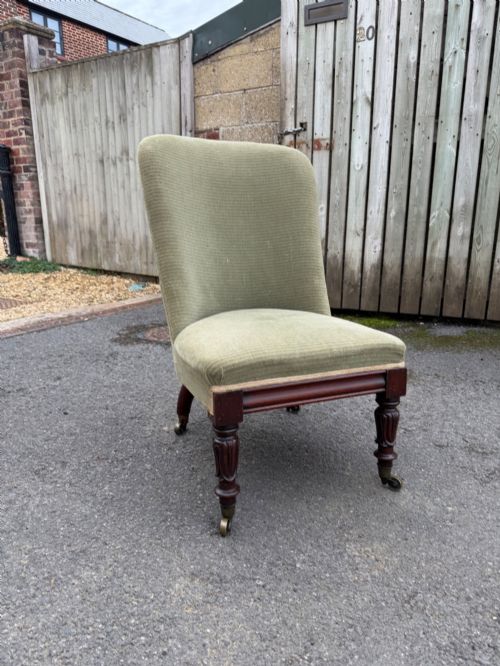
The selection ranges across authentic pieces from the nineteenth century alongside later revivals from the Edwardian era and the twentieth century. Forms span from tub chairs and wing barrel backs to open armchairs and low slipper seats designed for nineteenth-century parlours.
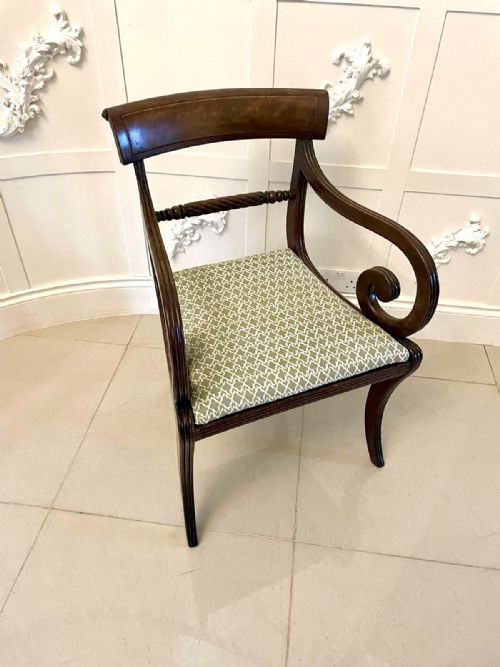
Makers and designers of the period drew inspiration from classical antiquity, resulting in sabre legs, reeded framing, and lyre backs. These seating forms served specific domestic functions in libraries, drawing rooms, and studies, where upholstered comfort met formal style.
How they were made
Cabinetmakers built the foundational frames of these chairs primarily in dense hardwoods such as mahogany and rosewood, occasionally utilising walnut. These timbers provided the structural strength required for slender reeded legs, curved arm supports, and carved details without compromising stability.
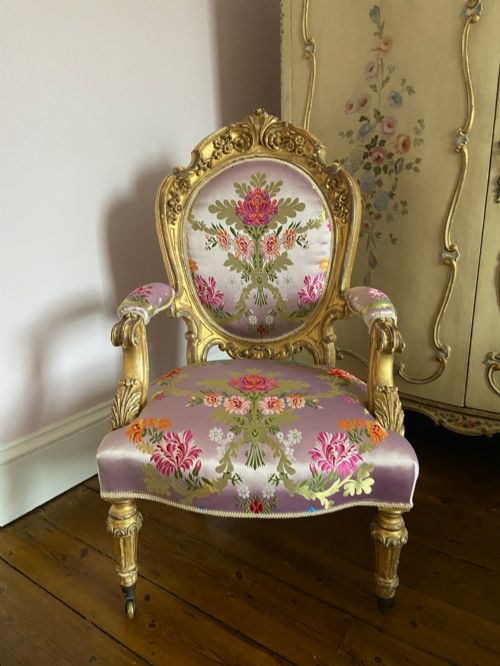
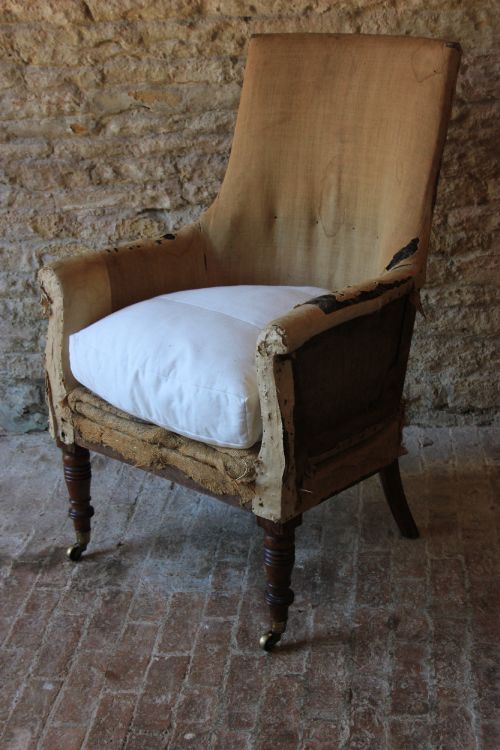
Upholstery techniques involved durable textiles, leather, velvet, and fabric stretched over supportive internal webbing and stuffing. Brass details, including castors and decorative tacks, frequently reinforced the legs and secured the textile edges to the hardwood frames.
Reading armchairs often feature deep curved tubs designed to shield nineteenth-century readers from drafty corners.
What varies in quality
The distinction between ordinary and superior examples rests in the crispness of the timber carving and the architectural proportion of the frame. Finer pieces demonstrate precise joinery in the complex curves of tub backs, reeded sabre legs, and integrated arm supports.
Selection of denser timbers with rich grain patterns, such as figured rosewood or premium mahogany, elevates an individual piece. The integrity of the original framing and the fidelity of revival work to historical prototypes dictate the standing of each armchair.
The Regency Upholstered Armchair Glossary
- Bergère
- An enclosed upholstered armchair with wooden framing exposed around the sides and back, often incorporating cane panels.
- Carver chair
- An armchair designed to match a set of dining chairs, typically featuring open arms and placed at the head of a dining table.
- Tub library armchair
- A seating form featuring a continuous curved back and armrest rail enclosing the sitter, built for long hours of reading.
- Sabre leg
- A concave-tapered furniture leg curving outward toward the floor, characteristic of classical revival design.
- Reeded moulding
- Parallel convex rounded mouldings carved directly into the surface of chair legs or frame rails.
Regency Upholstered Armchair: Frequently Asked Questions
How do I identify a true period piece?
Examine the timber species, construction joinery, and wear patterns on the frame to gauge age. Period examples typically utilise dense solid mahogany or rosewood with traditional hand-cut joinery.
Later nineteenth-century and Edwardian revivals often exhibit different secondary woods or machine-finished details beneath the upholstery.
Where were these armchairs used?
These pieces were originally placed in private libraries, studies, and formal drawing rooms for reading and correspondence. Low slipper chairs and compact desk chairs served specific domestic tasks.
Larger library armchairs provided comfort for gentlemen studying texts or resting by the fireplace.
Can I use these chairs daily?
Most antique and revival armchairs remain structurally robust for regular daily use provided the frame and internal webbing are sound. Professional conservation ensures the woodwork and upholstery support modern weight.
Placing them away from direct heat sources protects the antique timber and textile coverings from drying out.