
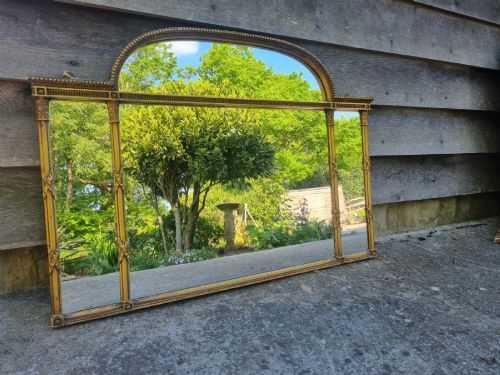

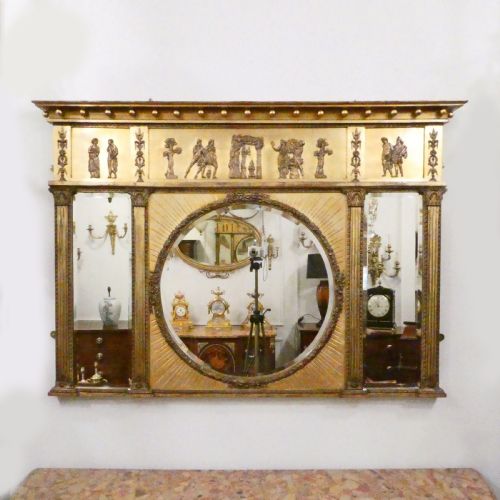


Regency Triptych Mirror
A regency triptych mirror brings three-panel symmetry and bright reflection into a room, capturing classical elegance for the modern interior.
Regency Triptych Mirror
A regency triptych mirror divides its reflecting surface into three distinct vertical sections, typically designed as wide horizontal overmantels meant to hang above a fireplace. These landscape-oriented pieces dominate the wall space they occupy, creating a sense of breadth and drawing light deep into a room from opposing windows.
The selections available range from authentic nineteenth-century antiques originating in the Regency and late Georgian periods through to later revival interpretations from the Victorian era and around nineteen hundred. Most examples take the form of overmantel mirrors, though dressing table mirrors also appear in the record.
Materials and construction methods
Makers built these frames using timber carcases of pine, mahogany, or walnut, which provided a stable foundation for decorative surface treatments. Artisans applied thin sheets of gold leaf or paint over grounds of gesso and composition moulding to achieve the bright metallic finishes characteristic of the style.
The glass panes are set into divided frames, sometimes incorporating columns decorated with acanthus motifs or stringing inlaid into the woodwork. Joining techniques from the period ensure the tripartite divisions remain secure within their heavy outer mouldings.
Some folding dressing table mirrors included secret stringing, offering travellers a touch of classical elegance wherever they unpacked their trunks.
Distinguishing quality across examples
The refinement of the carved or moulded ornamentation separates finer examples from simpler workshop output. Crisp execution in the acanthus leaves and columns indicates superior craftsmanship during the initial construction.
Originality of the gilding and the mirror glass itself influences the character of each piece. Surviving historic surfaces retain a softer warmth compared to later restorations or replacements.
The Regency Triptych Mirror Glossary
- Triptych
- A mirror divided into three separate panels, usually arranged horizontally within a single overarching frame. This format expands the visual field across a mantelpiece.
- Giltwood
- Timber coated with gold leaf applied over a prepared gesso base. It catches the ambient room light effectively.
- Overmantel
- A large landscape mirror specifically proportioned to hang on the wall directly above a fireplace. These forms anchor the decorative scheme of a reception room.
- Composition
- A moulded mixture of whiting, resin, glue and linseed oil pressed into decorative ornaments for furniture and frames. It allowed makers to produce intricate relief details efficiently.
- Acanthus
- A classical leaf ornament carved or moulded onto columns and frame corners. It draws directly upon ancient Greek and Roman architectural motifs.
Regency Triptych Mirror: Frequently Asked Questions
Where should a triptych mirror hang?
These landscape pieces traditionally sit above a fireplace mantel, where their horizontal proportions balance the hearth below. They also function well on principal walls in dining rooms or drawing rooms to reflect natural light.
Positioning them at eye level ensures the three internal panels distribute light evenly across the space without awkward reflections.
How do I spot a true period piece?
Examine the construction methods visible on the reverse, looking for period timber types such as pine or mahogany alongside older fixings. The surface should show the characteristic mellowing of historic gold leaf or gesso.
Revival pieces from later decades often display sharper mechanical uniformity in their composition ornaments and fresher timber backing boards.
What is the difference between Regency and Regency revival?
Original Regency pieces date from the early nineteenth century during the Regency era and the reign of George the Fourth. They carry the authentic wear and construction quirks of that specific period.
Regency revival pieces date from later periods, such as the late Victorian era around eighteen eighty or nineteen hundred, copying the earlier classical style using contemporaneous manufacturing techniques.
Can these mirrors be cleaned safely?
Dust the gilded frame gently with a soft dry brush to prevent any buildup within the carved or moulded recesses. Avoid using modern chemical cleaning sprays near the gesso and gold leaf.
Clean the glass panes sparingly with a slightly damp cloth, taking care not to let moisture seep behind the frame edges where it could damage the backing.