

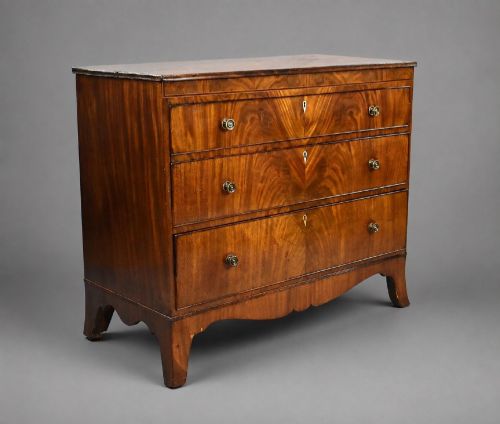
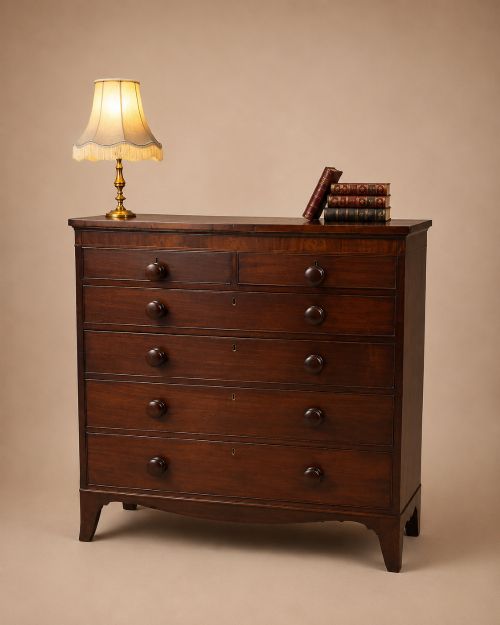
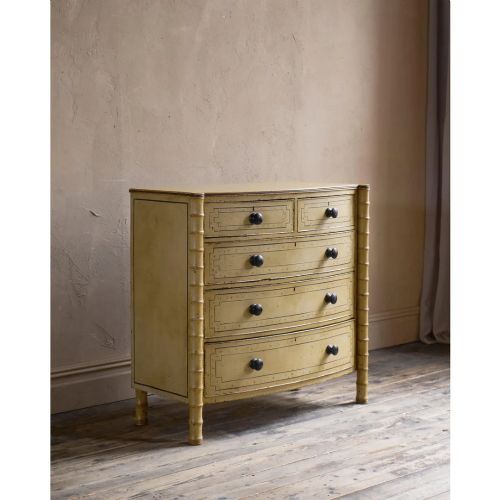
Regency Tallboy Dresser
A regency tallboy dresser brings commanding presence and generous storage to a room through stacked drawer configurations.
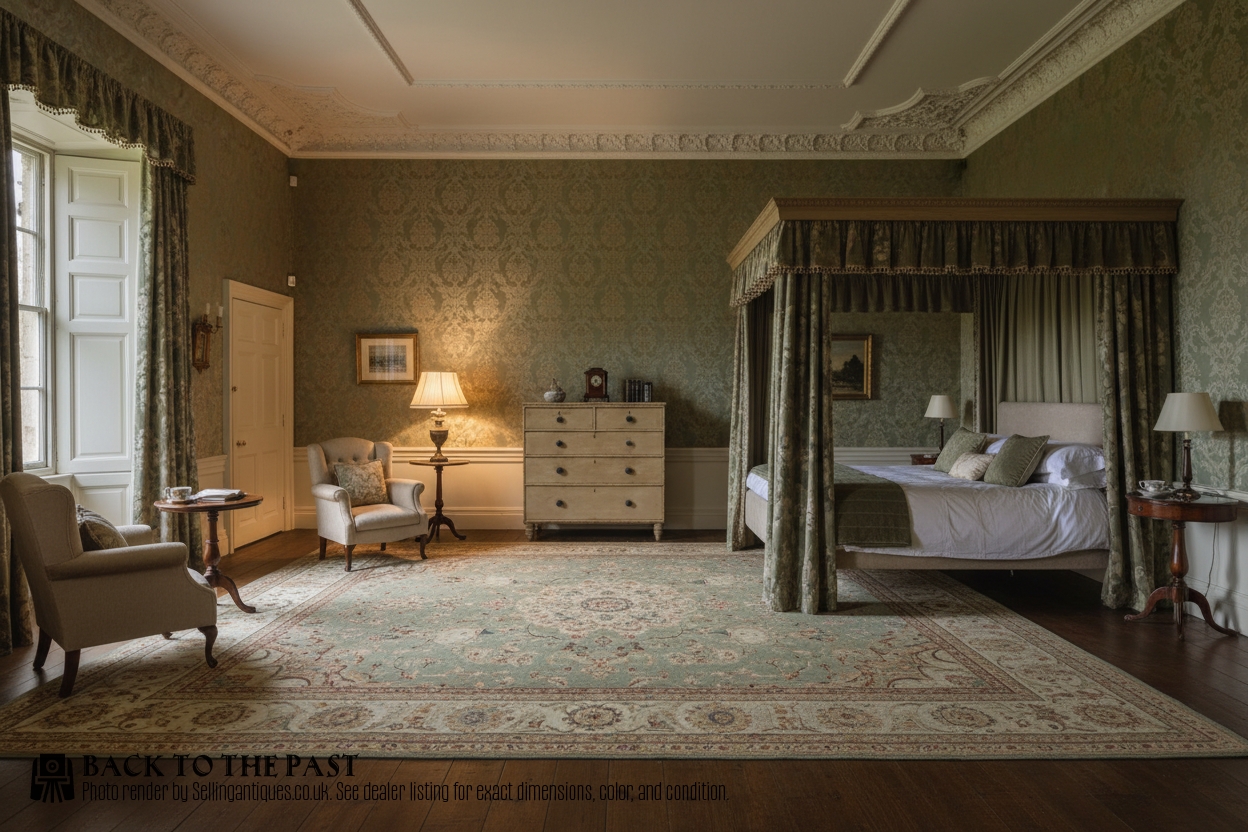
Regency Tallboy Dresser
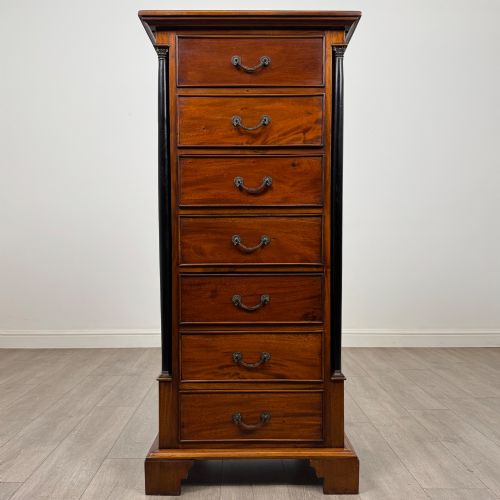
When you search for a regency tallboy dresser, you encounter large storage furniture constructed during the late Georgian and Regency periods. These pieces provide vertical drawer space designed to hold clothing and household linens efficiently without consuming excessive floor area.
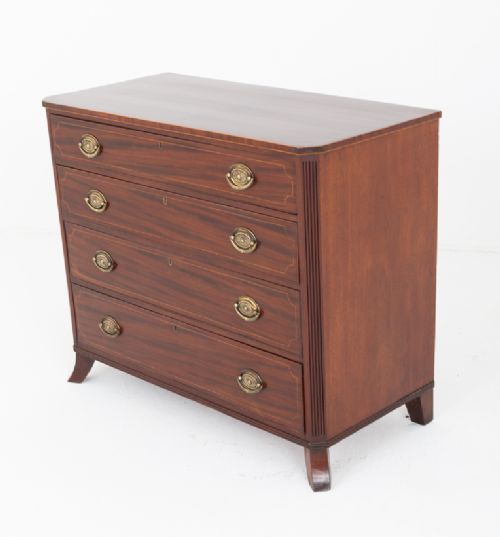
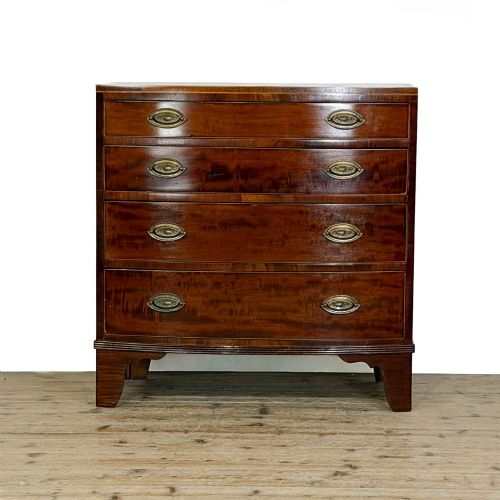
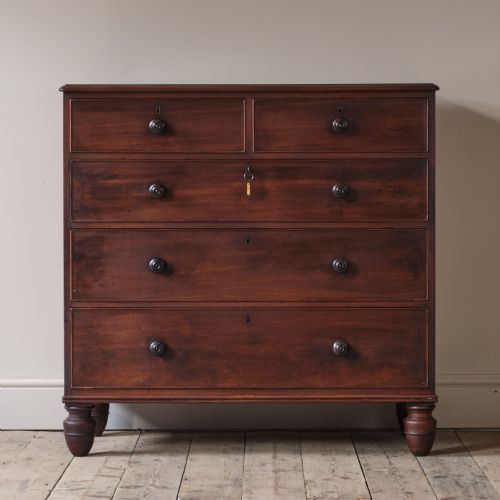
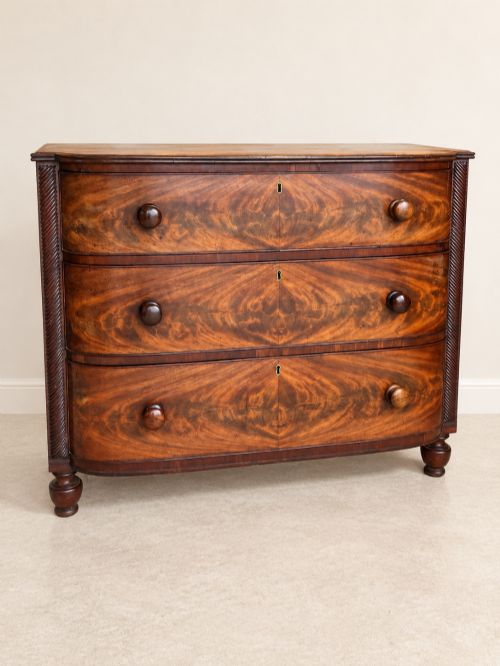
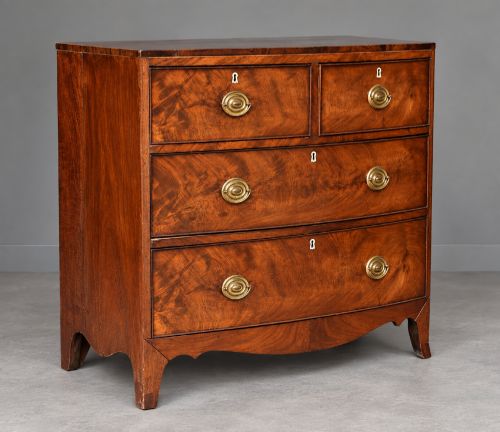
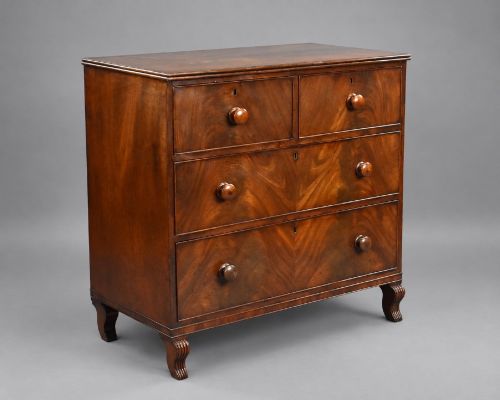
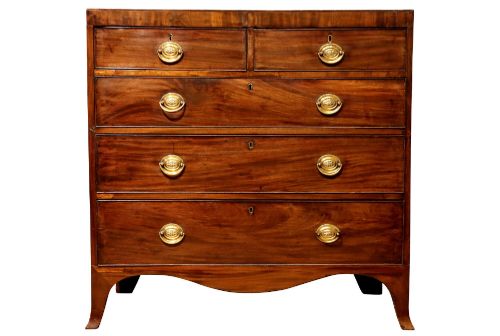
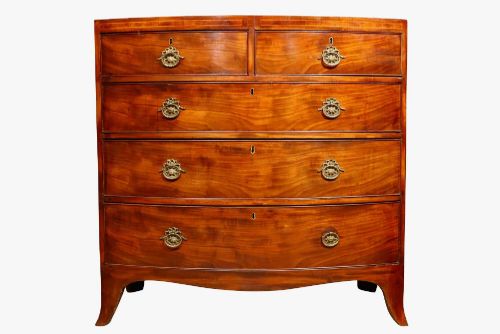
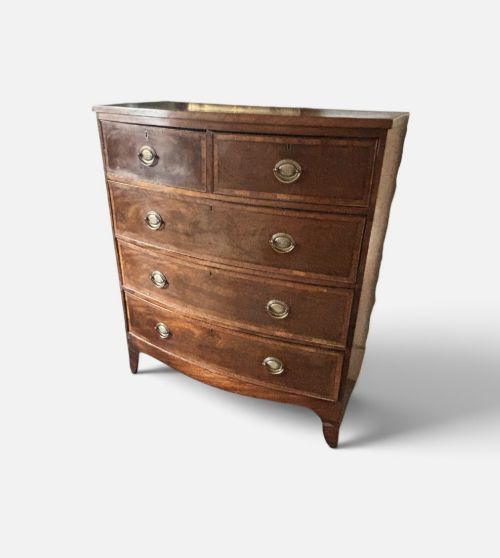
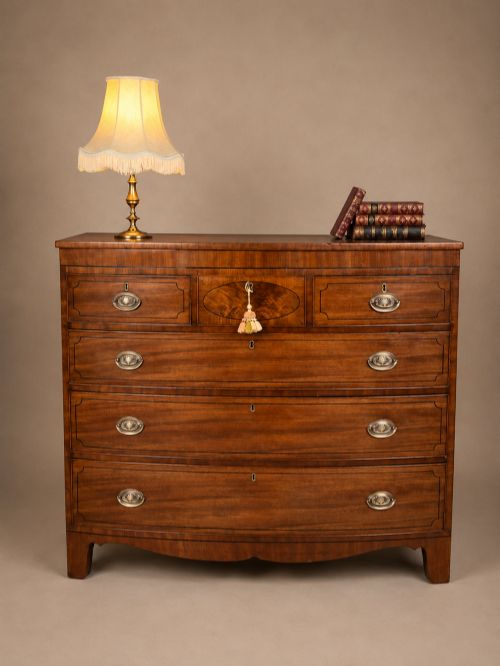
The objects listed here predominantly take the form of chests of drawers rather than towering double-bodied tallboys. You will frequently meet bow front designs, straight-fronted four and five drawer configurations, and distinct regional variants originating from Scotland and England.
The periods represented span the late eighteenth century through the early nineteenth century, alongside later revival pieces. Makers constructed these units to serve primary domestic bedchambers with substantial timber carcases.
Materials and construction methods
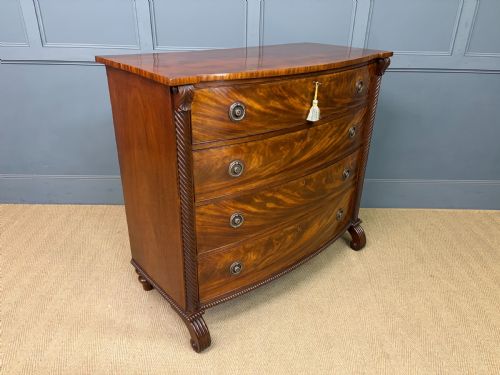
Cabinet makers built these pieces primarily using solid mahogany and oak, often applying figured flame mahogany veneers to drawer fronts for visual depth. Secondary timbers such as pine appear within internal drawer construction and carcase linings.
Surface decoration relies on contrasting timber borders, satinwood crossbanding, and delicate floral inlay details rather than heavy carving. Many larger examples were originally constructed in two distinct sections to facilitate movement between rooms.
Brass hardware, including ring pulls and escutcheons, complements the dark timber tones. Specialised elements such as faux bamboo turnings and painted pine finishes occur in select examples.
Distinctions in craftsmanship
The selection of timber grain largely defines the visual tier of a piece, particularly the use of highly figured flame mahogany veneers across the drawer faces. Uniform matching of veneer panels across multiple drawers demonstrates superior workshop planning.
Internal joinery standards separate standard domestic pieces from fine cabinet work, seen in the neatness of drawer linings and structural framing. The crisp execution of crossbanding, inlay work, and edge mouldings indicates the level of care invested by the maker.
T & G Seddon
The Regency Tallboy Dresser Glossary
- Bow front
- A convex curved cabinet front that projects outward in a smooth arc. This shape gained immense popularity during the Regency period.
- Crossbanding
- A strip of veneer applied to the border of a drawer front or tabletop with the grain running perpendicular to the surrounding wood. This technique creates a neat framing effect.
- Flame mahogany
- A cut of mahogany timber exhibiting a fiery, undulating flame-like grain pattern. Cabinet makers reserved this premium veneer for prominent exterior surfaces.
- Caddy top
- A tabletop style featuring a raised, moulded edge that echoes the form of tea caddies from the period. It provides a finished architectural cap to the chest.
- Graduated drawers
- A series of drawers decreasing in depth from bottom to top. This arrangement improves the visual balance of tall storage furniture.
Regency Tallboy Dresser: Frequently Asked Questions
How do I identify a genuine Regency piece?
Look for timber selection, hand-cut dovetails on the drawer sides, and period-appropriate brass hardware. Secondary woods like oak and pine inside the carcase provide further clues to age.
Examine the construction methods around the drawer runners and backboards for signs of traditional hand-working tools rather than modern machinery.
Where should I place a tall chest in my home?
These vertical storage units suit bedrooms, dressing rooms, and hallways where floor space is limited. Their height allows them to hold substantial quantities of folded garments.
Ensure the piece sits level on the floor, and consider securing tall furniture to the wall for safety if it contains heavy items.
How do I care for antique mahogany surfaces?
Dust the timber regularly with a soft, dry cloth to prevent grit accumulation. Avoid placing the furniture near direct heat sources or strong sunlight to protect the polish and prevent veneer splitting.
Apply a traditional beeswax polish occasionally to nourish the wood and maintain a gentle, natural sheen without building up heavy chemical layers.
What is the difference between straight and bow fronts?
Straight front chests feature flat drawer faces that align flush with the frame edges. Bow front pieces project outward in a gentle curve that softens the overall silhouette.
Both styles were produced concurrently, with bow front designs often utilising more decorative veneer work to accentuate the curved surface.