




Regency Style Nightstands
Regency style nightstands are compact bedroom tables that bring classical symmetry and rich mahogany timber to the bedside.
Regency Style Nightstands
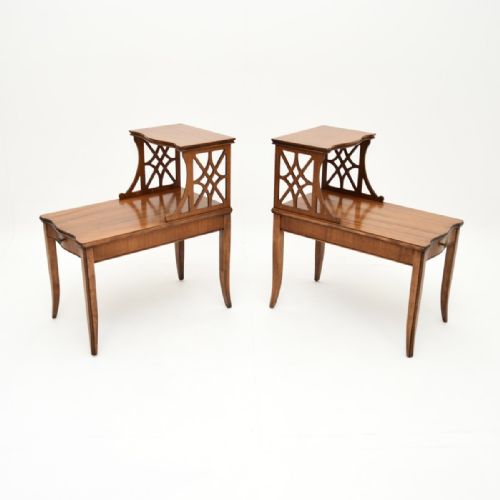
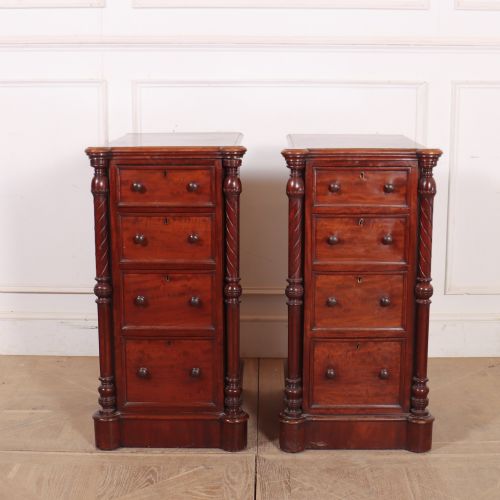
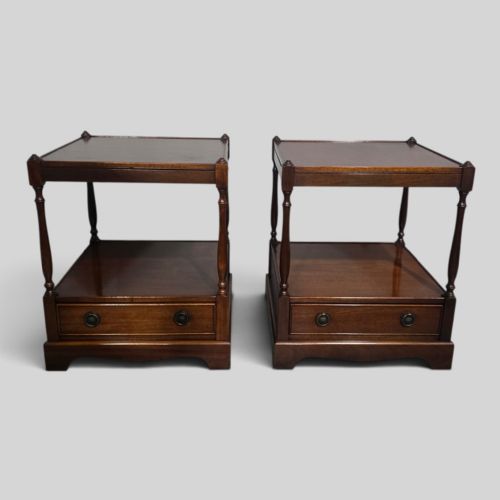
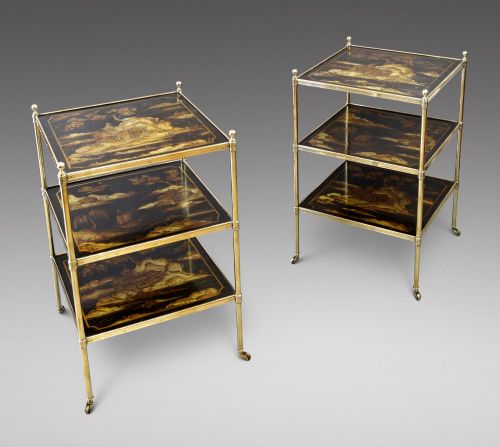
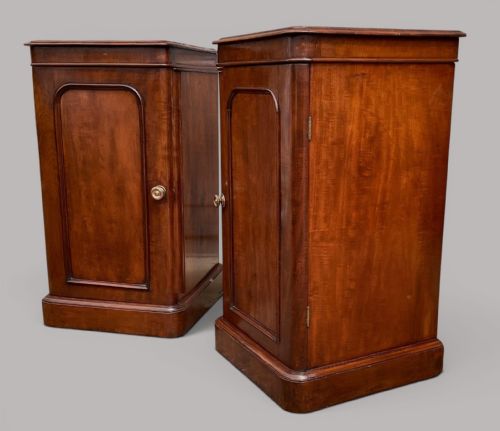
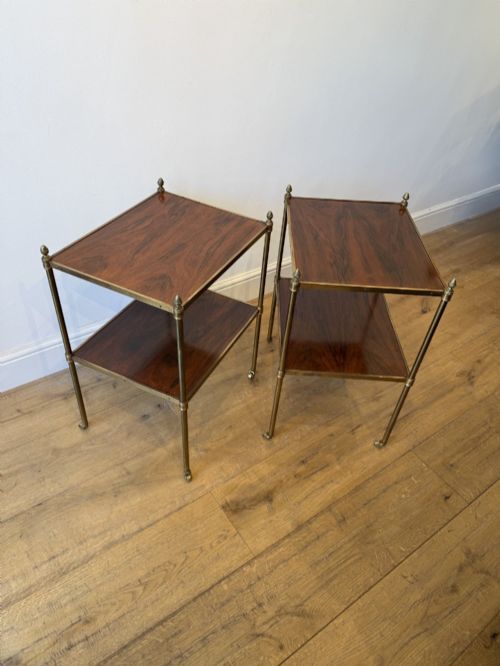
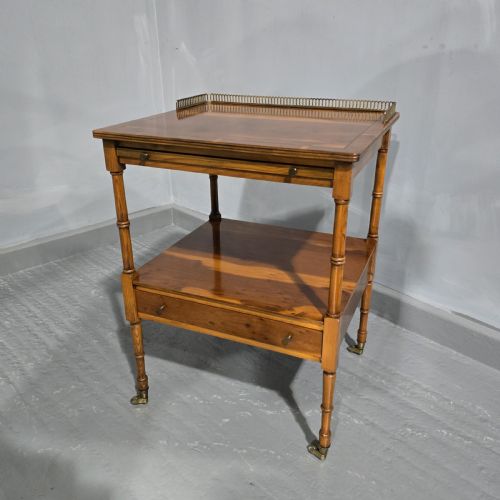
Regency style nightstands encompass a variety of small bedside forms, including pedestal cabinets, side tables, and chest formats designed for use beside a bed. These pieces draw on nineteenth-century proportions, featuring clean architectural lines and compact footprints suited to modern and traditional bedrooms alike.
The selection on this page relies heavily on nineteenth-century pieces alongside later revivals from the Edwardian era and the nineteen-twenties and thirties. Buyers will frequently encounter mahogany and flame mahogany veneer, alongside occasional examples in rosewood, yew wood, and ebonised timber.
Makers and makers' attributions connect certain pieces to notable workshops such as Holland and Sons and Mallett. These forms often appear as matched pairs, combining practical enclosed storage or open tiers with refined classical detailing.
Evaluating quality and proportion
Quality in these nightstands rests upon the selection of timber veneers and the crispness of classical mouldings or brass mounts. Superior examples display symmetrical flame patterns across matching pairs and tight, well-executed joinery that maintains structural integrity over centuries of use.
Proportion and scale separate the finest examples from standard production, with superior pieces maintaining balanced heights and widths that suit classical interior schemes. The integration of original brass hardware and untouched patination further distinguishes high-grade cabinets from later alterations.
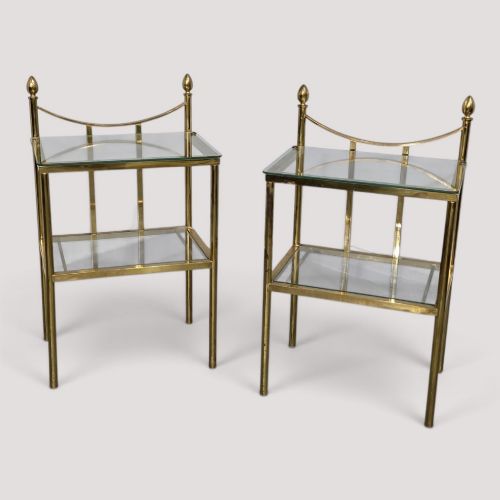
Listings span the nineteenth century through the nineteen-thirties, featuring mahogany, brass, glass, and rosewood across pedestal and cabinet forms.
Holland and Sons·Mallett
The Regency Style Nightstands Glossary
- Flame mahogany
- A veneer cut from the fork of the mahogany tree where the branch meets the trunk, producing a distinctive flickering flame-like grain pattern. This timber was highly prized for principal display surfaces on high-end cabinet work.
- Pedestal cabinet
- A freestanding enclosed cupboard supported on a plinth or feet, designed to house chamber pots or personal items beside a bed. These units often feature a single panelled door concealing interior shelving.
- Étagère
- A set of open shelves for displaying small objects or lamps, often constructed in tiers supported by slender uprights. This form gained popularity during the nineteenth century and saw revivals in the early twentieth century.
- Bowfront
- A curved cabinet front where the central portion projects outward in a convex arc. This treatment softens the profile of bedside chests and side tables.
- Ebonised wood
- Timber treated with a dark stain or chemical finish to imitate ebony. This technique provided sharp visual contrast in classical furniture design.
Regency Style Nightstands: Frequently Asked Questions
Are these nightstands sold as pairs?
Many of the listed nightstands and lamp tables appear as matching pairs, which suits symmetrical bedroom layouts flanking a bed.
Single tables also feature on the page, offering flexible placement options for smaller spaces or guest rooms.
What wood was used for these tables?
Mahogany is the predominant timber found across these pieces, frequently enhanced by flame mahogany veneers that highlight the natural grain.
Alternative woods include rosewood, yew, and ebonised timber, occasionally accented with brass fittings and glass surfaces.
How do I date a Regency style nightstand?
Dating relies on examining construction techniques, timber choice, and secondary woods used inside drawer boxes and carcases.
Pieces range from nineteenth-century originals to later twentieth-century revivals from the nineteen-twenties and thirties that imitate earlier classical proportions.
What is the difference between a bedside chest and a cabinet?
Bedside chests incorporate multiple working drawers stacked vertically to provide segmented storage for personal belongings.
Bedside cabinets feature an enclosed door opening to reveal a cupboard space or shelf rather than external drawer tiers.