




Lyre Base Side Table
A lyre base side table brings classic symmetry to a room, using distinctive twin-curved supports to anchor practical surfaces for writing, tea, or display.

Lyre Base Side Table
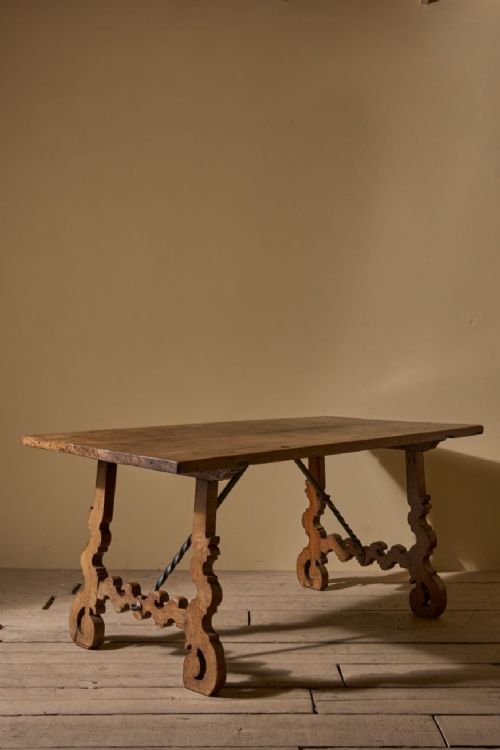
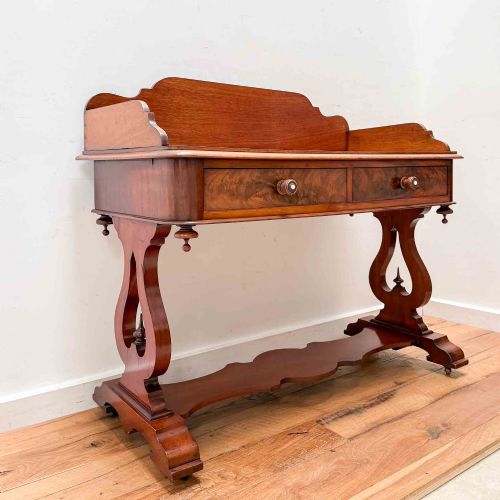
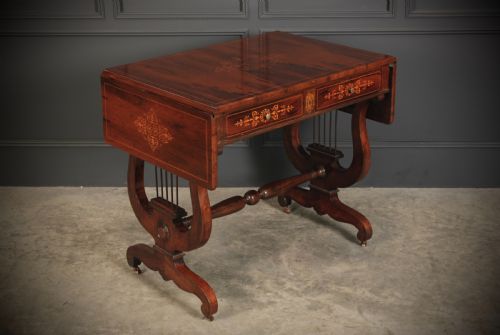
A lyre base side table takes its defining feature from the musical instrument motif, arranged in pairs as a central pedestal or flanking support beneath the top. These pieces arrive in various forms across the listings, functioning as side tables, writing desks, tea tables, sofa tables, and occasional tables.
The selection spans centuries of cabinetmaking, showing periods from the eighteenth century through the Regency and Victorian eras up to nineteen-twenty. Makers built these tables using diverse timbers, applying styles ranging from Regency Revival and Biedermeier to Spanish Baroque and Gustavian neoclassical design.
How they were made
Carpenters constructed these tables using solid timbers and decorative veneers, selecting mahogany, walnut, birch, ebonised wood, and burr oak for the primary surfaces and supports. Workshops applied marquetry inlay and brass details to enhance the visual weight of the timber framing.
Structural stability relied on precise joinery where the curved lyre supports meet the central stretcher or base platform. Tables featuring fold-over mechanisms or drop flaps required careful hinge placement to ensure the leaves aligned flat when opened.
Lyre Base Side Table Retail Price Guide 2026
Typical asking prices for lyre base side table among the pieces listed under this phrase on Sellingantiques today, from the lower quarter to the upper quarter. They describe what is for sale here now, not the wider market.
The listings feature pieces spanning the eighteenth, nineteenth, and early twentieth centuries, constructed in mahogany, walnut, birch, and oak.
What varies in quality
Quality rests upon the selection of timber figure and the crispness of the carving on the lyre scrolls. Plain, uniform planks sit at one end of the scale, while burr oak, pollard grain, and intricate marquetry inlay occupy the other.
Construction methods also separate standard production from superior cabinetwork. Well-made examples maintain tight joints in the lyre supports and smooth operation in drawers, whereas lesser pieces show uneven wear or loose framing around the pedestal base.
The Lyre Base Side Table Glossary
- Lyre base
- A support structure shaped like an ancient stringed instrument, commonly found beneath the top of nineteenth-century tables. This form provides both decorative presence and sturdy weight distribution.
- Veneer
- A thin layer of figured wood applied over a secondary timber base to create decorative patterns. Cabinetmakers used mahogany and birch veneers to display rich grain figures.
- Marquetry
- The art of applying pieces of veneer to a structure to form decorative patterns and pictures. Floral or geometric motifs often adorn the tops of finer occasional tables.
- Drop flap
- A hinged leaf attached to the main table top that lowers when not in use. This mechanism allows the surface area to expand or contract according to space requirements.
- Stretcher
- A horizontal bar connecting the legs or supports of a table for added rigidity. In lyre forms, this timber link stabilizes the twin uprights against lateral movement.
Lyre Base Side Table: Frequently Asked Questions
What is a lyre base side table used for?
These tables served various domestic purposes throughout the eighteenth and nineteenth centuries, functioning as writing desks, tea tables, or general surfaces for lamps and books.
Their compact footprints made them suitable for placement beside seating or against walls in hallways and sitting rooms.
How do I identify a Regency lyre table?
Regency pieces often display classical proportions, dark mahogany or burr timbers, and brass mounts reflecting neoclassical design influences from the early nineteenth century.
The carved lyre supports during this period tend to feature crisp reeding and brass stringing along the pedestals.
Are all lyre base tables mahogany?
No, while mahogany is common, these tables also appear in birch, walnut, ebonised wood, and oak.
Different periods favoured different materials, such as the birch and marquetry work seen in nineteenth-century occasional and sewing tables.
How do I care for antique timber tables?
Keep wooden surfaces away from direct sunlight and sudden temperature changes to prevent the veneer from drying and lifting.
Apply a traditional wax polish occasionally to nourish the grain and protect the finish from moisture.