


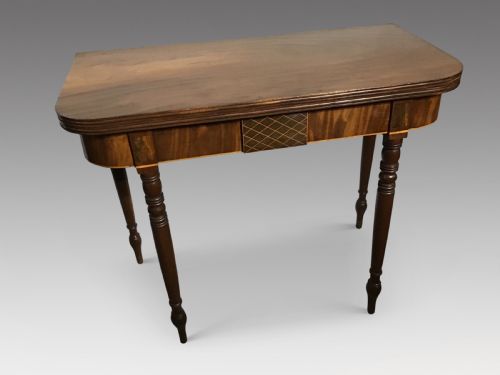


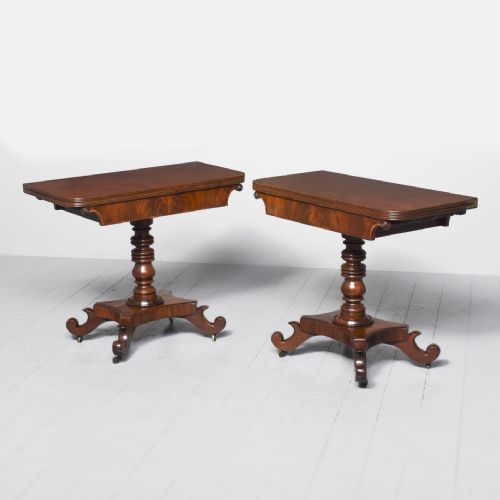

George IV Card Table
These george iv card table examples combine clever fold-over mechanics with rich timber grains, offering a clever surface for evening games that folds flat when daytime space matters.

What george iv card table pieces are
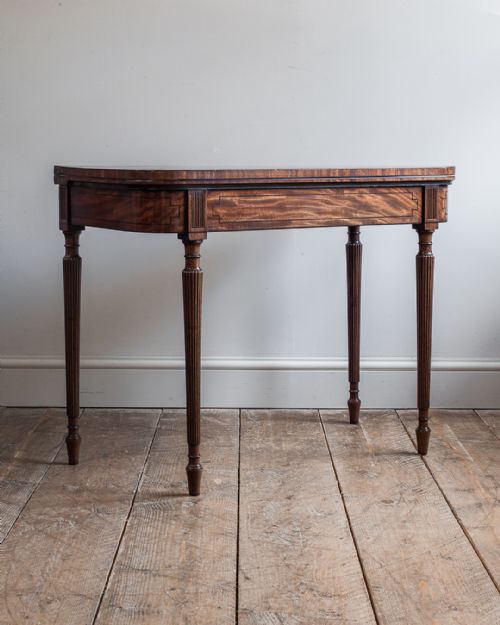
A george iv card table is a versatile surface designed for evening entertainment, featuring a hinged top that folds open to reveal a baize-lined playing area. The pieces on this page span the Georgian and nineteenth-century periods, showing how cabinet-makers adapted domestic furniture for social rooms.
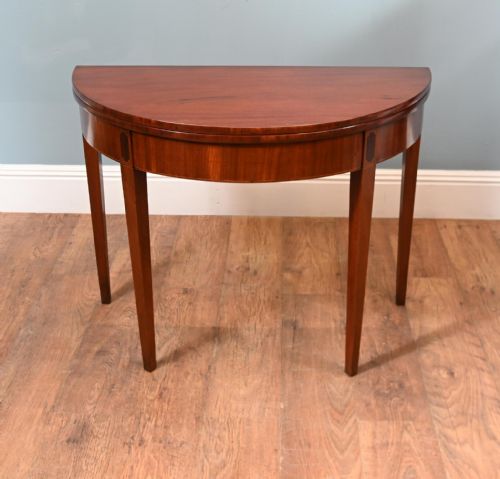
Most examples you encounter take the form of fold-over card tables or tea tables, often built with D-shaped tops or rectangular forms. Alongside standard card tables, the selection includes related console tables and pedestal formats designed for flexible placement in reception rooms.
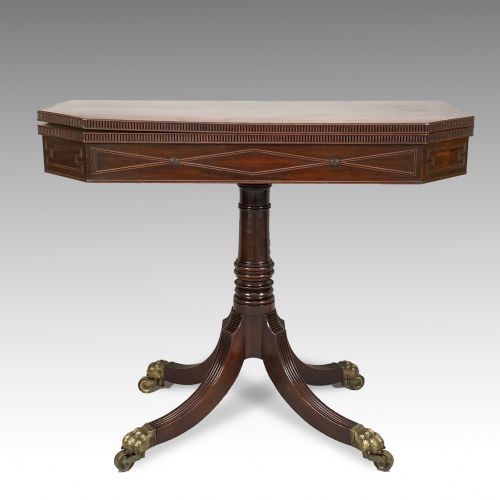
The dominant aesthetic draws heavily on Regency and George IV design idioms, favouring bold architectural supports and striking timber selections. These pieces represent a period when formal entertaining required dedicated furniture that could transform swiftly from a slim wall console into a stable playing surface.
Materials and construction methods
Makers relied primarily on dense tropical hardwoods like rosewood and mahogany, frequently enhanced by figured veneers such as birdseye maple and burr oak. Timber selection defined the visual weight of each piece, contrasting dark polished surfaces with lighter internal grains.
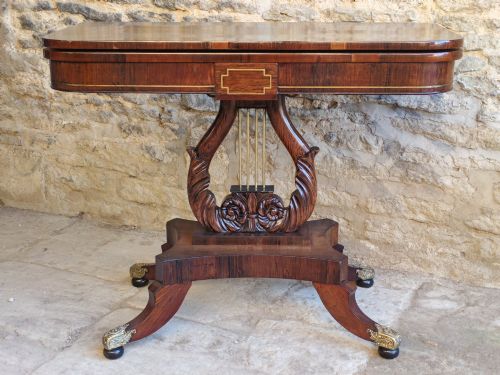
Structural integrity depended on heavy central pedestals or lyre support bases, occasionally enriched with brass inlay and gilt-brass mounts. The hinged top mechanism required precise joinery to ensure the folding leaf rested flat and flush when closed.
Retail Price Guide 2026
Typical UK retail prices for george iv card table, calculated from the Sellingantiques database of over a million retail prices indexed since 2003. This retail price guide relies exclusively on Sellingantiques data; no external sources or auction records are used, so the figures do not describe the wider market.
The documented periods span the eighteenth century, the nineteenth century, the Georgian era, and the Regency style.
What separates the finest examples
Refinement shows in the execution of carved supports, such as intricate lyre bases, and the integration of brass inlay rather than simple painted lines. Superior workshops invested greater skill in the stability of the folding mechanism and the seamless alignment of matched wood grains.
William Trotter·Gillows of Lancaster·Gillows
The George IV Card Table Glossary
- Fold-over top
- A hinged wooden surface that doubles the available area when opened for games or tea. This clever mechanism allows a slim console table to transform into a stable square or rectangular table.
- Lyre support
- A central pedestal carved in the stylized shape of a musical instrument. It provides both structural balance and a decorative focal point beneath the table top.
- Figured veneer
- Thin slices of wood cut from burls or junctions to display swirling grain patterns. Cabinet-makers laid these over sound carcases to create rich visual depth.
- Baize
- A coarse woolen fabric traditionally used to line the playing surface of games tables. It provides a soft texture that cushions cards and dampens sound during play.
- Gilt-brass mount
- Decorative cast metal hardware finished with gold plating and applied to structural points. These mounts enhance the formal appearance of the timberwork.
Frequently Asked Questions
How do you use a card table?
The hinged top swings open and rotates to rest upon a pivoted frame, creating a stable playing surface twice the depth of the closed console.
When not in use, the top folds flat against the base, allowing the piece to sit neatly against a wall as a side table.
What woods were used for these tables?
Makers predominantly utilised mahogany and rosewood as primary structural and surface timbers, often polished to a deep lustre.
Exotic veneers like birdseye maple, burr oak, and satinwood appear on finer examples to create dramatic contrasting grain patterns.
How do I spot a Regency style table?
Regency and George IV pieces characteristically feature bold architectural pedestals, platform bases, and lyre supports rather than slender cabriole legs.
Decoration often incorporates brass stringing, inlay, or gilt-brass mounts that reflect classical architectural motifs of the period.
Where should I place a fold-over table?
These pieces function well in entrance halls or against living room walls as slim console tables when the top remains closed.
Opening the table requires adequate clearance around the base, making them suitable for spaces where occasional surface area is needed.