




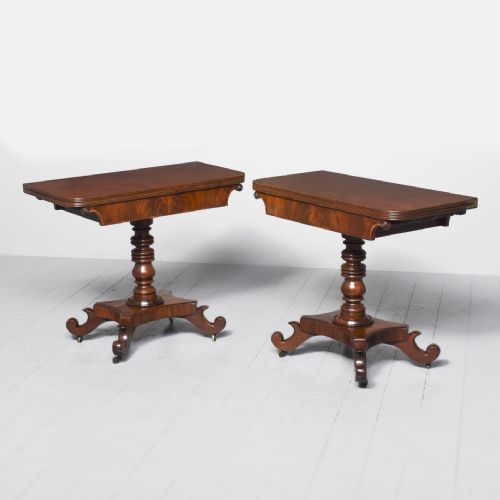

George IV Tea Table
A george iv tea table brings architectural proportion and figured timber to a formal interior, offering a hinged top that folds open for evening hospitality.

George IV Tea Table
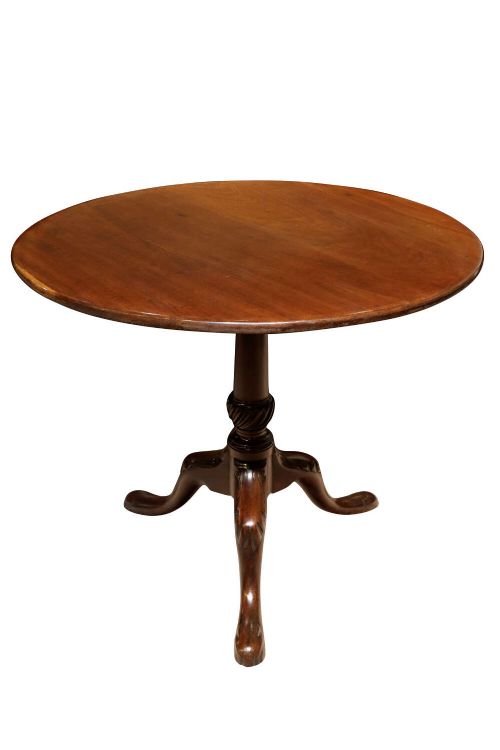
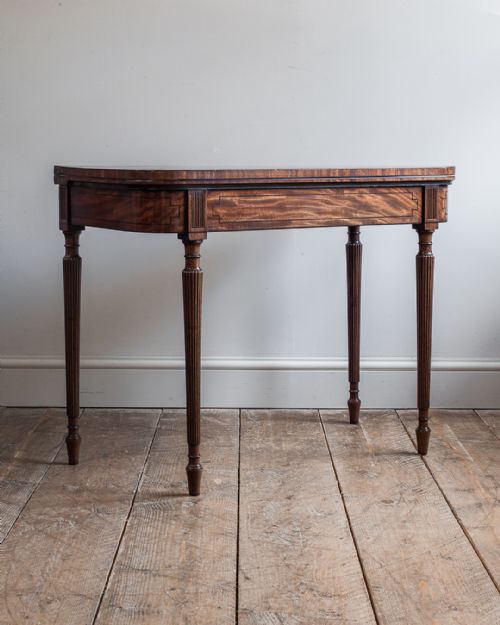
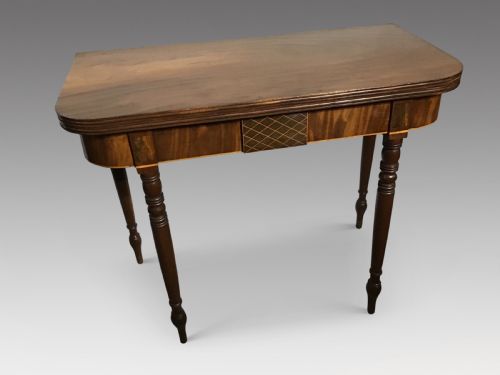
A george iv tea table is a formal piece of furniture designed primarily for the nineteenth-century drawing room, featuring a folding top that expands when needed. The versions seen on this page appear mainly in mahogany and rosewood, spanning the Georgian, Regency, and nineteenth-century periods.
The dominant forms are tea tables, card tables, and occasional tables, often constructed with D-shaped or serpentine profiles. These pieces function successfully in modern spaces either closed against a wall or opened up as display surfaces.
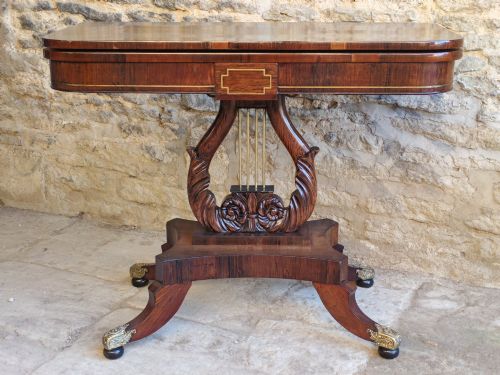
Makers and cabinet makers of this era utilised geometric forms, including pedestal bases and lyre supports, which provide sturdy balance to the folding top mechanism. Buyers encounter both plain timber surfaces and those enhanced by elaborate inlay or contrasting wood veneers.
What varies in quality
Quality rests in the choice of timber figure, such as highly figured mahogany or contrasting veneers like birdseye maple, which elevate the visual appeal. The crispness of the carving on pedestal bases and the smooth operation of the folding mechanism distinguish finer examples from standard production.
Proportion and the integrity of the structural joints dictate the long-term stability of the piece. Tables retaining their original brass castors and unblemished polish demonstrate superior preservation.
George IV Tea Table Retail Price Guide 2026
Typical asking prices for george iv tea table among the pieces listed under this phrase on Sellingantiques today, from the lower quarter to the upper quarter. They describe what is for sale here now, not the wider market.
Some tables hide their card-playing ambitions behind clever folding tops that conceal small velvet-lined compartments for lost fortunes.
William Trotter
The George IV Tea Table Glossary
- Tilt-Top
- A table top designed to pivot into a vertical position when not in use, saving valuable floor space in smaller rooms. This mechanism relies on a sturdy brass or wooden catch beneath the surface.
- Fold-Over
- A hinged table top that doubles the surface area when opened, commonly found on tea and card tables. The pivoting leaf rests upon a swing leg or a modified frieze frame.
- Lyre Support
- A furniture base carved or shaped in the outline of an ancient Greek lyre instrument. It provides both vertical support and decorative breadth beneath the central column.
- Demi-Lune
- A half-moon shape used for table tops and console designs, allowing the piece to sit flush against a wall. This form was favoured during the Regency and George IV periods for its compact elegance.
- Goncalo Alves
- A dense, exotic hardwood imported for high-end cabinet making, featuring distinct dark brown and yellowish-brown figuring. It provides a striking alternative to standard mahogany.
George IV Tea Table: Frequently Asked Questions
How do I use a tea table today?
These tables sit comfortably against a hallway or living room wall in their closed position, serving as a display surface for lamps or ornaments.
When hosting guests, the top unfolds to create a generous serving or games surface without dominating the room.
Can these tables hold modern weight?
The solid timber construction and robust pedestal or pillar bases provide substantial stability for everyday domestic objects.
Care should be taken when opening the folding leaf to ensure the supporting gate leg or pivot mechanism bears the weight evenly.
How do I tell George IV from Regency?
George IV pieces often display heavier proportions and bolder architectural motifs than earlier Regency designs, reflecting changing tastes in the eighteen-twenties.
Look for richer rosewood veneers, brass inlay, and substantial pedestal columns rather than delicate neoclassical lines.
What woods should I expect to see?
Mahogany remains the most common timber used across these pieces, frequently enhanced by decorative figuring or polished finishes.
Rosewood, birdseye maple, and burr oak appear regularly on higher-end examples, often utilised for striking veneer panels.