



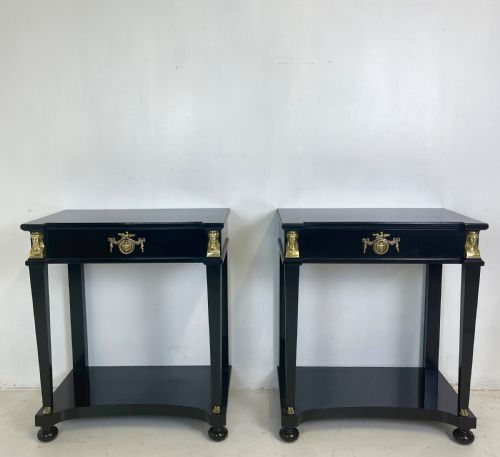
Black Bedside Cabinets
Black bedside cabinets bring deep tone and distinct historic character to a bedroom through painted surfaces, lacquer, and figured timber.
Black Bedside Cabinets
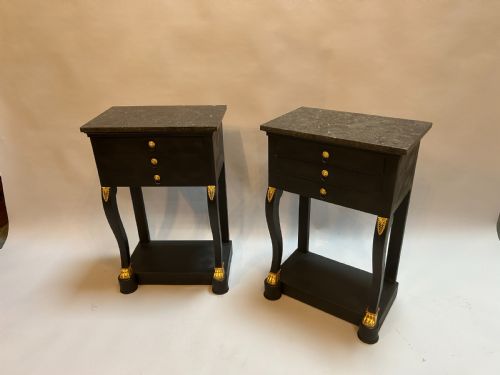
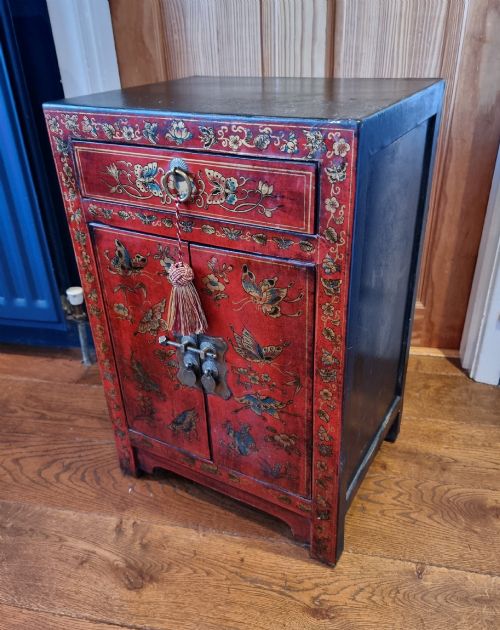
When you search for black bedside cabinets, you encounter a varied selection of antique bedside pieces, side tables, and small commodes shaped by diverse 19th and early 20th century European and Asian design traditions. The examples found here span Victorian, Edwardian, and later periods, capturing both austere painted pine and elaborate decorative schemes.
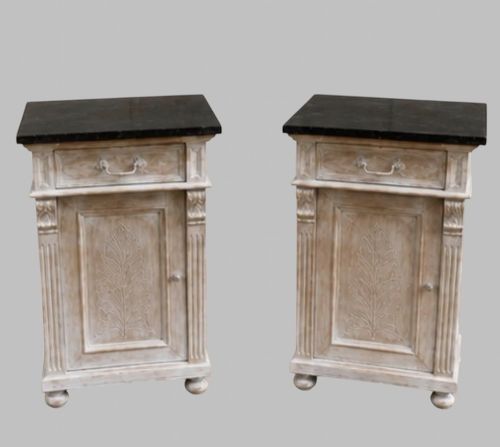
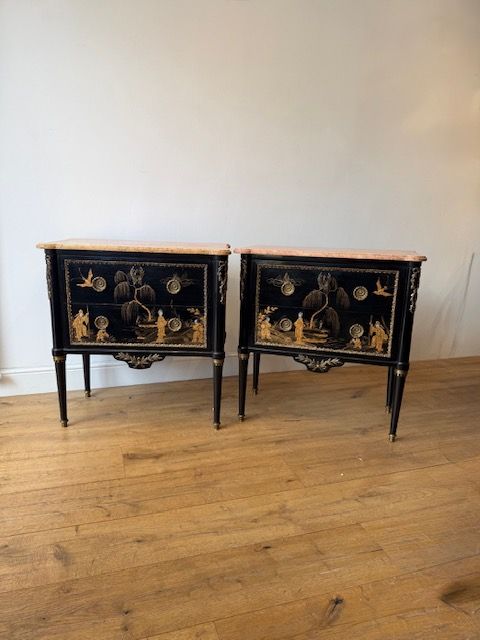
You are most likely to meet painted pine and oak bedside cabinets from the Victorian era, frequently featuring marble tops or columned details, alongside decorative lacquer and Chinoiserie pieces from the early decades of the twentieth century. These items serve as compact storage and display surfaces beside a bed, combining practical utility with strong visual presence.
The assortment includes pairs and individual items spanning French Empire, Gustavian, and Regency revival styles. Regional European craftsmanship appears alongside lacquer work, offering distinct proportions and surface treatments for domestic interiors.
How they were made
Construction relies primarily on traditional timber carcases using woods such as pine, oak, and other native hardwoods joined to form durable bedside chests and cupboards. These foundations support layered painted finishes or applied lacquer, often sealed and burnished to create deep, dark sheens.
Surface ornamentation integrates specialised techniques including hand-applied paint, Chinoiserie decoration, and brass mounts, alongside fitted marble tops on heavy Victorian pieces. Carved details and columned supports appear on wood frameworks, while lacquered cabinets on stands demonstrate meticulous layering of finish over timber.
Styles span Chinoiserie, Gustavian, French Empire, and Regency revival forms.
What varies in quality
Quality rests in the integrity of the timber carcase and the depth of the surviving surface finish, whether hand-applied paint, marble, or lacquer. Pieces with intact original decorative motifs and well-fitted stone tops demonstrate superior original manufacture.
Proportion and structural balance separate standard utilitarian cupboards from finer decorative items influenced by French Empire or Gustavian design. The finesse of the carving, the execution of Chinoiserie artwork, and the quality of brass fittings dictate the distinction between basic workshop output and accomplished stylistic pieces.
The Black Bedside Cabinets Glossary
- Chinoiserie
- European decorative style inspired by Chinese artistic traditions, featuring lacquered surfaces and painted motifs of figures, landscapes, or flora. This technique flourished across various antique periods to adorn cabinets and screens.
- Commode
- A low chest of drawers or cabinet, typically of French origin, adapted for domestic storage use. In bedroom settings, these function similarly to larger bedside tables.
- Gustavian
- Swedish neoclassical style characterised by restrained classical proportions, pale or dark painted finishes, and understated carving. It reflects a Scandinavian interpretation of French Louis XVI design.
- Marble
- Natural metamorphic rock cut into polished slabs and fitted to the tops of cabinets for a durable, decorative surface. It provides a cool, hard-wearing top resistant to water and daily use.
- Lacquered wood
- Timber coated with multiple layers of resin or varnish to produce a hard, smooth, and glossy protective finish. This technique underpins many decorative Asian and European cabinets.
Black Bedside Cabinets: Frequently Asked Questions
What periods do these cabinets represent?
The pieces span the Victorian and Edwardian eras, extending into the 1920s and 1930s with various revival styles.
Craftsmanship from these decades ranges from heavy painted pine storage units to lighter decorative lacquer work.
Are pairs common among these listings?
Matching pairs appear frequently, particularly within French Empire, Chinoiserie, and Victorian pine categories.
Finding a matched set allows for balanced placement on both sides of a bed.
What materials are used for the tops?
Many cabinets feature fitted marble tops, while others utilise plain or polished wood surfaces.
Stone tops provide a heavy, durable finish distinct from standard timber boards.
How do Chinoiserie cabinets differ from painted pine?
Chinoiserie cabinets rely on applied lacquer and intricate painted Asian-inspired motifs for their visual impact.
Painted pine variants focus more on architectural details like columns, carved woodwork, and solid painted surfaces.
How were these small cabinets originally used?
They served as bedside storage for personal items, nightwear, and chamber lighting in domestic bedrooms.
Their compact proportions allowed them to fit neatly beside period bed frames while offering functional surface space.