




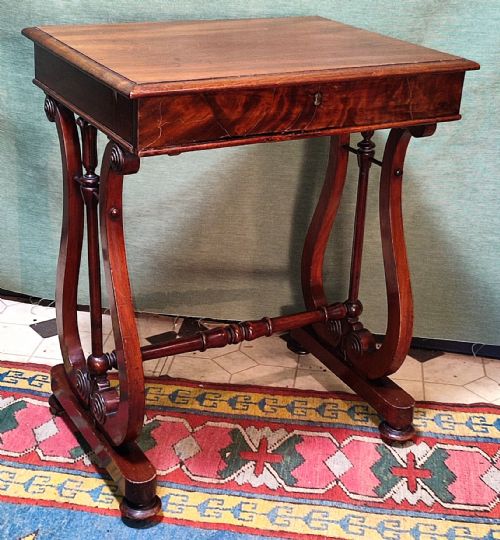


Regency Lyre Tables
Regency lyre tables are graceful period pieces defined by their distinctive harp-shaped supports, offering both stability and classical elegance to a room.
Regency Lyre Tables
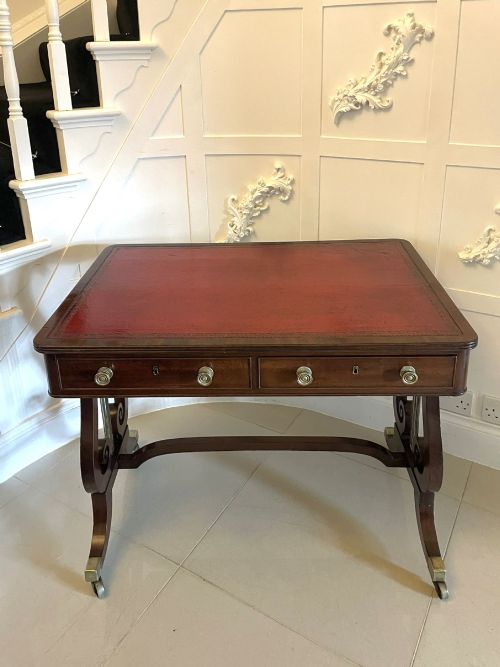
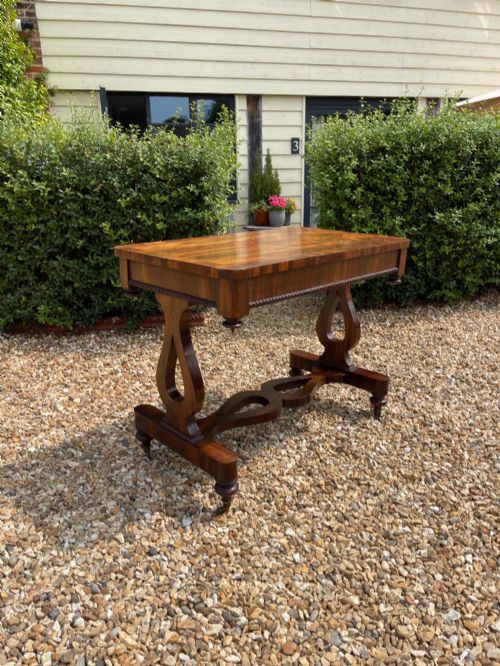
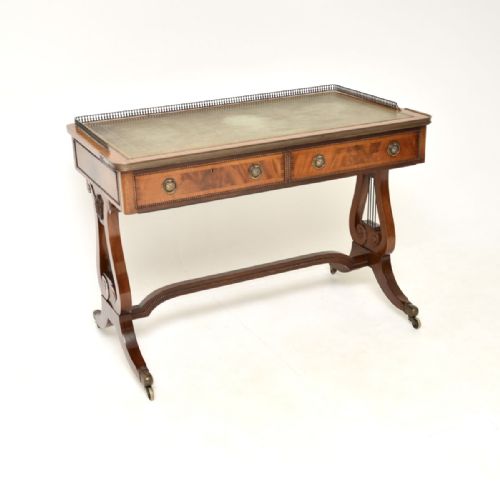
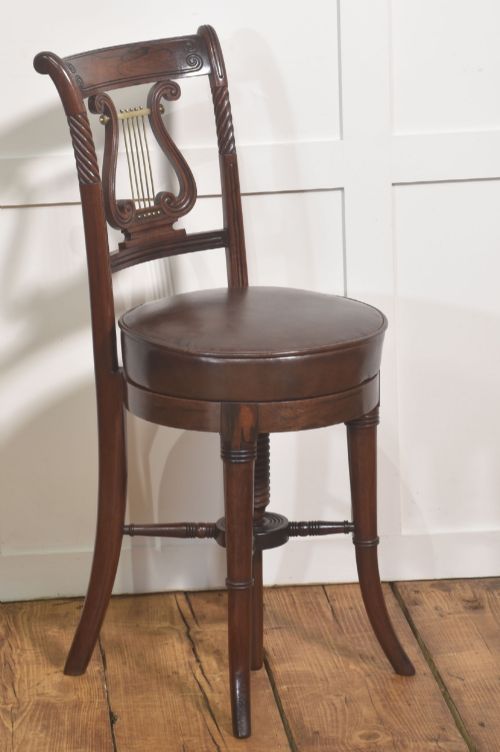
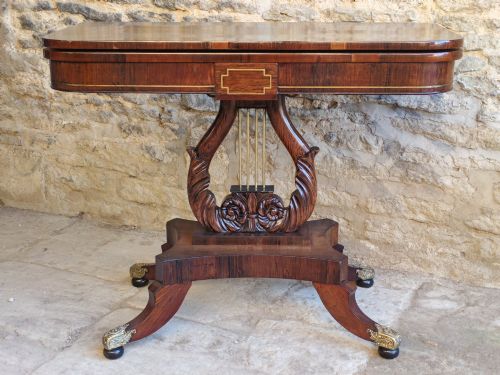
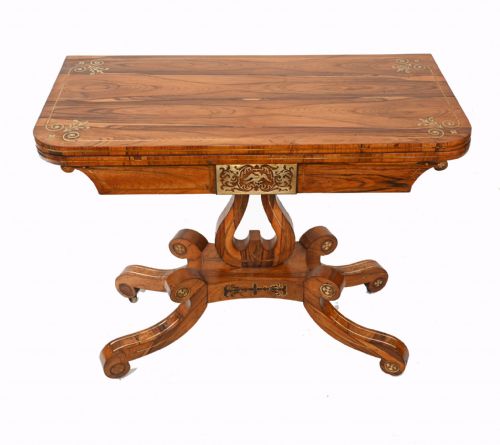
When you search for regency lyre tables, you encounter sophisticated furnishings designed primarily during the early nineteenth century and later replicated in revival periods. These items commonly manifest as sofa tables, card tables, tea tables, and writing desks supported by distinctive twin or single lyre-shaped pedestals. The forms reflect a broader neoclassical taste spanning the Regency, Georgian, and William IV eras, alongside subsequent Edwardian and 1930s revivals.
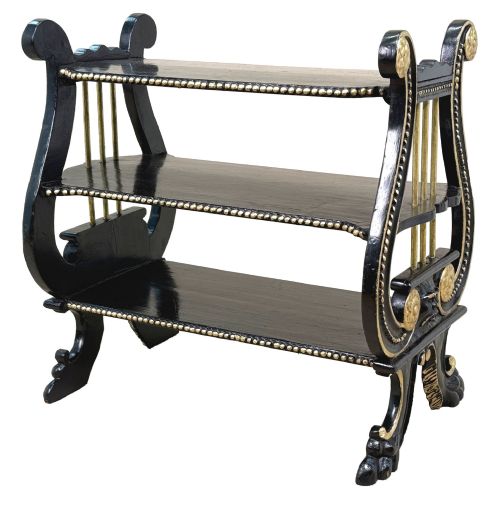
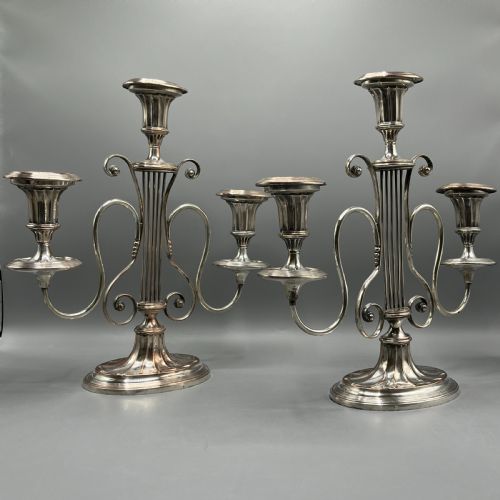
The pieces on this page lean heavily towards mahogany and rosewood constructions, frequently featuring freestanding formats intended to occupy the centre of a room. Alongside standard occasional and side tables, you find specialised forms like teapoys, sewing tables, and étagères incorporating the same characteristic lyre motifs. Origins range from authentic nineteenth-century craftsmanship to later twentieth-century interpretations adhering to classical proportions.
Materials and Technique
Craftsmen relied on dense timbers such as mahogany, rosewood, kingwood, and satinwood, often accentuating the grain with intricate wood inlay or marquetry. Ebonised wood and parcel gilt details appear alongside brass inlay and brass mounts, particularly on the prominent lyre supports and stretcher bases. Structural stability was achieved through precise joinery, accommodating drop leaves, fold-over tops, and adjustable components.
Surface treatments included fine polishing to highlight the natural figure of the timber, while specialist items incorporated leather inserts for writing surfaces and silk for sewing bags. The distinctive lyre frames were frequently carved from solid hardwoods or built up with layered veneers, sometimes finished with gilt bronze or brass stringing to echo classical Greek motifs.
Some nineteenth-century tables cleverly concealed sewing compartments within miniature lyre-ended boxes, keeping embroidery threads safe from wandering fingers.
Build and Detail
Quality separates ordinary joinery from superior cabinet work through the choice of timber and the crispness of the carving on the lyre supports. Better examples utilise heavily figured mahogany, rosewood, or pollard oak with meticulous brass inlay rather than simple painted lines.
Construction integrity defines the upper tier, seen in the seamless operation of fold-over mechanisms, smooth drawer runners, and stable weight distribution across the pedestals. The finesse of secondary woods, the execution of marquetry, and the integration of original brass or gilt hardware distinguish master workshops from standard production.
FB Adams London
The Regency Lyre Tables Glossary
- Lyre
- A classical harp-shaped architectural motif used primarily as a central pedestal or leg support on tables, desks, and chairs. It derives its form from ancient stringed musical instruments depicted in Greek and Roman art.
- Teapoy
- A small box or cabinet mounted on a central pillar or lyre base, originally designed to store dry tea leaves securely under lock and key. They frequently include internal caddies and mixing bowls.
- Sofa Table
- A long, narrow occasional table designed originally to stand directly in front of a sofa, featuring drop leaves on either side. These pieces typically rest on twin pillar or lyre ends connected by a stretcher.
- Marquetry
- The art and craft of applying small pieces of veneer to a structure to form decorative patterns, pictures, or designs. Makers utilised various exotic woods to create contrasting tonal effects.
- Etagere
- A piece of furniture consisting of a set of open shelves for displaying small ornaments, supported by slender columns or lyre-form uprights. They became particularly popular during the nineteenth century.
Regency Lyre Tables: Frequently Asked Questions
How do I identify a true period piece?
Authentic period pieces exhibit period-specific construction methods, secondary timbers like pine or oak behind primary veneers, and traditional hand-cut joinery.
Examine the patination on the wood and the wear patterns around the brass fittings and lyre base to confirm nineteenth-century origin.
Where should I place a sofa table?
Sofa tables work well positioned behind a sofa in an open room layout, or flat against a wall as a slim side table.
Because many examples feature finished backs and freestanding designs, they suit central room placements where the lyre supports remain fully visible.
How do I care for rosewood and mahogany?
Maintain these hardwood surfaces by dusting regularly with a soft, dry cloth and avoiding direct exposure to strong sunlight or heat sources.
Apply occasional traditional wax polish to nourish the timber grain and preserve the deep natural lustre without building up heavy chemical residues.