
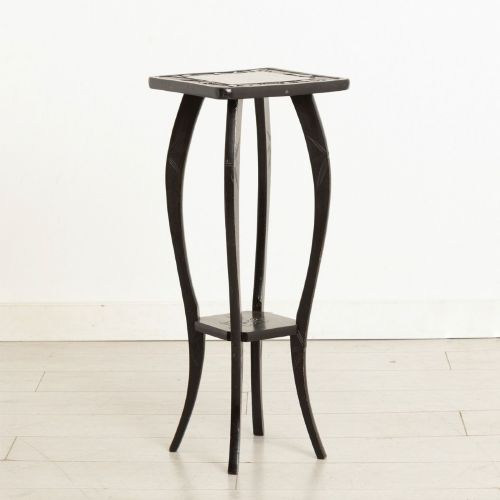
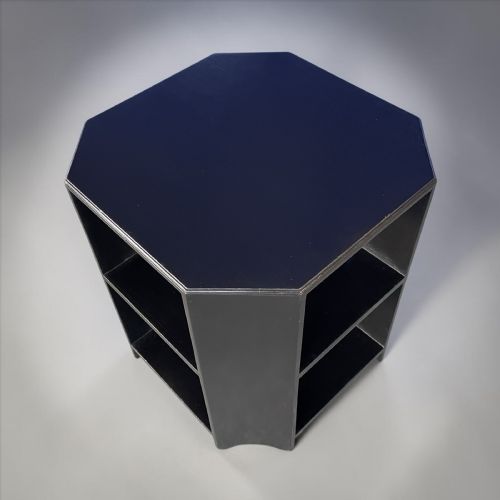
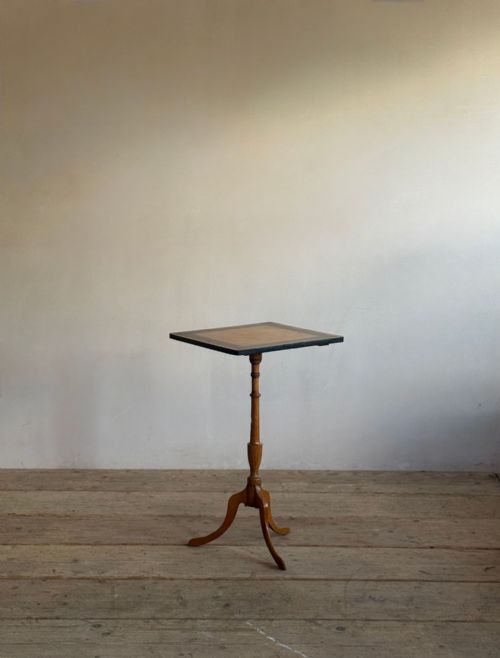
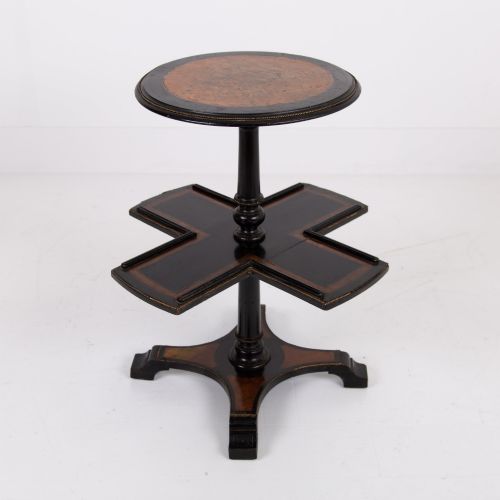
Black Pedestal Side Tables
Black pedestal side tables bring practical surfaces and dark elegance to a room, ranging from carved Victorian stands to smooth Art Deco designs.
Black Pedestal Side Tables
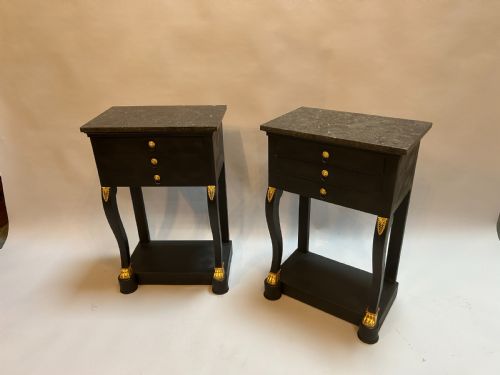
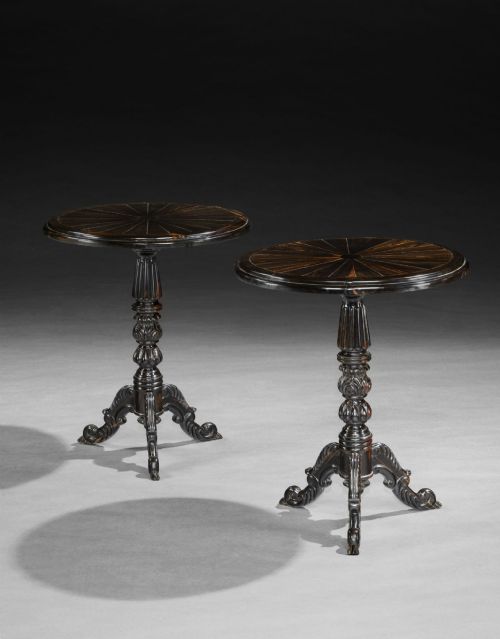
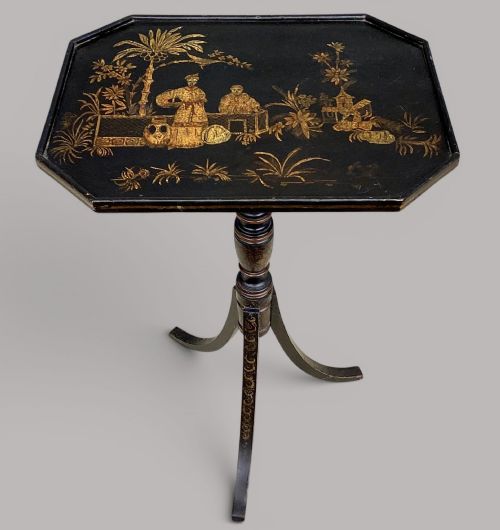
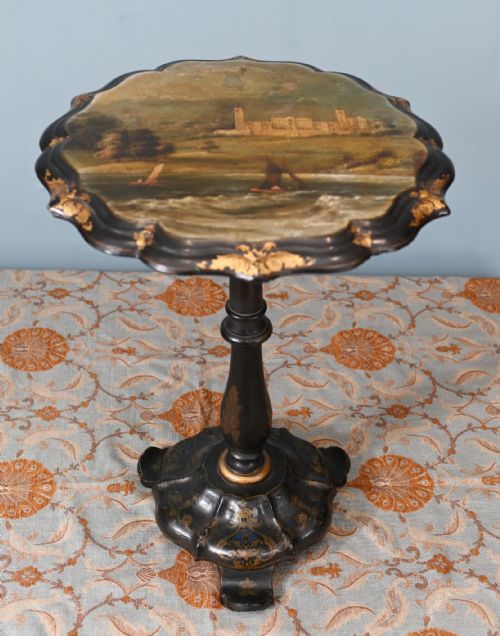
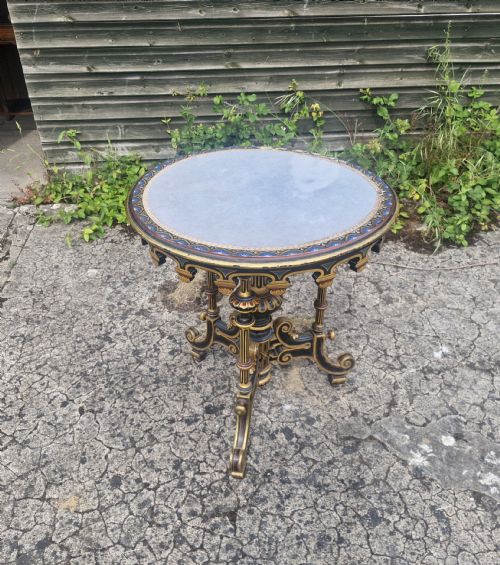
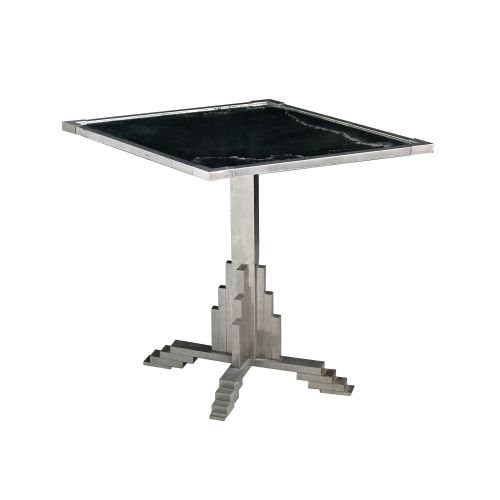
When searching for black pedestal side tables, buyers encounter diverse forms such as tripod tables, plant stands, and occasional tables supported by a central column. These pieces appear across multiple periods including the Victorian era, Regency, and Art Deco.
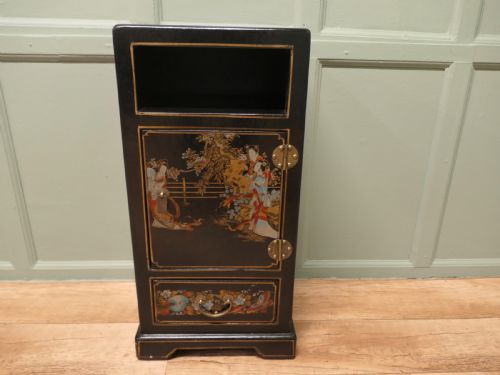
The materials shaping these surfaces include ebonised wood, marble, lacquer, and painted finishes. Most examples function as compact lamp tables, bedside cabinets, or plant stands.
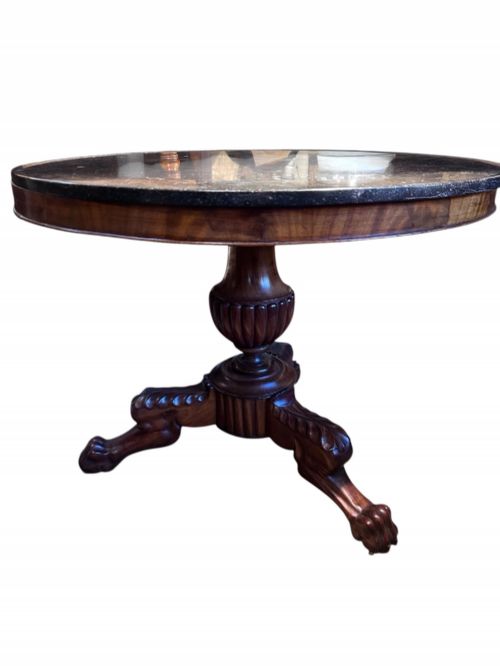
Origins stretch from European workshops to Japanese, Chinese, and Indian makers. Victorian ebonised pieces and 19th-century French guéridons dominate the forms visible on this page.
How They Were Made
Wood forms receive ebonised treatments, paint, or dark lacquer to achieve their characteristic black surfaces, frequently paired with contrasting materials like white or rouge marble tops. Artisans also utilise hardwoods such as oak, mahogany, and walnut beneath these dark finishes.
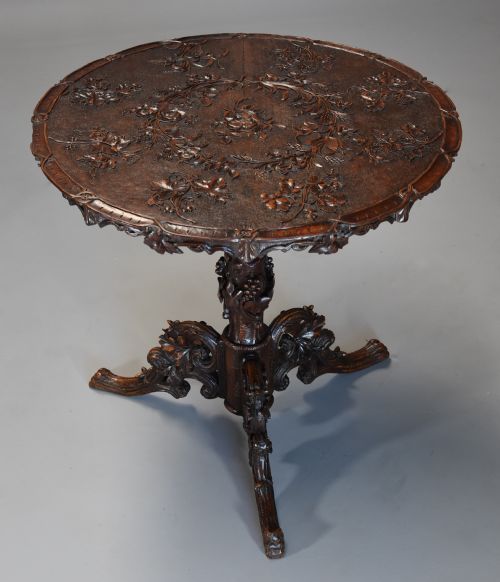
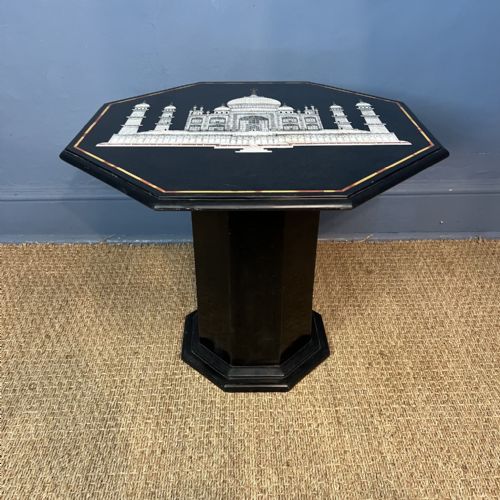
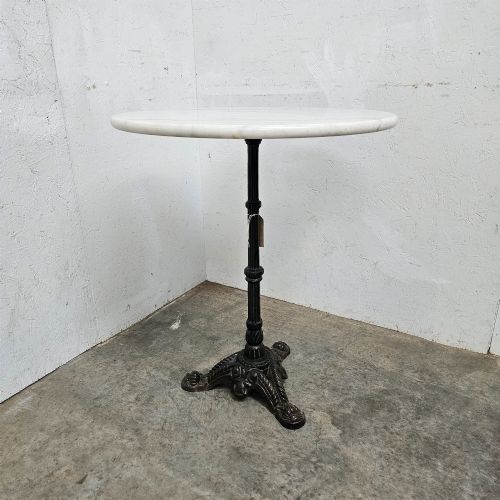
Construction techniques include detailed hand carving, particularly in Black Forest linden wood and Oriental plant stands, alongside marquetry and bone inlay found on Italian and Swiss tables. Metal elements appear in French iron café tables and brass accents on specific designs.
What Varies in Quality
The refinement of surface decoration distinguishes standard examples from exceptional ones, particularly where penwork, lacquer, or japanning shows careful hand execution. Finely carved figures, such as those on Black Forest stands, display greater anatomical precision and depth.
The integrity of materials plays a primary role, seen in the thickness and polish of inset marble tops, the tightness of wood joints on pedestals, and the original condition of painted or ebonised surfaces.
Maple and Co·Liberty of London
The Black Pedestal Side Tables Glossary
- Ebonised
- Wood treated with a stain or finish to imitate expensive ebony. This technique gained widespread popularity during the Victorian and Aesthetic Movement periods.
- Guéridon
- A small French table supported by one or more columns, often featuring a circular marble top. These pieces frequently date from the 19th century.
- Japanning
- A European imitation of East Asian lacquerwork using resin-based finishes. The technique creates a glossy black surface often decorated with gilt motifs.
- Pietra Dura
- An inlay technique using cut and fitted polished coloured stones to create pictorial designs. It appears on select Victorian marble tabletops.
- Tripod Table
- A small table standing on three legs connected to a central pillar. These tables were widely used for wine, lamps, or general occasional use.
Black Pedestal Side Tables: Frequently Asked Questions
Where do I put a black pedestal side table?
These compact tables fit easily beside a sofa, armchair, or bed where surface space is needed without a large footprint. Their central pillar construction also allows them to function effectively as plant stands in corners or hallways.
The dark finishes and marble tops provide a strong visual anchor against lighter walls or textured backgrounds. Smaller tripod versions move simply from room to room depending on daily requirements.
How do I care for ebonised wood?
Ebonised surfaces require gentle dusting with a soft, dry cloth to maintain their lustre. Avoid silicone polishes and keep the wood away from direct heat sources to prevent cracking.
Moisture should be wiped away promptly from both wooden and marble tops. Using coasters protects the dark finish from rings caused by glasses or cups.
What is the difference between a guéridon and a plant stand?
A guéridon is primarily designed as a small occasional table with a flat top for drinks, books, or lamps. These French tables usually feature decorative wood or marble surfaces.
Plant stands typically possess smaller top surfaces specifically proportioned to hold pots, jardinières, or decorative objects. Their structures often incorporate more elaborate carving or taller pedestal columns.
How do I identify a Victorian ebonised table?
Victorian ebonised tables often combine dark-stained timber with contrasting marquetry, gilt leaf, or amboyna wood. Stylistic markers include Aesthetic Movement motifs or heavily turned pedestal bases.
Construction details such as traditional joinery, hand-cut screws, and patination on the underside help confirm their 19th-century origins. These pieces frequently reflect Japanese or classical revival influences popular during the period.