


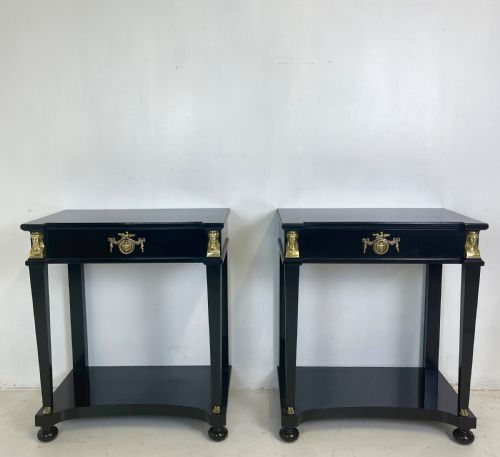


Ebonised Bedside Tables
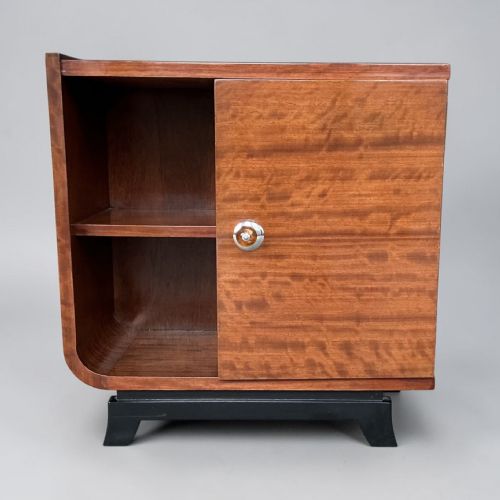
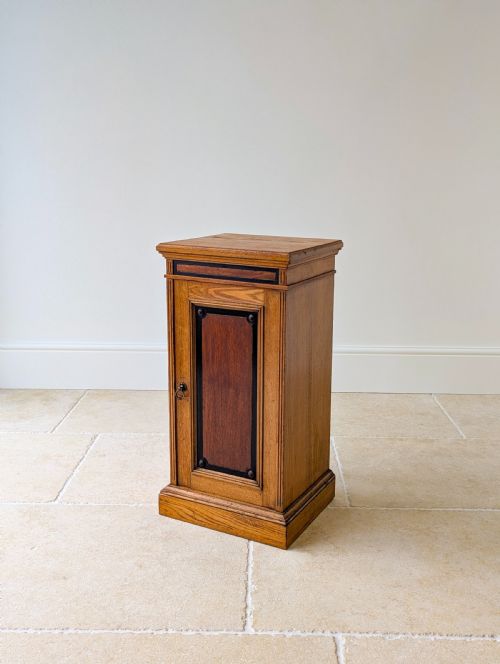
Ebonised bedside tables are dark, striking bedroom pieces offering dramatic contrast, and you are mostly meeting French Art Deco and Victorian examples here.
Ebonised Bedside Tables
You are most likely to meet pairs of bedside cabinets and small side tables, often incorporating contrasting materials like marble tops or gilt bronze mounts. These forms serve practical bedside storage while adding a strong focal point to a bedroom scheme.
How they were made
Cabinet makers utilised fruitwoods or cheaper timbers such as oak and walnut, applying a dark stain or polish to create the dense black finish. This technique allowed workshops to emulate the luxurious appearance of solid ebony without prohibitive material costs.
Finer examples integrate contrasting elements like burr walnut panels, marble tops, or inlaid brass and marquetry. These surfaces demonstrate traditional joinery techniques, including dovetail drawers and panel construction.
The listings span the eighteenth, nineteenth, and twentieth centuries, incorporating materials such as marble, burr walnut, and gilt bronze alongside ebonised wood.
What varies in quality
The standard of the ebonised finish dictates much of the visual success, ranging from flat painted surfaces to deeply polished French polish that reveals the grain beneath. Superior pieces retain crisp carved details or crisp gilt bronze mounts that do not blur into the dark wood.
Construction methods also separate utilitarian examples from finer commissions, seen in the choice of secondary timbers and the precision of marquetry inlay. Matching pairs command greater interest when the grain and proportion align symmetrically.
The Ebonised Bedside Tables Glossary
- Ebonised
- Wood treated with stain, dye, or polish to imitate genuine ebony. This dark finish gained popularity during the Victorian and Aesthetic Movement periods.
- French Polish
- A method of applying numerous thin coats of shellac dissolved in alcohol using a pad. This technique builds a high-gloss surface that enhances the wood grain.
- Marquetry
- Decorative patterns formed by fitting together thin veneers of wood and other materials onto a structural carcass. It requires considerable skill to achieve precise geometric or floral designs.
- Ormolu
- Gilded bronze mounts applied to furniture edges, feet, and keyholes. The term derives from the French for milled gold.
Ebonised Bedside Tables: Frequently Asked Questions
Are these tables solid ebony?
True solid ebony furniture is extremely uncommon due to the density and scarcity of the timber. Most pieces use a base wood like walnut, oak, or fruitwood finished with an ebonised coating.
This method provided the fashionable dark aesthetic while keeping the weight and cost manageable for the workshop.
How do I clean an ebonised finish?
Dust regularly with a soft, dry lint-free cloth to prevent surface scratching. Avoid harsh chemical sprays or excess water, which can damage the polish.
Applying a traditional beeswax occasionally will nourish the surface and maintain the deep black lustre.
Can I mix periods in a bedroom?
Mixing periods works well when scale and tone share a common thread. An Art Deco ebonised cabinet can sit comfortably near Victorian or even 18th-century pieces if the wood finishes complement one another.
Balance the visual weight so that no single piece overwhelms the bedside space.
How do I date an ebonised table?
Dating relies on examining the construction methods inside the drawers, the style of the hardware, and the timber beneath the black finish. Victorian pieces often display heavier proportions and Aesthetic Movement incised carving, whereas 1930s examples favor geometric lines.
Secondary woods and drawer dovetails also offer clear clues to the decade of manufacture.