




Empire Style Bedside Tables
Empire style bedside tables bring classical dignity to the bedroom through rich mahogany, marble tops, and gleaming ormolu mounts.
Empire Style Bedside Tables
Empire style bedside tables combine architectural form with refined classical detail, serving as both functional furniture and striking decorative pieces. These items draw heavily on the grand aesthetics of the nineteenth century, as well as later revivals from the early twentieth century.
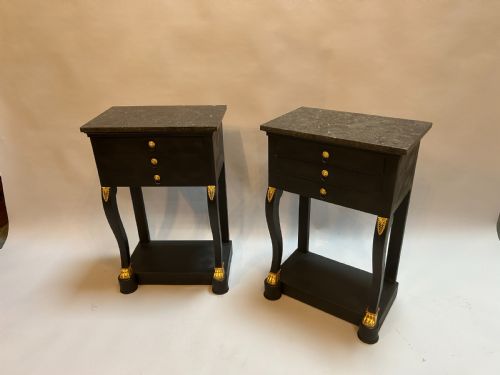
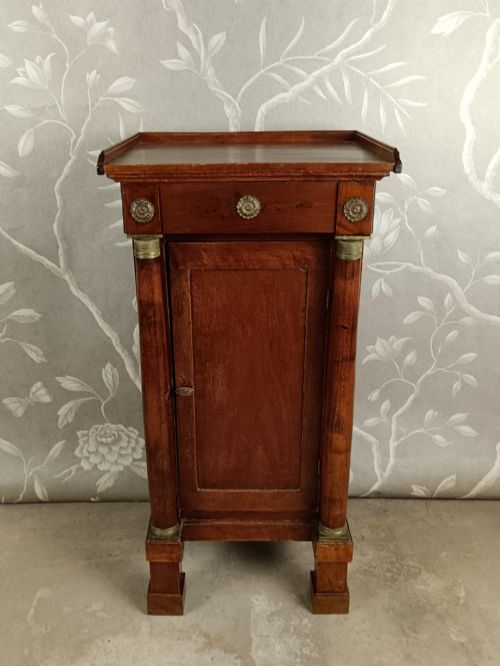
The pieces appearing on this page encompass various forms, from bedside cabinets and nightstands to occasional lamp tables. Walnut and mahogany provide the primary wooden structures, frequently paired with contrasting marble tops and polished metal mounts.
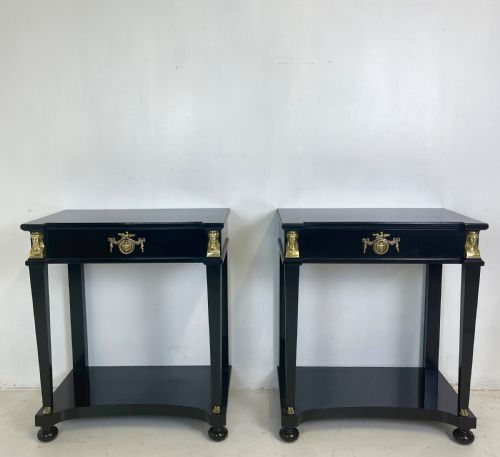
Origins span French and Italian workshops, reflecting both strict nineteenth century craftsmanship and the revival movements of the nineteen tens, twenties, and thirties. Buyers frequently encounter matched pairs, which remain highly sought after for balancing a bedroom scheme.
How they were made
Cabinet makers utilised dense hardwoods like mahogany and walnut to build the foundational carcasses of these bedside tables and cabinets. These timbers were often selected for deep grain patterns and finished to a high polish.
Decoration relied heavily on cast brass, bronze, and ormolu mounts depicting classical motifs such as masks and scrolling foliage. Natural marble slabs, chosen for colour and veining, were fitted precisely to the upper surfaces to provide a durable and luxurious finish.
Listings feature items spanning the nineteenth century through to the nineteen thirties, constructed from mahogany, walnut, marble, and ormolu.
What varies in quality
Quality in these pieces depends largely on the crispness of the metal cast mounts and the weight of the timber used. Finer examples display sharply detailed ormolu and heavy, solid wood construction rather than thin veneers over lesser cores.
The integration of materials also defines the tier of craftsmanship, particularly the snug fit of marble tops and the smooth operation of drawers. Superior execution shows seamless joins and balanced proportions that echo authentic neoclassical design.
Dugourc
The Empire Style Bedside Tables Glossary
- Ormolu
- Gilded bronze or brass applied to furniture and lighting mounts. This technique gives metalwork the appearance of solid gold.
- Ebonised wood
- Timber treated to resemble ebony. Makers achieved this dark, polished finish through staining and painting.
- Neoclassical
- A style inspired by classical antiquity. It values symmetry, restraint, and formal geometric lines.
- Nightstand
- A small bedside table or cabinet. These pieces hold lamps and personal items within reach of the bed.
Empire Style Bedside Tables: Frequently Asked Questions
How do I style empire bedside tables?
Pair these substantial wooden cabinets with simple, uncluttered surfaces to let the brass mounts and marble tops stand out. Placing matching lamps on top completes the symmetrical look favoured in classical interior design.
Consider the scale of your bed when choosing these tables, as their architectural presence works best alongside larger bed frames and classic headboards.
Are these tables strictly nineteenth century?
While many examples originate from the nineteenth century, a significant number date from early twentieth century revival periods, including the nineteen tens, twenties, and thirties.
Both original nineteenth century pieces and later twentieth century interpretations share the same design vocabulary rooted in French and Italian classical traditions.
What materials should I expect?
The primary construction relies on rich hardwoods like mahogany and walnut, frequently accented by ebonised wood details. Ormolu, gilt brass, and bronze provide the distinctive metallic mounts.
Upper surfaces are commonly fitted with heavy marble slabs, while some variations incorporate fabric elements or glass components in associated lighting pieces.
Do they come in pairs?
Many listings feature matched pairs of bedside tables and cabinets, which proves particularly common across both current inventory and archival sold items. Pairs offer balanced symmetry for flanking a bed.
Single pieces also appear, often functioning as standalone nightstands or side tables in smaller bedrooms.