


Regency Stationery Box
A regency stationery box brings orderly elegance to a desk, offering compartmentalised storage for papers and correspondence in rich timbers.
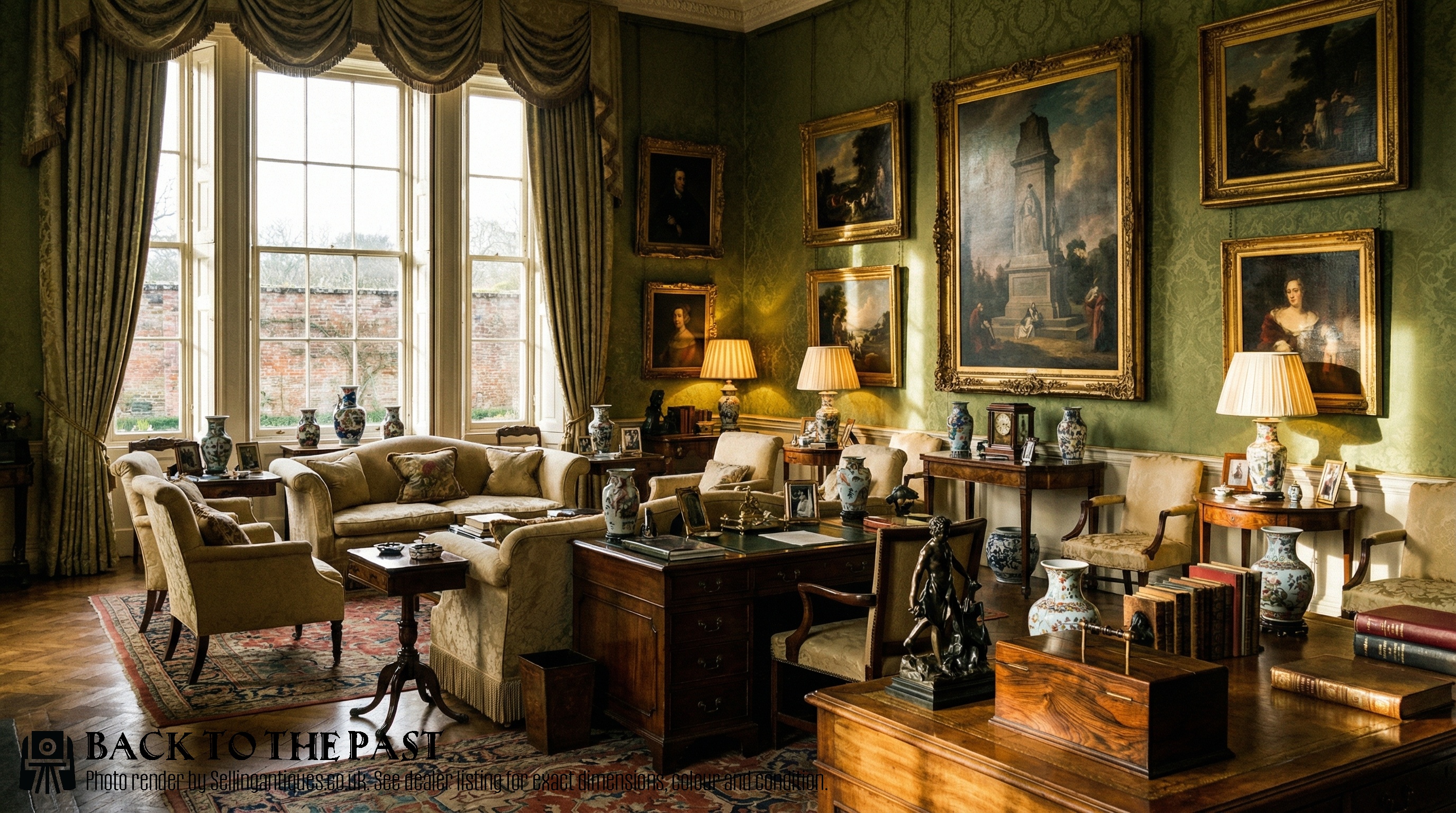
Regency Stationery Box
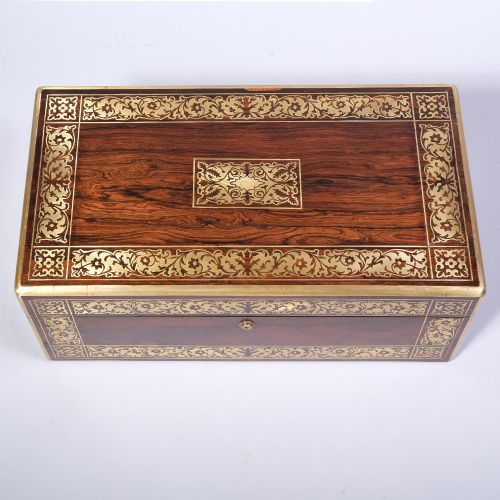
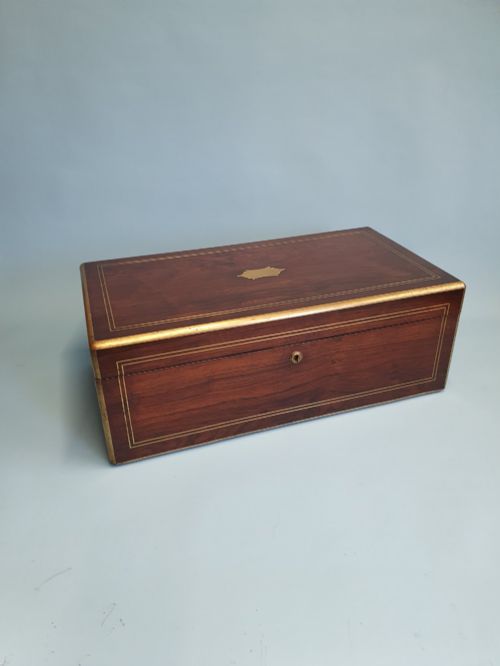
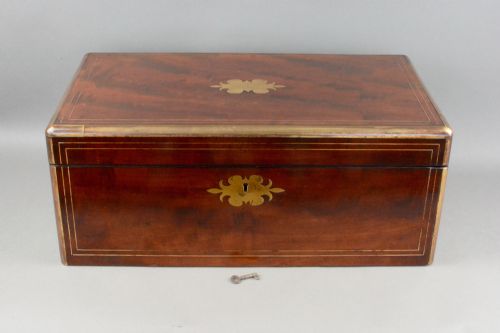
Rosewood remains the most frequent wood encountered in these pieces, frequently enriched with brass inlay or bound edges. Walnut, satinwood, and coromandel also appear across document boxes and desk stands.
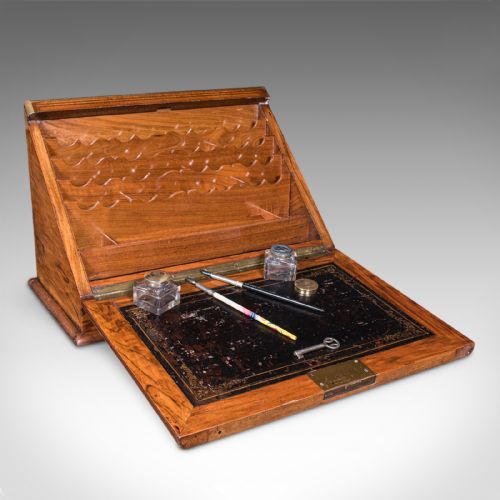
The forms range from compact tabletop writing slopes with secret drawers to large bi-fold writing desks and stationery cases fitted with glass inkwells. Many incorporate leather writing surfaces and specialised compartments for envelopes and nibs.
Distinctions in quality
Quality rests upon the precision of the cabinet work, particularly the snug fit of folding slopes and the seamless integration of brass inlay into the timber surface. Finer examples display carefully matched grain veneers and robust internal mechanisms for secret compartments.
The completeness of original fitted interiors, including matching glass inkwells and intact tooled leather panels, elevates a piece. Superior execution is also evident in the crispness of brass mounts and the weight of the underlying wood construction.
Secret drawers often require pressing hidden wooden springs to release, rewarding curious owners with miniature storage spaces for hidden notes.
Gillows of Lancaster
The Regency Stationery Box Glossary
- Writing slope
- A portable desk with a hinged, slanted lid that opens to reveal storage compartments and a sloping surface for writing. These boxes often feature internal secret drawers.
- Brass inlay
- Technique where thin strips or motifs of brass are embedded flush into the wooden surface of the box. This decoration is typical of the Regency period.
- Stationery case
- A tabletop cabinet or box designed specifically to hold envelopes, writing paper, and letters upright. They frequently accompany desk stands and inkwells.
- Secret drawer
- A concealed small drawer hidden behind removable partitions or triggered by a spring mechanism within the writing box. They were used for storing valuables.
Regency Stationery Box: Frequently Asked Questions
What is inside a writing slope?
Writing slopes typically contain partitions for folded paper, pen trays, and small lidded compartments for sealing wax and stamps. Many also house glass inkwells with matching metal lids.
Finer versions conceal secret drawers behind false partitions or beneath the pen recess for storing confidential items.
How do I date a stationery box?
Dating relies on timber choices, hardware style, and construction methods. Rosewood and brass inlay strongly suggest the Regency and late Georgian eras.
Later Victorian pieces often employ different internal layouts and secondary woods while retaining similar form factors to their Regency predecessors.
Where were these boxes used?
These boxes served as portable desks in studies, libraries, and bedrooms during a time when letter writing was a daily necessity.
Owners transported them between rooms or on travels, keeping their correspondence materials organised in one secure enclosure.
Are brass bound boxes stronger?
Brass bound edges and corners provided structural reinforcement for boxes subjected to frequent travel and handling.
This reinforcement protected the dense rosewood or mahogany corners from splitting while adding a decorative metallic contrast to the timber.