
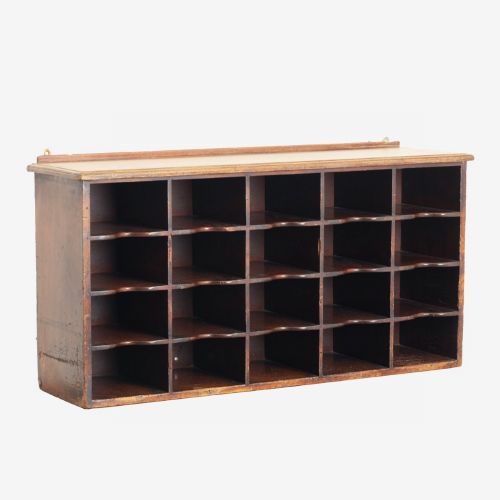

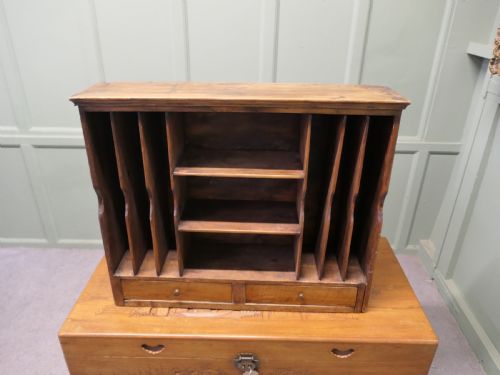
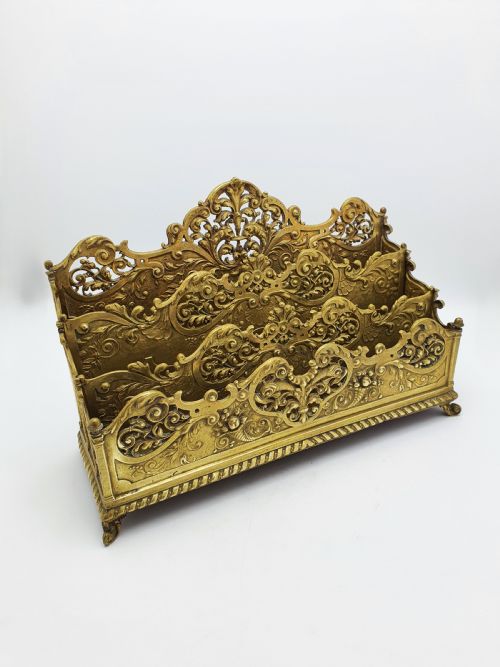
Antique Letter Tidy
An antique letter tidy corrals domestic correspondence with the compact desk-top presence that defined study spaces a century ago.
Antique Letter Tidy
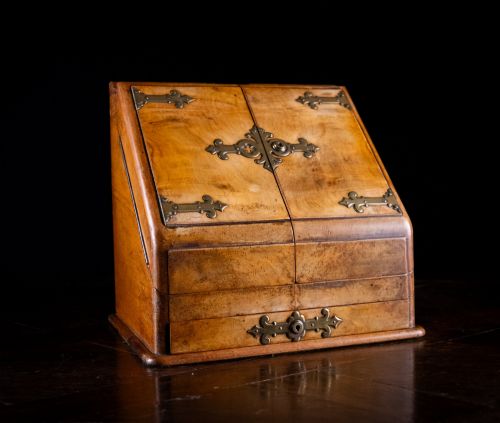
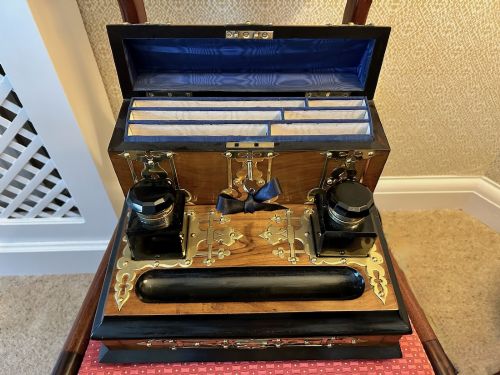
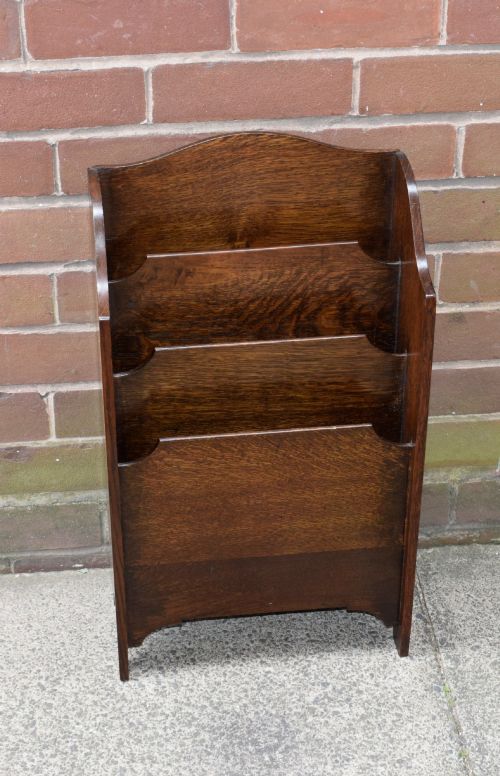
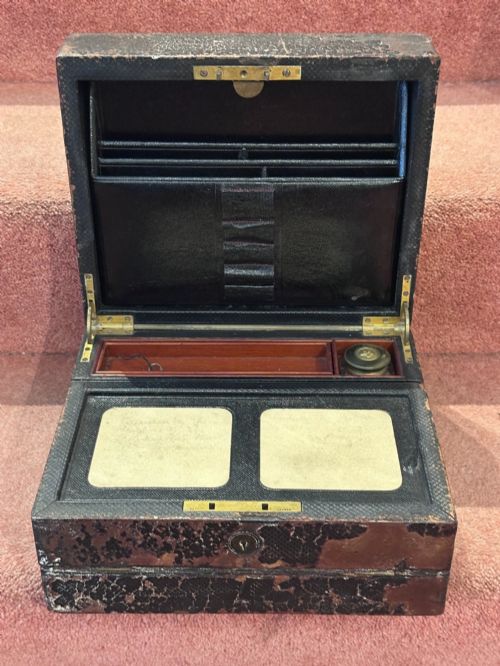
An antique letter tidy gathers stationery, envelopes, and incoming post within desktop compartments, racks, and lidded boxes. When you search for this phrase, you encounter desk accessories spanning the Victorian and Edwardian eras alongside later twentieth-century examples.
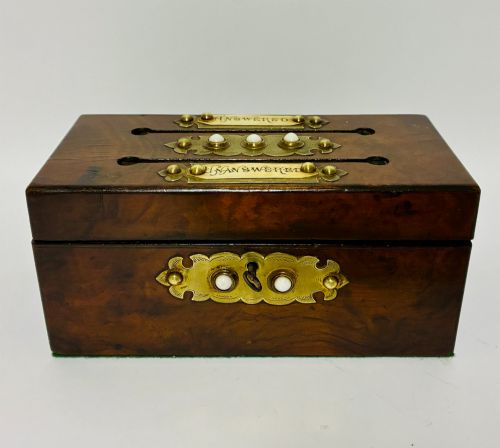
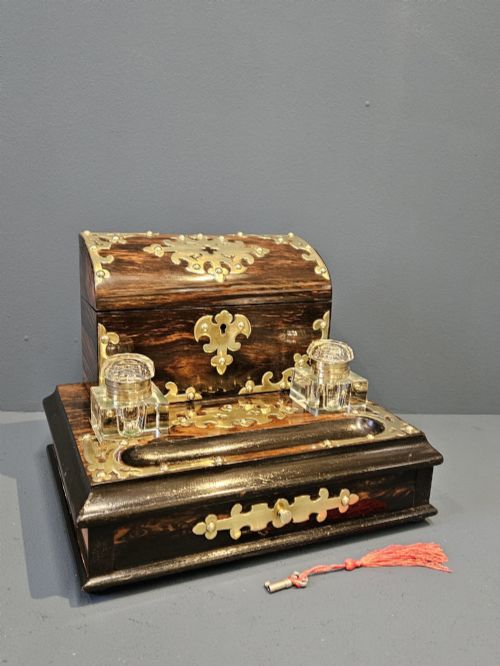
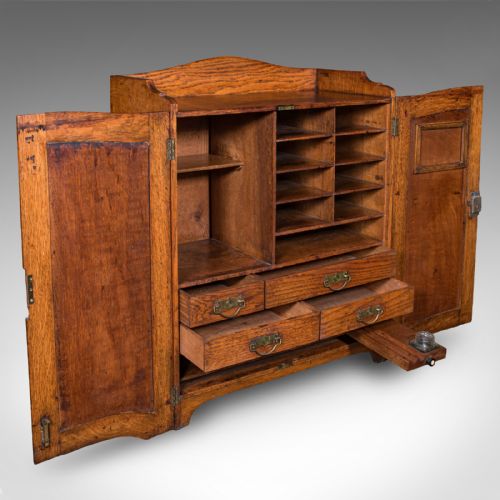
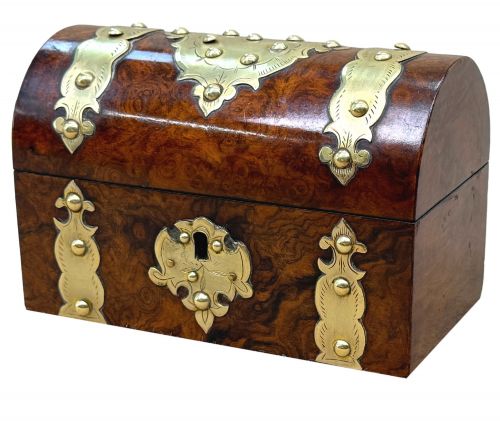
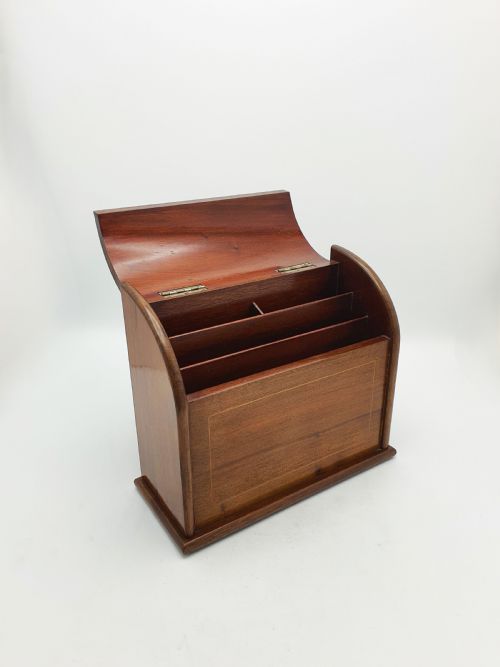
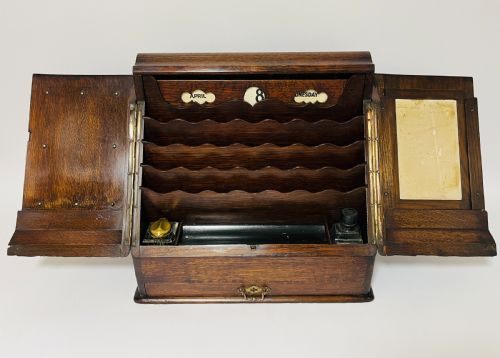
The most common formats on this page are upright wooden letter racks, hinged correspondence boxes, and fall-front stationery cabinets in oak, mahogany, and walnut. These pieces originated to manage the daily influx of letters in studies, libraries, and country house halls.
How they were made
Cabinet makers utilised dense hardwoods such as oak, mahogany, walnut, and rosewood, often pairing them with brass hinges, mounts, and divider rods. Selected pieces incorporate decorative details including inlaid wood, carved bone, or copper elements.
Stationery boxes and desk tidies frequently employ dovetailed joints for structural durability, combined with glass panels, leather bindings, or fabric linings inside compartments and writing slopes.
One brass letter rack takes the cheerful form of a cricket bat, ball, and wicket.
What varies in quality
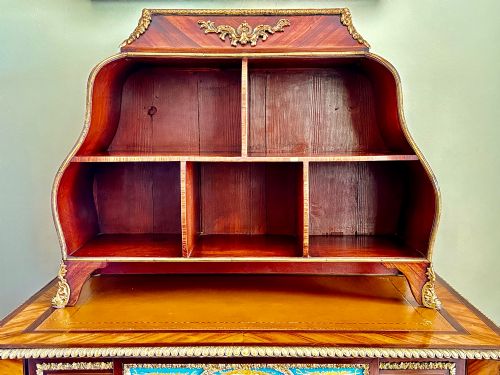
Quality rests in the precision of the joinery and the selection of timber veneers, such as burr walnut or figured mahogany, balanced against the cast quality of brass or ormolu mounts. Finer examples display thoughtful internal architecture, such as secret drawers, integrated calendars, and dedicated pen recesses.
Simpler utility pieces made for offices or institutional desks rely on sturdy construction without decorative embellishment. The distinction lies between utilitarian office equipment and ornamental items created for private drawing rooms and libraries.
The Antique Letter Tidy Glossary
- Letter tidy
- A desktop desk accessory designed to hold stationery and incoming correspondence upright or in compartments.
- Stationery cabinet
- A lidded or fall-front wooden box with internal partitions for paper, envelopes, and writing instruments.
- Standish
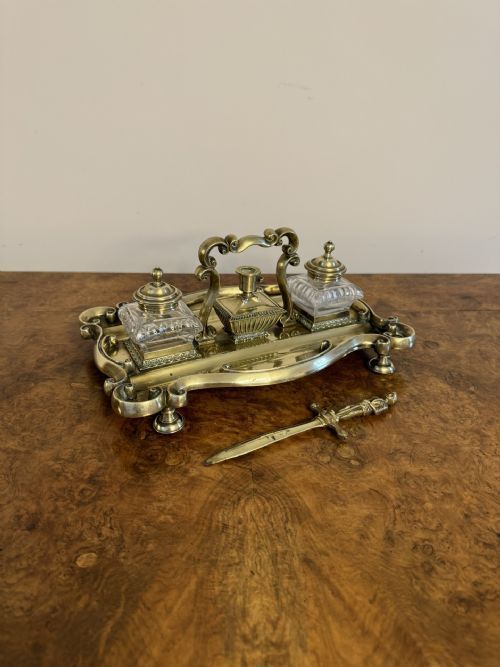
- An inkstand or desk tray fitted with inkwells, pen rests, and sometimes a central letter rack.
- Ormolu
- Gilt bronze mounts applied to decorative desk accessories, particularly prevalent in revival styles.
- Cartonnuer
- A desktop cabinet containing multiple vertical shelves or compartments for filing papers and letters.
Antique Letter Tidy: Frequently Asked Questions
What is an antique letter tidy used for?
An antique letter tidy served to organise personal correspondence, business mail, and note paper on a writing desk or hall table.
These desktop accessories kept daily writing materials accessible while maintaining tidiness in the Victorian study.
How do I date an antique letter tidy?
Dating relies on timber selection, hardware, and prevailing design styles recorded across Victorian, Edwardian, and Arts and Crafts periods.
Earlier pieces often feature heavy brass bindings and rosewood or mahogany, whereas later twentieth-century examples show simpler oak or copper construction.
Are letter boxes different from letter racks?
Letter boxes feature enclosed compartments with hinged lids or doors to conceal post, whereas letter racks use open dividers.
Enclosed boxes offered greater privacy for correspondence in busy household hallways and estate offices.
What woods were used for letter tidies?
Makers constructed these pieces primarily from domestic and exotic hardwoods including oak, mahogany, walnut, and rosewood.
Finer versions incorporated decorative veneers like burr walnut alongside brass mounts or inlaid details.