

Regency Sofa Side Table
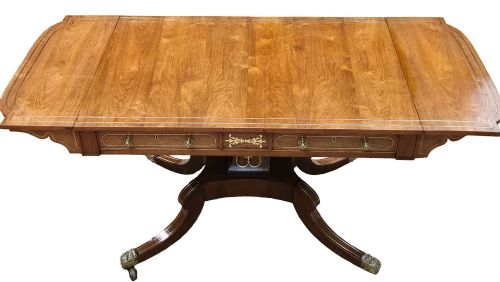
A regency sofa side table brings adaptable elegance to a room with its drop-leaf design and refined proportions.

Regency Sofa Side Table
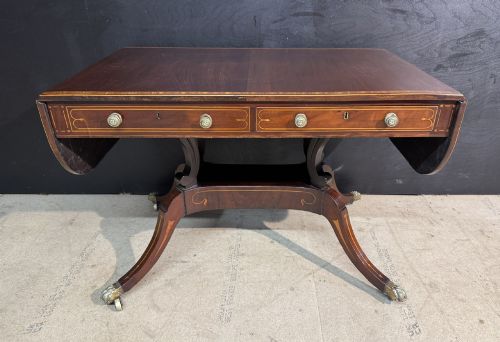
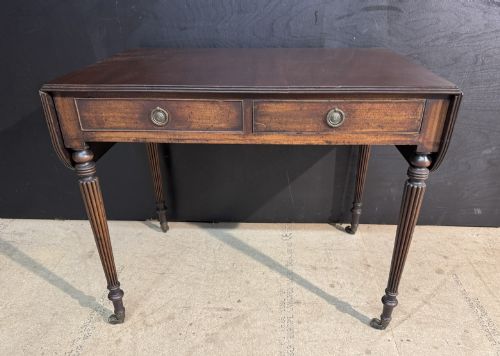
Most examples found on this page date from the nineteenth century, spanning periods from George III through William IV, with occasional later revivals. They serve equally as lamp tables, occasional surfaces, or compact serving desks in traditional interiors.
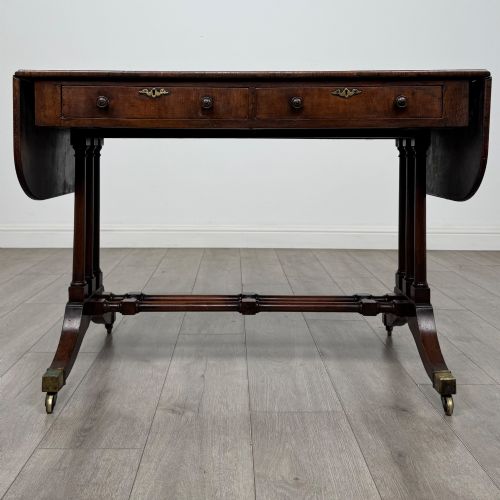
Makers designed these items with freestanding finished backs so they could sit away from walls. The presence of drawers at one or both ends distinguishes a true sofa table from standard Pembroke or occasional designs.
How they were made
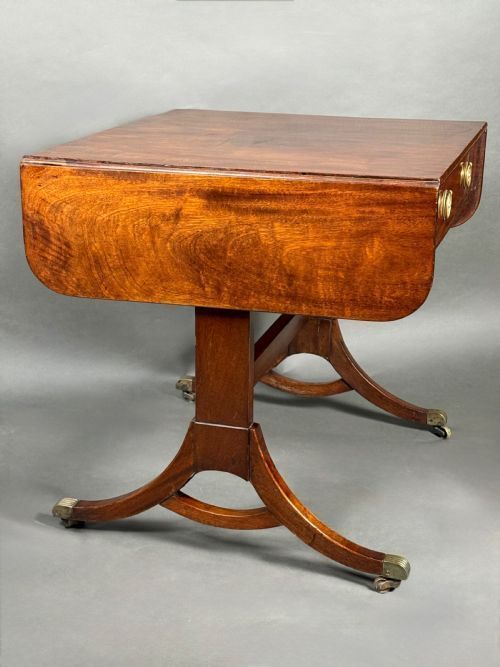
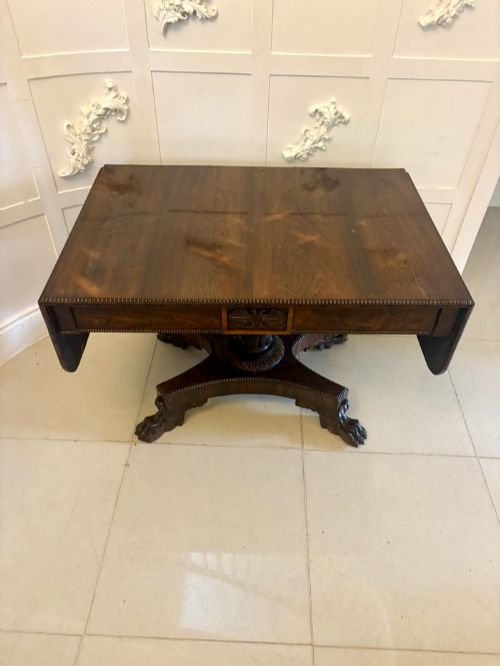
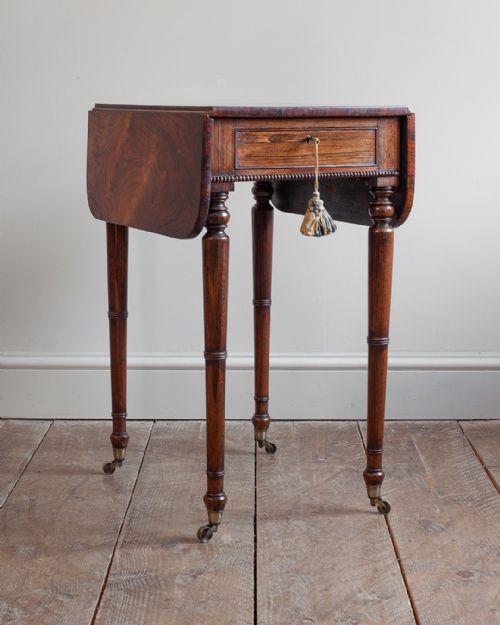
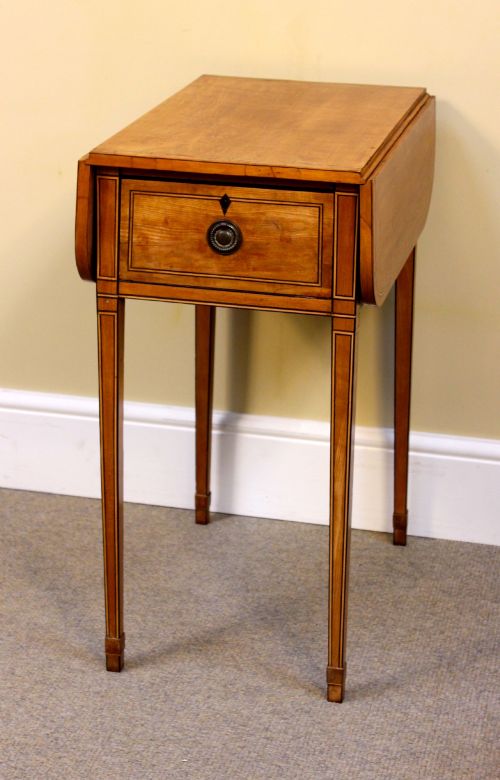
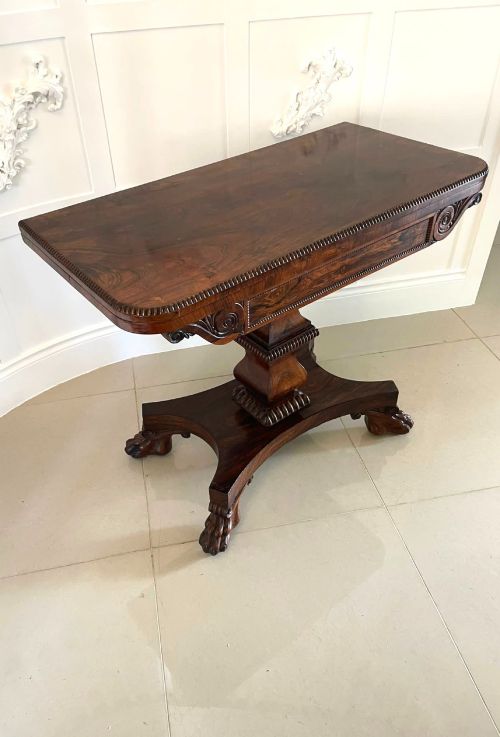
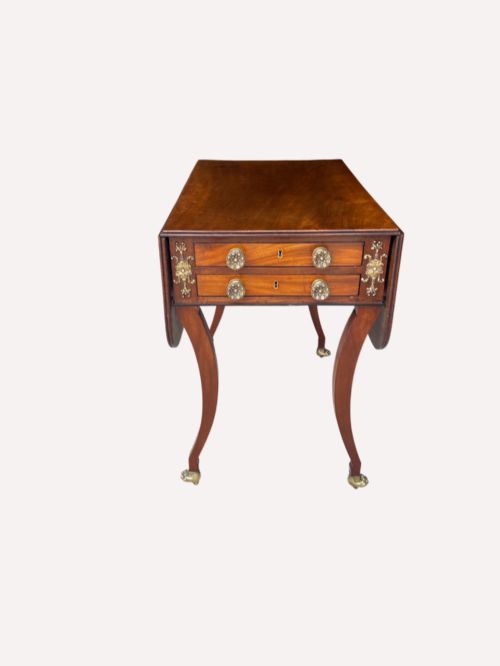
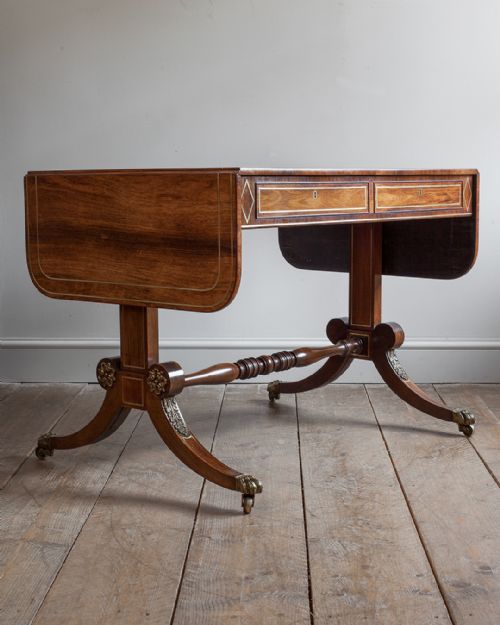
Cabinetmakers utilised dense timbers like mahogany and rosewood, often selecting flame or figured veneers to cover the primary surfaces. Crossbanding in satinwood or contrasting woods frequently frames the outer edges of the top and drawer fronts.
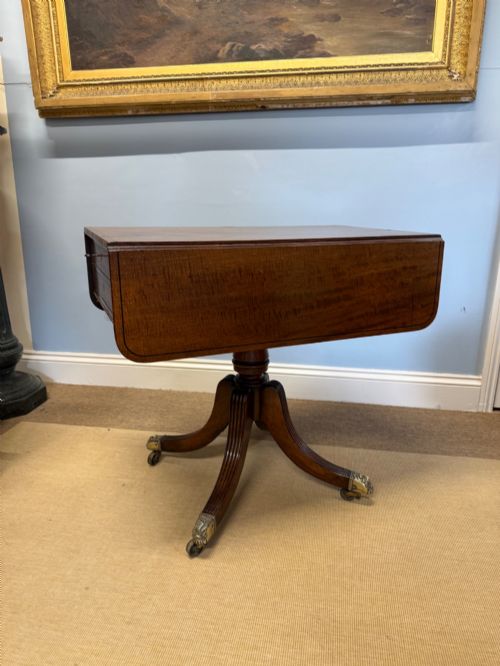
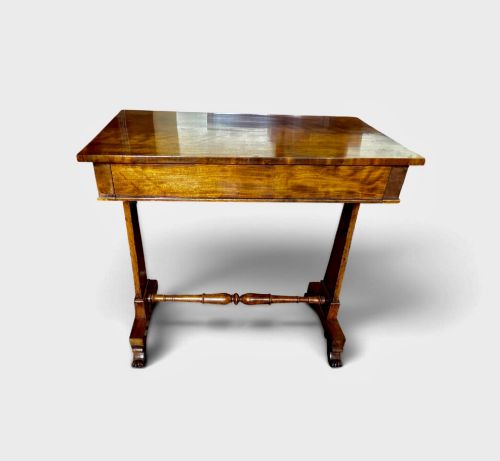
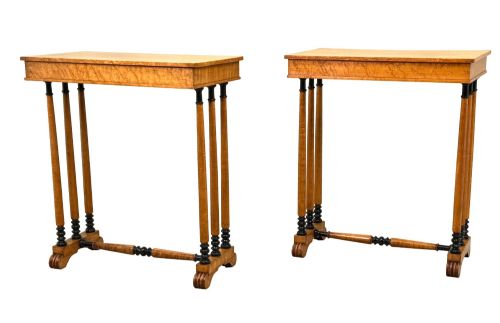
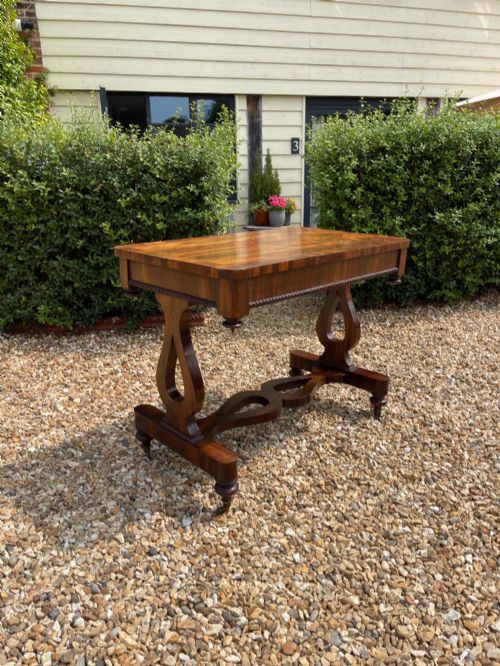
Brass inlay, giltwood accents, and subtle wood stringing define the ornamentation on finer examples. Support structures range from pillar and claw pedestals to reeded sabre legs and stretcher-based trestles.
Some drop-leaf surfaces hide secret compartments originally intended for clandestine notes rather than afternoon tea.
What varies in quality
The selection of timber grain sets the visual tone, with matched flame mahogany and rich dark rosewood representing the upper echelon of craftsmanship. Subtle detailing in the brass inlay work and precision in the cabinet joints separate standard production from master workshops.
Proportion and structural honesty dictate long-term desirability. Pieces retaining their original castors, functional drawer locks, and unwarped drop leaves demonstrate superior preservation.
Gillows
The Regency Sofa Side Table Glossary
- Drop leaf
- A hinged flap on either side of a table that raises to extend the surface area or drops down when space is limited.
- Crossbanding
- A strip of veneer applied perpendicularly to the grain of the main surface to create a decorative border.
- Sabre leg
- A curving, outward-flaring leg shape characteristic of Regency furniture design, often tapering towards the foot.
- Pembroke table
- A small rectangular table featuring two hinged flaps and usually a single drawer, popular from the eighteenth century onward.
- Freestanding
- A piece finished on all sides so that it looks correct when viewed from any angle in an open room.
Regency Sofa Side Table: Frequently Asked Questions
Where did these tables stand?
These tables were originally placed directly in front of or beside upholstered sofas, taking advantage of their narrow profiles and drop leaves. Their finished backs also allowed them to float in the middle of principal reception rooms.
Over time, their versatility led them to be utilised as lamp tables in hallways, writing desks in libraries, or serving surfaces in morning rooms.
How do I spot a true Regency piece?
Authentic Regency pieces typically display characteristic design motifs such as reeded legs, brass stringing, and heavy reliance on dense mahogany or rosewood. Construction methods, including hand-cut dovetails inside the drawers, help confirm the period.
Later Victorian or Edwardian revivals often mimic the forms but utilise different secondary woods or display machine-cut joinery.
Are the drop leaves sturdy?
The drop leaves are supported by pivoting wooden brackets or swing arms attached beneath the main top. When extended properly, they provide a stable surface for lamps, books, or decorative items.
Users should check that the hinge mechanisms move smoothly and that the support brackets lock firmly into place without sagging.
How do I care for rosewood?
Rosewood surfaces benefit from minimal interference, requiring only a soft, dry cloth to remove dust. Avoiding direct sunlight and sudden temperature shifts preserves the natural oils and rich colour of the timber.
Occasional application of high-quality beeswax helps nourish the grain without building up a heavy, cloudy film.