
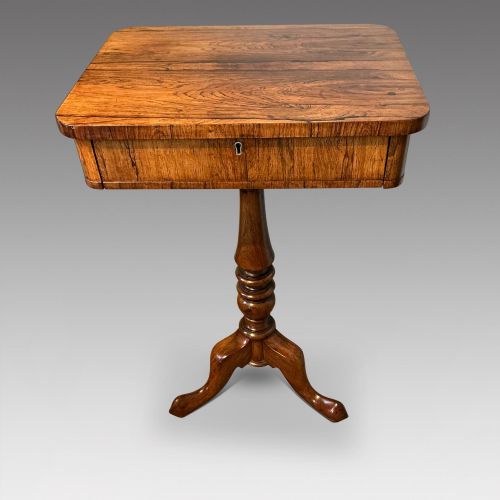

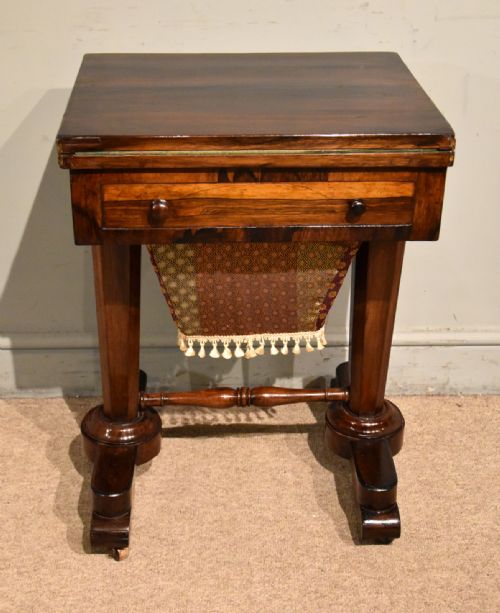


Regency Rosewood Sewing Table
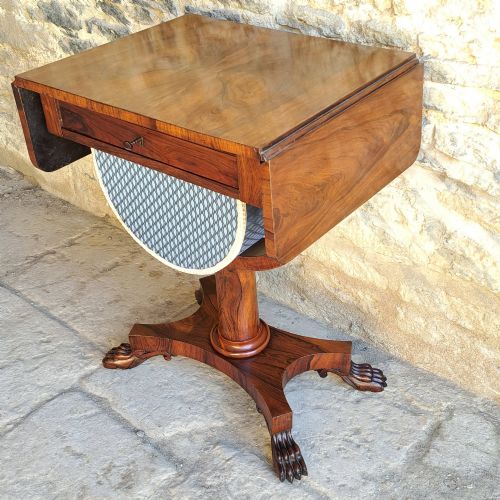
A regency rosewood sewing table brings refined timber and hidden utility together, offering drop leaves and fitted compartments for domestic needlework.
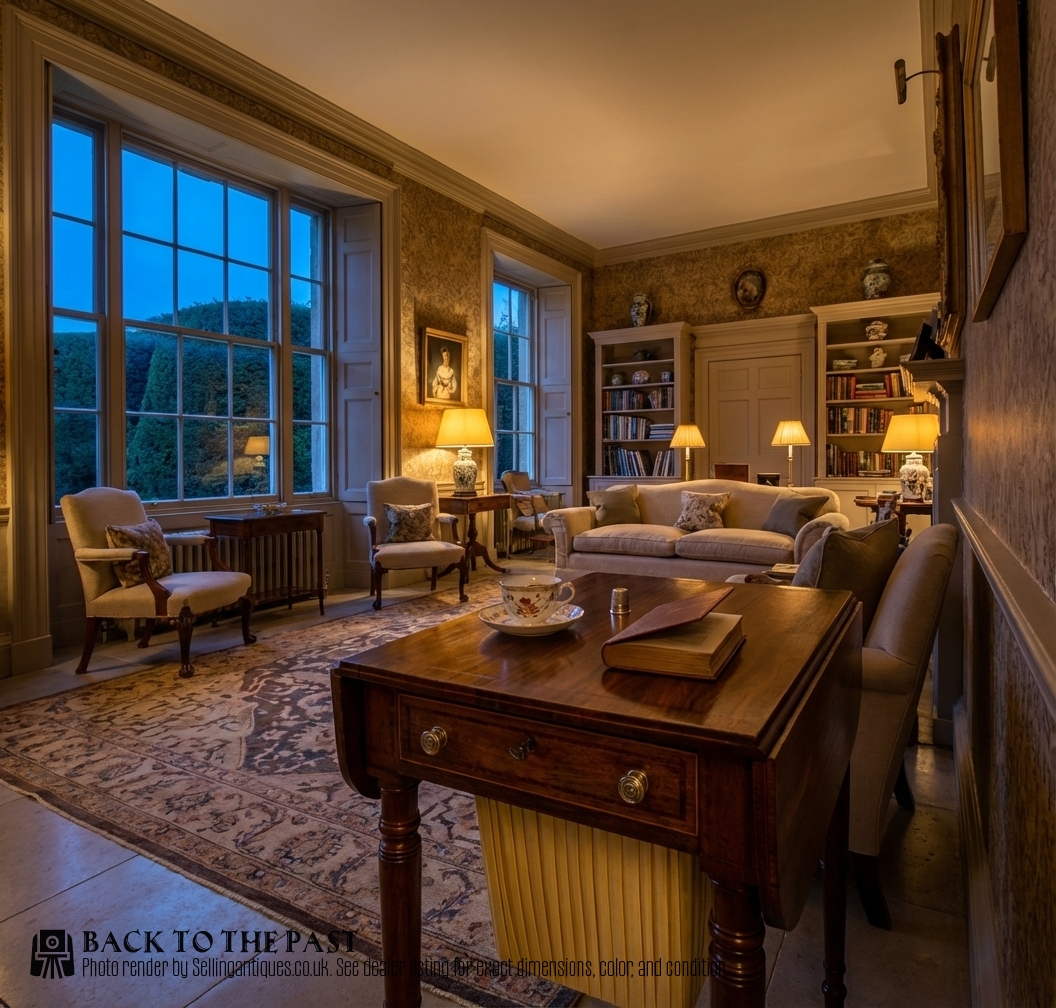
Regency Rosewood Sewing Table
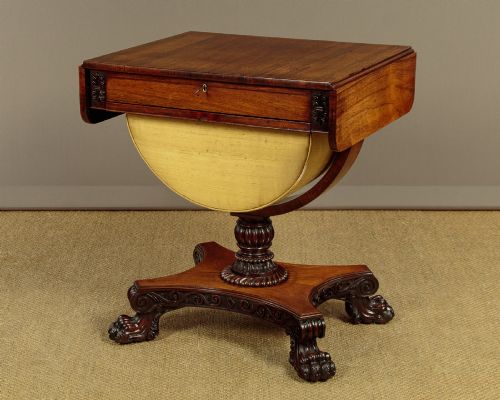
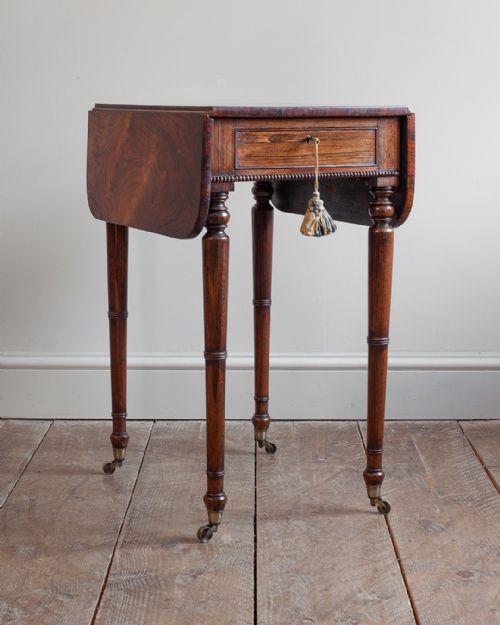
A regency rosewood sewing table is primarily encountered in forms designed for nineteenth-century domestic needlework, featuring drop leaves, integrated writing surfaces, and internal compartments. These pieces span the Regency, George IV, and William IV periods, alongside later Victorian interpretations of the form.
The objects frequently combine multiple functions, serving as games tables, lamp tables, or small writing desks alongside their primary role as work tables. Their versatile design makes them suitable as occasional furniture in contemporary living spaces.
The listings demonstrate origins across the nineteenth century, with construction rooted in English cabinet-making traditions of the Georgian and early Victorian eras. Pieces emerge in distinct stylistic variants, including English Empire and items reflecting the manner of prominent makers.

Materials and Construction
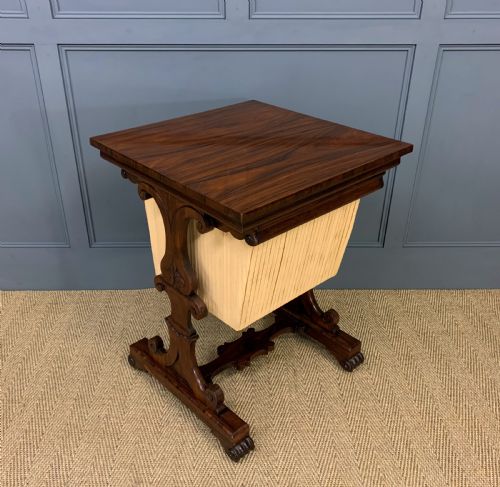
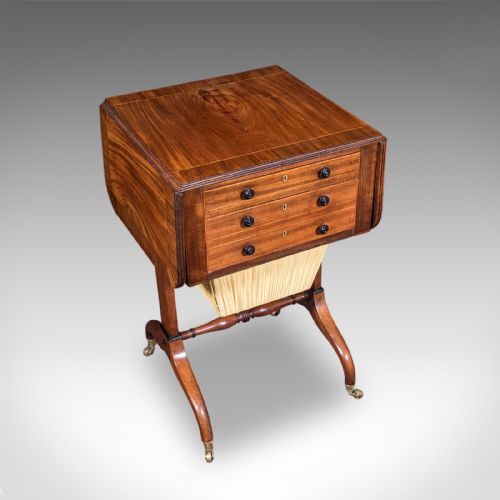
Construction relies heavily on figured rosewood veneers applied to solid timber carcases, often complemented by contrasting woods such as satinwood and ebony. Craftspeople utilised brass inlay and delicate wood inlay to accentuate the top surfaces and borders.
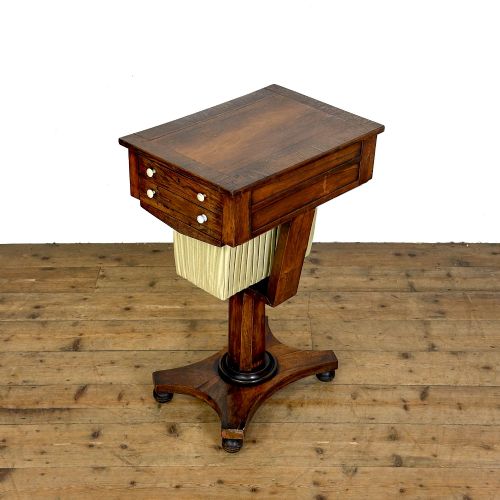
Structural elements frequently incorporate pedestal bases with carved supports, drop-leaf mechanisms on hinges, and internal fabric bags or wooden work boxes suspended beneath the main body.
Object forms span work tables, sewing tables, games tables, teapoys, and writing desks across the Regency and Victorian periods.
Evaluating Quality and Detail
Quality rests upon the selection of timber figure, the precision of brass or wood inlay, and the integration of internal fittings such as fitted writing slides and partitioned work boxes. Superior examples display meticulous attention to secondary timbers and stable pedestal joinery.
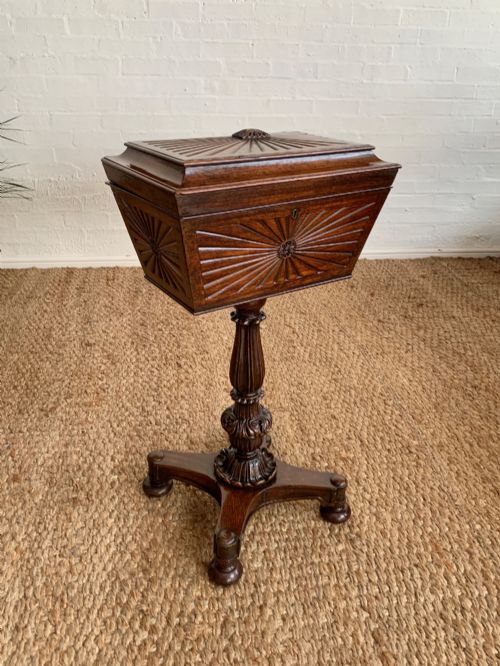
The refinement of carved details, such as sunburst motifs on caddy tops or pedestal collars, distinguishes standard production from more ambitious workshop pieces.
Gillows of Lancaster·John MaClean
The Regency Rosewood Sewing Table Glossary
- Rosewood
- A dense, heavily figured timber valued for its rich dark grain and polished finish. It served as the primary surface material for high-status nineteenth-century cabinet work.
- Work Table
- A multi-functional small table equipped with drawers, compartments, or suspended fabric bags for sewing and needlework equipment. These pieces often doubled as writing or lamp tables.
- Caddy Top
- A hinged or domed lid construction reminiscent of tea caddies, frequently utilised on work boxes and table tops to conceal internal compartments. It adds architectural depth to the profile.
- Drop Leaf
- A hinged flap at the side of a table that can be raised to extend the surface area or lowered when space is restricted. It defines the flexible proportions of many sewing tables.
- Inlay
- The technique of inserting contrasting materials, such as brass, satinwood, or ebony, into carved recesses on the wood surface to create decorative patterns.
Regency Rosewood Sewing Table: Frequently Asked Questions
What is inside a sewing table?
These pieces typically contain a shallow drawer divided into small compartments for organising threads, needles, and bobbins. Many also feature a suspended fabric bag underneath for holding wool and larger unfinished projects.
Some variants include integrated writing slides with leather inserts and inkwells, reflecting the multi-purpose nature of nineteenth-century domestic furniture.
How do I date a rosewood table?
Dating relies on observing structural characteristics, hardware styles, and the specific Regency or William IV design vocabulary present in the piece. Cabinet-makers of the early nineteenth century utilised distinct pedestal turnings and brass inlay patterns that shifted by the Victorian era.
Archival comparables and workshop traits, such as those associated with Gillows or John MaClean, help narrow the period of manufacture between 1800 and the mid-nineteenth century.
Can I use a work table for games?
Many examples on this page are specifically catalogued as games and work tables combined. Their foldover tops frequently reveal baize-lined surfaces intended for cards or chess.
This dual utility made them essential items in Regency drawing rooms, where furniture needed to adapt quickly to different evening entertainments.
How do I care for rosewood furniture?
Rosewood benefits from stable indoor humidity levels and protection from direct sunlight to preserve the rich colour and prevent timber shrinkage. Regular dusting with a soft, dry cloth maintains the polished finish without the need for heavy silicones.
Applying a traditional beeswax polish sparingly helps nourish the historic timber surface and maintains its natural lustre.