



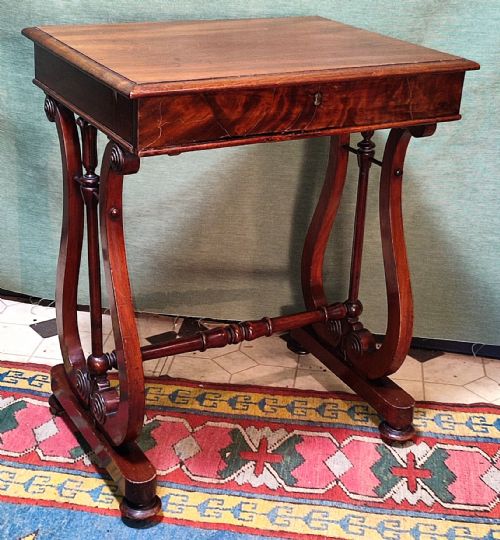


Regency Pedestal Sewing Table
These regency pedestal sewing table examples offer clever compartments and elegant tripod bases for sorting threads and trimmings.

Regency Pedestal Sewing Table
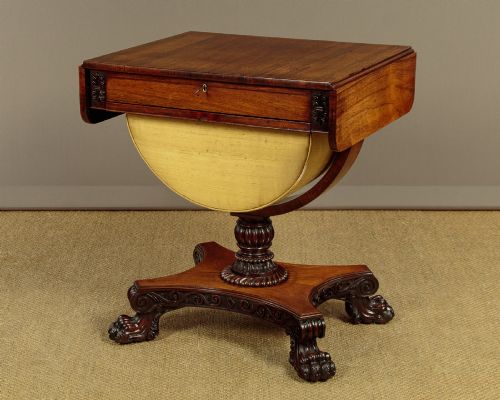
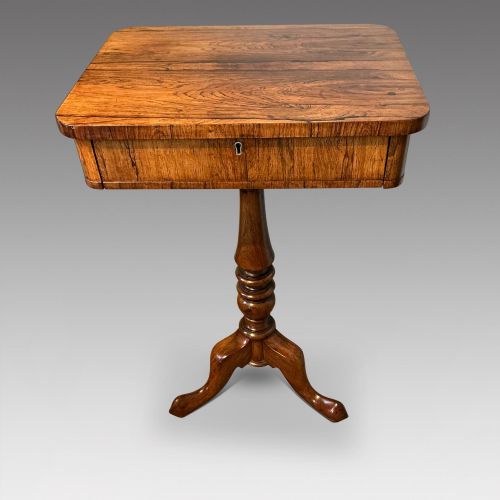
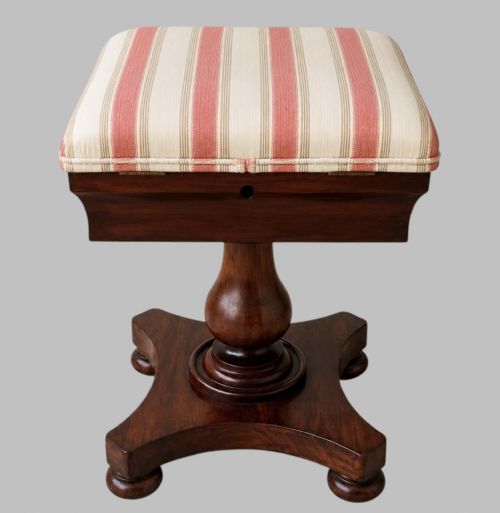
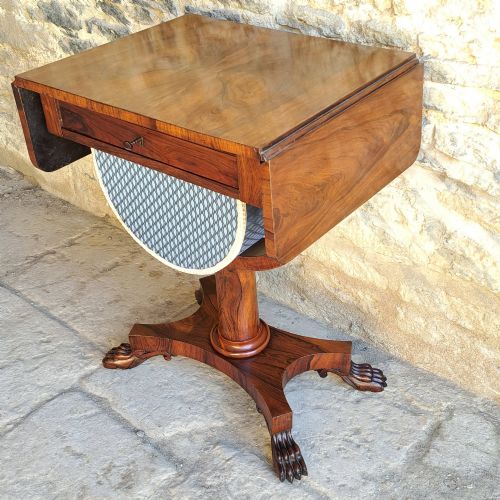
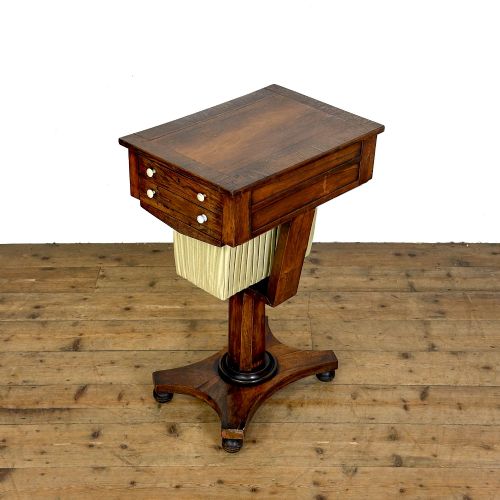
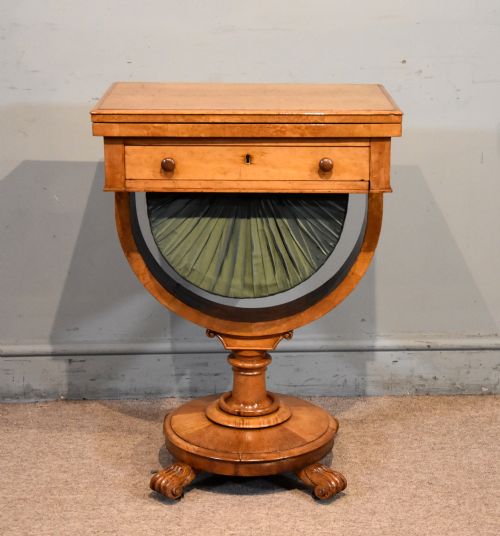
A regency pedestal sewing table serves as a compact storage piece designed for domestic needlework during the early nineteenth century. These tables typically feature a central column supported on a platform or swept legs, housing an internal bag or compartment for textiles.
The selections span the Regency, George IV, William IV, and Early Victorian eras. Mahogany and rosewood form the dominant timbers, often enhanced by drop leaves or fitted interiors for games and writing.
Materials and Construction
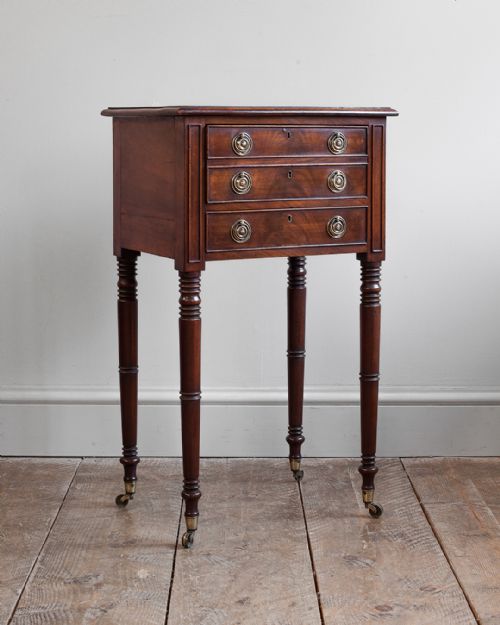
Cabinetmakers utilised solid mahogany, rosewood, and pollard oak, frequently applying flame mahogany veneers to exterior surfaces. Delicate details like boxwood and ebony stringing accent the edges and tops.
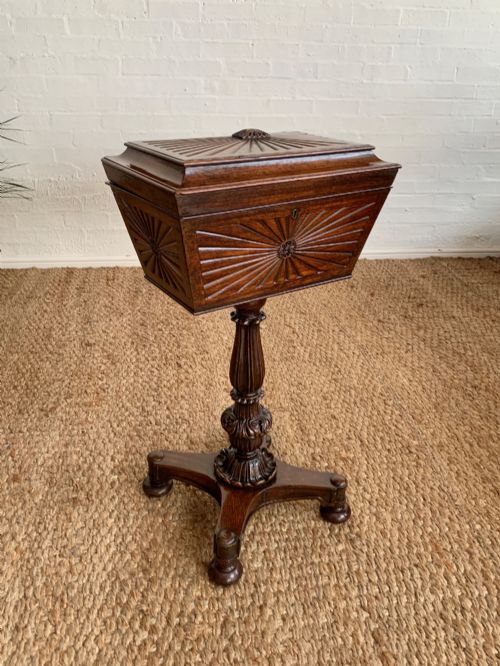
Carved wooden bases support the central pedestals, whilst brass castors allow mobility across domestic rooms. Fabric components line the drop bags intended for sewing equipment.
Standards of Craftsmanship
Figure in the timber grain distinguishes standard examples from superior pieces, particularly where flame mahogany or burr yew is selected. The crispness of carved details on the pedestal base also indicates workshop skill.
Fitted internal compartments with functioning lids and original hardware demonstrate higher manufacturing ambition. The integration of dual functions, such as combined games boards and sewing drawers, elevates the design.
The Regency Pedestal Sewing Table Glossary
- Drop-leaf
- A table top with hinged flaps that fold down to save space when not in use. These flaps are supported by swing brackets.
- Work table
- A small functional piece of furniture designed for needlework, containing compartments and suspended fabric bags. They were essential items for ladies of the household.
- Stringing
- Inlay work using thin lines of contrasting wood, such as ebony or boxwood, set into the primary timber surface. This technique creates geometric borders.
- Caddy top
- A raised or tiered table top reminiscent of tea caddy construction. It provides decorative depth to the central surface.
Regency Pedestal Sewing Table: Frequently Asked Questions
What is a regency pedestal sewing table used for?
These tables served ladies for holding embroidery threads, needles, and small textile projects. The fitted compartments kept tools organised within the drawing room.
Many examples also doubled as occasional or games tables by incorporating boards or writing surfaces.
How do I identify a William IV table?
William IV pieces generally display heavier proportions and bolder carved pedestal motifs than earlier Regency items. Dark rosewood and figured mahogany dominate this later period.
Carved scroll feet and robust central pillars are common characteristics of the era.
Are these tables suitable for modern rooms?
Their compact footprints make them practical side tables beside seating or in hallways. The internal compartments provide discreet storage for contemporary small items.
Their rich timbers add warmth and historic character to various interior styles.
What woods were used in construction?
Mahogany and rosewood form the primary structural and decorative surfaces across the period. Cabinetmakers also employed exotic accents like burr yew, pollard oak, ebony, and boxwood.
Flame mahogany veneers created striking grain patterns on table tops and drawer fronts.