



Regency Needlework Box
A regency needlework box offers an elegant portable repository for threads and pins, combining fine cabinetmaking with utilitarian design.
Regency Needlework Box
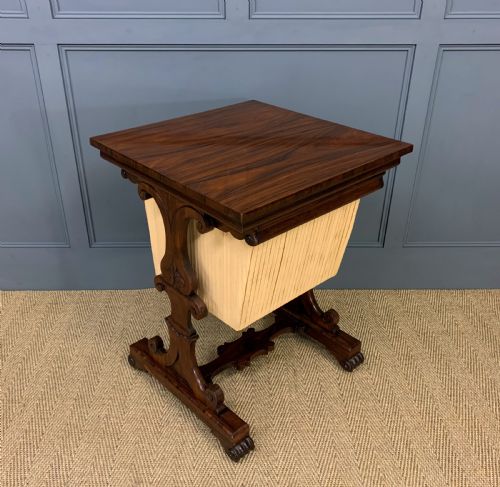
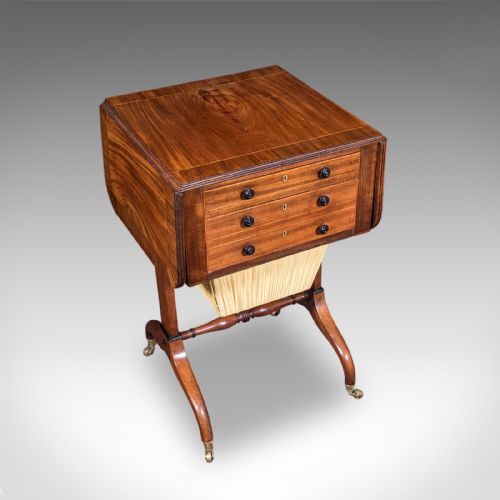
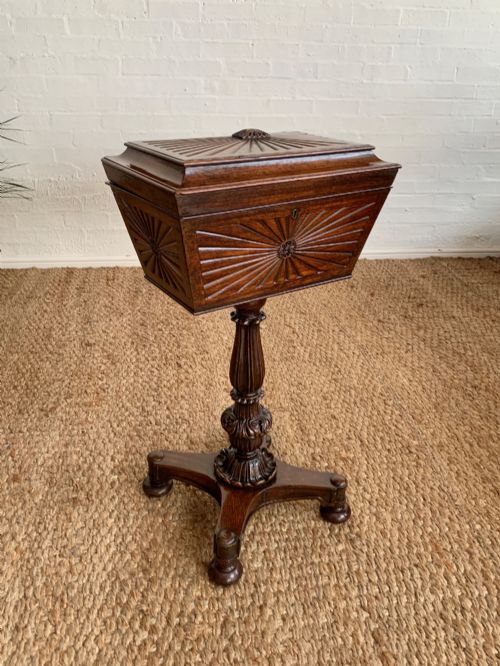
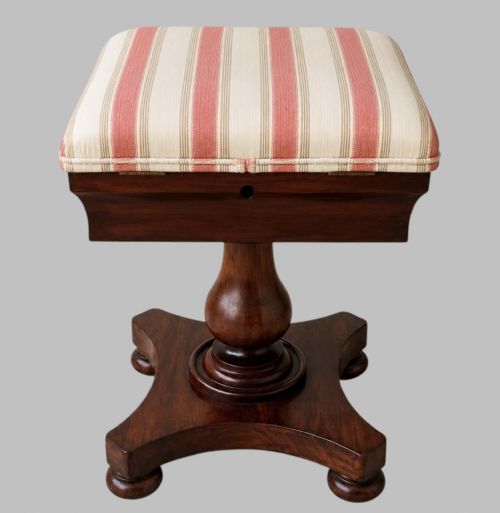
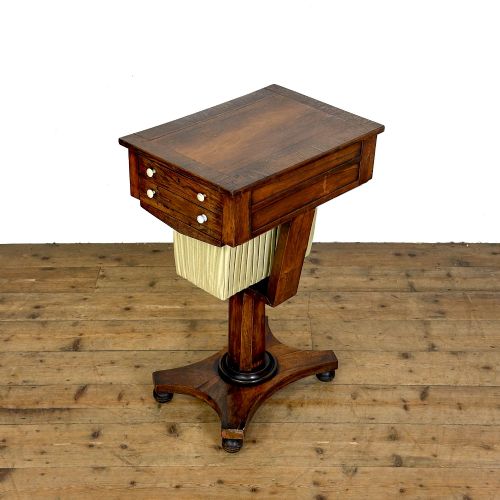
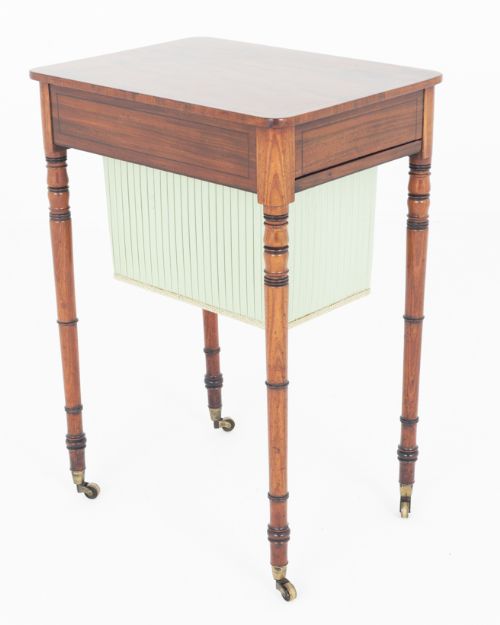
When you search for a regency needlework box, you encounter pieces designed to hold threads, needles, and tools for domestic textile pursuits. These range from small tabletop boxes resting on feet to larger freestanding work tables featuring pedestals, drop leaves, and fitted interiors.
The objects on this page span the 19th Century, Georgian, Regency, and William IV periods, alongside later Victorian interpretations. You will frequently find them described as work tables, sewing tables, or occasional side tables alongside portable table top boxes.
Makers and craftsmen utilised dense exotic timbers and clever internal compartments to organise sewing equipment. While some remain strictly portable boxes, many stand independently on pedestals or lyre ends designed for the parlour.
Materials and construction methods
Makers constructed these pieces using solid and veneered timbers including mahogany, flame mahogany, rosewood, satinwood, kingwood, and burr ash. Brass hardware, fabric linings, and intricate inlay frequently decorate the exterior surfaces.
Structural methods involve sturdy joinery for the main carcase and pedestal bases, often incorporating drop leaves supported by pivoting brackets or hinged lids concealing compartmentalised trays.
Listings for this phrase include pieces executed in satinwood, burr ash, and yellow japanned finishes alongside standard mahogany and rosewood.
Distinguishing quality in execution
Quality rests in the selection of figured wood veneers, such as flame mahogany or richly grained rosewood, matched across the surfaces. The crispness of carved details like sunburst motifs and lyre ends distinguishes finer examples.
Internal sophistication also marks the better pieces, with neatly fitted lidded compartments and original silk or fabric accessories demonstrating superior craftsmanship.
The Regency Needlework Box Glossary
- Work table
- A small freestanding table containing a drawer and a fabric bag or compartment for sewing gear. These pieces served ladies for needlework in the parlour.
- Lyre end
- A furniture support shaped like the ancient Greek musical instrument. This carved form appears frequently on the pedestals of Regency tables.
- Flame mahogany
- A wood veneer cut from the branch junction of the mahogany tree, showing a distinctive flickering flame pattern. Cabinetmakers prized this figure for prominent lid surfaces.
- Drop leaf
- A hinged flap on the side of a table that raises to extend the surface area. It drops down when not in use.
- Caddy top
- A raised, moulded lid profile resembling the shape of a tea caddy. This feature often caps the top of a work box or table.
Regency Needlework Box: Frequently Asked Questions
What is a regency needlework box used for?
These boxes and tables served ladies for storing threads, needles, pins, and small tools during the 19th century. They kept essential sewing gear organised and portable within the home.
Many examples feature fitted internal trays with small compartments specifically sized for spools, thimbles, and bone or ivory winding cards.
How do I tell a Regency from a Victorian box?
Regency pieces typically display restrained classical proportions, premium exotic veneers like rosewood or flame mahogany, and carved details such as lyre ends or brass inlay. They date from roughly 1811 to 1820.
Victorian pieces often show heavier proportions, darker finishes, and more eclectic ornamentation reflecting later 19th-century taste.
Where were these placed in a room?
Freestanding work tables stood beside chairs or sofas in parlours and drawing rooms where ladies gathered for handiwork. Portable boxes sat atop side tables, chests, or dressing drawers.
Because they combined decorative wood grains with functional storage, they doubled as occasional tables for lamps or small decorative objects.
Are these boxes meant for travel?
Tabletop needlework boxes were designed with secure lids and sometimes carrying handles for moving between rooms or taking on visits. Freestanding tables, however, remained stationary in the principal rooms.
Portable versions allowed users to pack their embroidery and sewing implements neatly away when guests arrived.