



George IV Rosewood Table
A george iv rosewood table brings rich dark grain and architectural presence into a room, spanning library tables, tea tables and card tables.
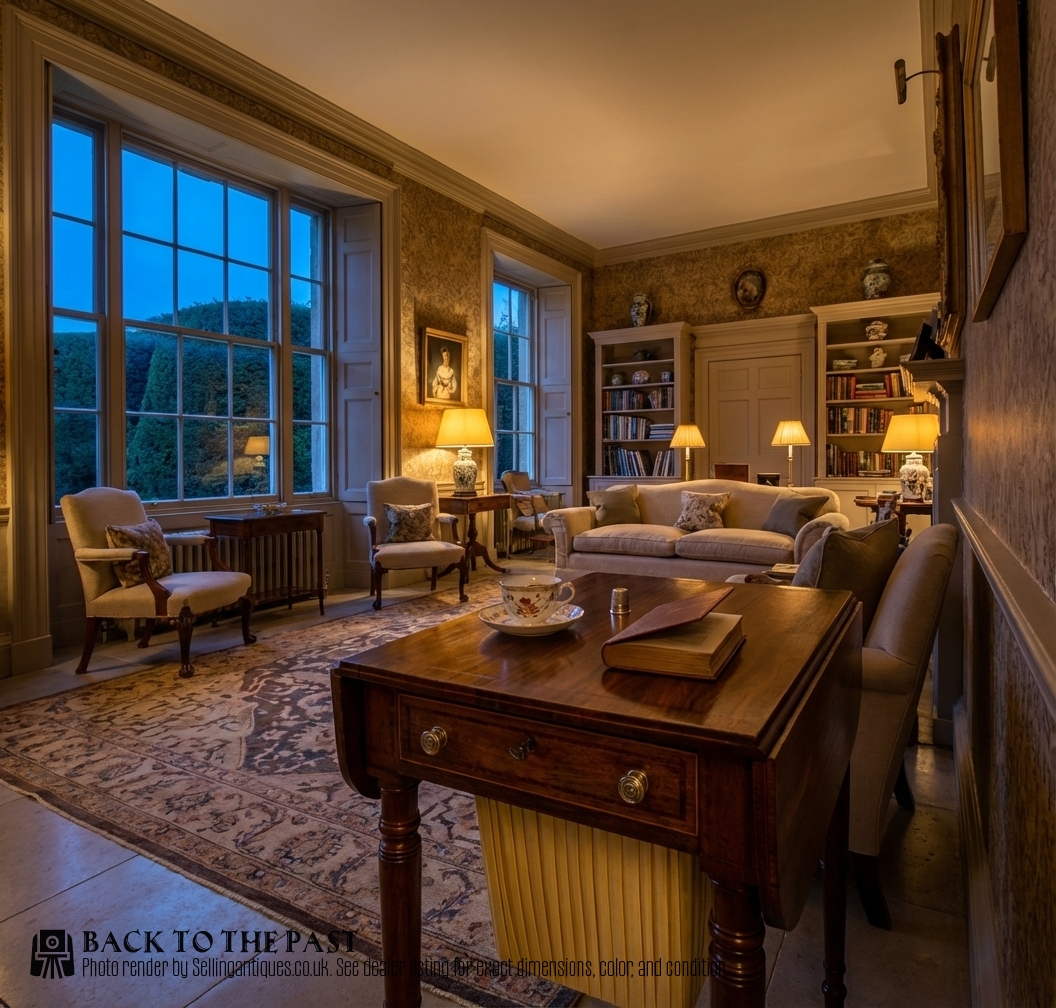
George IV Rosewood Table
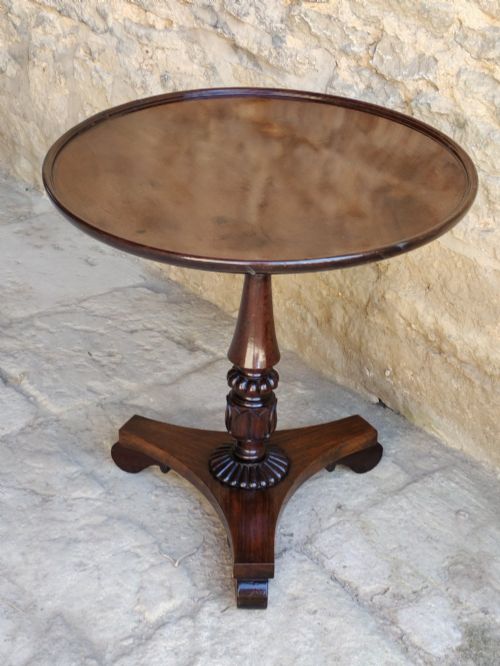
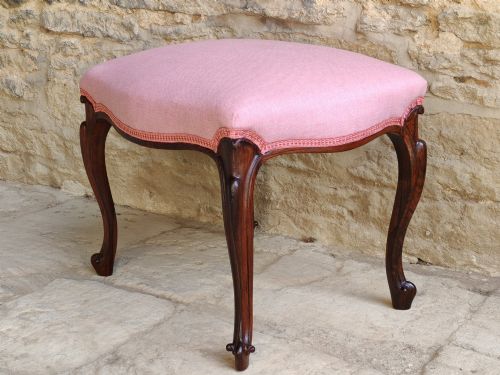
A george iv rosewood table encompasses a wide variety of domestic forms from the early nineteenth century, including large centre tables, breakfast tables and library writing tables. Library tables and pedestal tables appear frequently, alongside smaller occasional pieces, sewing tables and card tables designed for specific social rooms.
The pieces emerge from the Georgian and Regency periods, aligning with the reign of George IV through the early decades of the nineteenth century. Makers of the era utilise the dense imported timber for freestanding centrepieces and specialised work tables with fitted interiors.
Makers construct these tables to serve prominent functions in formal interiors, from central display surfaces in entrance halls to functional writing desks and reading tables. The forms reflect the shifting domestic habits of the period, favouring movable occasional furniture and pedestal-supported designs.
Materials and Technique
Cabinet makers construct the primary carcase using solid timbers such as mahogany or oak, applying figured rosewood veneers to visible surfaces to display rich grain patterns. Workshops occasionally combine rosewood with contrasting exotic woods, employing marquetry inlay or brass stringing and mounts to accent the borders and pedestals.
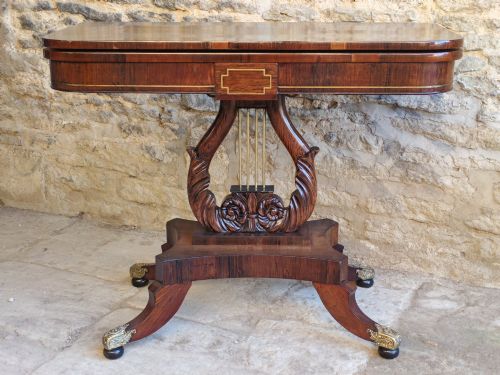
Pedestal tables utilise heavy turned columns fixed to tripartite or quadruped platform bases, frequently terminating in carved paw feet or brass castors. Joiners incorporate clever mechanics into specialised forms, such as rotating fold-over tops for card tables and drop leaves for smaller work tables.
George IV Rosewood Table Retail Price Guide 2026
Typical asking prices for george iv rosewood table among the pieces listed under this phrase on Sellingantiques today, from the lower quarter to the upper quarter. They describe what is for sale here now, not the wider market.
Miniature drop-leaf tables gave miniature sewing supplies a very grand address.
Judging Quality
The standard of a george iv rosewood table rests upon the choice of veneer and the symmetry of its grain arrangement across the top. Cabinet makers who selected highly figured stock and matched the grain symmetrical create surfaces with distinct optical depth.
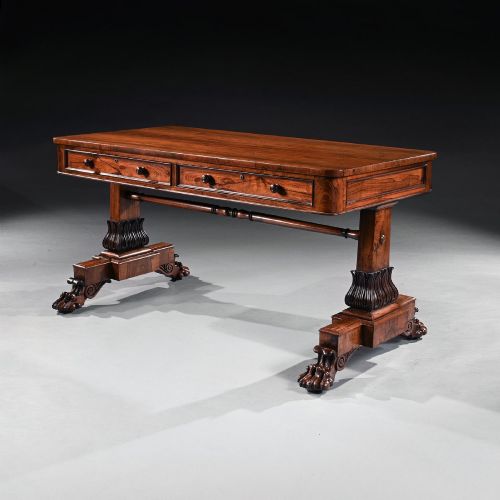
Proportion and carving depth dictate the standing of individual pieces, as seen in crisp execution of lion paw feet and turned pedestals. The integrity of internal framing and the precision of fitted compartments in work tables further separate standard production from exceptional workshop output.
Gillows of Lancaster·James Mein Jnr·Thomas King
The George IV Rosewood Table Glossary
- Rosewood
- A dense, heavily figured timber imported from tropical regions, valued for its dark purple-brown colour and contrasting black grain lines. Cabinet makers prized it for high-status furniture during the Regency period.
- Crossbanding
- A border technique where veneer strips are laid perpendicular to the main grain of the table top. This frames the central panel and provides a neat geometric edge.
- Lyre table
- A form of occasional or tea table featuring supports shaped like the ancient musical instrument. The wooden lyre shape often incorporates brass strings.
- Sutherland table
- A narrow drop-leaf table featuring exceptionally small flaps supported by pivoting gate legs. The design allows the piece to fold flat for storage against a wall.
- Goncalo Alves
- A dense exotic hardwood sometimes utilised alongside rosewood in early nineteenth-century furniture. It displays striking dark brown and warm golden tones.
George IV Rosewood Table: Frequently Asked Questions
What is a centre table used for?
A centre table stands freestanding in the middle of a room rather than against a wall, serving as a focal point for displaying lamps, books or decorative objects. In nineteenth-century interiors, these pieces occupied large entrance halls and principal reception spaces.
Larger variations functioned as informal dining surfaces or library tables where people gathered to read and write. Their finished appearance on all sides allowed them to command an open space.
How do I care for rosewood veneer?
Rosewood requires stable indoor humidity and protection from direct sunlight to prevent the natural oils in the timber from drying out. Keep surfaces away from direct heat sources to avoid splitting the delicate veneer.
Dust the timber gently with a dry, soft cloth and avoid commercial silicone polishes. Traditional wax applied sparingly maintains the natural sheen of the grain.
Were these tables used for writing?
Many examples on this page served as library tables or writing desks, equipped with spacious rectangular tops and occasional drawer compartments. Writing tables provided a stable, dedicated surface for correspondence before the widespread adoption of fitted study furniture.
Cabinet makers designed library tables to sit away from walls, allowing scholars to access books and writing materials from multiple sides. Leather or fabric inserts occasionally lined the top surfaces to provide a smooth writing pad.