
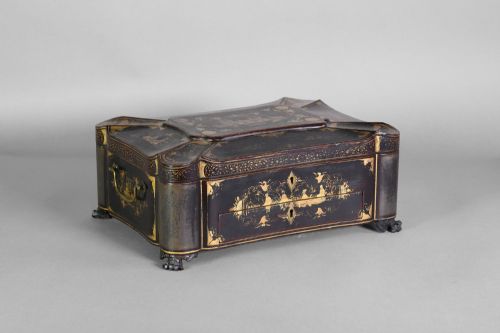


Regency Sewing Casket
These regency sewing casket examples are fitted table boxes holding cottons and needles, offering elegant storage for a dressing table.

Regency Sewing Casket
When you search for a regency sewing casket, you look at lidded work boxes and caskets from the Regency, William IV, and Victorian periods. Most pieces on this page are rosewood or leather-bound boxes designed for sewing and needlework.
The forms range from sarcophagus shapes to rectangular tables and lap chests. Interiors often include silk linings, bone fittings, and compartments for threads and needles.
How they were made
Maker's work relied on timber carcases veneered in rosewood, satinwood, coromandel, or birdseye maple, often inlaid with mother of pearl and brass. Interiors combined paper linings with silk, alongside carved bone or gold fittings.
Surface decoration utilised leather binding, yellow japanning, penwork, and tortoiseshell. Construction dates span from the early nineteenth century through to the Victorian era.
One box carries an engraved letter 'K' from 1818, preserving a personal initial across two centuries.
What varies in quality
Quality rests upon the selection of timber veneers and the precision of brass or mother of pearl inlay. Finer examples retain original silk linings and gold-fitted tools.
Structural integrity of the sarcophagus or rectangular carcase dictates value. Boxes with complex interior trays and original penwork or japanning stand above plain alternatives.
The Regency Sewing Casket Glossary
- Sarcophagus
- A box shape with a domed or stepped lid tapering toward the base, commonly seen on Regency rosewood pieces. This form mimics ancient stone coffins but was favored for luxury workboxes.
- Japanning
- A European imitation of East Asian lacquerwork, applied here in yellow tones on early nineteenth-century workboxes. It creates a glossy, decorative surface finish.
- Penwork
- A surface decoration technique using India ink to draw fine designs directly onto wood before sealing. It appears on portable boxes from the early decades of the eighteen-hundreds.
- Necessaire
- A small fitted case holding toilet or sewing implements, often containing original gold fittings. These pieces combine utility with portable luxury.
- Workbox
- A container specifically built for sewing equipment, threads, and needlework tools. These objects feature internal trays and partitioned compartments.
Regency Sewing Casket: Frequently Asked Questions
What is a regency sewing casket used for?
These caskets were designed to hold sewing gear, threads, and small needlework tools. Ladies kept them on tables for daily stitching tasks.
Inside, compartments and trays organised pins, bobbins, and gold fittings. They also served as secure storage for jewellery and letters.
How do I date a sewing casket?
Dating relies on timber choices like rosewood and satinwood, alongside construction methods from the Regency and William IV periods. Exterior shapes such as sarcophagus forms point to specific decades.
Interior materials like silk linings and bone fittings help narrow down the manufacturing era. Engraved dates or initials on plates occasionally provide direct evidence.
What woods were used for these boxes?
Carcases were constructed from timber veneers including rosewood, satinwood, coromandel, and birdseye maple. Some examples feature tortoiseshell or leather over wood.
Inlays commonly incorporated brass and mother of pearl to accent the primary wood grains. Secondary woods formed the internal partitions and trays.
Are interior fittings usually original?
Many boxes retain their original silk-lined compartments and fitted trays. Some preserve bone or gold-fitted sewing tools inside.
Replacements occur due to the delicate nature of nineteenth-century fabrics. Examining the glue and wear patterns helps determine originality.
How do I care for rosewood boxes?
Keep wooden boxes away from direct sunlight and steady heat sources to protect the veneer. Gentle dusting maintains the polished surface without damaging the wood.
Avoid excessive moisture on leather-bound or silk-lined interiors. Natural wax can be applied sparingly to preserve the timber grain.