


Tortoiseshell Table Box
A tortoiseshell table box brings tactile warmth and organic pattern to any surface, combining rich translucent shell with bright precious metal.

Tortoiseshell Table Box
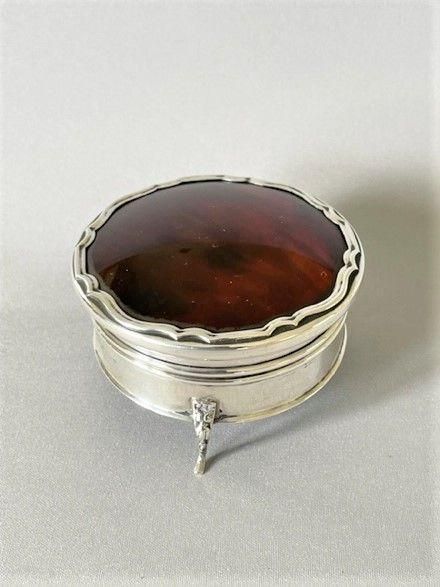
A tortoiseshell table box is a compact lidded container designed for the dressing table, desk or drawing room to hold jewellery, trinkets, snuff or sewing gear. When searching for a tortoiseshell table box, expect to encounter forms ranging from George V trinket boxes and Edwardian dressing table jars to Regency and Georgian table snuff boxes. These pieces combine organic marine shell with structural mounts in sterling silver, white metal, brass and various woods.
The material appears in genuine turtle shell alongside early faux tortoiseshell, horn and burr walnut alternatives. Shapes vary from small circular patch boxes and rectangular jewellery caskets to vanity jars with cut crystal bodies. Origins span English workshops of the nineteenth and twentieth centuries alongside continental European examples.
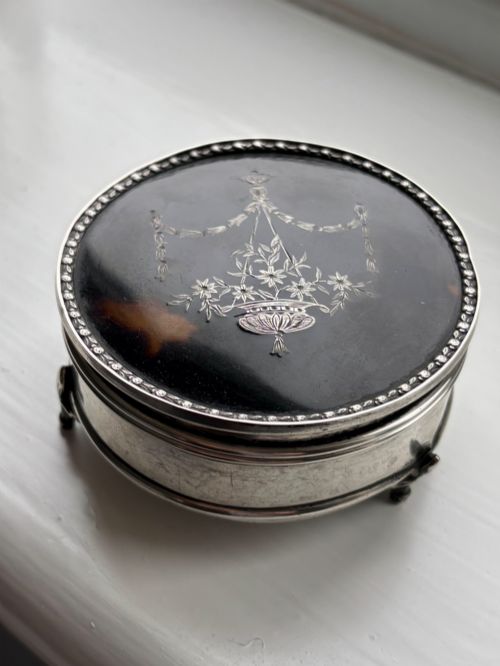
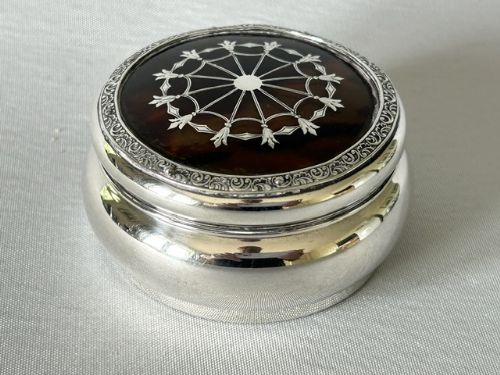
Edwardian and George V silver-mounted pieces dominate current selections, frequently featuring pique work or inlaid silver decoration across the lid. Earlier nineteenth-century examples often take the form of table snuff boxes utilising thick plates of shell over wooden or metal carcases. Larger sewing and jewellery boxes from the Georgian and Regency periods represent the more substantial end of the scale.
Materials and construction
Makers constructed these boxes by applying thin plates of natural tortoiseshell or turtle shell over a wooden or metal carcase, securing the organic material with tiny pins or adhesive. Sterling silver or white metal mounts reinforced the edges, hinges and feet, often wrapping around the lid in broad bezels.
Surface decoration frequently involved pique work, where tiny points and strips of gold or silver were pressed directly into the warm shell to create geometric or floral motifs. Interiors were typically lined with silk, velvet or pale wood to protect delicate contents such as jewellery, patches or sewing implements.
Object forms include trinket boxes, jewellery boxes, snuff boxes, sewing boxes, vanity jars and patch boxes originating from English and continental makers.
Assessing quality and craftsmanship
Quality rests primarily on the depth and translucency of the shell, where rich amber tones and distinct clouding elevate the visual impact above flat or opaque surfaces. The precision of the silver mounts and the crispness of any pique work further separate standard production from finer luxury commissions.
Structural integrity matters immensely, as organic shell expands and contracts with humidity changes. Superior pieces display tight joints between the metal mounts and the shell, with lids that close flush and original interior linings intact.
Ollivant and Botsford·Asprey and Co.·Mappin and Webb
The Tortoiseshell Table Box Glossary
- Pique work
- A method of decorating tortoiseshell or ivory by inlaying tiny pins, strips or dots of gold or silver into the surface. This delicate technique creates shimmering patterns that catch the light.
- Treen
- Small handmade wooden objects produced before the mass era. In these collections, treen describes turned or carved wooden boxes incorporating shell elements.
- Sterling silver
- An alloy of silver containing 92.5 percent pure silver and 7.5 percent other metals, usually copper. It provides the durable structural mounts for the lids and bases of these containers.
- Patch box
- A small container originally used to hold cosmetic fabric patches worn on the face during the Georgian era. They often feature mirror-lined lids and tortoiseshell linings.
- Carcase
- The underlying structural body of a box, usually made from wood or metal, which supports the decorative outer veneer of tortoiseshell.
Tortoiseshell Table Box: Frequently Asked Questions
What were tortoiseshell table boxes used for?
These boxes served multiple domestic purposes depending on their size and internal layout. Smaller examples held dry goods like snuff or cosmetic patches, while larger variants accommodated sewing accessories, rings and personal jewellery.
Placed on dressing tables, desks or withdrawing room surfaces, they kept small valuables protected and close to hand. The inclusion of fitted compartments and velvet linings indicates their role in safeguarding delicate personal items.
How do I care for a tortoiseshell box?
Organic shell requires stable environmental conditions away from direct sunlight, extreme heat and sudden humidity changes. Keep the box in a room with moderate temperature to prevent the shell from warping or shrinking away from its metal mounts.
Clean the surface only with a soft, dry microfiber cloth to remove dust. Avoid chemical polishes, abrasives or excess moisture, which can damage both the shell veneer and the delicate metal pique work.
How can I tell natural shell from faux?
Natural tortoiseshell displays irregular mottled patterns of amber, brown and yellow that run deep into the material rather than sitting on the surface. Under magnification, natural shell shows organic clouding and growth patterns unique to marine turtle scutes.
Faux tortoiseshell, often produced from horn, celluloid or stained materials in later periods, tends to show repetitive patterns or uniform opacity. Natural shell also feels warmer to the touch than glass or modern plastics.
What periods do these boxes come from?
The available pieces span from the late eighteenth century through the Georgian, Regency, Victorian and Edwardian eras into the early twentieth century. George V and Art Deco examples also appear alongside earlier nineteenth-century table snuff boxes.
Stylistic shifts reflect the prevailing tastes of each reign, moving from simple eighteenth-century patch boxes to heavily mounted Edwardian dressing table jars and geometric 1920s designs.