
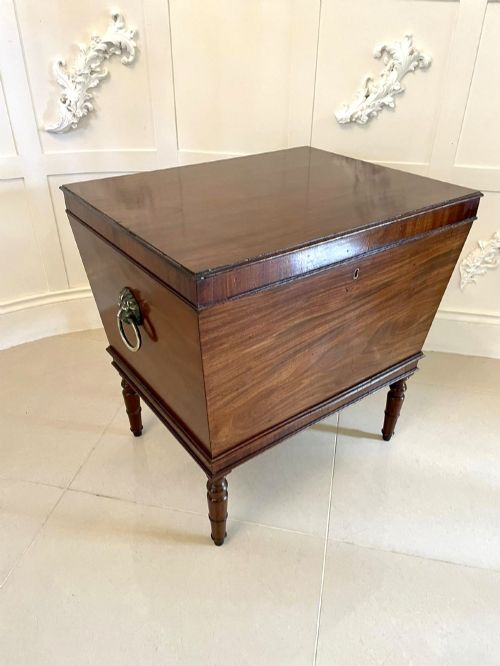
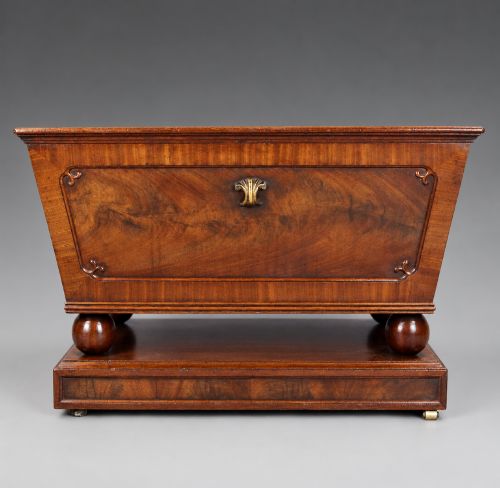
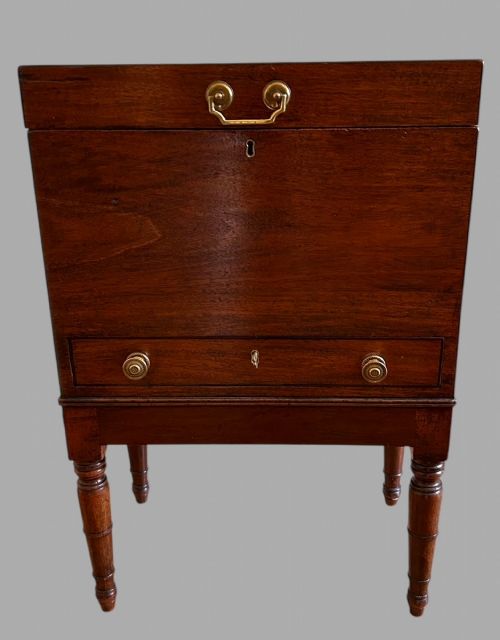
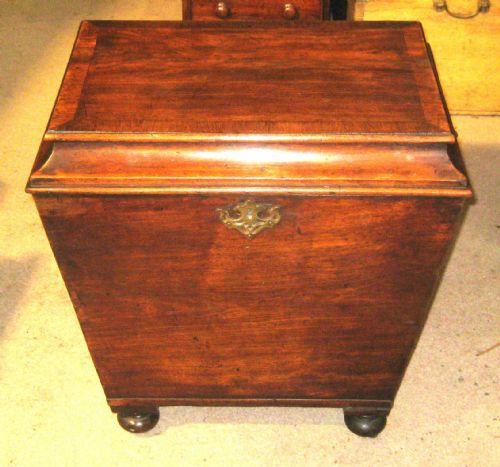




Regency Sarcophagus Wine Cooler
A regency sarcophagus wine cooler brings classical proportion and substantial timber to a dining room, designed originally to keep bottles chilled for the table.
Regency Sarcophagus Wine Cooler
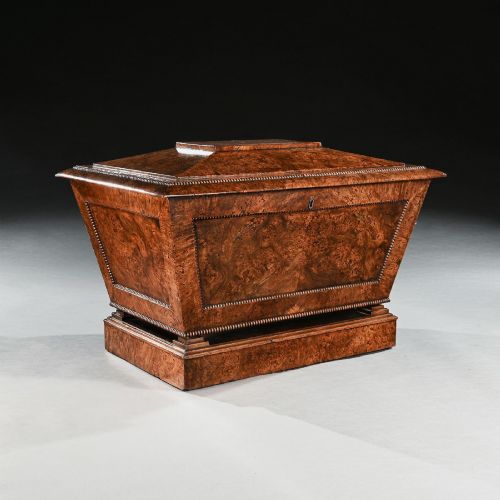
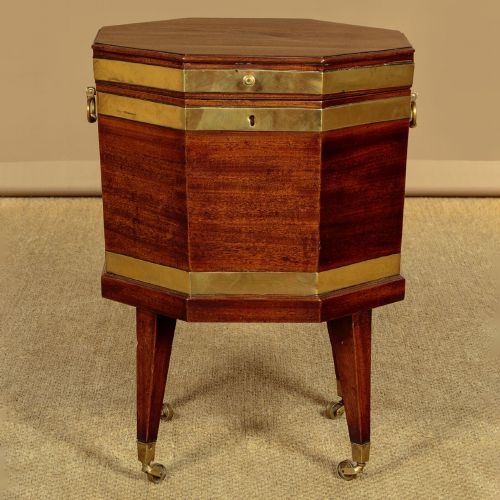
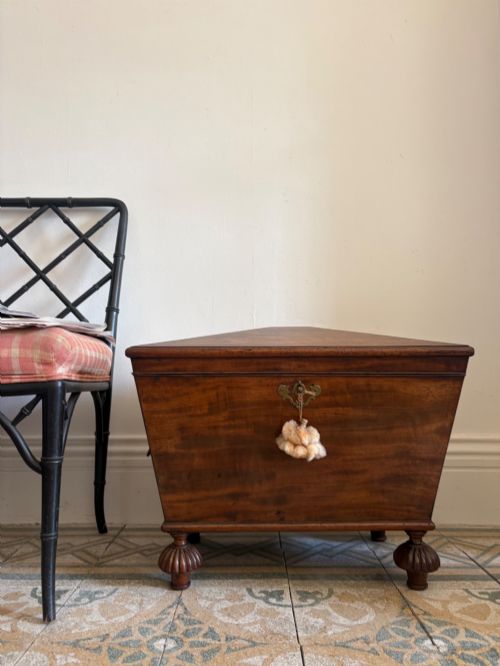
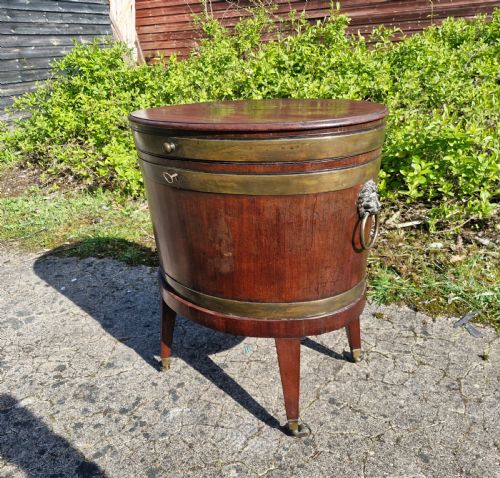
A regency sarcophagus wine cooler is a low, heavy container built to hold wine bottles, most commonly found from the 19th Century and the Georgian era.
The dominant shape is the sarcophagus form, echoing classical antiquity with sloping sides and a fitted lid, often standing on short feet.
Makers designed these pieces for the dining room, where they sat near the table to hold ice and bottles during extended meals.
Subtleties of Execution
Quality rests in the choice of timber veneer, where deeply figured flame mahogany or pollard oak elevates a piece above plain stock.
The crispness of carved details, from paw feet to classical scrollwork, separates standard workshop production from exceptional cabinet work.
Original internal lead linings and working locks indicate a high degree of survival and careful past ownership.
Several examples retain their heavy lead linings, silently bearing the dents of nineteenth-century ice blocks.
Thomas Hope·Gillows of Lancaster and London·Maples and Co·Robert Strahan and Co·Wilkinson
The Regency Sarcophagus Wine Cooler Glossary
- Sarcophagus
- A coffin-shaped container with a flat or domed lid, which cabinet makers adopted during the neoclassical period for dining room storage.
- Cellarette
- An alternative term for a wine cooler, denoting a box or chest built specifically to store bottles.
- Flame mahogany
- A veneer cut from the fork of the mahogany tree, creating a fiery, undulating pattern across the surface.
- Ormolu
- Gilded bronze used for mounts and decorative accents, providing a bright metallic contrast to dark wood.
- Lead liner
- The internal metal container fitted inside the wooden body to hold ice and water for chilling bottles.
Regency Sarcophagus Wine Cooler: Frequently Asked Questions
What is a regency sarcophagus wine cooler?
It is a classical lidded chest from the early nineteenth century, constructed to hold wine bottles and ice in a dining room.
These pieces typically feature mahogany timber, brass mounts, and a lead-lined interior designed to keep bottles cool during long meals.
How were they used originally?
Servants filled the internal lead compartment with ice and water, placing wine bottles inside to chill before serving at the dining table.
After meals, the heavy lid helped maintain the internal temperature while keeping the dining space tidy and orderly.
How do I style one at home?
They function well as freestanding statement pieces in a dining room, hallway, or living space, often holding blankets or books.
The flat top provides a useful surface for lamps or decorative objects while preserving the architectural presence of the antique.
How do I identify the period?
Period pieces display 19th Century or Georgian construction methods, such as hand-cut dovetails, secondary oak framing, and heavy flame mahogany veneers.
Classical design motifs like paw feet, brass lion masks, and sarcophagus proportions point directly to the Regency and William IV eras.