
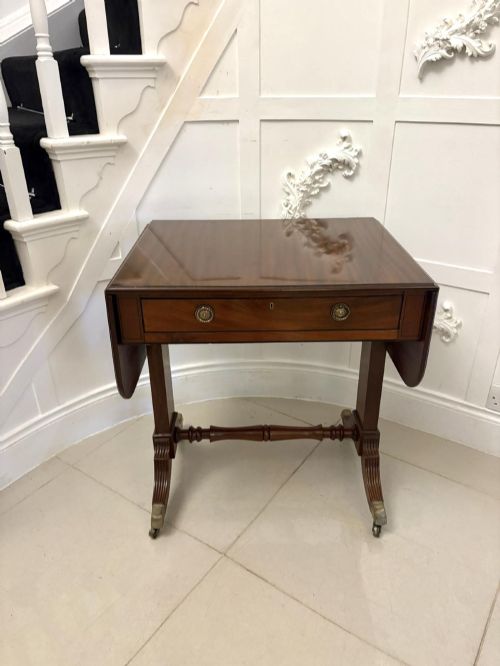
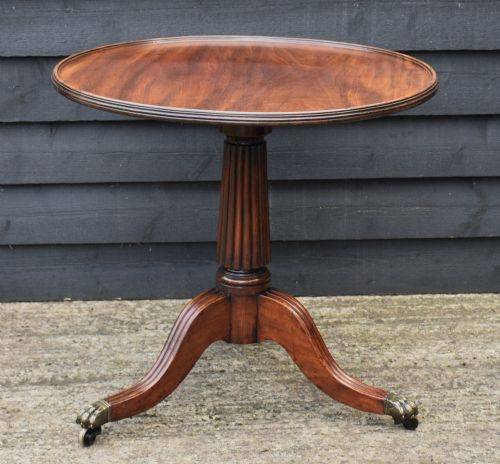
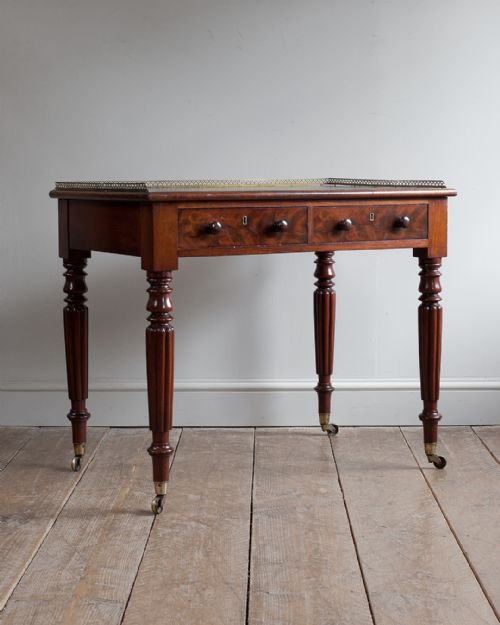
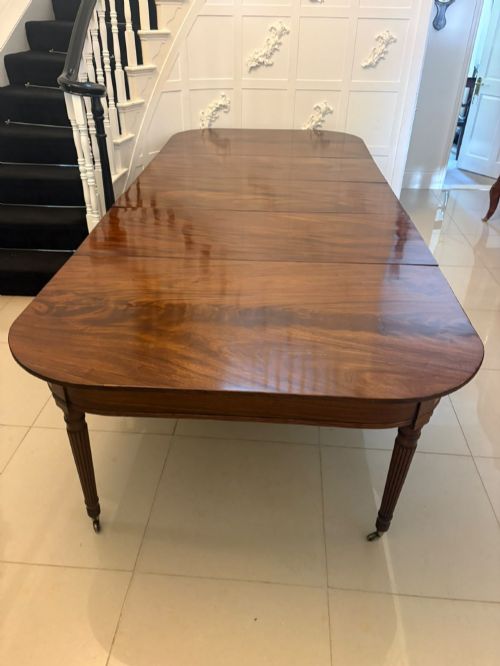
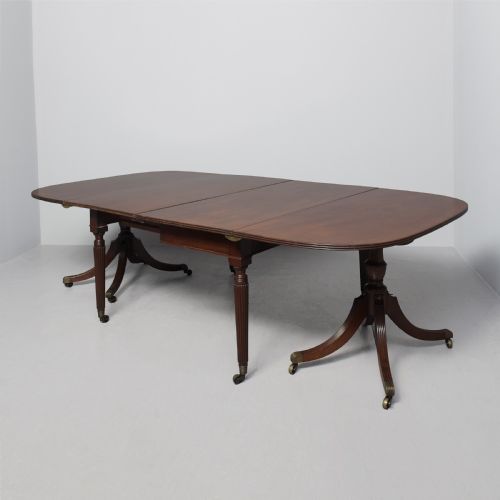
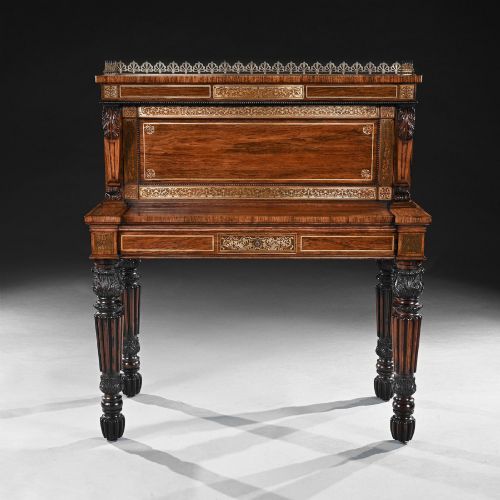
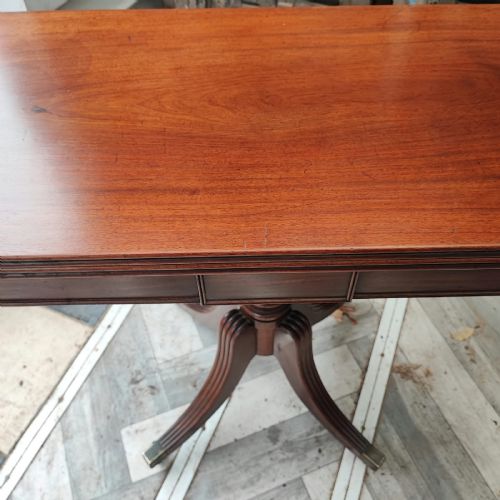
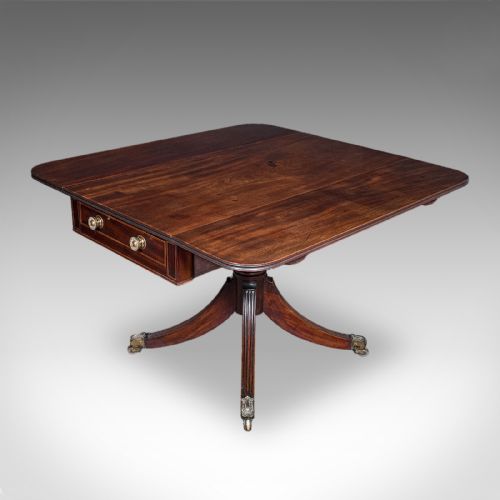
Regency Reeded Leg Table
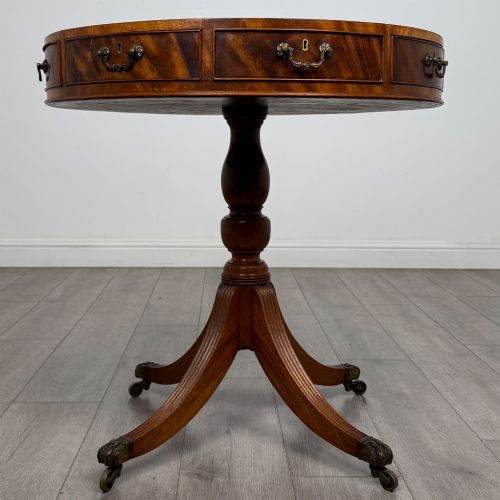
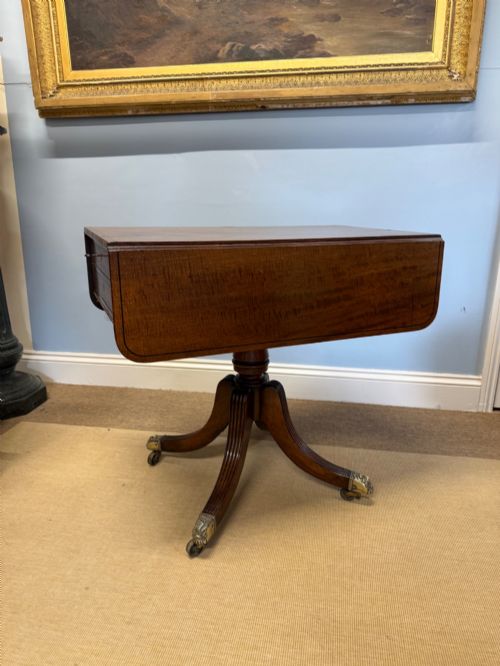
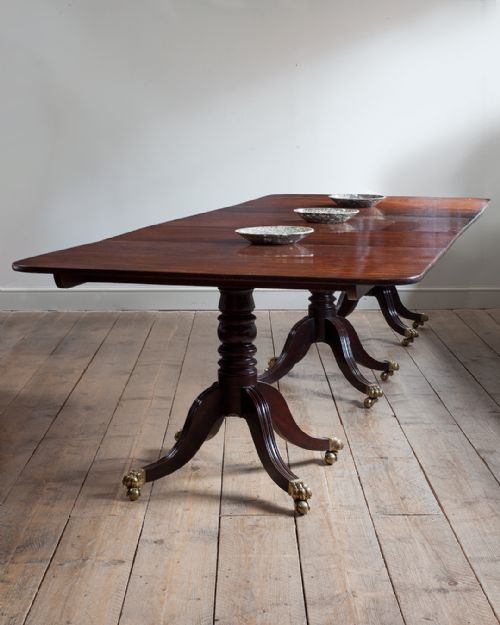
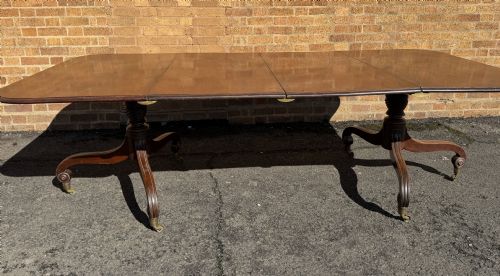
A regency reeded leg table brings architectural linearity to a room through carved parallel grooves that lift heavy timber.
Regency Reeded Leg Table
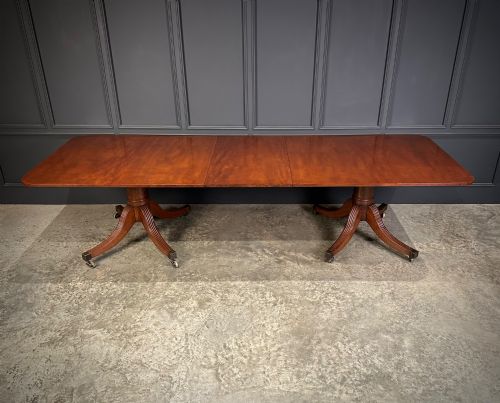
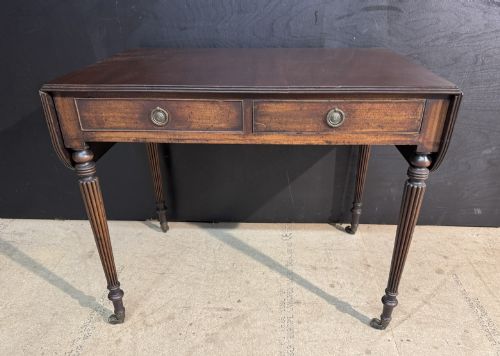
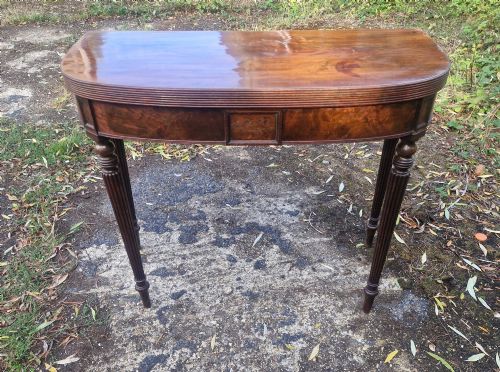
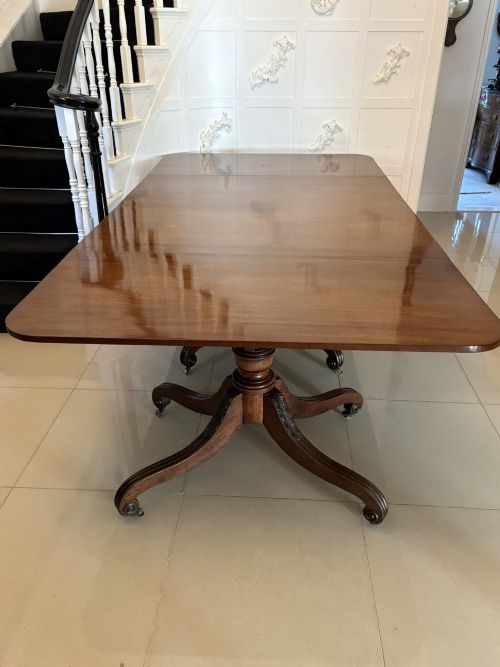
A regency reeded leg table takes many domestic forms, most commonly appearing as dining tables, tea tables, side tables, and writing tables across this selection.
The primary forms trace their origins to the nineteenth century, though later revivals from the Edwardian and Victorian periods also surface regularly.
Mahogany dominates the selection, accompanied by rosewood, oak, and satinwood veneers, frequently mounted with brass details or leather inserts.
How they were made
Cabinet makers turned or carved parallel convex mouldings directly into solid timber to create the characteristic reeded legs seen on dining and side tables.
Figured mahogany and rosewood veneers were laid over secondary woods to construct expansive table tops, occasional surfaces, and drop-leaf mechanisms.
Brass castors, inlay, and mounts were integrated into pedestals and legs, pairing structural utility with decorative refinement.
Object forms range widely from expansive fourteen-seater extending dining tables to small bedside cabinets and tea tables.
What varies in quality
The fineness of the reeding determines the visual rhythm of the base, separating crisp, hand-carved mouldings from softer, later machine cuts.
Timber selection governs the character of the surface, distinguishing highly figured mahogany and rich rosewood grains from plain secondary boards.
Engineering integrity dictates longevity, particularly in extending dining tables, multi-pillar mechanisms, and drop-leaf joints that must bear daily weight.
Gillows of Lancaster·Gillows Oxford Street Workshop
The Regency Reeded Leg Table Glossary
- Reeding
- Parallel convex mouldings carved into timber legs or columns to create a textural, classical column effect. This linear carving is the defining feature of the phrase.
- Pedestal
- A central column support resting on a platform or splayed feet, commonly used to hold up large dining tables. Multiple pedestals allow tables to extend.
- Crossbanding
- A border of veneer laid with the grain running perpendicular to the main surface, framing the top of tea and side tables.
- Pembroke table
- A small rectangular table with hinged drop leaves on two opposing sides, useful for versatile domestic placement.
- Drum table
- A circular library or writing table with a deep frieze containing drawers, usually supported by a single central column and tripod base.
Regency Reeded Leg Table: Frequently Asked Questions
How do I date a reeded leg table?
Dating relies on timber choice, construction methods, and secondary woods beneath the surface. Pieces from the early nineteenth century often show hand-cut joinery and dense, aged mahogany.
Later revival pieces from the Edwardian era or the twentieth century employ different internal secondary timbers and mechanical fasteners that reveal their true age.
Can I use an antique dining table daily?
These tables were built for heavy domestic use, featuring sturdy mahogany and robust pedestals designed to withstand family meals and daily writing.
Maintenance involves using coasters and treating surfaces with appropriate wax to protect the historic polish from moisture and heat.
What is the difference between a tea table and a dining table?
Tea tables are smaller, often featuring folding or pivoting tops designed to sit against a wall when not in use for evening hospitality.
Dining tables are scaled for seating multiple guests, frequently incorporating extending leaves and multiple pedestal supports to distribute weight evenly.
How do I care for rosewood and mahogany?
Historic timbers respond best to natural beeswax polishes applied sparingly and buffed with a soft cloth to maintain the depth of the grain.
Keeping tables away from direct heat sources and strong sunlight prevents the wood and its underlying veneers from drying out or splitting.