
Regency Sofa Table Brass
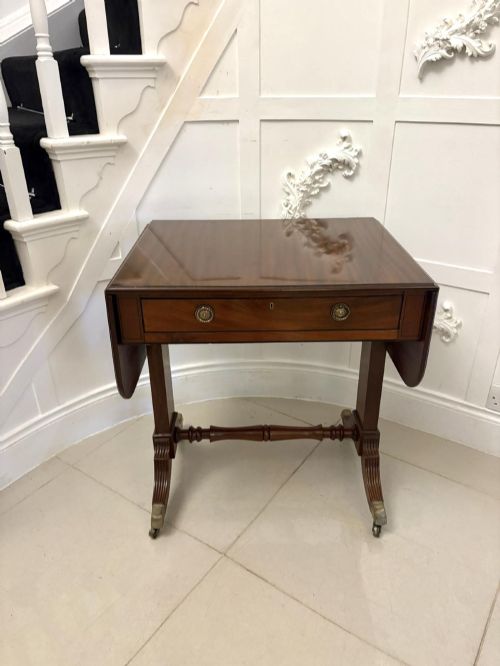
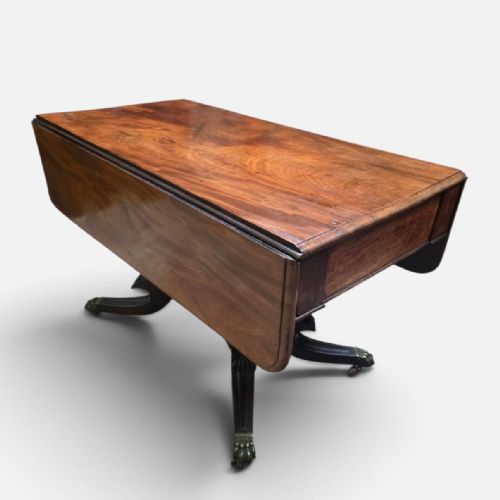
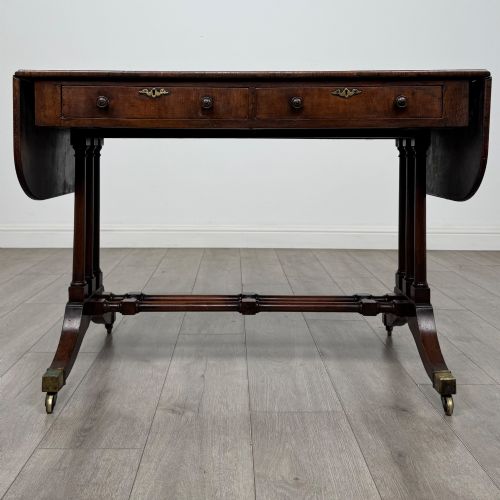
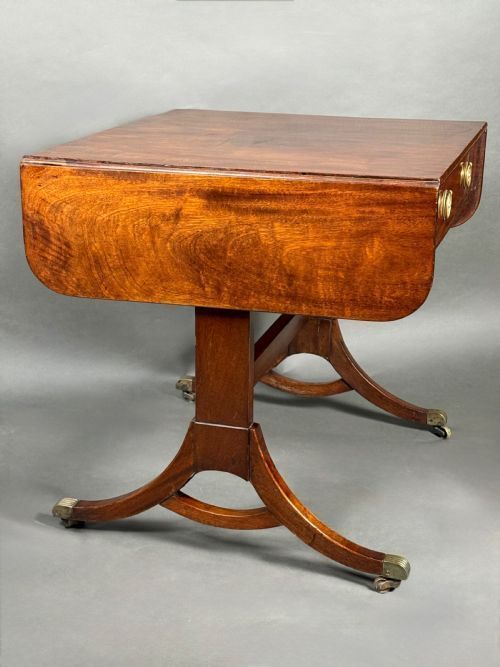
A regency sofa table brass brings refined proportions and functional drop leaves to a drawing room.
Regency Sofa Table Brass
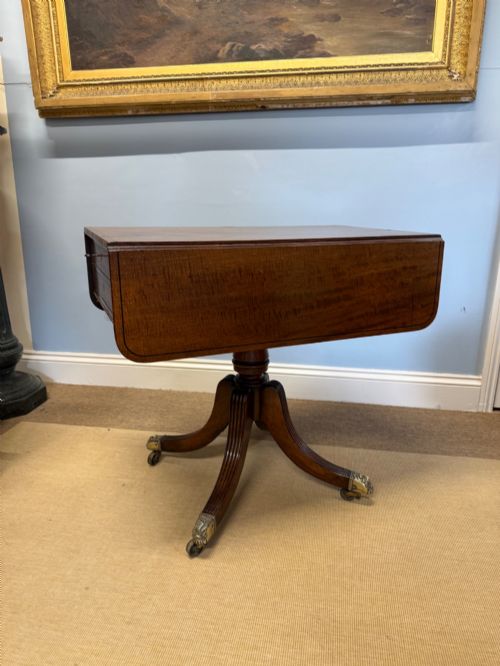
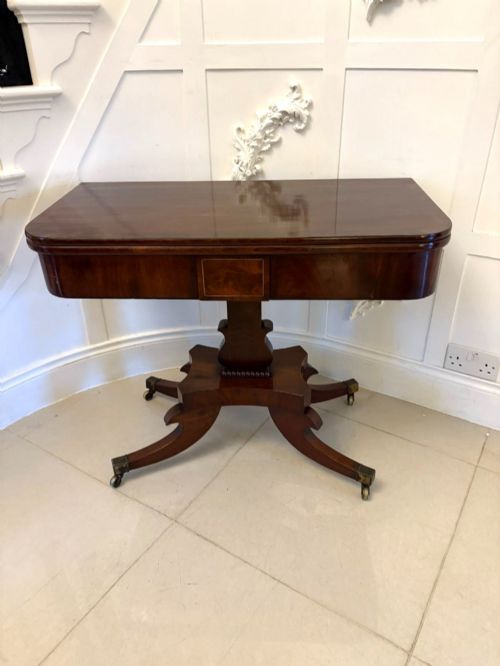
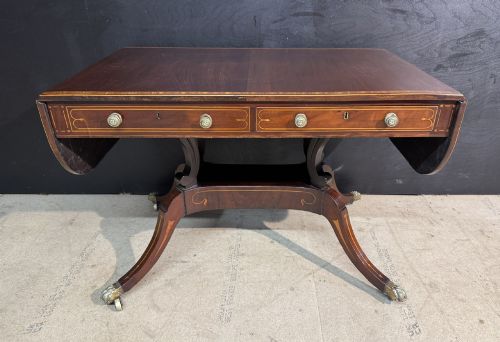
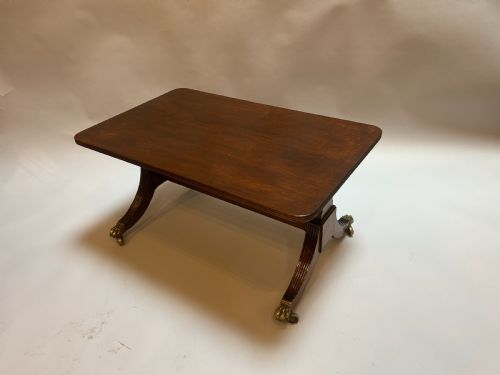
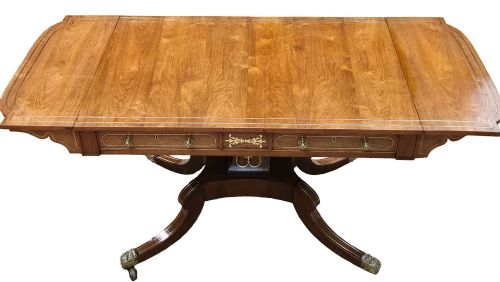
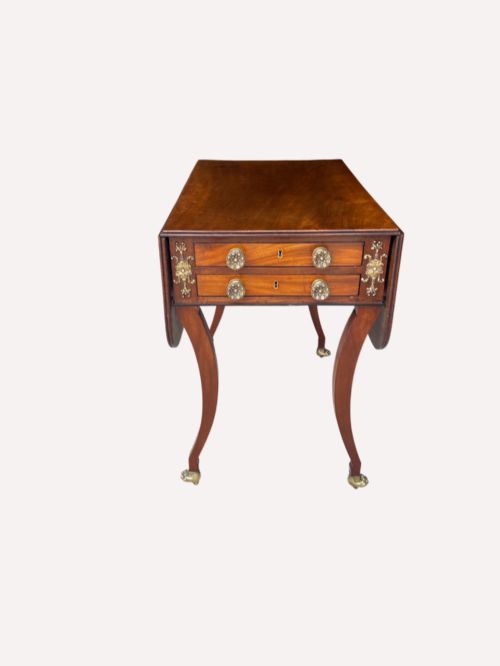
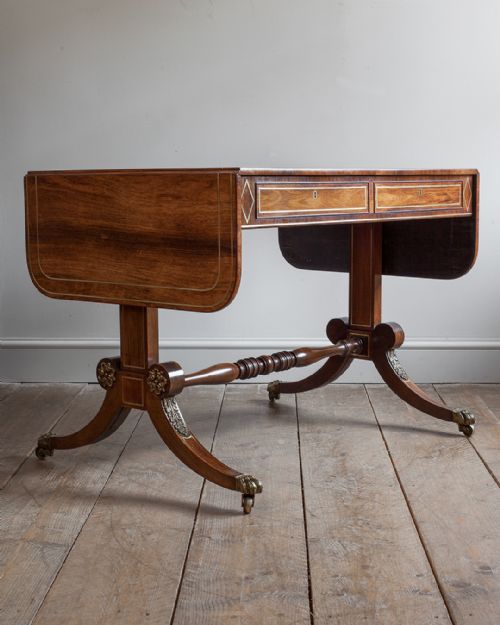
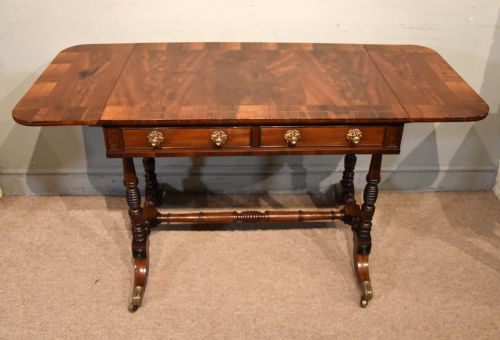
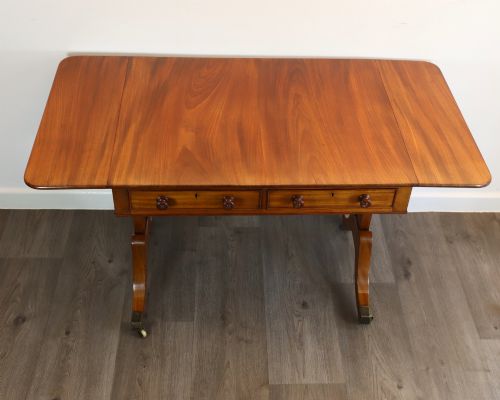
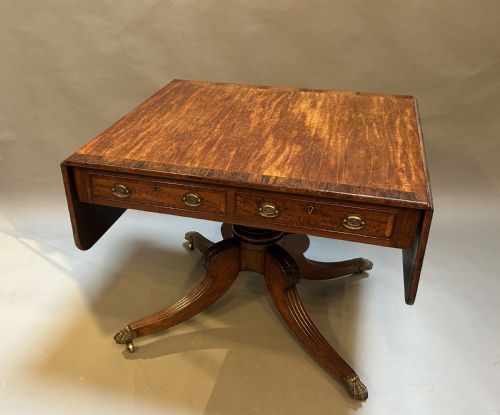
A regency sofa table brass is a freestanding table originally designed to stand before a sofa, featuring drop leaves supported by flap brackets. The pieces found here span the nineteenth century, including the Regency period itself alongside Georgian, George III, George IV, and William IV eras.
Most examples on this page are constructed in rich timbers such as mahogany, flame mahogany, and rosewood, often complemented by contrasting wood inlay. Alongside genuine period items, the selection includes later nineteenth century works and revival pieces from the nineteen thirties.
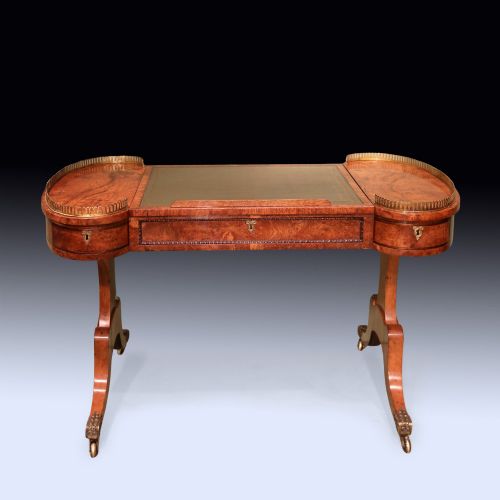
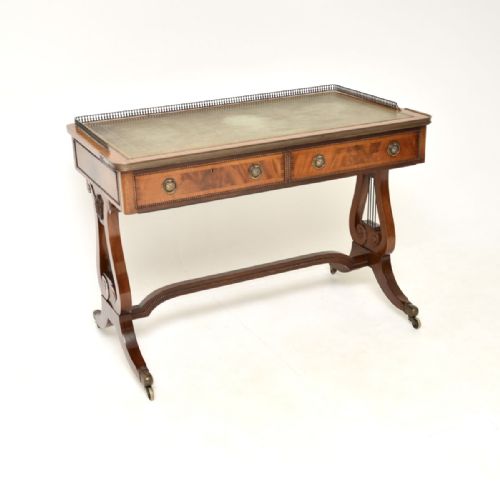
While primarily categorised as sofa tables, the form overlaps closely with library tables, writing desks, and console tables. Buyers encounter freestanding centre tables and drop leaf dining variants that share the same characteristic low proportions and twin-pillar or pedestal supports.
What varies in quality
The choice of timber veneer dictates the visual impact, with highly figured flame mahogany and richly contrasted rosewood marking out superior workshop output. Subtle touches such as precise wood inlay and well-chosen burr oak elevate specific pieces above standard production.
The integration of metalwork defines the upper tier of craftsmanship. Finely cast or chased brass mounts and delicate brass inlay require advanced joinery skills that separate bespoke cabinet work from simpler utilitarian tables.
Listings include tables spanning the Georgian, Regency, Victorian, and nineteen thirty eras, constructed in mahogany, rosewood, yew, and burr oak.
The Regency Sofa Table Brass Glossary
- Drop leaf
- A table featuring hinged flaps on either side that can be raised to extend the surface area or lowered when space is constrained. These leaves are typically supported by pivoting wooden brackets.
- Freestanding
- Finished on all four sides so the table can sit in the middle of a room rather than against a wall. This allows access to drawers and pedestals from any angle.
- Stringing
- A narrow strip of contrasting wood or metal inlaid into the surface of furniture to create geometric borders. Brass stringing is particularly characteristic of high-status Regency cabinet work.
- Lyre end
- A table base carved in the stylized shape of an ancient Greek lyre instrument. This support style frequently appears on nineteenth-century sofa tables and writing desks.
Regency Sofa Table Brass: Frequently Asked Questions
What is a regency sofa table brass used for?
These tables were originally placed directly behind a sofa for writing, needlework, or holding lighting. Today they function effectively as console tables, compact desks, or freestanding centre tables.
The drop leaves allow the surface area to adapt to smaller rooms or larger gatherings when opened fully.
How do I identify a genuine Regency period piece?
Authentic period examples date roughly from the late eighteenth century through the reign of George IV and the Regency era. Look for period timber selection, hand-cut joinery, and traditional construction methods.
Later Victorian interpretations and nineteen thirties revival pieces often show subtle differences in timber finishing and secondary woods.
Are these tables suitable for everyday use?
Solid mahogany, rosewood, and sturdy brass mountings make these tables robust enough for daily placement in a modern home. Their compact depth and drop leaves offer practical flexibility for changing spatial needs.
Care should be taken with polished polished timber surfaces when placing hot cups or unsealed liquids directly onto the wood.
What woods were commonly used?
Mahogany is the dominant timber, often selected in highly figured, flame, or light variations to showcase natural grain movement. Rosewood appears frequently in finer pieces, prized for its dark, richly variegated tone.
Secondary or alternative timbers such as yew wood and burr oak also feature among specific side and writing tables.