


Regency Porcelain Platter
These regency porcelain platter selections bring together grand serving dishes and dessert plates shaped by the tastes of the early nineteenth century.
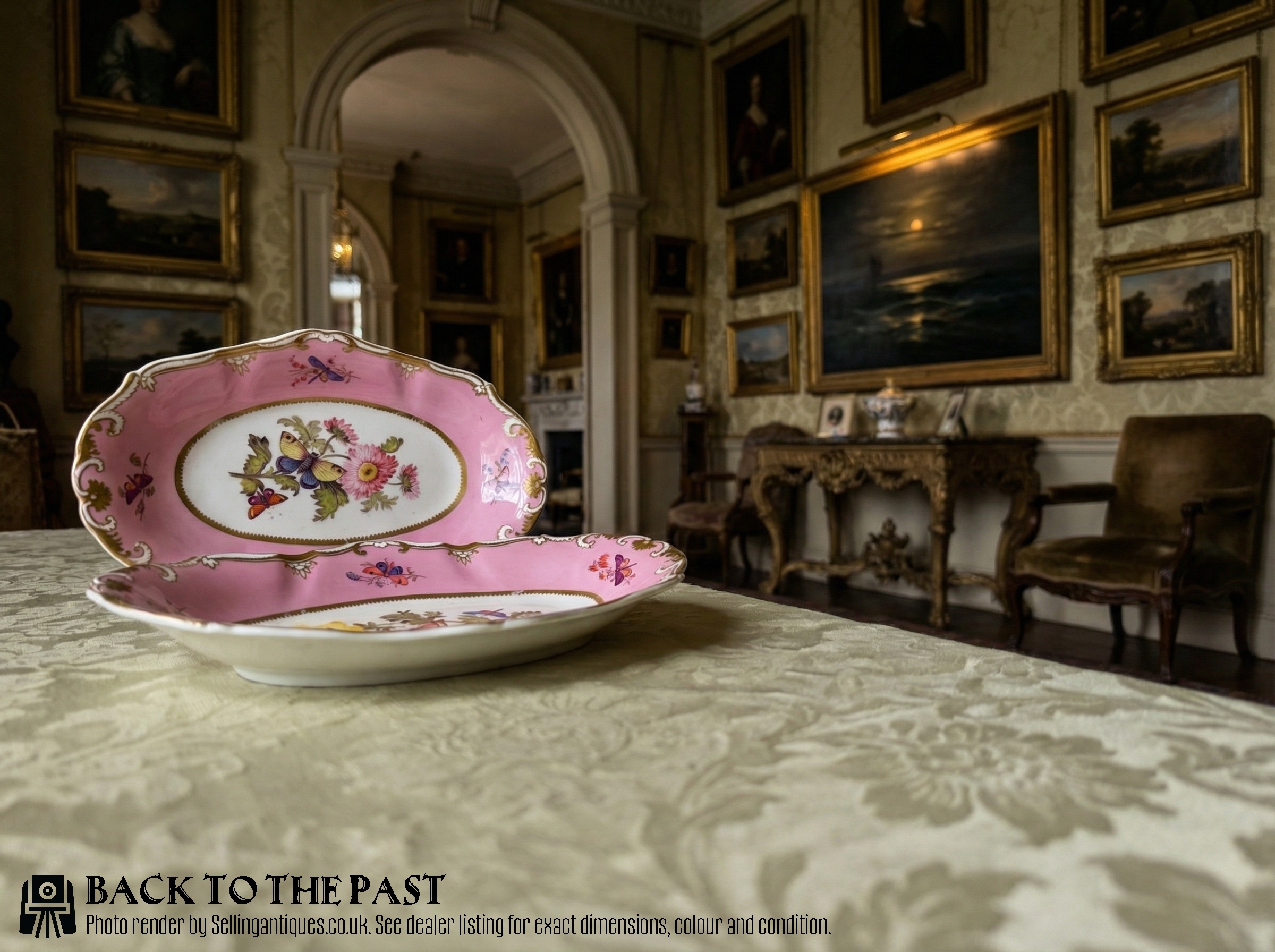
Regency Porcelain Platter
When you search for a regency porcelain platter, you encounter serving dishes, oval plates, and large moulded dessert serving pieces created during the Georgian and Regency periods. These items served dining tables across elite households, functioning primarily as serving dishes for courses of fruit, meat, or sweet dishes.
The selections on this page span the late eighteenth century through the early nineteenth century, with particular concentration on English porcelain and ironstone. Forms range from twin-handled serving dishes to ornate drainers and dessert shapes.
Makers represented in these listings include established factories such as Chamberlains Worcester, Spode, and H & R Daniel. Each piece carries the stylistic markers of early nineteenth-century dining culture, blending utility with decorative ambition.
Materials and production methods
Potters constructed these pieces using porcelain, ironstone, and earthenware bodies, often incorporating felspar porcelain for added strength. Artisans then applied handpainted enamel decoration, blue and white transfer printing, and details in gold leaf and gilding.
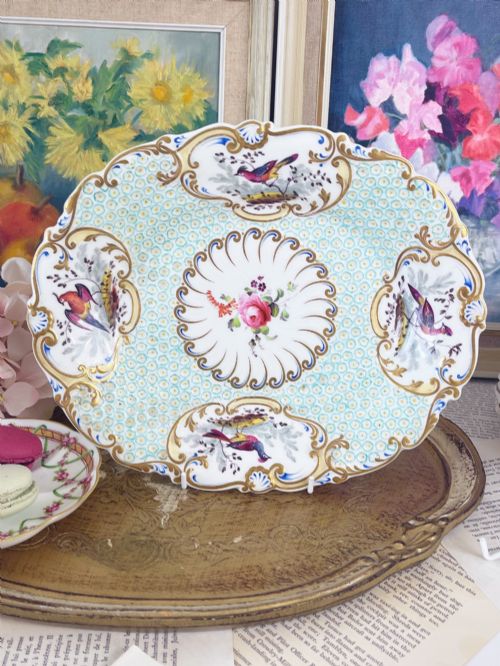
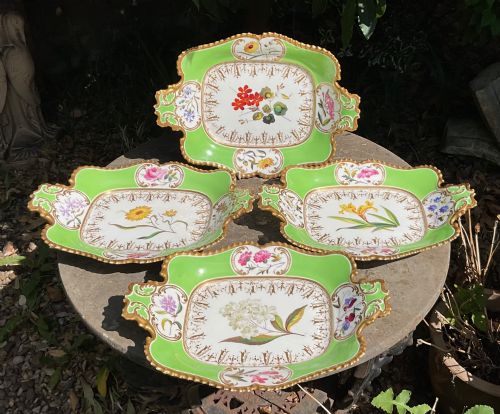
Moulded decoration added relief texture to many serving dishes before firing in kilns. Guilds of painters and decorators subsequently applied botanical studies, fancy birds, and armorial patterns by hand.
Blue pheasants and fancy birds peer across nineteenth-century dinner tables, frozen mid-peck by enthusiastic Georgian decorators.
Assessing quality in early serving ware
Quality rests in the crispness of the porcelain moulding and the precision of the handpainted or transfer-printed details. Superior pieces display finely rendered botanical studies or complex armorial crests executed by skilled hands rather than hurried brushwork.
The weight and purity of the ceramic body also distinguish finer items, particularly where felspar porcelain or dense ironstone was utilised. Preservation of the original gilding and enamel colours without excessive rubbing elevates the standing of an individual platter.
H & R Daniel·Chamberlains Worcester·Hicks & Meigh·John Davenport of Longport·Spode·Coalport·Hicks, Meigh & Johnson·Mason·Ridgway·Barr, Flight & Barr Worcester
The Regency Porcelain Platter Glossary
- Ironstone
- A dense, durable type of earthenware patented in the nineteenth century. It resists chipping better than soft-paste porcelain while accepting transfer-printed decoration.
- Felspar porcelain
- A specialised porcelain body introduced by Spode containing felspar. It offered enhanced durability and a bright white ground for enamelling.
- Drainer
- A perforated ceramic insert placed inside a serving dish or platter. It allowed juices from meat or moisture from washed fruit to drain away from the food.
- Imari pattern
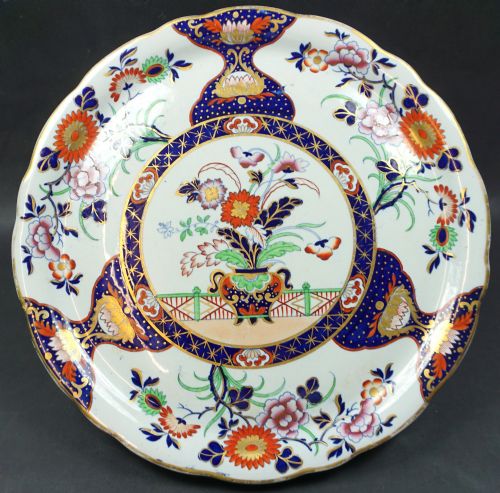
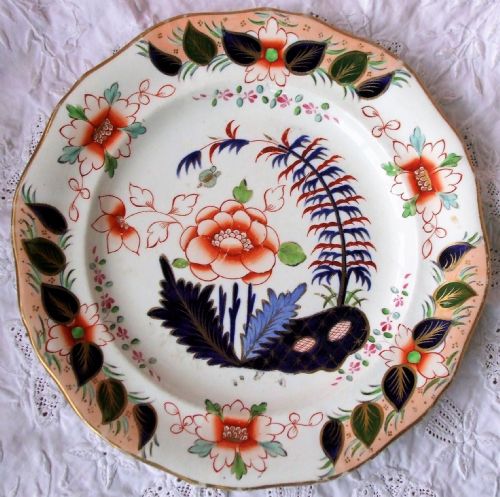
- A decorative style inspired by Japanese export wares, utilising a palette of underglaze blue, iron red, and abundant gold gilding. English factories adopted this aesthetic widely during the Regency era.
- Armorial plate
- A piece of tableware painted with the specific coat of arms or crest of the commissioning family. These items formed part of larger bespoke dinner services.
Regency Porcelain Platter: Frequently Asked Questions
How were these platters used?
These platters and serving dishes functioned at formal dining tables for presenting large courses, including meats, fruits, and desserts. Households used them both to serve food directly and to display wealth through fine ceramic art.
Servants brought these dishes from the kitchens to the dining room during multi-course meals. Their decorative surfaces added visual interest to the table setting even after the food was consumed.
Are these pieces safe for food?
While these items were originally created for dining, historic ceramics often contain lead or other materials in their glazes. Modern use is generally discouraged due to the risk of degradation.
Handwashing is essential for preserving the delicate enamel paints and gold leaf applied over two centuries ago. Displaying them on walls, in cabinets, or on stands protects the fragile surfaces.
How do I identify Regency pieces?
Regency ceramics typically display neoclassical influences, vibrant handpainted enamels, or transfer-printed patterns in blue and white. Forms often feature moulded borders, botanical motifs, and rich gilding characteristic of the early nineteenth century.
Maker marks, pattern numbers painted on the underside, and specific paste compositions offer clues to the exact factory and decade of production. Comparing stylistic details with documented pieces helps confirm the period.
What is ironstone compared to porcelain?
Ironstone is a heavy, opaque earthenware developed to imitate true porcelain while offering greater strength for daily use. It provides a robust body that resists chipping during heavy dining service.
Porcelain contains ingredients like kaolin and petuntse, firing into a more translucent, refined material. Ironstone relies on a dense ceramic mixture glazed to resemble finer china.