


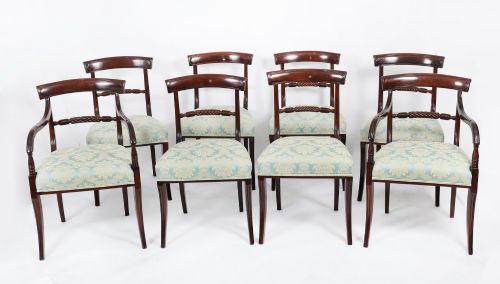
Regency Period Dining Chairs
Regency period dining chairs bring architectural balance and classical proportion to a room, offering enduring elegance for daily dining.
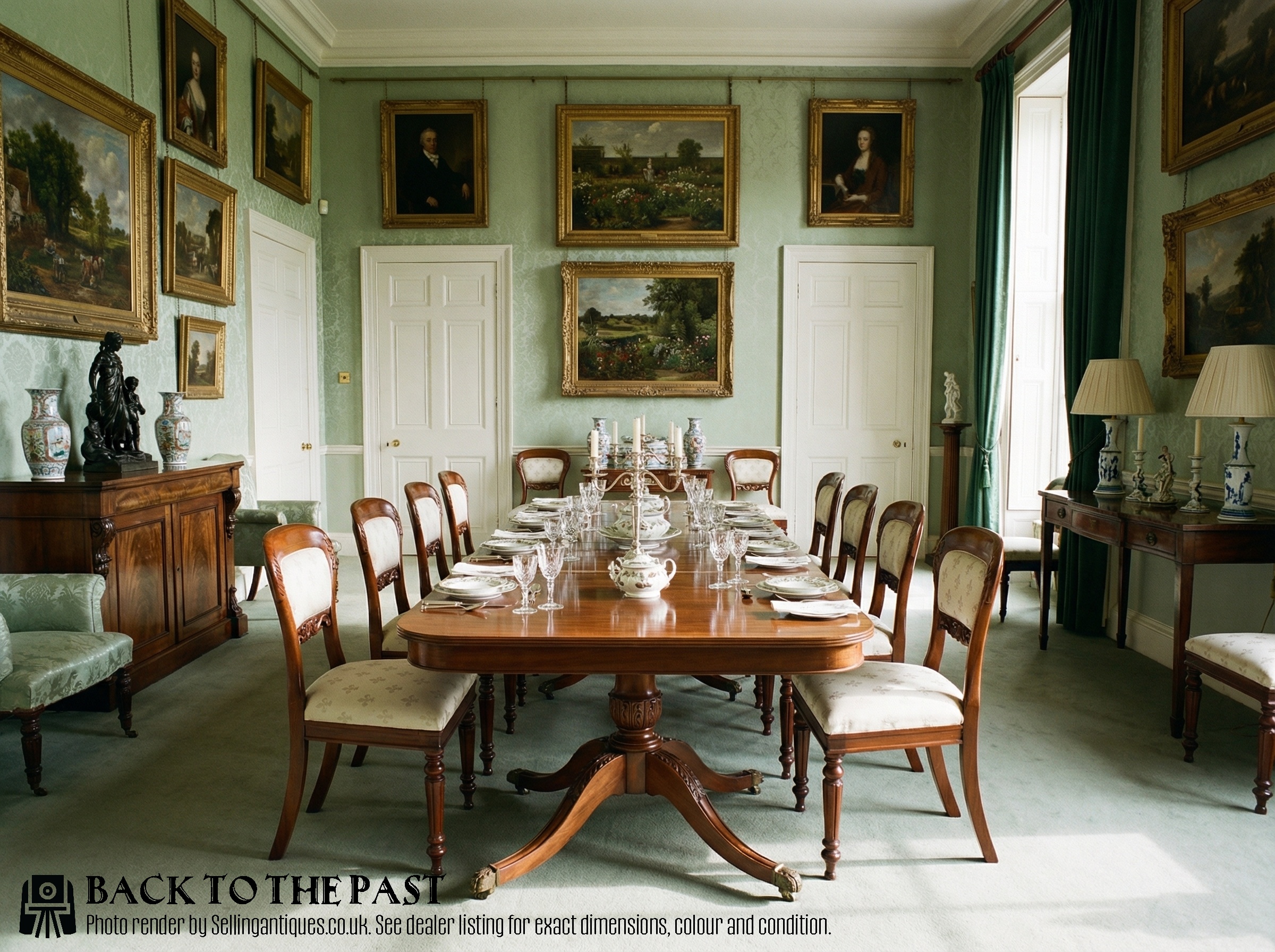
Regency Period Dining Chairs
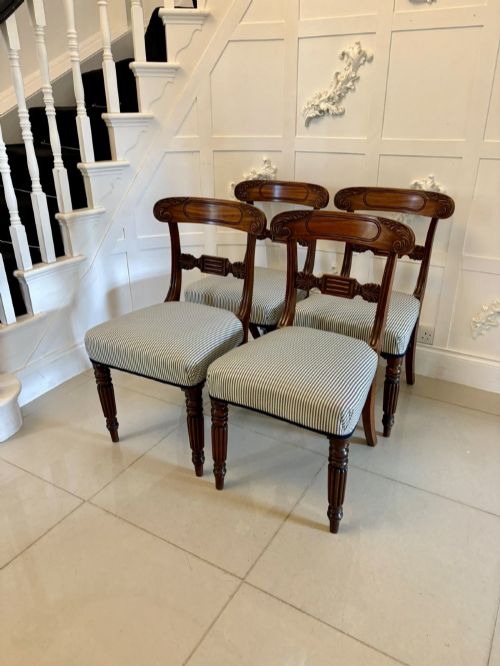
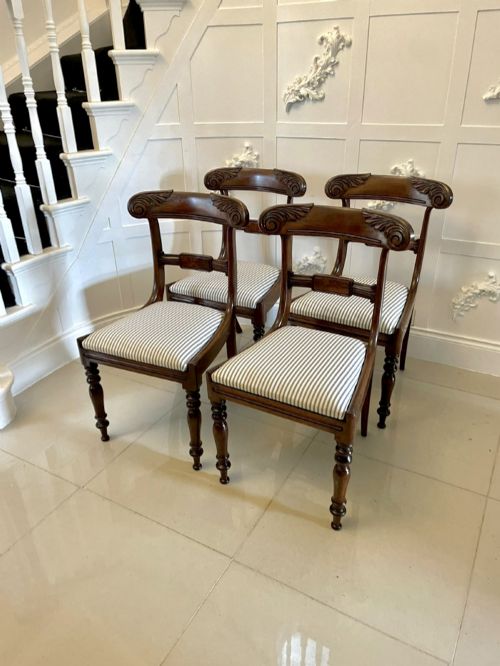
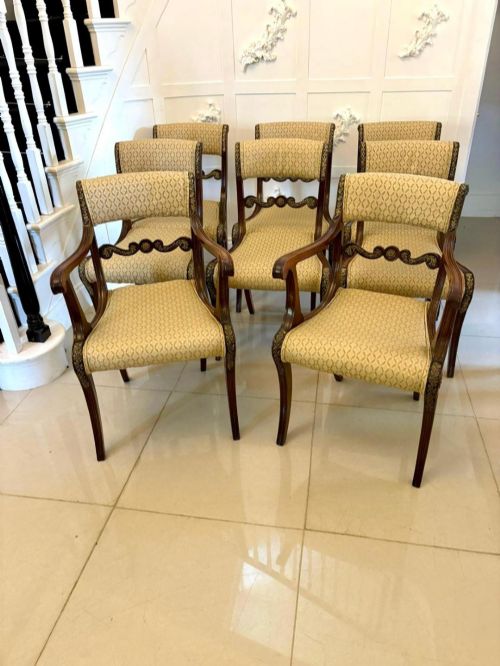
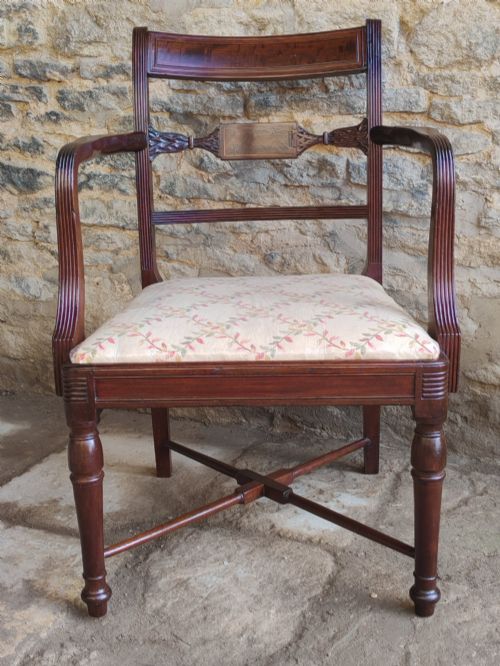
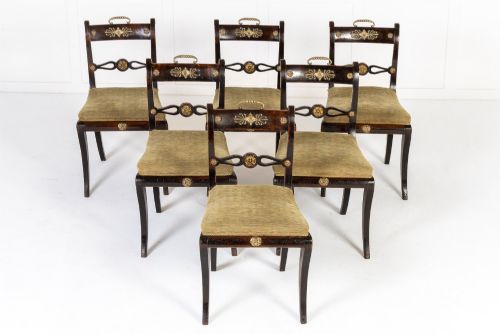
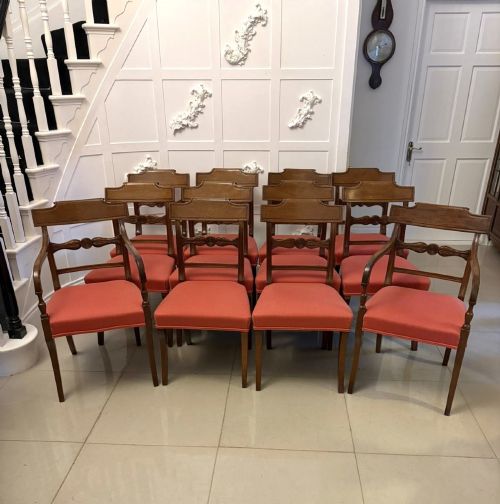
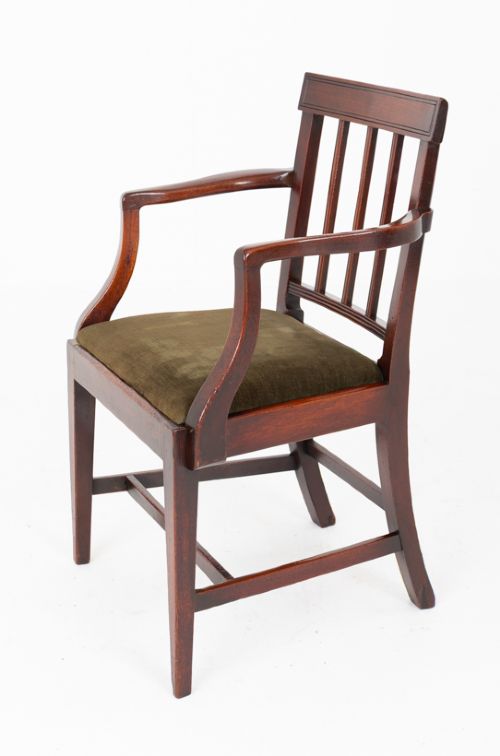
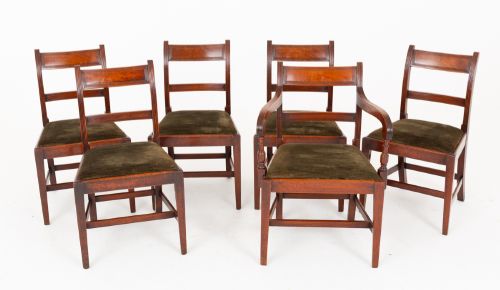
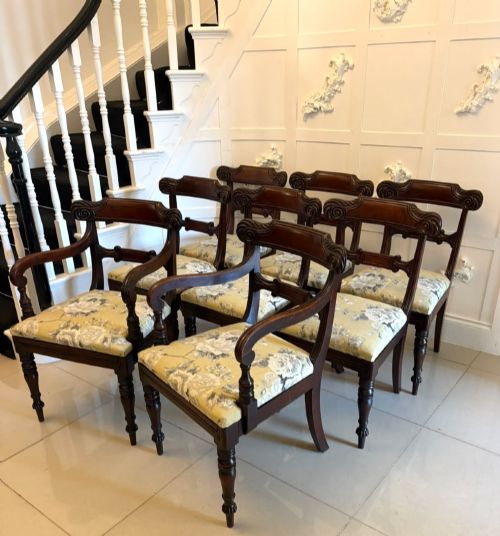
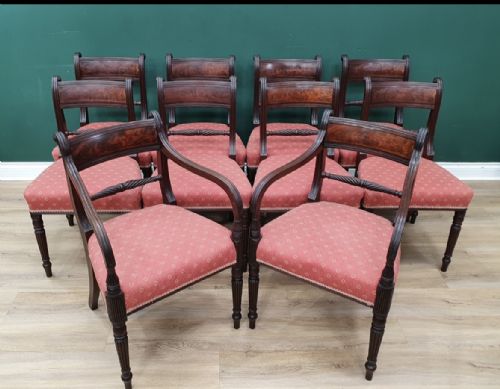
Regency period dining chairs comprise single side chairs, armchairs, and carvers designed during the early nineteenth century and the wider Regency era. These pieces often appear in matching sets of four, six, eight, ten, or twelve items to accommodate formal dining tables.
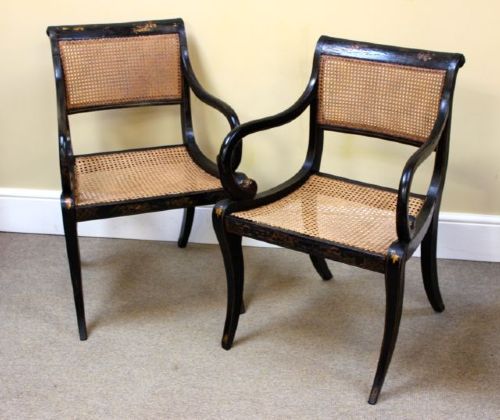
The form typically draws upon classical Greek and Roman motifs, featuring saber legs, bar backs, and carved top rails. Pieces frequently emerge from the Georgian transition, extending into later nineteenth-century revivals.
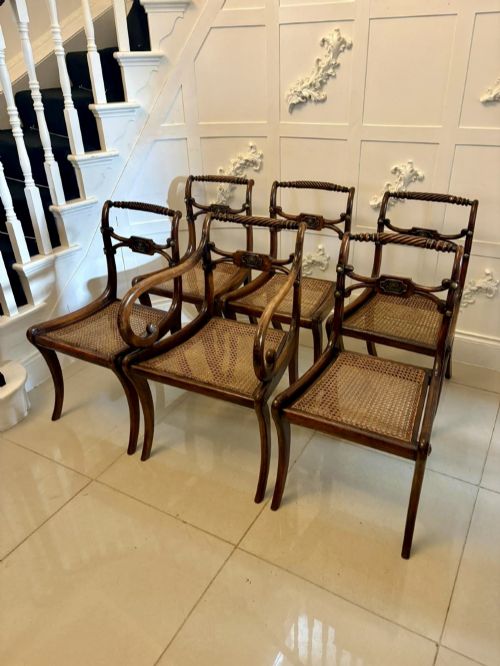
Dining chairs from this period utilise distinct seating configurations, including drop-in squabs, upholstered pads, and woven cane panels. Workshops constructed these items primarily for domestic dining rooms in grand houses and town residences.
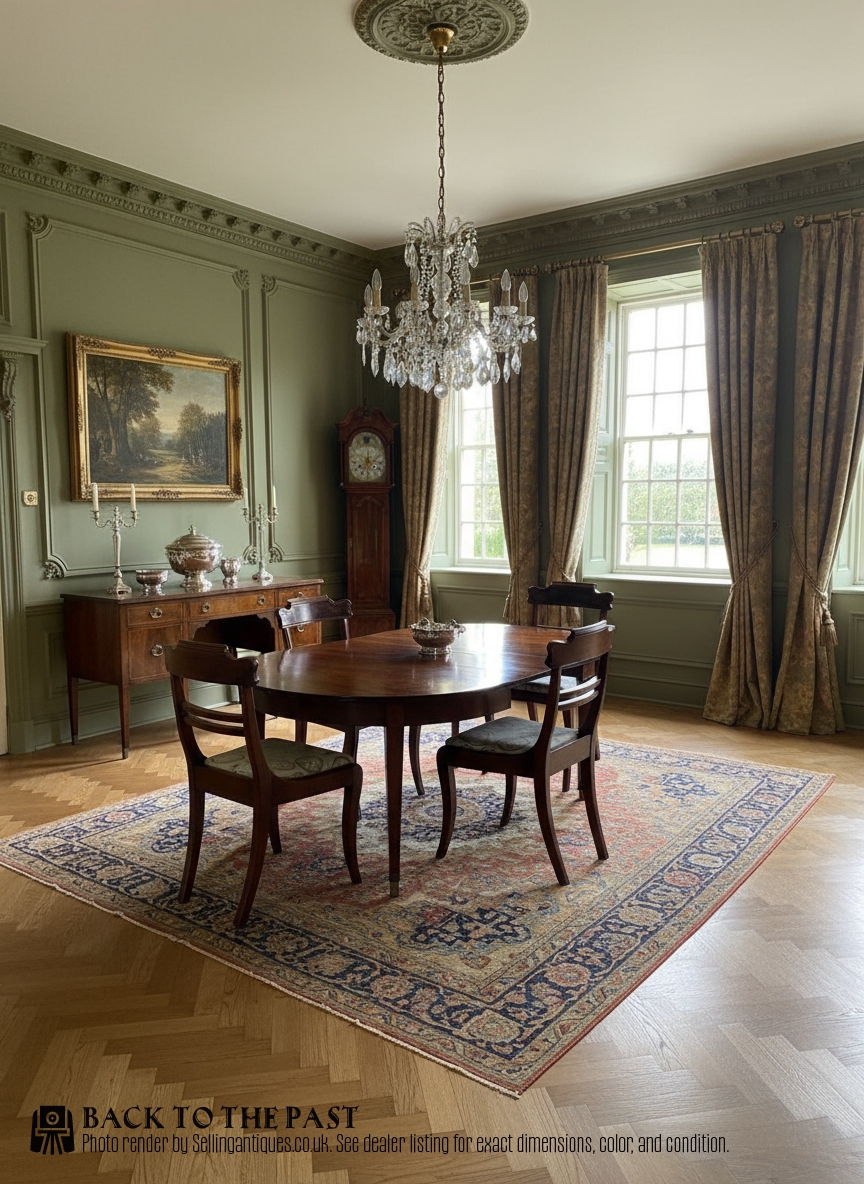
How They Were Made
Cabinetmakers constructed the primary frames of these chairs using dense timbers such as mahogany and rosewood, alongside decorative alternatives like simulated rosewood and satin birch. Carpenters employed precise joinery to ensure stability across slender saber and turned legs.
Surface detailing frequently incorporated carved scrollwork, brass inlay, and ebonised finishes to emulate classical luxury. Seating areas relied on cane work woven directly into the frame or webbed upholstery covered in velvet, fabric, or traditional textile.
Regency Period Dining Chairs Retail Price Guide 2026
Typical asking prices for regency period dining chairs among the pieces listed under this phrase on Sellingantiques today, from the lower quarter to the upper quarter. They describe what is for sale here now, not the wider market.
The inventory spans the Georgian, Regency, William IV, and Edwardian revival periods.
What Varies in Quality
The integrity of the timber selection and the crispness of carved details distinguish standard examples from finer commissions. Workshops utilising heavily figured mahogany and precise brass mounts produced pieces of superior visual depth.
The scale of the surviving set influences desirability, with larger matched groupings commanding particular attention. Original surface patination and intact structural joinery separate untouched examples from heavily restored sets.
The Regency Period Dining Chairs Glossary
- Carver
- An armchair designed with armrests, traditionally placed at the head of a dining table and matched to a set of smaller side chairs.
- Saber leg
- A curved, concave leg that tapers toward the foot, mimicking the shape of a cavalry sword and defining many classical seating designs.
- Bar back
- A horizontal wooden splat spanning the uprights of a chair back, frequently curved to fit the contours of the sitter.
- Caning
- A seating material created by weaving thin strips of rattan plant material into an open mesh pattern across the chair frame.
- Ebonised
- Timber treated with a dark finish to imitate the appearance and density of true ebony wood.
Regency Period Dining Chairs: Frequently Asked Questions
How many chairs came in a typical set?
Sets from this era commonly ranged from four to twelve pieces, often including two matching armchairs for the heads of the table. Larger gatherings required extensive matching suites commissioned specifically for grand dining spaces.
Finding a complete, unaltered set of eight or twelve remains uncommon due to the natural dispersal of furniture over centuries.
What is the difference between a side chair and a carver?
Side chairs are narrower seats built without armrests designed to line the sides of a dining table efficiently. Carvers feature integrated armrests and generous proportions for comfort.
Pairs of carvers traditionally accompanied larger sets of single chairs to accommodate hosts.
Are cane seats original to these chairs?
Many seating platforms utilised woven cane to provide lightweight support and ventilation during the warm months. These panels were often paired with removable upholstered squab cushions for added comfort.
Original cane work displays signs of age and tension, though skilled re-weaving preserves the functional integrity of the piece.
How do I identify a Regency revival chair?
Revival pieces produced later in the nineteenth or twentieth century adopt the classical forms of the Regency era but employ different timber preparation and machine-cut joinery. Examining the internal construction reveals the manufacturing methods of the period.
Consulting the overarching style markers helps distinguish an original early nineteenth-century production from subsequent interpretations.