


Regency Period Convex Mirror
These large, curved plates capture entire rooms in miniature, bringing light and depth through the distinct lens of a regency period convex mirror.
Regency Period Convex Mirror
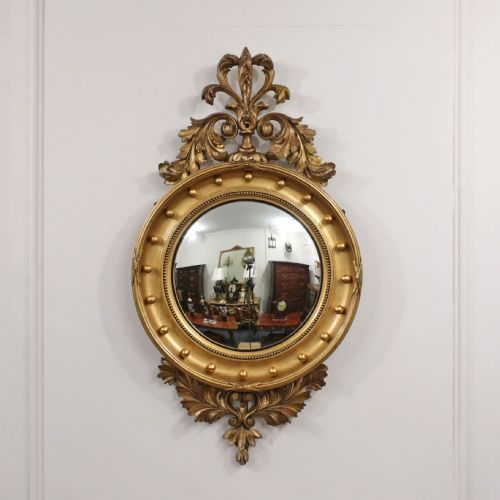
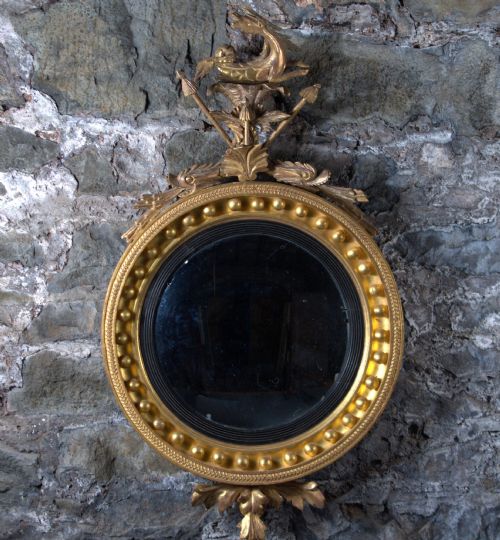
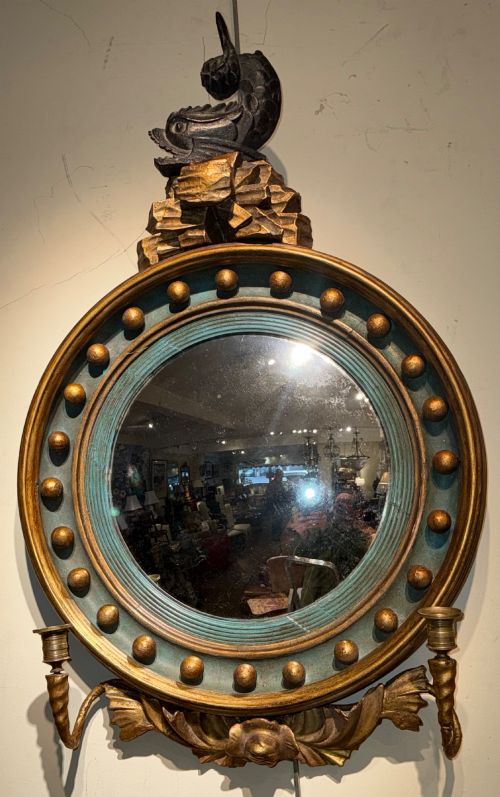
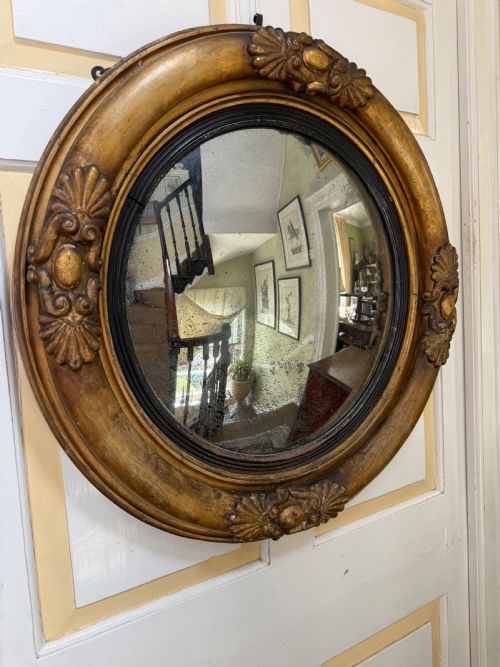
A regency period convex mirror takes the form of a circular wall mirror designed to draw light into a room while presenting a wide-angled reflection of the interior. The examples found here belong strictly to the Regency era and the broader nineteenth century, appearing as circular wall mirrors and girandoles.
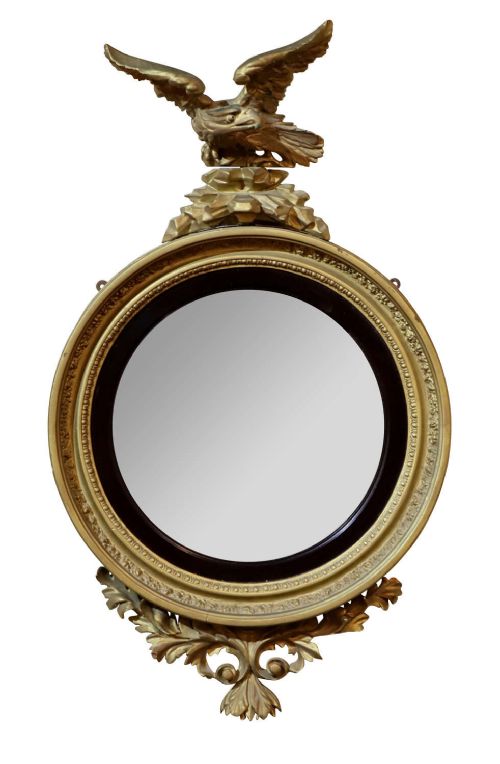
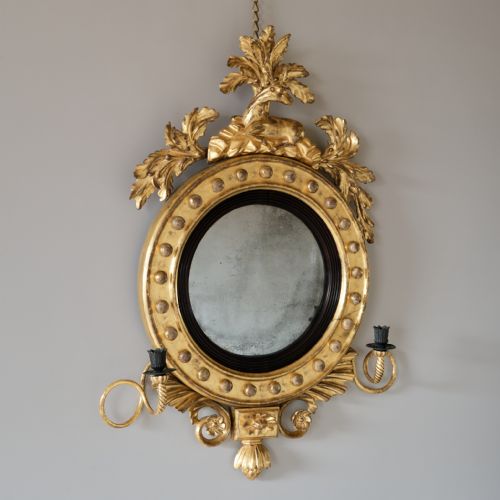
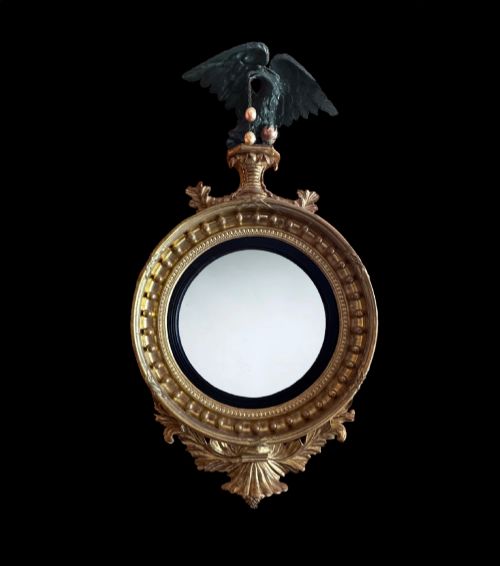
Buyers will encounter plain circular frames alongside versions finished with carved figures such as eagles mounted at the crest. Certain pieces also incorporate candle sconces as part of a girandole design, or feature specific influences like Grecian revival styling within the woodwork.
Materials and Construction
The primary structure of a regency period convex mirror relies on carved timber, shaped into circular frames and augmented with gesso to build up decorative details. Giltwood provides the predominant surface finish, achieved by applying gold leaf over the prepared wooden base.
Alternative variations incorporate ebonised wood or painted wood elements alongside the standard gilt framing. The glass itself is curved to create the characteristic convex reflection, held within the circular rebate of the timber frame.
Assessing Quality
The distinction between tiers of quality rests primarily on the ambition of the carved ornament and the crispness of the gesso work. Elaborate crests involving carved eagles or dragons demand a high level of sculptural skill from the maker, separating standard circular frames from more sculptural compositions.
Scale also dictates standing, with larger wall mirrors and girandoles requiring heavier timber construction to support the proportions of the curved plate. The preservation of the original gilt surface and the retention of the initial convex glass further separate standard examples from finer survivals.
The Regency Period Convex Mirror Glossary
- Convex mirror
- A circular wall mirror featuring an outward-curving glass plate that produces a wide-angled reflection of the surrounding room. This form was especially popular during the early nineteenth century for domestic interiors.
- Giltwood
- Timber that has been coated with a thin layer of gold leaf over a prepared gesso ground. It provides the bright reflective surface seen on the majority of Regency frames.
- Gesso
- A plaster-like mixture applied to wood frames to create a smooth surface for subsequent carving or gilding. It allows for crisp ornamental details.
- Girandole
- A branched wall mirror fitted with candle sconces attached to the frame. The candles multiply the available light by reflecting in the curved glass.
- Eagle surmount
- A decorative carved eagle perched at the top of the mirror frame. This classical motif frequently crowns Regency wall mirrors.
Regency Period Convex Mirror: Frequently Asked Questions
Where should I hang a convex mirror?
These mirrors work best opposite a window or a light source, where they gather daylight and project it back into the space. Their wide-angled reflection fills dark corners and makes smaller rooms feel expansive.
Because of their optical distortion, they are typically hung at eye level as a focal point rather than for personal grooming. Positioning them above a mantelpiece or a console table follows historical placement.
How do I identify a genuine Regency piece?
Look for the construction methods of the early nineteenth century, including hand-carved timber framing beneath the gesso and traditional gilt application. The weight and timber density of the frame offer clues to its age.
Examine the glass for the subtle irregularities typical of nineteenth-century production. Original plates often retain a distinct depth and softness in their reflection compared to modern reproductions.
What is the difference between a standard mirror and a girandole?
A standard convex mirror consists simply of the circular frame and glass plate designed solely for wall decoration and light distribution. Its profile remains focused on the central reflective orb.
A girandole incorporates candle arms or sconces extending from the sides of the frame. These allowed the flickering candlelight to multiply across the curved glass during evening hours.
Are these mirrors fragile?
The combination of heavy timber frames, gesso ornament, and curved glass means these pieces require secure wall fixings. The weight is often concentrated through the top mounting point where eagle crests or carved pediments attach.
Routine care involves dusting the gilt surface gently with a dry brush and avoiding liquid cleaners on the antique gilding and original mirror plates.