

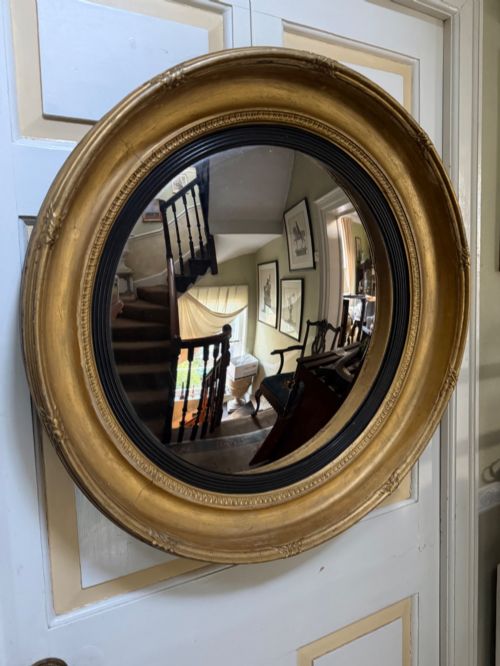
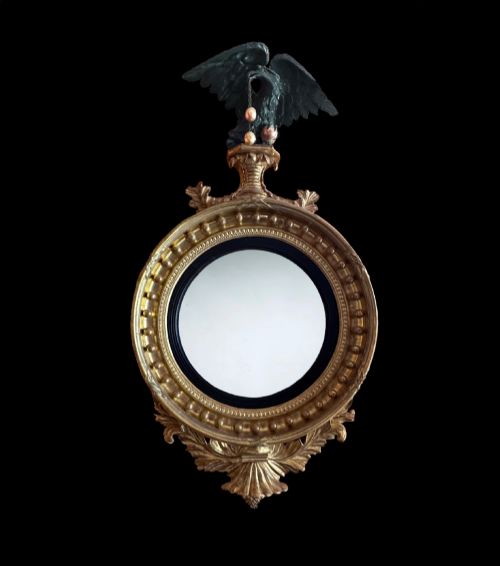
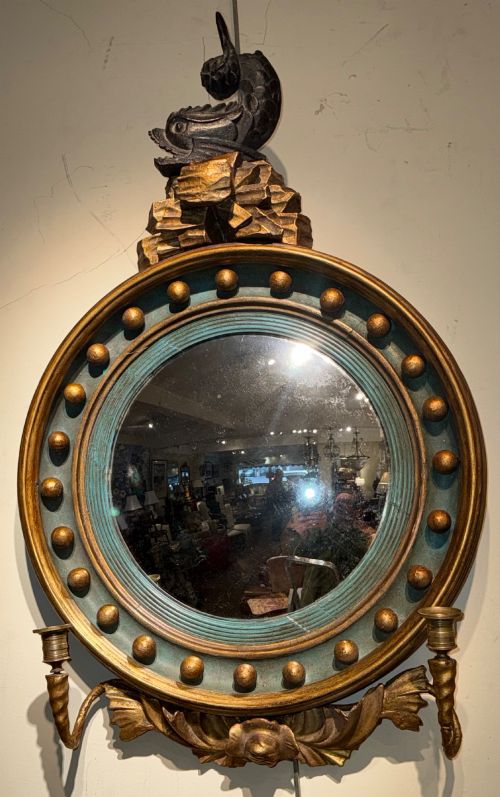


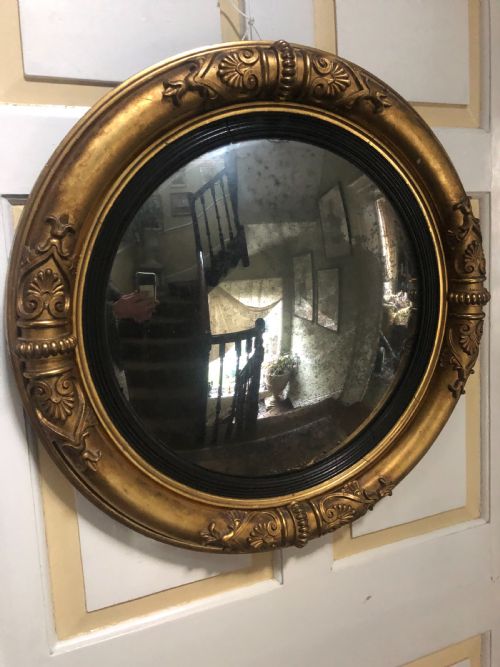


Regency Period Circular Mirror
A regency period circular mirror brings brilliant optical depth and classical elegance to any wall, capturing light with its curved convex glass.
Regency Period Circular Mirror
A regency period circular mirror is a striking wall furnishing designed to curve outwards and draw the room into its glassy sphere. These pieces belong predominantly to the Regency era and the broader nineteenth century, reflecting the neoclassical tastes of the period.
The form appears most frequently as a circular convex wall mirror framed in giltwood, often incorporating decorative crests like eagles or detailed carved motifs. Wall mirrors dominate the selection, alongside occasional double-sided hand mirrors in ebonised wood or gilt finishes.
Scale and proportion vary considerably, ranging from small wall examples dated around eighteen hundred and twenty up to large pieces of bold architectural presence. Grecian revival design influences several items, demonstrating the classical revivalism underpinning these furnishings.
How They Were Made
Makers constructed the frames using pine and wood, applying gesso layers to build up intricate surface details before finishing them in bright gilt. Carved elements such as eagle mounts required skilled carpentry and shaping to achieve balanced proportions around the circular glass.
Makers utilised ebonised wood for specific handheld variations, contrasting dark polished timber against reflective glass plates. Giltwood remains the defining surface treatment across the primary wall-hung pieces, capturing the luxurious aesthetic of the Regency epoch.
Regency Period Circular Mirror Retail Price Guide 2026
Typical asking prices for regency period circular mirror among the pieces listed under this phrase on Sellingantiques today, from the lower quarter to the upper quarter. They describe what is for sale here now, not the wider market.
Several mirrors sport proud wooden eagles on top, keeping a watchful, glassy-eyed vigil over the entire drawing room.
What Varies in Quality
The refinement of the carved woodwork and the crispness of the gesso application separate standard frames from superior examples. Elaborate crests like eagles demonstrate higher levels of craftsmanship compared to plain round frames.
The integrity of the original convex glass plate and the depth of the gilding determine the visual impact of the piece. Bold scale and balanced proportions elevate the presence of the mirror on the wall.
The Regency Period Circular Mirror Glossary
- Convex mirror
- A circular mirror with an outward-curving glass plate that produces a wide-angled, panoramic reflection of the interior space. This optical design was immensely popular during the Regency era for illuminating dark corners.
- Giltwood
- Timber coated with a thin layer of gold leaf over a prepared gesso base. This technique creates a radiant, luminous surface that catches candlelight and daylight alike.
- Gesso
- A plaster-like mixture applied to wood frames and carved into decorative relief details before gilding. It allows for sharp, intricate ornamental designs.
- Ebonised wood
- Timber treated with a dark stain or finish to imitate expensive ebony. This dark material provides a striking contrast to bright metal or polished glass.
- Grecian revival
- An architectural and decorative style drawing inspiration from classical ancient Greece. It manifests in clean geometric motifs and classical ornaments on the frame.
Regency Period Circular Mirror: Frequently Asked Questions
How were these mirrors used originally?
Regency convex mirrors were hung in principal reception rooms such as dining rooms and parlours to disperse natural daylight. Their curved glass acted as a practical light amplifier before the widespread availability of electric lighting.
Hand-held versions offered personal reflection, while larger wall-mounted examples acted as grand decorative statements. Butler's mirrors were often placed to allow staff to monitor the room discreetly.
How do I date a Regency mirror?
Dating relies on examining the construction methods, wood types like pine beneath the gesso, and the style of the carving. Regency pieces often exhibit Grecian revival motifs and specific frame profiles associated with the early nineteenth century.
The presence of original convex glass plates and traditional backboards further aids in establishing the correct period. Archival comparisons with dated examples from around eighteen hundred and twenty provide additional context.
How do I live with a convex mirror?
Hanging a convex mirror requires a secure wall fixing due to the substantial weight of the timber and gesso frame. Position it at eye level opposite a window or light source to maximise the panoramic reflection.
Keep these pieces away from direct sunlight and excessive moisture to preserve the delicate giltwood surface. Dust gently with a soft dry cloth to maintain the finish without damaging the gilding.